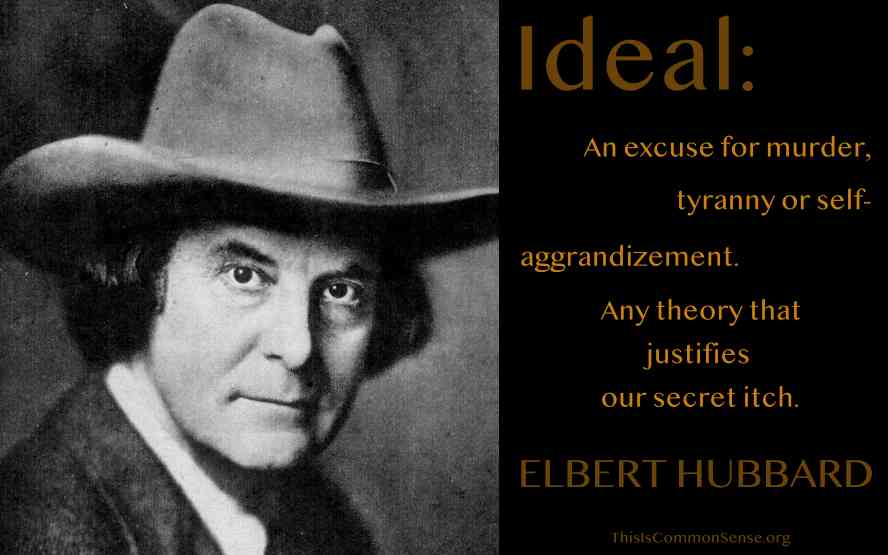
Ideal: An excuse for murder, tyranny or self-aggrandizement. Any theory that justifies our secret itch.
Elbert Hubbard, The Roycroft Dictionary Concocted by Ali Baba and the Bunch on Rainy Days (1914), p. 73.
Elbert Hubbard
Ideal: An excuse for murder, tyranny or self-aggrandizement. Any theory that justifies our secret itch.
Elbert Hubbard, The Roycroft Dictionary Concocted by Ali Baba and the Bunch on Rainy Days (1914), p. 73.
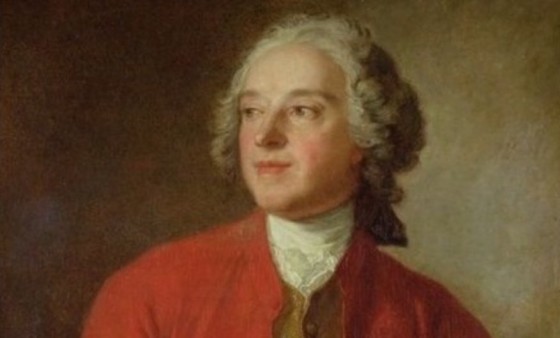
On January 24, 1732, French playwright, watchmaker, inventor, musician, diplomat, fugitive, spy, publisher, horticulturalist, arms dealer, satirist, financier, and revolutionary (both French and American) Pierre-Augustin Caron de Beaumarchais was born. He proved instrumental in securing armaments for the America Revolution, but remains best known for his three “Figaro” plays, Le Barbier de Séville, Le Mariage de Figaro and La Mère coupable. The plays remain memorable today chiefly for their operatic settings by Mozart and Rossini.
Beaumarchais died May 18, 1799.
This is what the new president of Argentina, Javier Milei, has sought to confirm by means of radically free-market economic policies. He is going as far as he can as fast as he can to make Argentina a freer and more prosperous country.
Can he succeed in the long run?
Many exploiters of the socialist status quo ante are bitterly opposed to his reforms and hope to undo them. We’ve seen before how quickly a relatively anticapitalist administration can kill the freedom-expanding reforms of a relatively procapitalist one.
But at least for now, Milei is proving his point, as witness the market for apartments in Buenos Aires.
The Buenos Aires newspaper El Cronista reports (with the help of Google Translate) that with the end of rent controls, the supply of rental units in Buenos Aires has doubled and prices for units have fallen by around 20%. The paper cites data by the Argentine Real Estate Chamber and the reports of brokers.
Under rent control, by 2023 the supply of rentals had shrunk to just 400 units. “Today we have a stock of more than 800 apartments, and it is growing day by day,” says Alejandro Bennazar, a director at
Eight hundred units is still low given the size of the capital city, but there’s light at the end of the tunnel. Getting rid of the controls caused supply to double instantly. An excellent start.
This is Common Sense. I’m Paul Jacob.
Illustration created with Midjourney
See all recent commentary
(simplified and organized)
See recent popular posts
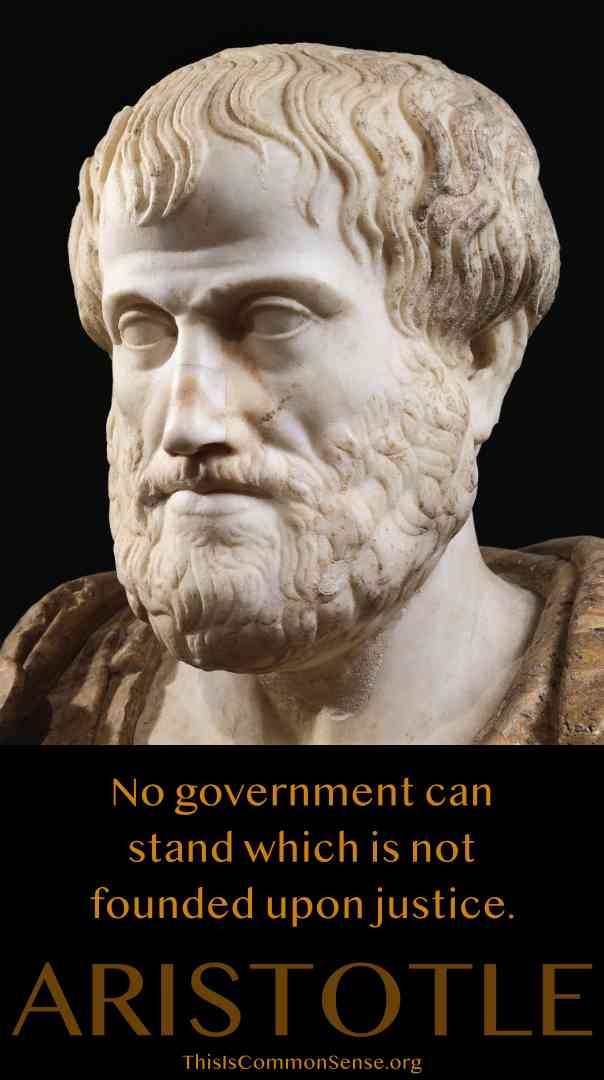
No government can stand which is not founded upon justice.
Aristotle, Politics, 7.14, Benjamin Jowett, trans. (1885).
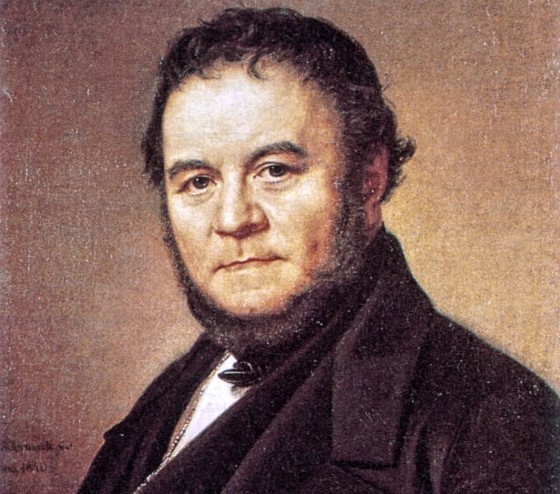
On January 23, 1783, journalist and novelist Marie-Henri Beyle, known by his pen name Stendhal (pictured above), was born. Stendhal was a follower of Destutt de Tracy and an attendant at the count’s salons. His most famous works include the novel The Red and the Black and a treatise on romantic love.
Stendhal died March 22, 1842.
On January 23, 1860, the Cobden–Chevalier Treaty was signed between France and Great Britain. The treaty was named after the two main proponents of the agreement, Richard Cobden (in England) and economist Michel Chevalier (in France). The treaty had been suggested the year earlier, in British Parliament, by Cobden’s colleague John Bright, who looked upon the policy as a peace measure, an alternate to a military build-up.
An Ontario court has dismissed Jordan Peterson’s appeal of a decision that had ruled in favor of the autocratic College of Psychologists of Ontario (CPO).
A year ago, Dr. Peterson’s livelihood was jeopardized because, on social media, he challenged “consensus” determinations on matters like climate change, sex-change operations on minors, and COVID-19 policies.
That’s when CPO, a regulatory body established by legislation, told Peterson that he must either submit to degrading “training” as the penalty for participating in public discourse or forfeit his right to practice.
With the new ruling, “There are no other legal avenues open to me now,” he says on Twitter. “It’s capitulate to the petty bureaucrats and the addlepated woke mob or lose my professional licence.”
The setback pertains only to “this round,” though. And: “There is nothing you can take from me that I’m unwilling to lose.”
In a recent National Post column, he says that he can either comply with the reeducation and confess his ideological sins or “tell my would-be masters to go directly to the hell they are so rapidly gathering around themselves and everyone else.”
If you read Dr. Peterson’s warnings to fellow Canadians about the precarious state of their liberties and interpret his tone accurately, I think you’ll agree that he’s going with the go-to-hell option.
Peterson has made millions off the fame he garnered by opposing the compelled speech aspect aspect of Canada’s Bill C-16. Thanks to the marketplace of ideas, he has more go-to-hell money than most folks.
This is Common Sense. I’m Paul Jacob.
Illustration created with Firefly and PicFinder
See all recent commentary
(simplified and organized)
See recent popular posts
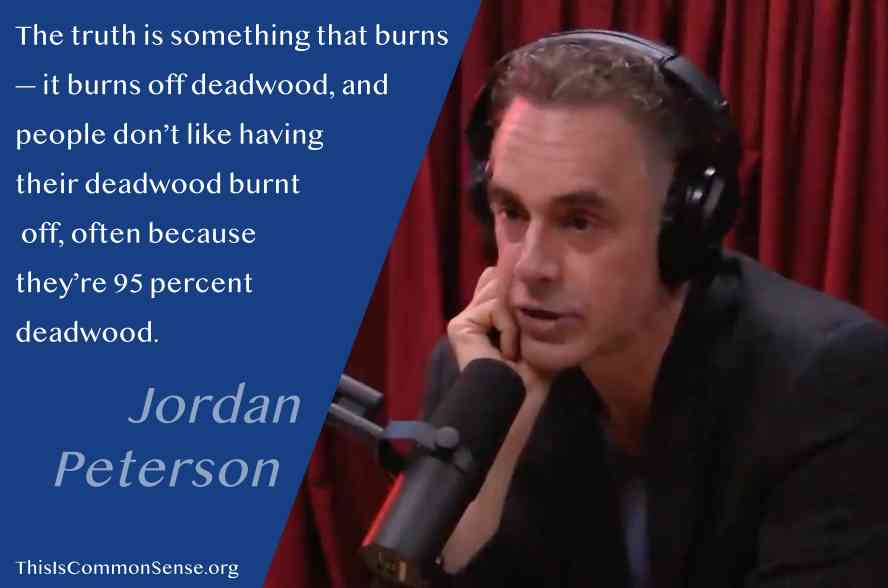
The truth is something that burns — it burns off deadwood, and people don’t like having their deadwood burnt off, often because they’re 95 percent deadwood.
Jordan Peterson, Joe Rogan Experience #958 (May 2017).
On January 22, 1920, American neoconservative pundit and author Irving Kristol was born. He is famous for a number of works, including the essay “‘When virtue loses all her loveliness’ — some reflections on Capitalism and ‘the free society’” (National Affairs, Fall 1970) and the treatise Two Cheers for Capitalism: A Penetrating Assessment Of Free Enterprise And The Corporate System (1978).
Kristol died September 18, 2009.
Paul no longer produces his weekly “weekend wrap-up” podcast, This Week in Common Sense. But he still has something to say. This is the video of the talk shared on audio yesterday:
Please go to StopTheChinazis.org for more information.
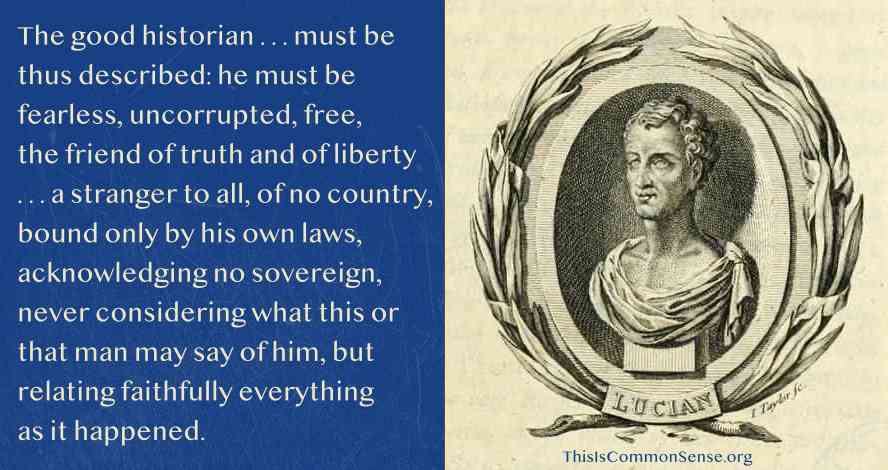
The good historian, then, must be thus described: he must be fearless, uncorrupted, free, the friend of truth and of liberty; one who, to use the words of the comic poet, calls a fig a fig, and a skiff a skiff, neither giving nor withholding from any, from favour or from enmity, not influenced by pity, by shame, or by remorse; a just judge, so far benevolent to all as never to give more than is due to any in his work; a stranger to all, of no country, bound only by his own laws, acknowledging no sovereign, never considering what this or that man may say of him, but relating faithfully everything as it happened.
Lucian, “How to Write History.” Thomas Francklin, D.D. (trans.).