Henry David Thoreau, “Slavery in Massachusetts” (1854).
The law will never make men free; it is men who have got to make the law free.
Categories
Henry David Thoreau
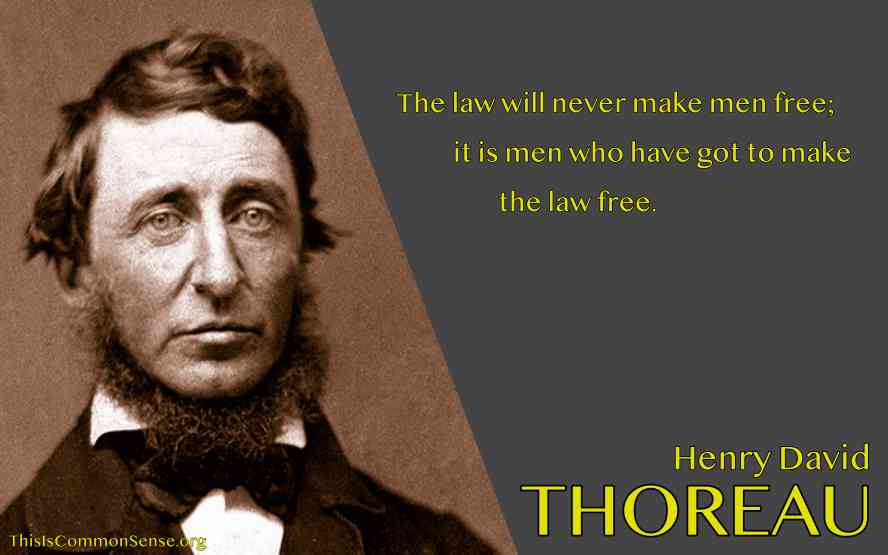
Henry David Thoreau, “Slavery in Massachusetts” (1854).
The law will never make men free; it is men who have got to make the law free.
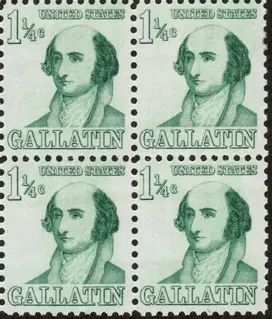
On January 29, 1761, Albert Gallatin was born. Gallatin served as the fourth United States Secretary of the Treasury — a post in which he served longer than any other in American history — advanced the anthropological and linguistic study of native Americans, and became the subject of a biography by Henry Adams. Called the “father of American ethnology,” he has been honored with a 1967 U.S. stamp as well as many place names, including the Gallatin National Forest in Montana.
In yesterday’s update, we directed your attention to a court decision that showed some progress in preventing the federal government from outright theft via the medieval civil asset forfeiture technique. The Epoch Times reported. But there was a passage we did not quote:
“Plaintiffs do have a significant privacy interest in their safe deposit boxes, given that their conduct indicates they intended their items to be ‘preserved . . . as private,’ and society generally views the privacy expectations of items in safe deposit boxes as reasonable,” Judge Smith wrote.
Yes, Judge Smith, we do have “privacy interests” in our . . . private property.
It is right there in the term, private property.
The conceptual fight to reclaim our rights can be a tough slog through the obvious.
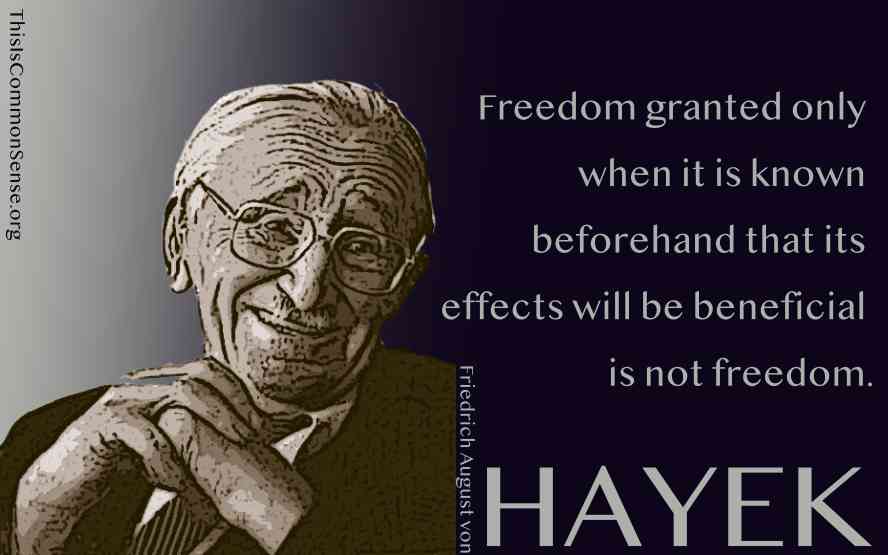
F.A. Hayek, The Constitution of Liberty, p. 83.
Freedom granted only when it is known beforehand that its effects will be beneficial is not freedom.
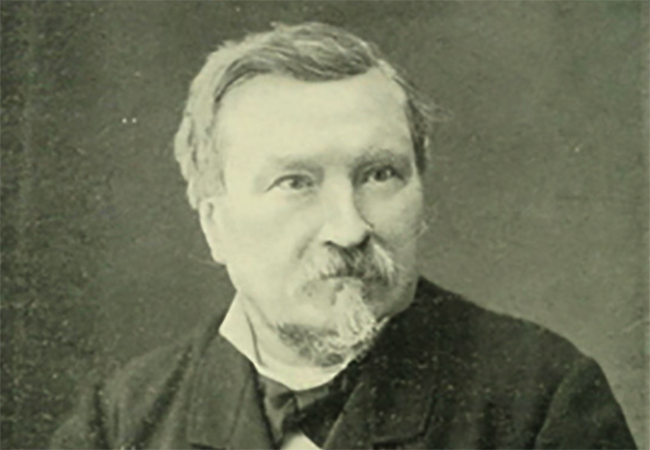
On January 28, 1912, Belgian economist Gustave de Molinari died. Molinari was one of the last major economists of the French Liberal School, heir to Frederic Bastiat, and a prominent advocate of free trade. His last book, The Society of To-morrow (the only one of his many books to be translated into English in his day) envisioned a future of extremely limited government, and argued against the growing tide of socialism and war that was becoming all too apparent as the future of Europe.
Sadly, the old liberal order of Europe ended with the beginning of the Great War, exactly two and one half years after Molinari’s demise.
On Jan. 28, 1981, President Ronald Reagan lifted the federal government’s remaining domestic petroleum price and allocation controls in the United States, helping to end the 1970s energy crisis and begin the 1980s’ oil glut.
The deregulatory move had been begun by Democrats in Congress, particularly Sen. Ted Kennedy, but had been placed on a gradual schedule, and the whole effort clouded with talk of “windfall profits” and a tax on those allegedly unfair returns on investment.
Government agencies that “fight crime” too often engage in criminal behavior to do so.
In June of 2021, Common Sense with Paul Jacob reported on an FBI operation that raided safe deposit boxes.
In March, the federal government conducted a raid of a safe deposit box company called U.S. Privacy Vaults. The government accuses the company of abetting drug dealers.
The government accuses the box renters of . . . nothing. But DOJ is trying to use civil forfeiture laws to retain most of what it seized during the raid: some $85 million in cash and valuables.
In August of 2022 Paul returned to the case, wondering whether FBI agents would themselves see justice:
The plot’s been foiled, it appears, but will the culprits within the FBI be prosecuted?
Seems unlikely.
Truth is, the culture at the FBI has never been good. Barring defunding (which would be politically difficult) perhaps FBI agents should be restricted to just investigation, stripped of their weaponry, forced to rely on state and local lawmen — and perhaps the U.S. Marshals — to make any searches and arrests at all.
In October, the courts failed to back up the Constitution regarding searches and seizures in this case.
Now, according to The Epoch Times, a federal court has indeed found cause to reprimand the FBI and the lawyers that defended the agents who had — without cause — searched all of the safety deposit boxes:
“We note that it is particularly troubling that the government has failed to provide a limiting principle to how far a hypothetical ‘inventory search’ conducted pursuant to customized instructions can go,” Judge Smith said.
Many of the plaintiffs have already had their belongings returned by the FBI but pressed forward with the case for an opinion in their favor.
The ruling remanded the case back to U.S. District Judge Robert Klausner, who previously dismissed the case, for a ruling that directs the FBI to destroy records the bureau collected on the box renters who are members of the class-action case.
The opinion “draws a line in the sand, to ensure something like this never happens again,” Rob Johnson, a senior attorney with the Institute for Justice, which was representing the plaintiffs, said in a statement. “If this had come out the other way, the government could have exported this raid as a model across the country. Now, the government is on notice its actions violated the Fourth Amendment.”
It took several years, but apparently justice in this case is finally approaching, and the Federal Bureau of Investigations has been reminded that its powers are limited. By our rights.
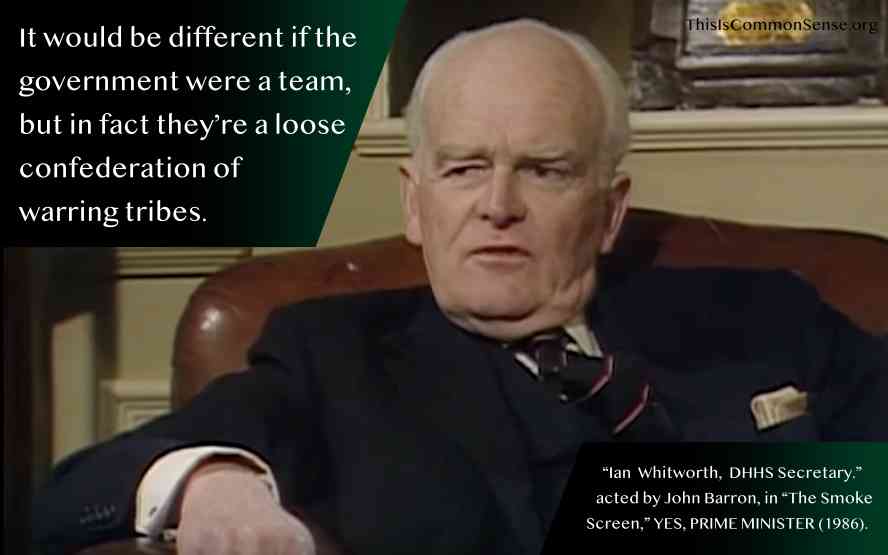
It would be different if the government were a team, but in fact they’re a loose confederation of warring tribes.
Sir Ian Whitworth, Permanent Secretary for Health, Yes, Prime Minister, “The Smoke Screen” (S1; E3: Thu, Jan 23, 1986), as performed by John Barron; written by Antony Jay and Jonathan Lynn.

On Jan. 27, 1973, President Richard Nixon’s Secretary of Defense, Melvin R. Laird, announced an end to the military draft in favor of a system of voluntary enlistment. Since 1973, the United States armed forces have been known as the All-Volunteer Force.

The federal government, it seems, had instituted a policy of “cover-up.”
This has changed in the last few years, after a military investigation into UFOs went public, and as Congress began making public and confidential inquiries.
What do we really know?
Not much.
Still, that startling 1952 UFO wave appears to have received some additional evidence . . . from an unexpected quarter.
A team of astronomers compared old sky plates from the Palomar Observatory —photographed in the 1950s — to modern digitized pictures of the heavens, searching for “vanishing stars.” Appearing and disappearing stars are a fascinating study, in this research the aim being to detect “instances where a star directly collapses into a black hole.” The scientists found none of these “failed supernova” events.
But what they found surprised them: “several images where multiple star-like objects appear in a single snapshot of the sky, never to be seen again.”
They tested many possible explanations for the mysterious data, and then an automated search coughed up a doozy: “The image showed three bright and beautiful objects looking just like stars in a POSS-I image from the 19th of July 1952 that appeared and vanished within a plate exposure. . . . The three bright objects seemed as real as Betelgeuse itself.”
These were not single bright dots on photographic plates, but multiple simultaneous dots.
As scientist Beatriz Villarroel writes, “our two most prominent and brightest cases of multiple transients coincided in time with the two weekends of the renowned Washington UFO flyovers.”
One wonders whether later mass-sighting events, such as the “Belgian Wave” (November 1989–April 1990) and Arizona’s “Phoenix Lights” (March 13, 1997), might have recorded similar transients above, ready for study.
Thankfully, we do not need to rely directly upon government agents to do the research.
This is Common Sense. I’m Paul Jacob.
Illustration created with Midjourney and Fireflly
See all recent commentary
(simplified and organized)
See recent popular posts
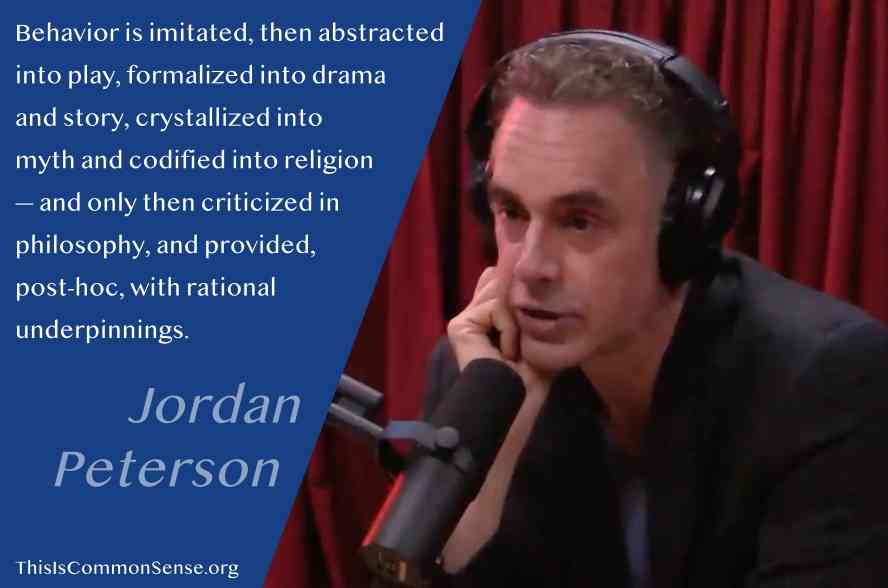
Behavior is imitated, then abstracted into play, formalized into drama and story, crystallized into myth and codified into religion — and only then criticized in philosophy, and provided, post-hoc, with rational underpinnings.
Jordan Peterson, Maps of Meaning (1999), p. 78.