The average man does not get pleasure out of an idea because he thinks it is true; he thinks it is true because he gets pleasure out of it.
H. L. Mencken, Damn! A Book of Calumny (1918), p. 40.
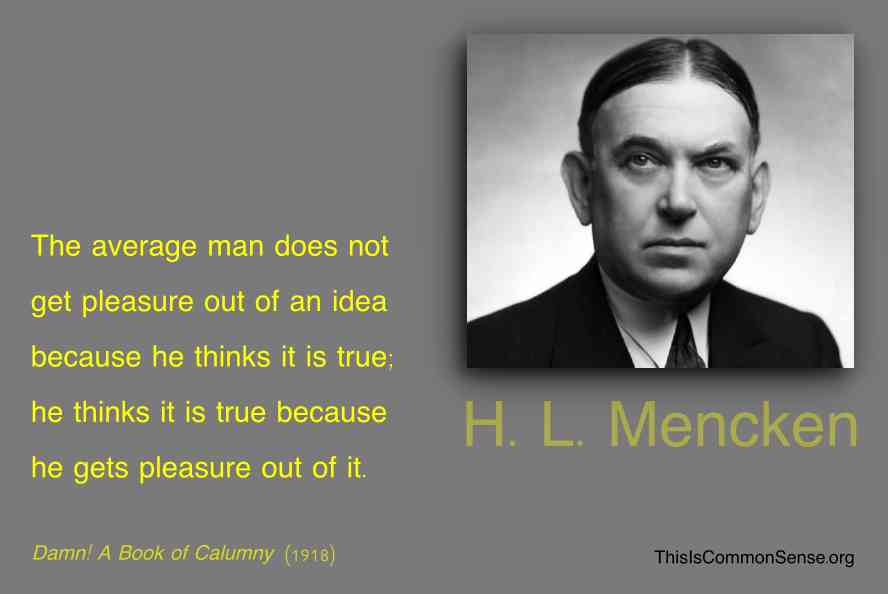
The average man does not get pleasure out of an idea because he thinks it is true; he thinks it is true because he gets pleasure out of it.
H. L. Mencken, Damn! A Book of Calumny (1918), p. 40.
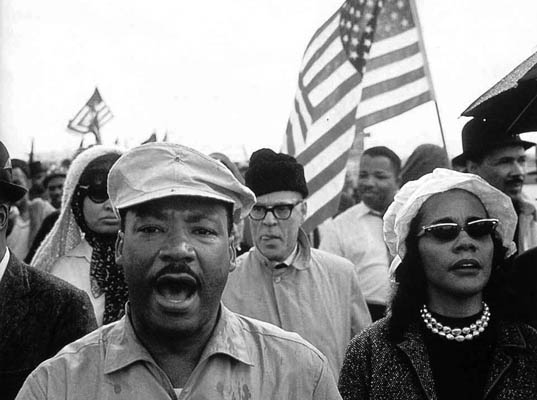
On March 25, 1965, civil rights activists led by Martin Luther King, Jr., successfully completed their four-day, 50-mile march from Selma to the capitol in Montgomery, Alabama.

Since the outside of your house is public, the government may video-record your house sans search warrant. “Law enforcement in Kansas recorded the front of a man’s home for 68 days straight, 15 hours a day, and obtained evidence to prove him guilty on 16 charges,” according to Jalopnik:
“Mr. Hay had no reasonable expectation of privacy in a view of the front of his house,” said the U.S. Tenth Circuit Court of Appeals in its decision on U.S. vs Hay. “As video cameras proliferate throughout society, regrettably, the reasonable expectation of privacy from filming is diminished.”
Maxwell Zeff, “Feds Can Film Your Front Porch for 68 Days Without a Warrant, Says Court,” Jalopnik (March 21, 2024).
Outside the jurisdiction of the Tenth Circuit, this ruling does not strictly apply. But it shows where courts are heading, no?
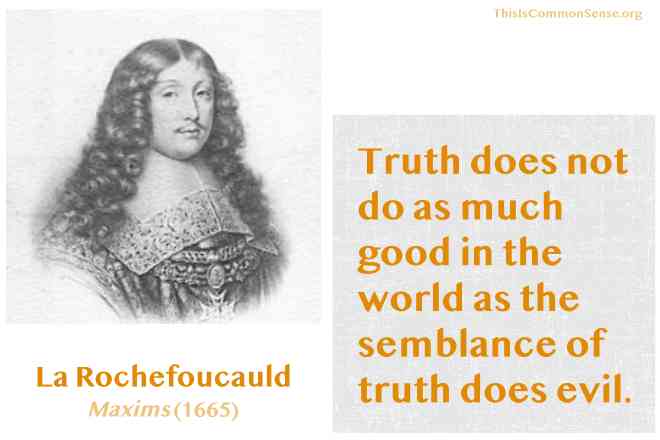
Truth does not do as much good in the world as the semblance of truth does evil.
François de La Rochefoucauld, 2nd Duke of La Rochefoucauld, Prince de Marcillac, Maxims (1665), no. 67 (Leonard Tancock, trans.)
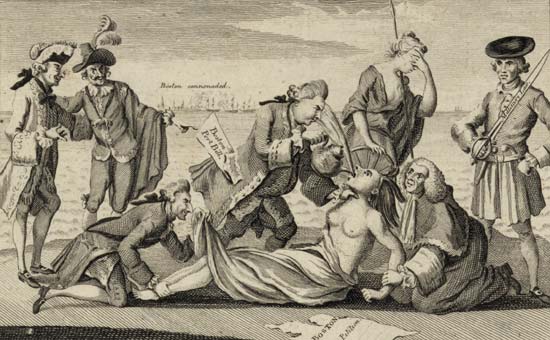
On March 24, 1765, the Kingdom of Great Britain passed the Quartering Act, which required the Thirteen Colonies to house British troops.
On the same date in 1855, slavery was abolished in Venezuela.
Yesterday, Paul Jacob explored the chief issues surrounding the fourth anniversary of “Fifteen Days to Flatten America.” He concluded by blaming mostly Fauci and Birx for the massive tyrannies and ineptitudes of the lockdowns and other measures associated with the pandemic.
While one of those names, Anthony Fauci, is more than familiar to readers of Common Sense with Paul Jacob, the other — Deborah Birx, the author of a memoir of the pandemic, Silent Invasion (2022) — is much less familiar. And it may be tempting to downplay her role.
But as a recent documentary argues, au contraire! She was key. Birx did the bulk of the damage. It was her bizarre reactions that led the federal government response.
Watch it and weep: “It Wasn’t Fauci — How the Deep State Really Played Trump”:
Yes, it is about the Deep State, but mostly about the dread Dr. Deborah Birx . . . and the perfidy of Vice President Mike Pence.
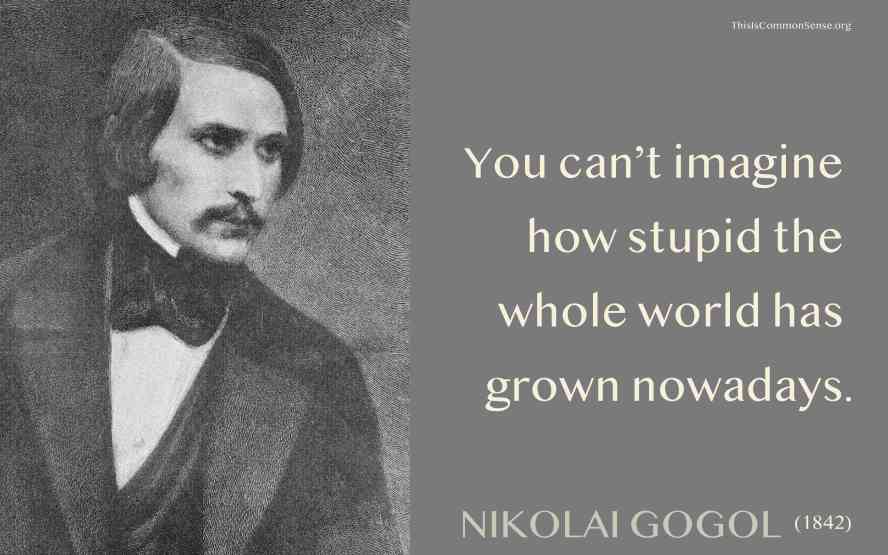
You can’t imagine how stupid the whole world has grown nowadays.
Nikolai Gogol, Dead Souls (1842). The same passage in D. J. Hogarth’s translation: “ As things are now, the world has grown stupid to a degree that passes belief.”
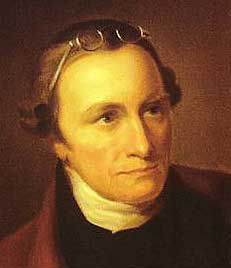
On March 23, 1775, Patrick Henry delivered his “Give me Liberty, or give me Death!” speech at St. John’s Church in Richmond, Virginia.
On this date in 1992, economist and social philosopher Friedrich August von Hayek died. He remains best known for his 1944 political tract The Road to Serfdom.

No state limited its lockdown measures to
The public rationale for the lockdowns had been to save hospitals from being swamped with COVID patients — though the Army Corps of Engineers had built emergency COVID care centers near pandemic hot spots around the country, which were unceremoniously dismantled, without having been used, even as governors continued their hysterics.
And tyrannies.
Out west in Washington, for example, Governor Inslee shut down the whole state with a March 24, 2020, order, and, on April 3, unilaterally extended it to May 4, despite the fact that most of the state had hardly experienced the virus yet. On May 29, the stay-at-home order was still in effect, with the governor dictating a county-by-county re-opening order that he fiddled with incoherently for the next year.
Across the country, most hospitals suffered
John Stossel just “celebrated” the four-year anniversary of the lockdowns with an article titled “‘15 Days To Slow the Spread’: On the Fourth Anniversary, a Reminder to Never Give Politicians That Power Again.” Mr. Stossel provides a concise litany of the idiocy of that brief, if far too long, epoch of . . . . what he calls
But does incompetence exhaust the fault?
At the beginning I had expressed caution, even suggesting a little lenience for our leaders. Then came the enormity of the mass liberticide.
It was President Trump who put out the “guidelines” for shutting down the country; it was Trump who stuck to his guns on the efficacy of the lockdown “mitigations.” Trump did so because he was mesmerized, perhaps, by Drs. Fauci and Birx — whom he had promoted into
Little did Trump know, however, that Fauci had funded the very disease he was allegedly fighting, and that Birx, privately, had pushed lockdowns not in good faith for reasons stated, but with every intention of pushing “longer and more aggressive interventions.”
Trump? Played, yes; incompetent, sure.
But Birx and Fauci? Malevolent. Evil. Pick the word.
This is Common Sense. I’m Paul Jacob.
Illustration created with Midjourney
See all recent commentary
(simplified and organized)
See recent popular posts
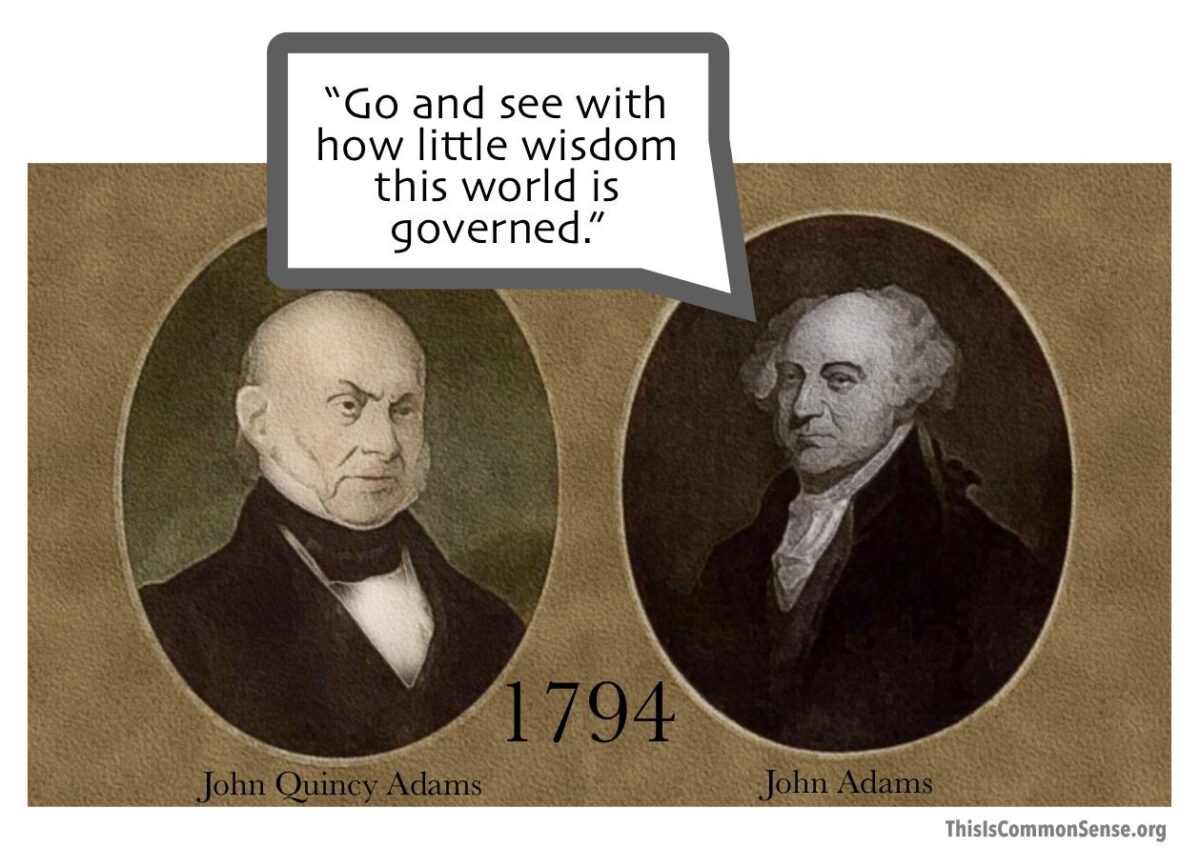
“Go and see with how little wisdom this world is governed.”
John Adams, in a letter to John Quincy Adams (received June 3, 1794), advising of a diplomatic position opening up. See Phyllis Lee Levin, The Remarkable Education of John Quincy Adams (2015), first page.