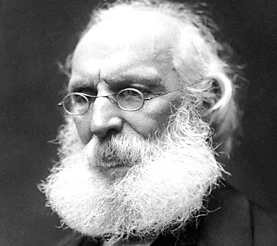
A weak man has doubts before a decision, a strong man has them afterwards.
Karl Kraus
A weak man has doubts before a decision, a strong man has them afterwards.
On December 21, 1620, William Bradford and the Mayflower Pilgrims landed on what is now known as Plymouth Rock in Plymouth, Massachusetts.
American settlers in Nacogdoches, Mexican Texas, declared their independence on December 21, 1826, starting the Fredonian Rebellion.
Avant-garde rock ’n’ roll guitarist, band leader, and composer Frank Zappa was born on this date in 1940. In 1985, Zappa testified before the United States Senate Commerce, Technology, and Transportation committee, attacking the Parents Music Resource Center or PMRC, a music organization co-founded by Tipper Gore, wife of then-senator Al Gore. Zappa was a passionate advocate for freedom of speech, self-education, political participation and the abolition of censorship. Describing his political views, Frank Zappa categorized himself as a “practical conservative,” or “independent.” He died in 1993.
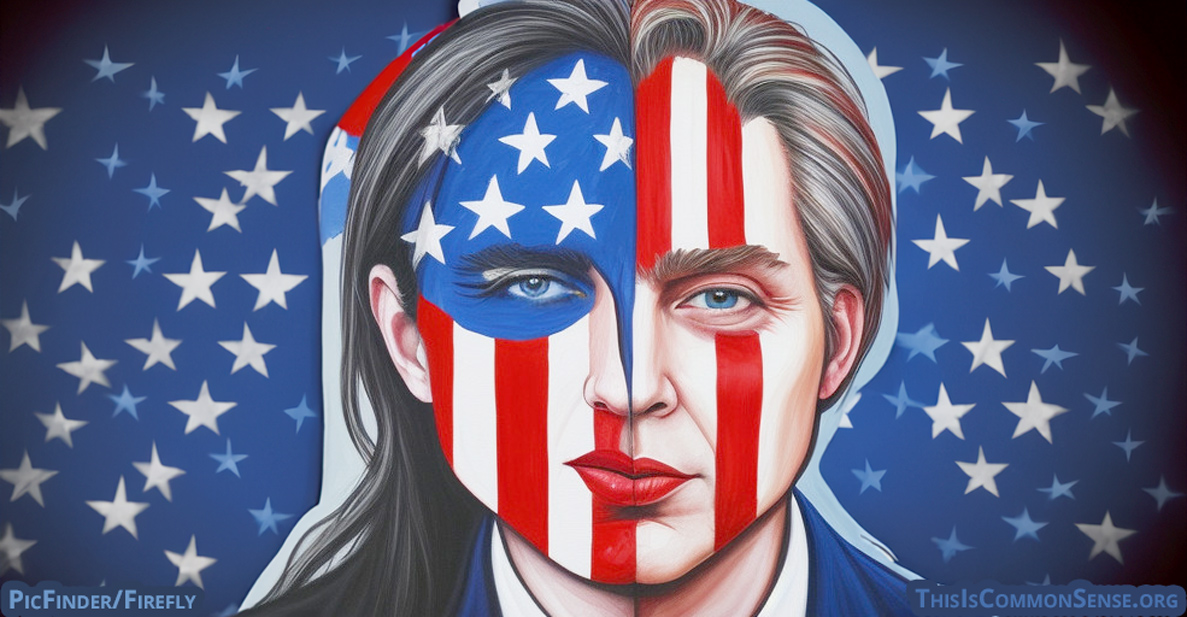
“A divided Colorado Supreme Court on Tuesday declared former President Donald Trump ineligible for the White House under the U.S. Constitution’s insurrection clause and removed him from the state’s presidential primary ballot,” wrote David Knowles for Yahoo News. This will, of course, induce a “showdown in the nation’s highest court to decide whether the front-runner for the GOP nomination can remain in the race.”
The idea — half plausible, I suppose — is that President Trump’s actions on January 6 spurred an insurrection attempt, therefore he is ineligible to run for any federal office.
But emphasize the half-plausible, since, no matter how often Democrats repeat it, the rally-turned-mini-riot-turned-incursion into the Capitol Building did not amount to anything like an insurrection. Capitol Hill interlopers on January 6 were neither prepared nor demonstrating a plan to overthrow the peaceful succession of power.
They certainly didn’t try to take over the government.
Nor has Mr. Trump been convicted of any such thing.
But, as we all know, this is a controversial matter falling mostly on partisan lines (the Colorado State Supreme Court being made up entirely of Democratic
The state-by-state lawsuits have been sponsored by progressive interest groups trying, desperately, to stop Donald Trump from pulling off a Grover Cleveland: returning to office after a fluke one-term “pause.”
Yet, even if the Supreme Court balks at putting down this too-clever-by-half-plausible scheme, the best Democrats could hope for is preventing Trump from running in blue states with blue courts. Trump might still win despite not being on some state ballots.
Or lose in an election obviously rigged because he is barred.
A recipe for deep distrust, resentment and anger.
This is Common Sense. I’m Paul Jacob.
Illustration created with PicFinder and Firefly
See all recent commentary
(simplified and organized)
See recent popular posts

Reading furnishes the mind only with materials of knowledge; it is thinking that makes what we read ours.
On December 20, 1740, Arthur Lee — Revolutionary Era diplomat, spy, and Virginia delegate to the Continental Congress — was born. He practiced law in London from 1770 to 1776, where he wrote polemics against slavery and in defense of the American colonies’ resistance to the Townshend acts and other tyrannical British policies.
He was brother to Richard Henry Lee and Francis Lightfoot Lee.
“Libertarian economics was a scam perpetrated by
the beneficiaries of the economic system that theywere defending . . . I think you need to ask: ‘Does this economic system produce a lot of Dollar Stores?’
And if it does, it’s not a system that you want, because it degrades people — and it makes their lives worse and it increases exponentially the amount of ugliness in
your society. And anything that increases ugliness is evil.
So if it’s such a good system, why do we have all these Dollar Stores?”
At Reason, Liz Wolfe fell for the same trap that has apparently ensnared Mr. Carlson. She defended progress in the U.S. since the time he was born. What?
Contra Liz Wolfe, and in defense of Tucker, I’d say we are indeed living in tough times. Inflation’s way up, the birth rate is down, life-expectancy’s dropping, and a whole lot of Americans struggle to pay bills and keep even, financially, much less “get ahead.” The proliferation of dollar stores shows that the upscale stores are too expensive for too many.
They are a refuge for the poor.
But are they evilly uglifying, though?
Perhaps not as pretty as Safeway or Target, but they’re clean and you can buy a can of soup for four bits, a dollar less than at an upscale market.
Are the rise of discount consumer goods stores, like Dollar Tree and Dollar General, especially hideous and indicative of a blow to . . . the American spirit?
Seems more revelatory of a weird elitist streak in Tucker.
And what does libertarian — free-market — economics have to do with it? Libertarian economists have opposed all the major drivers of the current system: central banking, deficit spending, sovereign debt accumulation, taxation for redistribution, subsidy. The policies that have truly “hollowed out” the last semblance of progress.
But Tucker blames libertarian economists’ defense of equity markets for not only social decline but Dollar Stores.
He’s fallen for the progressives’ perennial scam: see a problem in our mixed economy and blame the freer part . . . not the role of elitist schemers with political power.
This is Common Sense. I’m Paul Jacob.

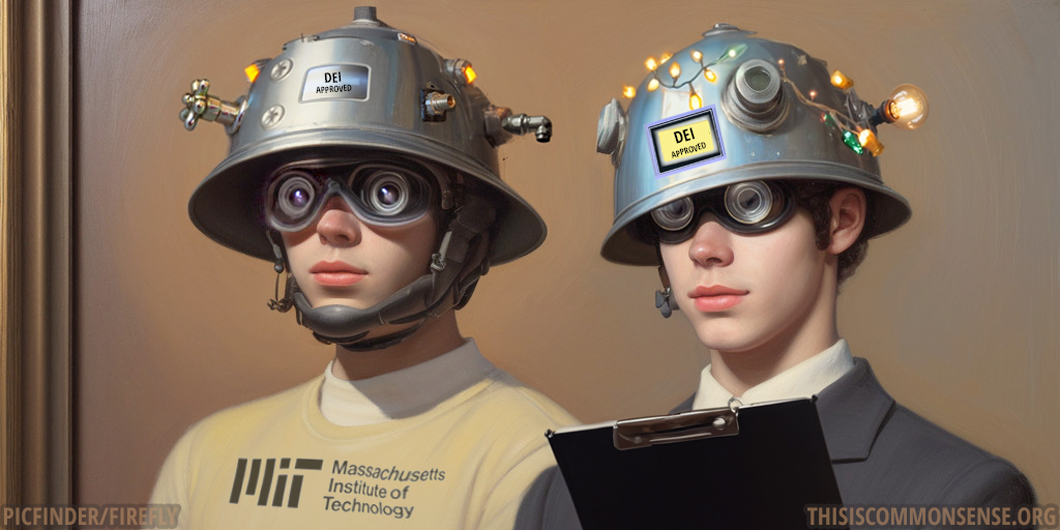
Illustration created with PicFinder and Firefly
See all recent commentary
(simplified and organized)
See recent popular posts
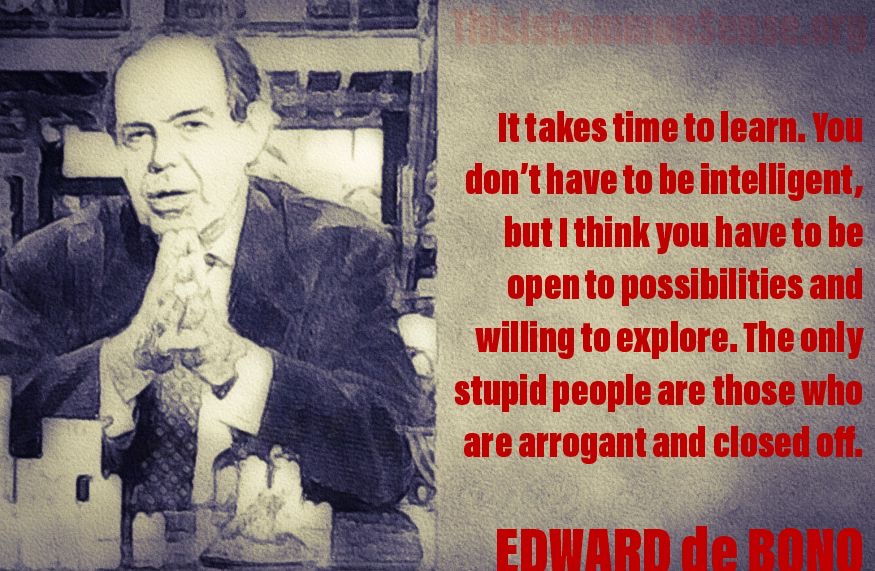
The books that help you the most are those which make you think the most.
Theodore Parker, as quoted in The Gigantic Book of Teachers’ Wisdom (2007) by Erin Gruwell and Frank McCourt, p. 496.
On December 19, 1776, Tom Paine published one of a series of pamphlets in the Pennsylvania Journal titled The American Crisis. Exactly one year later, George Washington’s Continental Army went into winter quarters at Valley Forge, Pennsylvania.
On December 19, 1828, Vice President of the United States John C. Calhoun penned the South Carolina Exposition and Protest, arguing against the Tariff of 1828, a key moment in what became known as the Nullification Crisis.
In Washington state, lawmakers hope to put an end to gas-powered landscaping. If they succeed, the ordinary activities of humble homeowners and businessmen — humble but determined to keep using Yardmax lawn mowers and Echo leaf blowers — would be criminalized.
Regulations instead of bombs will be the way. If you don’t follow the regulations, then you’ll be “bombed” with fines. Or jail time.
State Representative Amy Walen is pushing legislation, HB 1868, that would “prohibit engine exhaust and evaporative emissions from new outdoor power equipment,” a prohibition to take effect as early as January 1, 2026.
Persons using gas-powered equipment bought before the ban takes effect would presumably not be subject to fines or jail time. They might still be subject to investigation, though, if one of their grandfathered gas-powered tools looks too shiny.
And they might be at risk if they ignore the prohibition and buy post-January-2026-produced gas-powered mowers from out of state.
Exactly how the legislation would play out is hard to predict. But it does not look good for the average guy who just wants to keep his plot in shape.
Government agencies dealing with “natural or human-caused emergency events” would be exempt, at least initially. They wouldn’t have to worry about spending a year in jail for efficiently cutting the lawn.
Just everybody else.
This is Common Sense. I’m Paul Jacob.
Illustration created with PicFinder and Firefly
See all recent commentary
(simplified and organized)
See recent popular posts
Europe was a heap of swords piled as delicately as jackstraws; one could not be pulled out without moving the others.
Barbara W. Tuchman, The Guns of August, Chapter 2, “Let the Last Man on the Right Brush the Channel with His Sleeve” (p. 22).