Categories
free trade & free markets regulation too much government

The AB5 Agenda

AB5 is the code name for legislation passed in California a few years ago to kill freelance work. 

Ex-freelancers hate AB5; employers who can’t afford to convert contractors into regular employees hate AB5. 

Unions, on the other hand, love AB5; lawmakers also love AB5.

A California citizen initiative partly reversed it. Then the Ninth Circuit at least temporarily reversed the reversal.

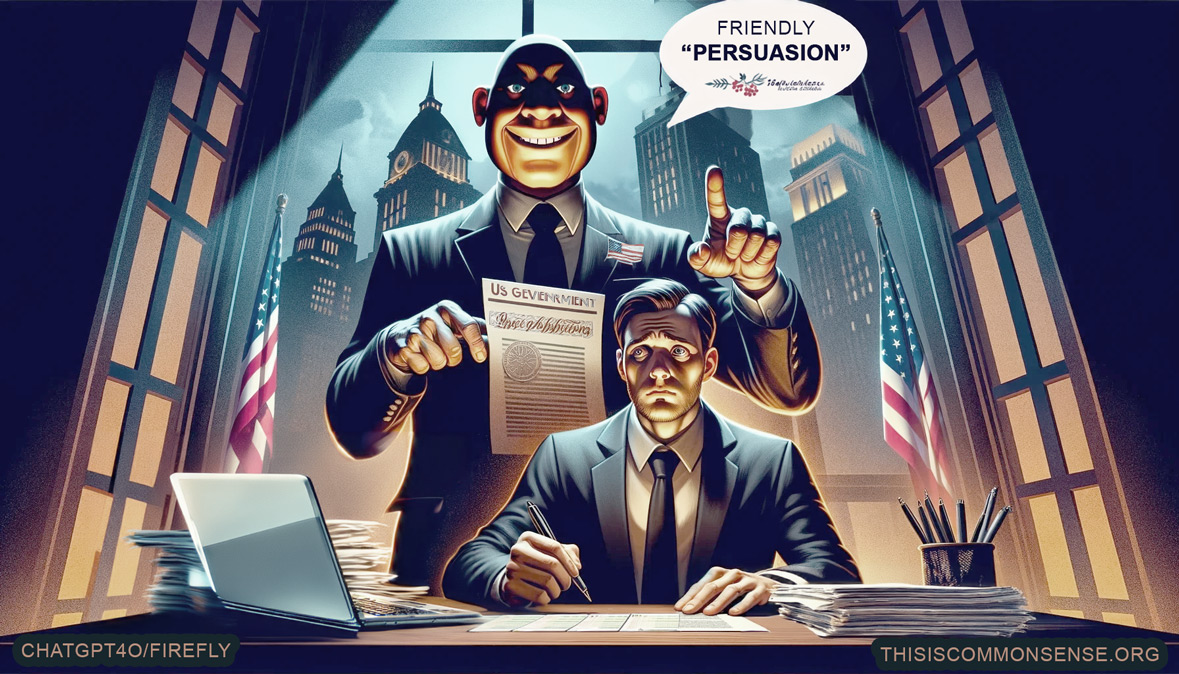
Though Democrats have made several attempts to bring it to the federal level, Congress has not passed a federal version of AB5. But now the Department of Labor is acting to impose a rule to challenge the status of many independent contractors, scheduled to take effect March 11. This AB5-like rule enunciates six criteria determining whether contract work may still be called contract work.

This affects what I do. One of my dozen jobs is citizen-initiative work. Various state governments have done all they can apart from comprehensive AB5-like rules to impede my ability to collaborate with petitioners to get citizen initiatives on the ballot. It is most efficient to pay these contractors per thing they do instead of earning a fixed salary or getting paid an hourly wage. 

Politicians and bureaucrats know this.

If the Labor Department’s new rule takes effect, will contractors working with me pass the test? Or will we all be thrown into chaos and confusion?

It is being challenged in court. 

Many voters — who are, after all, wage-earners or salaried employees — may not care very much; it may seem irrelevant to them. But it is time for them to inquire why some politicians and union bosses want to destroy the ability of freelancers to freely work for outfits short of becoming full-time employees.

For the ramifications will reach far beyond my niche “industry.”

This is Common Sense. I’m Paul Jacob.


PDF for printing

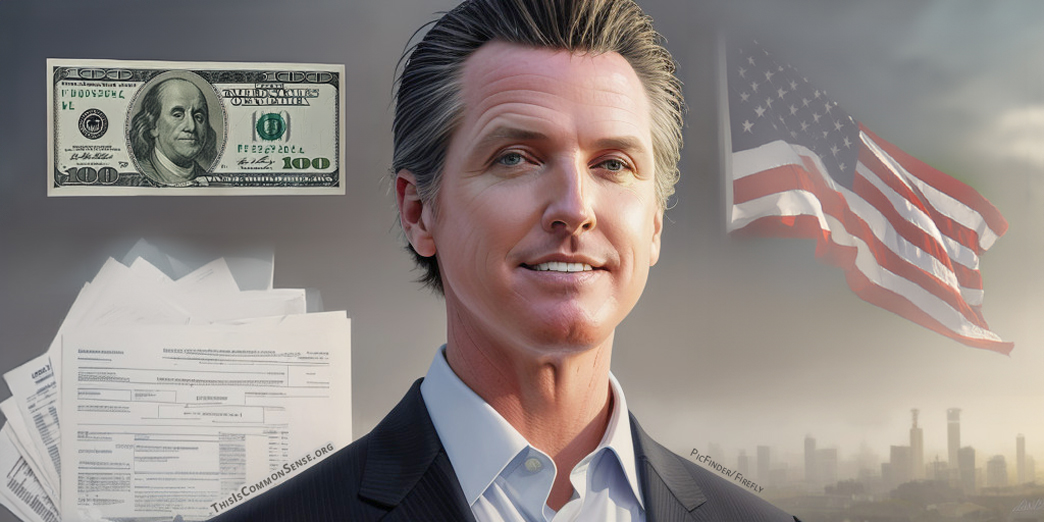
Illustration created with PicFinder and Firefly

See all recent commentary
(simplified and organized)
See recent popular posts
Categories
Thought

Giorgio de Santillana

The working of great administrations is mainly the result of a vast mass of routine, petty malice, self-interest, carelessness and sheer mistake. Only a residual fraction is thought.

Giorgio de Santillana, The Crime of Galileo (1958).
Categories
Today

Corn Law

On January 31, 1849, the Corn Laws were abolished in the United Kingdom, one of the most impressive and far-reaching anti-protectionist moves of all time. “Corn” stood for all grains, including wheat, oats, barley, etc.; the free-trade agitation by John Bright and Richard Cobden was one of the main impetuses for the reform.

On Jan. 31, 1865, the United States Congress proposed the Thirteenth Amendment to the U.S. Constitution, submitting it to the states for ratification. The Amendment’s main section reads: “Neither slavery nor involuntary servitude, except as a punishment for crime whereof the party shall have been duly convicted, shall exist within the United States, or any place subject to their jurisdiction.”

On Jan. 31, 1990, the first McDonald’s fast food restaurant opened in the Soviet Union. In 2022 they were all closed in protest of the Ukraine war.

Categories
general freedom regulation too much government

Unlimited Limits

Do politicians understand limits? 

They seem to have this notion that they may limit us every which way . . . with no natural or civilized limit set upon the limits they may impose.

Take California lawmaker Scott Wiener.

This state senator (District 11-D.) has introduced a bill to force carmakers to install a gadget limiting vehicle speed to a maximum of ten miles per hour above the speed limit. The murderous gadget would be installed starting with 2027 car models.

I foresee problems. Hence that word “murderous.” Wouldn’t it be kind of dumb to have to go slower than the traffic all around you if that other traffic consists of pre-2027 vehicles going markedly faster than the speed limit?

Also, mightn’t emergency vehicles often have good reason to zip along faster than this gadget-imposed maximum?

Not to worry. The Hill reports that emergency vehicles would be exempt, “and the California Highway Patrol could authorize the system’s disabling in certain other cases.”

Touble is, any vehicle can, at any time, become an “emergency vehicle” — if an emergency requires it to move faster than the Wiener-imposed limit. Do you then call up the California Highway Patrol and ask that the gadget be disabled? What if you have five seconds to act? That’s not much time to beg the California Highway Patrol to give you control over your own property.

I detect hazards in letting government control every aspect of our lives and every movement we make. Can we put on the brakes, please?

This is Common Sense. I’m Paul Jacob.


PDF for printing

Illustration created with PicFinder and Firefly

See all recent commentary
(simplified and organized)
See recent popular posts
Categories
Thought

George Santayana

The mind celebrates a little triumph whenever it can formulate a truth.

George Santayana, The Life of Reason: The Phases of Human Progress; Vol. IV, Reason in Art (1906).
Categories
Today

Non-Violence … and Violent Reaction

On Jan. 30, 1948, Indian leader Mohandas K. Gandhi, known for his non-violent, non-cooperation struggle for freedom and national independence, was assassinated by a Hindu extremist.

On Jan. 30, 1956, Martin Luther King, Jr.’s home was bombed in retaliation for his work on the Montgomery Bus Boycott.

On Jan. 30, 1972, British soldiers killed fourteen unarmed civil rights marchers in Northern Ireland in what came to be known as “Bloody Sunday.” Soldiers shot 26 unarmed protesters and bystanders – 13 males, seven of whom were teenagers, died immediately, while another man died of his injuries nearly five months later. In the immediate aftermath, an investigation by the British Government largely cleared the soldiers and British authorities of blame. A second investigation begun in 1998, released a report in 2010 declaring that all of those shot were unarmed, and that the killings were both “unjustified and unjustifiable.”


Not quite fitting today’s “non-violence elicits violence” theme, on January 30, 1835, Richard Lawrence attempted to shoot former military leader and then-President Andrew Jackson, but failed. He was subdued by a crowd, including several congressmen. That marked the first attempt on the life of a sitting U.S. president.

Categories
free trade & free markets regulation too much government

SAD Regulators

Americans are getting sicker and fatter on government-approved, corporate-made foodstuffs, yet government continues to crack down on the sale of natural and home-made foods.

The classic case is raw, whole milk. I’ve talked about this before. The most recent case is from Amish country, where the State of Pennsylvania raided a farm “on suspicion of selling ‘illegal milk,’ among other products,” explains The Epoch Times, and the farm “is being sued by the Pennsylvania Office of the Attorney General and Pennsylvania Department of Agriculture.” 

The Amish farm “has been ordered to halt all sales of its dairy products, inspiring widespread anger over what critics have called a blatant example of government overreach.”

At issue is government interference in farmers and customers freely choosing to skip the major grocery outlets multinational companies and dealing with each other on a local, free-market basis. “Capitalist acts between consenting adults,” as Robert Nozick put it.

But it’s especially galling when placed in the wider context of the FDA’s and USDA’s obvious failure to produce a healthier populace. Though the state’s attorney general insists that “we cannot ignore the illnesses and further potential harm posed by [the] distribution of these unregulated products,” the illnesses caused by what many call the Standard America Diet (SAD) go unnoticed and unregistered as such. 

One standard for “the market,” another for the regulators.

Meanwhile, the State of Wisconsin is pushing a new bill to impose a $20,000 annual sales cap on participants in the state’s cottage food industry, “one of the most restrictive in the nation,” explains Suranjan Sen, an attorney at the Institute for Justice — a legal aid outfit often mentioned in these pages.

The very point of the law is to protect brick-and-mortar grocery and baked-goods stores — not the health of consumers. It has the backing of powerful lobbyists.

Looking for healthier foods and healthier economies? Don’t look to government.

This is Common Sense. I’m Paul Jacob.


PDF for printing

Illustration created with Midjourney

See all recent commentary
(simplified and organized)
See recent popular posts
Categories
Thought

Henry David Thoreau

The law will never make men free; it is men who have got to make the law free.

Henry David Thoreau, “Slavery in Massachusetts” (1854).

Categories
Today

Gallatin

On January 29, 1761, Albert Gallatin was born. Gallatin served as the fourth United States Secretary of the Treasury — a post in which he served longer than any other in American history — advanced the anthropological and linguistic study of native Americans, and became the subject of a biography by Henry Adams. Called the “father of American ethnology,” he has been honored with a 1967 U.S. stamp as well as many place names, including the Gallatin National Forest in Montana.

Categories
privacy property rights Update

Update: The “No Duh” Element in Private Property

In yesterday’s update, we directed your attention to a court decision that showed some progress in preventing the federal government from outright theft via the medieval civil asset forfeiture technique. The Epoch Times reported. But there was a passage we did not quote:

“Plaintiffs do have a significant privacy interest in their safe deposit boxes, given that their conduct indicates they intended their items to be ‘preserved . . . as private,’ and society generally views the privacy expectations of items in safe deposit boxes as reasonable,” Judge Smith wrote.

Yes, Judge Smith, we do have “privacy interests” in our . . . private property.

It is right there in the term, private property.

The conceptual fight to reclaim our rights can be a tough slog through the obvious.