Categories
crime and punishment First Amendment rights general freedom

Amazon’s Wide, Flowing, Constricted River

Under the U.S. Constitution, the federal government is prohibited from censoring speech.

It often tries anyway. 

One of the ways, as we’ve learned, is by pressuring social media and other companies to suppress speech. Since the federal government can make life very difficult for any company, some companies are understandably reluctant to ignore such pressure.

Amazon did not. When asked by the Biden administration in the person of one Andrew Slavitt, an advisor for the White House’s COVID-19 “response team,” the company agreed to hide books critical of the COVID-19 vaccines

Among the emails obtained by the House Judiciary Committee is Slavitt’s March 2, 2021, communication with Amazon complaining that “if you search for ‘vaccines’ under books, I see what comes up [books criticizing the vaccine]. . . . [I]f that’s what’s on the surface, it’s concerning.”

Amazon was reluctant to intervene “manually” to demote such books and worried privately that rigging the game against particular books because of their viewpoints might undermine the company. But it caved nonetheless, soon modifying its algorithm and advising the White House that “we did enable Do Not Promote for anti-vax books whose primary purpose is to persuade readers vaccines are unsafe or ineffective.”

Are such decisions consistent with a “consumer-centric” approach that easily allows people to find just what they’re looking for? Which is Amazon’s big selling point?

Of course not.

But as it has done so often over the years, our government was putting its thumb on the scale.

This is Common Sense. I’m Paul Jacob.

Amazon, censor, censorship, surveillance, mind control

PDF for printing

Illustration created with PicFinder and Firefly

See all recent commentary
(simplified and organized)
See recent popular posts
Categories
Thought

Stephen Crane

The wayfarer, 
Perceiving the pathway to truth, 
Was struck with astonishment. 
It was thickly grown with weeds. 
“Ha,” he said, 
“I see that none has passed here 
In a long time.”
Later he saw that each weed 
Was a singular knife. 
“Well,” he mumbled at last, 
“Doubtless there are other roads.”

Stephen Crane, from War Is Kind and Other Lines (1899).
Categories
Today

Scharansky Freed

On Feb. 12, 1986, Soviet human rights activist Anatoly Scharansky was released after spending eight years in Soviet prisons and labor camps. The amnesty deal was arranged at a summit meeting between Soviet leader Mikhail Gorbachev and President Ronald Reagan. Scharansky had been imprisoned for his campaign to win emigration rights for Russian Jews — who had been forbidden to practice Judaism in the USSR.

On Feb. 12, 1909, the National Association for the Advancement of Colored People (NAACP) was founded.

On Feb. 12, 1593, approximately 3,000 Korean defenders led by General Kwon Yul successfully repelled more than 30,000 invading Japanese forces in the Siege of Haengju.

Categories
Thought

Seneca the Younger

Apply reason to difficulties; harsh circumstances can be softened, narrow limits can be widened, and burdensome things can be made to press less severely on those who bear them cleverly.

Seneca, epistle to Serenus — translated and published as Tranquillity of Mind and Providence (1900) by William Bell Langsdorf.
Categories
Today

Mandela Released

On Feb. 11, 1990, after 27 years in prison, Nelson Mandela was released by South African authorities.

Mandela had joined the African National Congress (ANC) in 1944, becoming deputy national president of the group in 1952. Arrested for treason in 1961, he was acquitted — but then arrested again in 1962 for illegally leaving the country. Convicted and sentenced to five years at Robben Island Prison, he was put on trial again in 1964 on charges of sabotage. He was convicted and sentenced to life in prison along with several other ANC leaders.

In 1989, F.W. de Klerk became South African president and began dismantling apartheid. De Klerk lifted the ban on the ANC, suspended executions, and in February 1990 ordered the release of Nelson Mandela.

Mandela subsequently led the ANC in negotiating an end to apartheid and the establishment of a multiracial government. In 1993, Mandela and de Klerk were jointly awarded the Nobel Peace Prize. One year later, the ANC won the country’s first free elections, and Mandela was elected South Africa’s president.

Categories
Thought

Simone Weil

If a captive mind is unaware of being in prison, it is living in error. If it has recognized the fact, even for the tenth of a second, and then quickly forgotten it in order to avoid suffering, it is living in falsehood. Men of the most brilliant intelligence can be born, live and die in error and falsehood. In them, intelligence is neither a good, nor even an asset. The difference between more or less intelligent men is like the difference between criminals condemned to life imprisonment in smaller or larger cells. The intelligent man who is proud of his intelligence is like a condemned man who is proud of his large cell.

Simone Weil, Human Personality (1943), p. 69.
Categories
Today

The Twenty-Fifth

On Feb. 10, 1967, the 25th Amendment to the U.S. Constitution was ratified by Nevada, the necessary 38th state to do so. The amendment sets the process for presidential succession, and reads:

Section 1. In case of the removal of the President from office or of his death or resignation, the Vice President shall become President.

Section 2. Whenever there is a vacancy in the office of the Vice President, the President shall nominate a Vice President who shall take office upon confirmation by a majority vote of both Houses of Congress.

Section 3. Whenever the President transmits to the President pro tempore of the Senate and the Speaker of the House of Representatives his written declaration that he is unable to discharge the powers and duties of his office, and until he transmits to them a written declaration to the contrary, such powers and duties shall be discharged by the Vice President as Acting President.

Section 4. Whenever the Vice President and a majority of either the principal officers of the executive departments or of such other body as Congress may by law provide, transmit to the President pro tempore of the Senate and the Speaker of the House of Representatives their written declaration that the President is unable to discharge the powers and duties of his office, the Vice President shall immediately assume the powers and duties of the office as Acting President.

Thereafter, when the President transmits to the President pro tempore of the Senate and the Speaker of the House of Representatives his written declaration that no inability exists, he shall resume the powers and duties of his office unless the Vice President and a majority of either the principal officers of the executive department or of such other body as Congress may by law provide, transmit within four days to the President pro tempore of the Senate and the Speaker of the House of Representatives their written declaration that the President is unable to discharge the powers and duties of his office. Thereupon Congress shall decide the issue, assembling within forty-eight hours for that purpose if not in session. If the Congress, within twenty-one days after receipt of the latter written declaration, or, if Congress is not in session, within twenty-one days after Congress is required to assemble, determines by two-thirds vote of both Houses that the President is unable to discharge the powers and duties of his office, the Vice President shall continue to discharge the same as Acting President; otherwise, the President shall resume the powers and duties of his office.

Categories
Accountability folly national politics & policies

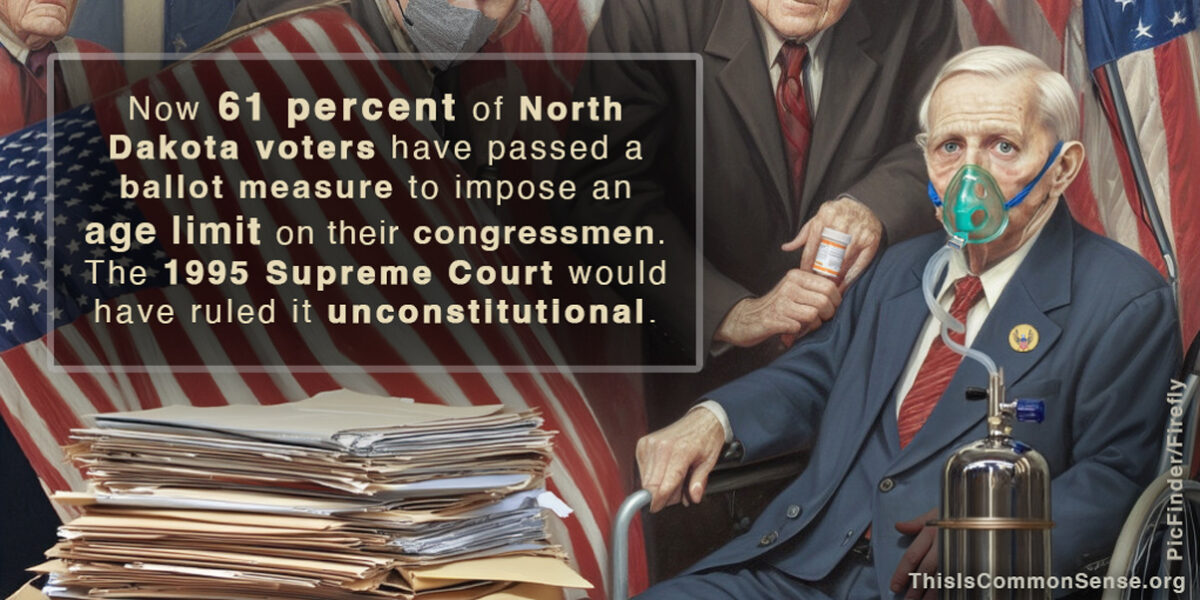
Sympathetically Diminished

“I’m sympathetically diminished.”

That’s how legal analyst Jonathan Turley described President Joe Biden’s “victory lap” over news that special counsel Robert Hur would not charge Mr. Biden with felonies for his “willful” mishandling and disclosure of classified documents. 

You see, in the special counsel’s “searing” 300-plus-page report, one reason for not prosecuting Sleepy Joe is that investigators found our president’s “memory was significantly limited.” In interviews, Biden couldn’t “remember when his son Beau died,” CNN explained, “nor the years he was vice president.”

Sure, it’s hard to testify about past criminal willfulness if one cannot remember the past. 

“Mr. Biden would likely present himself to a jury, as he did during our interview of him,” the special counsel points out, “as a sympathetic, well-meaning, elderly man with a poor memory.”

Ah, our 81-year-old commander-in-chief! Where did I put those nuclear codes?

Mr. Biden is “someone for whom many jurors will want to identify reasonable doubt.”

Yes, I certainly have my own misgivings about our commander’s . . . er, cognitive skills. How can a man incompetent to stand trial possibly be competent to preside over the federal government?

Biden’s personal attorney Bob Bauer and White House counsel Richard Sauber expressed their own doubts “that the report’s treatment of President Biden’s memory is accurate or appropriate.”

“Appropriate”?

They claim “a lack of recall” is “a commonplace occurrence among witnesses.”

If not leaders of the free world.

Is our major party choice for president going to be between a sitting chief executive who cannot be charged for criminal conduct because he is “not all there” and one who can be and is being prosecuted, strangely disadvantaged by his pre-octogenarian mental acuity?

This is Common Sense. I’m Paul Jacob.


PDF for printing

Illustration created with PicFinder and Firefly

See all recent commentary
(simplified and organized)
See recent popular posts
Categories
Thought

Walter Bagehot

In modern days, in civilised days, men’s choice determines nearly all they do. But in early times that choice determined scarcely anything.

Walter Bagehot, Physics and Politics (1872), p. 29.
Categories
ideological culture judiciary property rights

Must Your Town Become San Francisco?

I love San Francisco. Such a beautiful city, I thought on a recent visit. 

But then I turned the corner and discovered, once again, that all-important skill of rapidly averting one’s eyes. 

Where was an escape route?

The city by the bay, like other towns with mild weather, is always going to get more than its share of what we used to call hobos, or — more accurately — bums. Sleeping on the streets there must beat sleeping on Chicago streets in the winter.

Still, Frisco gives added benefits to those living on its streets. Indeed, vagrants can become less vagrant by setting up encampments in public, apparently wherever, toilet facilities optional. An impending Supreme Court ruling may push other cities in the same direction.

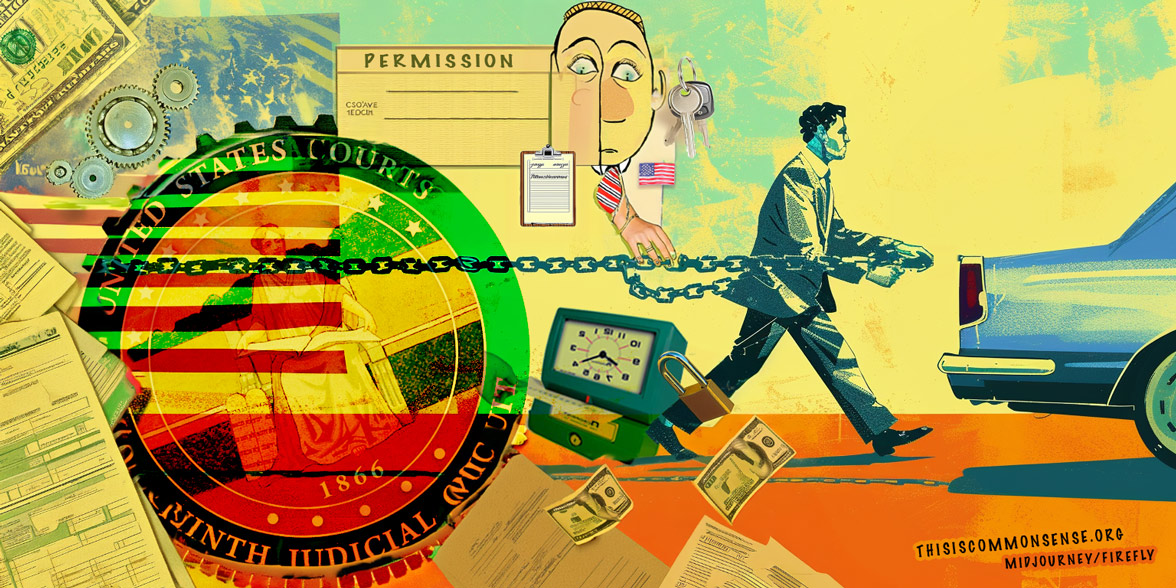
The case, Johnson v. City of Grants Pass, Oregon, has reached the U.S. Supreme Court.

Three vagrants challenged a Grants Pass ordinance prohibiting them “from using a blanket, pillow, or cardboard box for protection from the elements”; in other words, from setting up camp in the street.

In response, the Ninth Circuit blocked Grants Pass from enforcing the ordinance unless it provides shelter to those kicked off the street. Many towns cannot afford such expenditures, especially if the vagrant population is of any great size.

You get more of what you subsidize. If, obeying such rulings, towns do stretch budgets to prevent encampments, they thus encourage vagrants from nearby lands to move into town to get the taxpayer-funded accommodations.

The Ninth Circuit decision applies to nine states. Now the Supreme Court will either throw out the decision; revise it; or, upholding it, begin to consign all of us in all states to the fate of San Francisco.

This is Common Sense. I’m Paul Jacob.


PDF for printing

Illustration created with PicFinder and Firefly

See all recent commentary
(simplified and organized)
See recent popular posts