Categories
local leaders too much government

Brave New Budgets

“Stay here and you will suffer.” 

That’s the message Denver’s Newcomer Communications Liaison Andres Carrera delivered to migrants last month, according to the city’s NBC 9 News.

“You don’t have to walk anywhere, we can buy you a free ticket,” Carrera offered. “You can go to any city,” he said, mentioning New York and Chicago, specifically. 

“We can take you up to the Canadian border, wherever!”

Denver is now preparing to spend $90 million on migrant programs this year. 

In the last fiscal year, New York City spent $1.5 billion “for asylum seeker shelter and services,” and those expenses are going up. Chicago’s “City Council is set to vote on spending another $70 million in city funds for migrant services,” Block Club Chicago reported last week, “just five months after Mayor Brandon Johnson’s 2024 budget allocated $150 million for new arrivals this year.”

We hear about the costs of the border crisis; these whopping numbers certainly clarify that matter. 

Still, something else caught my attention. 

Denver is making a 2.5 percent cut to most city agencies, while reducing the police department budget 1.9 percent, an $8.4 million dollar decrease for cops. Some charge that’s de-funding the police.

“The City of Denver’s adjustment to the Denver Police Department’s budget was carefully crafted with safety leaders and Mayor [Mike] Johnston,” a spokesperson explained, “to ensure there would be no impact to the department’s public services,” 

Crafted with care. And having precisely zero impact.

Imagine had you or I suggested to politicians and government officials that we slice millions of dollars from their budgets. We’d be accused of gutting education and undermining public safety . . . if not starving the children.

Who knew it could be so easy and painless for them?

This is Common Sense. I’m Paul Jacob.


PDF for printing

Illustration created with PicFinder and Firefly

See all recent commentary
(simplified and organized)
See recent popular posts

Categories
Thought

Immanuel Kant

The civil state regarded purely as a lawful state, is based on the following a priori principles:

• The freedom of every member of society as a human being.
• The equality of each with all the others as a subject.
• The independence of each member of a commonwealth as a citizen.

These principles are not so much laws given by an already established state, as laws by which a state can alone be established in accordance with pure rational principles of external human right.

Immanuel Kant, Theory and Practice (1791).
Categories
Today

The Kant Tricentennial

On April 22, 1724, philosopher Immanuel Kant was born.

Aside from being the pre-eminent modern philosopher and originator of transcendental idealism, Kant was also a major figure of Enlightenment thought, a classical liberal, and the originator of the notion of the Categorial Imperative. He was an early and important astronomical theorist in his early career, but produced his greatest works towards the end of his life, including The Critique of Pure Reason and The Groundwork for the Metaphysics of Morals. He was also author of the 1795 essay “Perpetual Peace: A Philosophical Sketch.”

Arthur Schopenhauer is widely known as an admiring and astute critic of Kant’s thought, while philosophical opponents include Friedrich Nietzsche and Ayn Rand. Kant’s approach to ethics continues to excite interest today, with some of the revival a result of the work of John Rawls.

Kant died on February 12, 1804, in Königsberg, Prussia (now Kaliningrad, Russia), where he had lived the bulk of his life.

Categories
Update

COVID Response Under Continuing Fire

What did they know and when did they know it?

This classic question, derived from Senator Howard Baker and the Watergate brouhaha of the 1970s, continues to echo as we uncover each new scandal. But no one is calling the pandemic debacle as “COVIDgate” or “WuhanGate” or even “FauciGate,” for the scandal is broad.

How broad? In Britain, a very small minority is getting a handle on it:

In America, keeping track of all the pieces has been an ongoing issue for a number of podcasters, not least of whom is Tom Woods, whose book Diary of a Psychosis (2023) is itself a good indicator of where we are at. A recent podcast of his (“Ep. 2481 Yale’s Harvey Risch: The Corruption of American Medicine”) shows just how daunting a task this endeavor can be.

Categories
Today

F-Word Defined

Nowadays, all sorts of people call their political opponents “fascist,” often on the shakiest of rationales. Well, The Manifesto of Fascist Intellectuals was first published in Il Mondo, then by most Italian newspapers on April 21, 1925 — the national, anniversary-day celebration of the Founding of Rome (ca. April 21, 753 BC).

It might be a good idea to consult this original document, for a good idea what politics’ “f-word” originally meant:

Fascism was . . . a political and moral movement at its origins. It understood and championed politics as a training ground for self-denial and self-sacrifice in the name of an idea, one which would provide the individual with his reason for being, his freedom, and all his rights. The idea in question is that of the fatherland. It is an ideal that is a continuous and inexhaustible process of historical actualization. It represents a distinct and singular embodiment of a civilization’s traditions which, far from withering as a dead memory of the past, assumes the form of a personality focussed on the end towards which it strives. The fatherland is, thus, a mission.

The manifesto was written by Giovanni Gentile, in support of the regime of Benito Mussolini (pictured above).

Less than two weeks later, on May 1, 1925, Il Mondo published philosopher Benedetto Croce’s The Manifesto of the Anti-Fascist Intellectuals.

Categories
Thought

Ursula K. Le Guin

You can’t crush ideas by suppressing them. You can only crush them by ignoring them. By refusing to think, refusing to change. And that’s precisely what our society is doing!

Ursula K. Le Guin, The Dispossessed (1974), Chapter 6.
Categories
Thought

Ursula K. Le Guin

Coercion is the least efficient means of obtaining order.

Ursula K. Le Guin, The Dispossessed (1974), Chapter 5.
Categories
Today

New Amsterdam

On April 20, 1657, freedom of religion was granted to the Jews of New Amsterdam, which was later renamed New York City.

Categories
Fifth Amendment rights general freedom international affairs

Brussels Conference Squelched

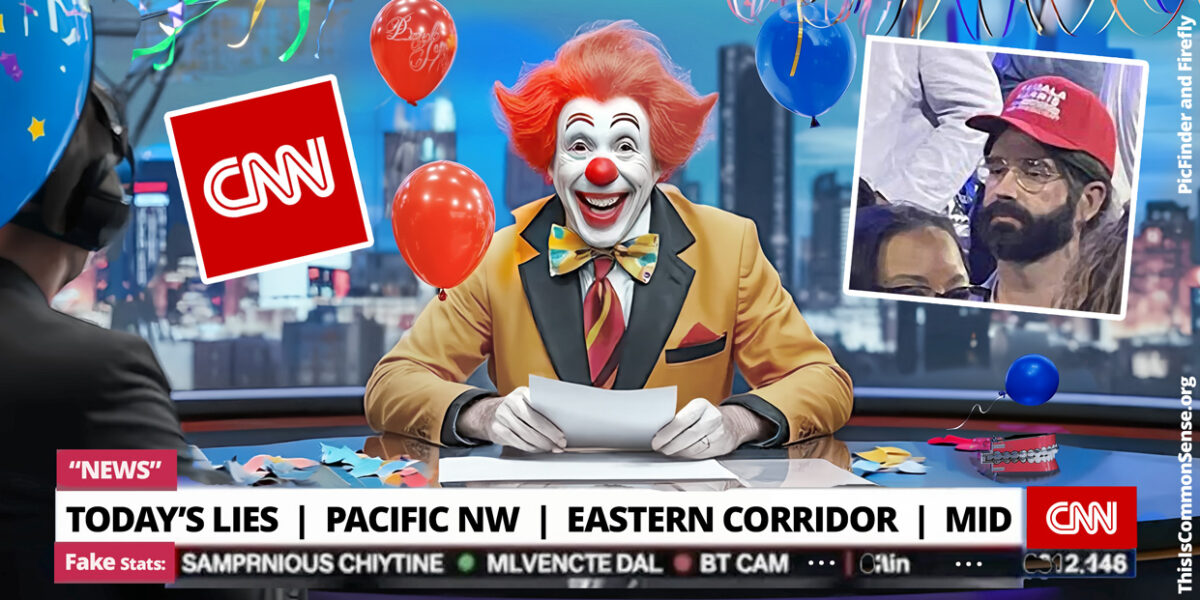
What happened in Brussels?

“In Brussels, in the heart of the European Union, in a western liberal democracy, we’re unable to have a conversation about identity, migration, borders, family, and security without facing attempts to have it shut down,” says Matt Goodwin, a British professor.

The mayor of a Brussels district, Emir Kir, had ordered the shutdown of the National Conservatism Conference in order, he said, to “guarantee public safety.”

But Kir also stated the real reason, that in his neck of the woods “the far right is not welcome.” He apparently disagrees with viewpoints to be elaborated at the conference.

Police took steps to stymie would-be attendees.

Prime Minister of Hungary Viktor Orbán said: “The last time they wanted to silence me with the police was when the Communists set them on me in ’88. We didn’t give up then and we will not give up this time either!”

This is a more open targeting of political speech than erasing the “misinformation” of social media posts. Does it signal a new strategy throughout Europe?

Hard to say. The immediate reaction of other European politicians, including many on the left, was dismay and shock that anybody would attempt such a thing. 

“Banning political meetings is unconstitutional. Full stop,” proclaims the Belgian prime minister.

“Extremely disturbing,” says a British spokesman.

Could be sincere; could be a realization that “Uh oh, we’ve gone too far”; could be a mixture of both.

The next question: will it happen again?

This is Common Sense. I’m Paul Jacob.


PDF for printing

Illustration created with PicFinder and Firefly

See all recent commentary
(simplified and organized)
See recent popular posts
Categories
Thought

William Graham Sumner

Certain ills belong to the hardships of human life. They are natural. They are part of the struggle with Nature for existence. We cannot blame our fellow-men for our share of these. My neighbor and I are both struggling to free ourselves from these ills. The fact that my neighbor has succeeded in this struggle better than I constitutes no grievance for me.

William Graham Sumner, What Social Classes Owe to Each Other (1883).