Categories
election law national politics & policies

The Impossible Dream ID

The SAVE America Act, formerly known as the Safeguard American Voter Eligibility (SAVE) Act, may get a vote this week on the floor of the U.S. House.

I like the bill’s two key provisions: Voter ID and proof of citizenship.

But Senate Minority Leader Chuck Schumer (D-NY) has already announced the bill “dead on arrival,” even with House passage, as Democrats will filibuster to block a Senate vote. 

“According to an August 2025 Pew Poll, 95 percent of Republicans and 71 percent of Democrats favor voter ID,” reported CNBC. “A 2024 Gallup poll found that 84 percent of Americans support voter ID and 83 percent support proof of citizenship to register to vote.”

Sunday, on ABC’s This Week with[out] George Stephanopoulos, co-anchor Jonathan Karl detailed the public polling before asking Sen. Adam Schiff (D-Calif.): “What about the idea of voter I.D., a photo I.D. being required to vote?”

“It’s still going to be something that disenfranchises people,” replied Schiff, those “that don’t have the proper real I.D., driver’s license I.D., that don’t have the I.D. necessary to vote, even though they are citizens. This is another way to simply try to suppress the vote.”

Sen. Jon Ossoff (D-Ga.) opposes voter ID, too . . . yet he requires government-issued photo identification to attend his campaign events. 

Years back, then-Vice-President Kamala Harris warned that “in some people’s mind [voter ID] means you’re gonna have to Xerox or photocopy your ID to send it in to prove you are who you are. Well, there’re a whole lot of people, especially people who live in rural communities, who don’t — there’s no Kinko’s, there’s no Office Max near them. Of course, people have to prove who they are. But not in a way that makes it almost impossible for them to prove who they are.”

Seems Democrat leaders cannot imagine any possible system of checking ID or determining citizenship. Even though the rest of the democratic world does it without a hitch. 

This is Common Sense. I’m Paul Jacob.


* The key action is in the states, as this headline in Michigan last week attests: “While Washington Argues Over Proof-of-Citizenship Voting Rules, Michigan Grabs the Wheel.”

PDF for printing

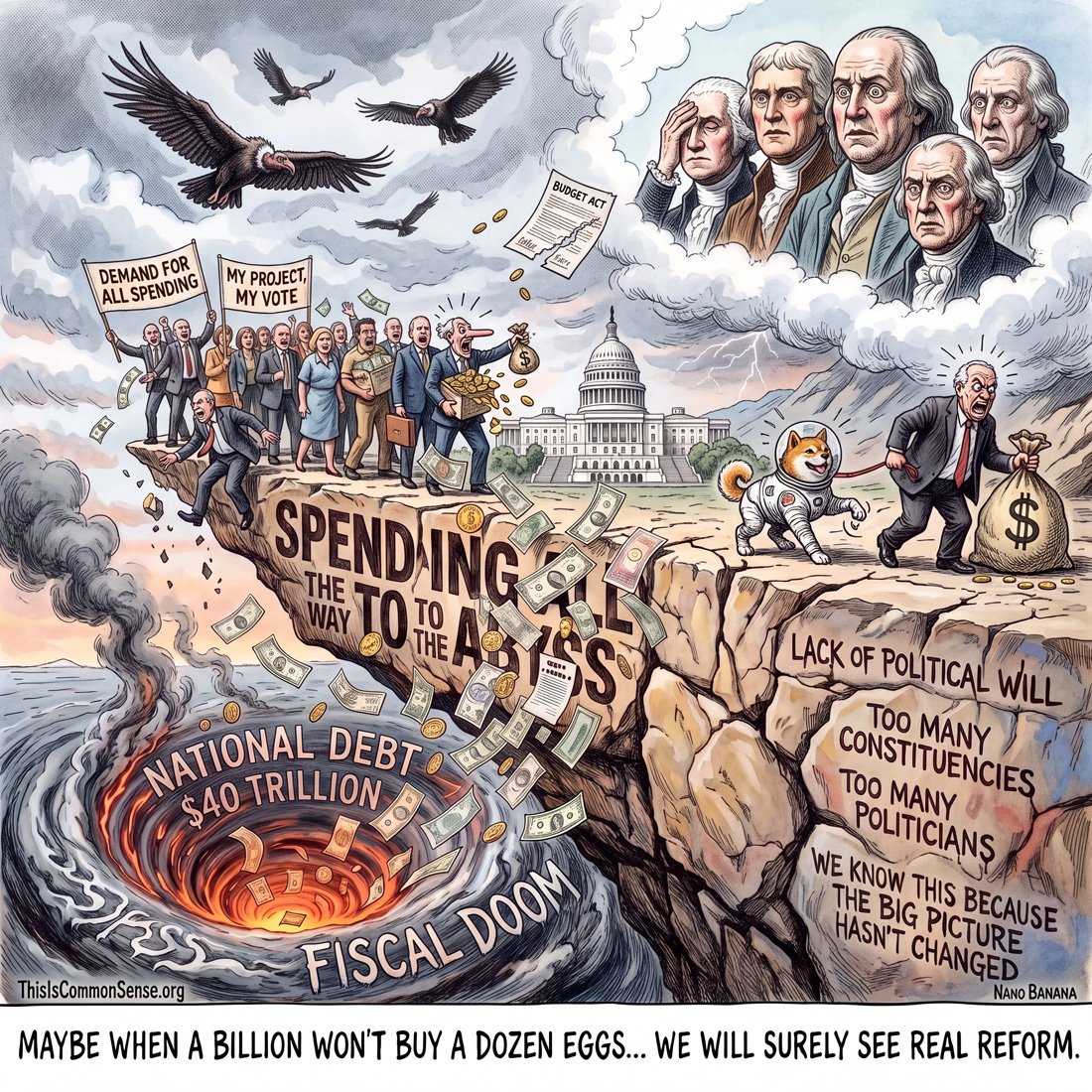
Illustration created with Nano Banana

See all recent commentary
(simplified and organized)
See recent popular posts

Categories
Thought

Thomas Sowell

Since risky investments usually pay more than safer investments, the incentive is for a government-supported enterprise to take bigger risks, since they get more profit if the risks pay off and the taxpayers get stuck with the losses if not.

Thomas Sowell, “Bailout Politics,” September 30, 2008.

Categories
Today

Twenty-fifth Amendment

On February 10, 1967, the 25th Amendment to the United States Constitution was ratified. Submitted to the states on July 6, 1965, by the 89th Congress, it was adopted on the day the requisite number of states ratified it — the 38th, which was in this case Nevada. The Amendment deals with presidential disability and succession in cases of emergency or inability to perform the constitutional duties of the office.

The text reads:

Section 1. In case of the removal of the President from office or of his death or resignation, the Vice President shall become President.
Section 2. Whenever there is a vacancy in the office of the Vice President, the President shall nominate a Vice President who shall take office upon confirmation by a majority vote of both Houses of Congress.
Section 3. Whenever the President transmits to the President pro tempore of the Senate and the Speaker of the House of Representatives his written declaration that he is unable to discharge the powers and duties of his office, and until he transmits to them a written declaration to the contrary, such powers and duties shall be discharged by the Vice President as Acting President.
Section 4. Whenever the Vice President and a majority of either the principal officers of the executive departments or of such other body as Congress may by law provide, transmit to the President pro tempore of the Senate and the Speaker of the House of Representatives their written declaration that the President is unable to discharge the powers and duties of his office, the Vice President shall immediately assume the powers and duties of the office as Acting President.
Thereafter, when the President transmits to the President pro tempore of the Senate and the Speaker of the House of Representatives his written declaration that no inability exists, he shall resume the powers and duties of his office unless the Vice President and a majority of either the principal officers of the executive department [sic] or of such other body as Congress may by law provide, transmit within four days to the President pro tempore of the Senate and the Speaker of the House of Representatives their written declaration that the President is unable to discharge the powers and duties of his office. Thereupon Congress shall decide the issue, assembling within forty-eight hours for that purpose if not in session. If the Congress, within twenty-one days after receipt of the latter written declaration, or, if Congress is not in session, within twenty-one days after Congress is required to assemble, determines by two-thirds vote of both Houses that the President is unable to discharge the powers and duties of his office, the Vice President shall continue to discharge the same as Acting President; otherwise, the President shall resume the powers and duties of his office.

Categories
election law partisanship

Values of the DFL

Republicans and Democrats in Minnesota held party caucuses last week, featuring straw polls in the governor’s race. Grassroots politics!

“Caucus attendees can also vote on potential changes to the party’s platform,” The Minnesota Reformer informed readers before the big night, reporting afterwards that caucusgoers “approved a bevy of resolutions to alter the DFL’s party platform, including abolishing U.S. Immigration and Customs Enforcement, defunding the Department of Homeland Security and assuring people have access to gender-affirming care.”

Then I discovered that Democrats — called the Democratic-Farmer-Labor Party (DFL) in Minnesota — allow noncitizens to participate and vote in their caucuses. 

Four years ago, a three-judge appeals court panel ruled that the “criminal penalties of Minnesota Statutes . . . which punish unlawful voting as a felony, do not apply to voting in precinct caucuses.” 

That led then-DFL Party Chair Ken Martin to announce: “Our party can finally live its values.” Responding to reporters, Martin had explained at the time that “we are governed under our own First Amendment freedom of association rights and we can determine whoever we want to participate in the party.”

Okay. “Immigrants who aren’t U.S. citizens can caucus and become convention delegates,” a change approved unanimously by the party’s executive committee, according to Minnesota Public Radio News.

“By opening the front door to historically excluded neighbors,” argued Emilia Gonzalez Avalos, a noncitizen union organizer from Mexico, the DFL is “making sure that those affected by the issues in our platforms have a say in the process and can grasp power to truly hold our own side accountable to our shared vision.” 

There are many things in my house, upon which I don’t let my neighbors vote. The DFL is free to do as it wishes in its own elections.* We are free to take note.

This is Common Sense. I’m Paul Jacob.


* This from the Minnesota Reformer is interesting: “As the Office of Secretary of State makes clear, these are party-run functions, but the results of the straw polls will be posted on the Secretary of State’s website.” If state law doesn’t apply because the parties are private associations, then why is the Secretary expending resources to report the votes? 

PDF for printing

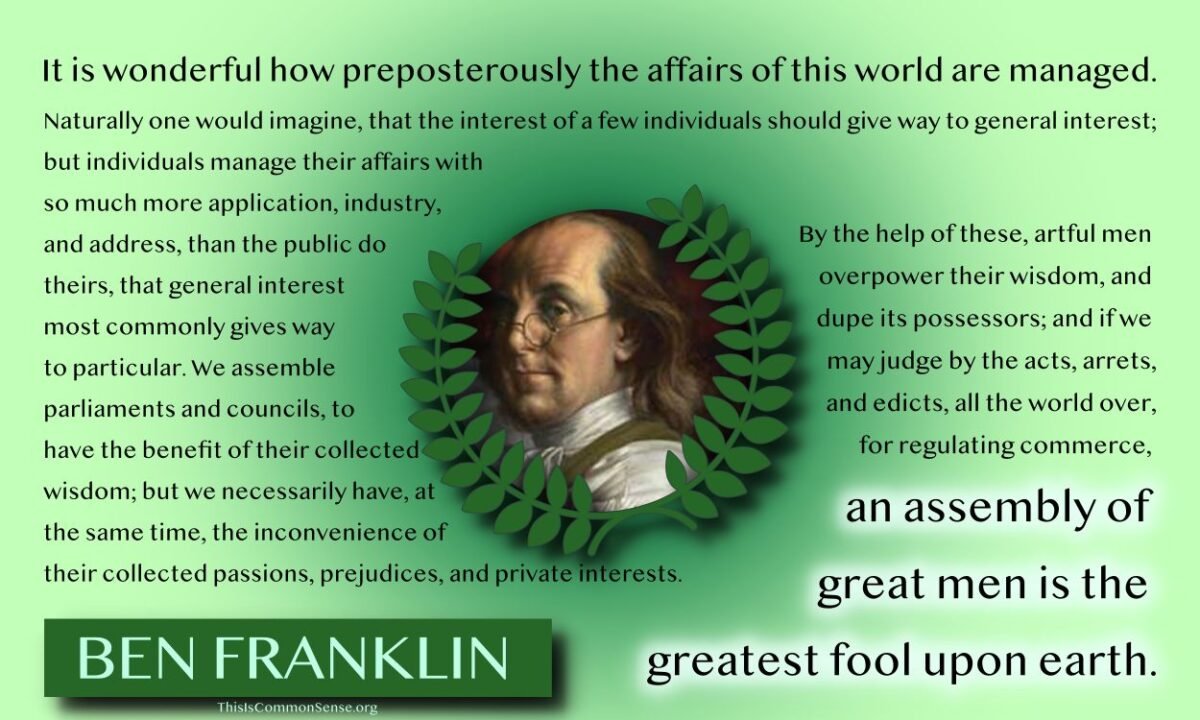
Illustration created with Nano Banana

See all recent commentary
(simplified and organized)
See recent popular posts
Categories
Thought

Erasmus

I am a lover of liberty. I will not and I cannot serve a party.

As quoted in Desiderius Erasmus of Rotterdam (1900) by Ephraim Emerton, p. 377.

Categories
Today

Lithuanian Independence

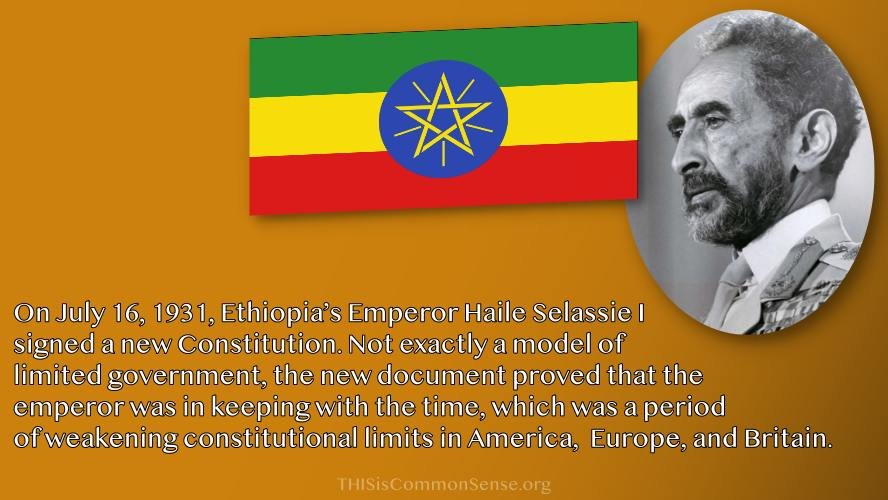
On February 9, 1991, voters in Lithuania voted for independence from the Soviet Union, eleven months after independence from the Soviet Union had been declared on March 11, 1990. Just over 93 percent of those voting voted in favor of independence, while the number of eligible voters voting “yes,” was 76.5 percent, far exceeding the 50 percent threshold. Independence was subsequently achieved in August 1991.

Categories
Thought

Thomas Sowell

The fact that so many successful politicians are such shameless liars is not only a reflection on them, it is also a reflection on us. When the people want the impossible, only liars can satisfy.

Thomas Sowell, “Big Lies in Politics” (Townhall, July 31, 2012).

Categories
Update

Pizzagate Redux?

The big news this past week has been the info dump — over a million files! — regarding the Jeffrey Epstein case. The story is mainly chaos right now. But Matt Kibbe’s interview of Rep. Thomas Massie (R-Ky.), who is chiefly responsible for this ungainly disclosure, offers an interesting perspective on the mess. He makes a good case that blackmail was not the chief method of Mr. Epstein:

For a deeper dive, consider Tucker Carlson’s discussion of “pizza and grape juice” (and other oddities found in the release of data) with the notorious Ian Carroll:

Kim Iverson quotes the original Pizzagate researcher, Ben Swann:

It is quite a story, unfolding before our eyes. Sort of. And it reviving the Pizzagate story isn’t outré enough, why not reconsider the question of whether Jeffrey Epstein is really dead?

But what do the files say? The above appraisal does not analyze all the purported postmortem photos available:

There are a lot of issues to deal with regarding the Jeffrey Epstein case. One issue hanging out there, like a matzo ball: Epstein claimed to be an agent of the Rothschilds.

Categories
Thought

Robert Sheckley

I know you’re sane and you know you’re sane. But what if we’re both wrong?

Robert Sheckley, “The Death of the Dreammaster,” in Martin H. Greenberg (ed.), The Further Adventures of Batman (1989), p. 24

Categories
Today

Commies Give Up

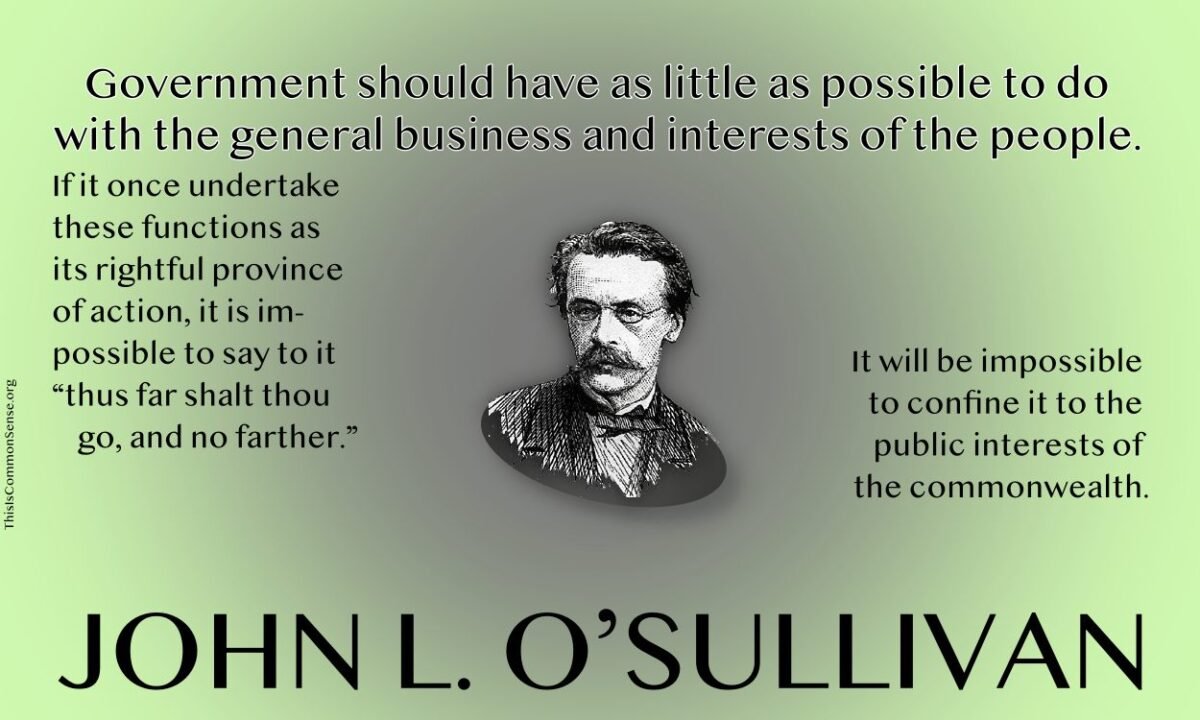
On February 7, 1990, the Central Committee of the Soviet Communist Party agreed to give up its monopoly on power, thus ushering the way for the dissolution of the putatively communist empire.