Categories
privacy regulation

Driving VPNs South

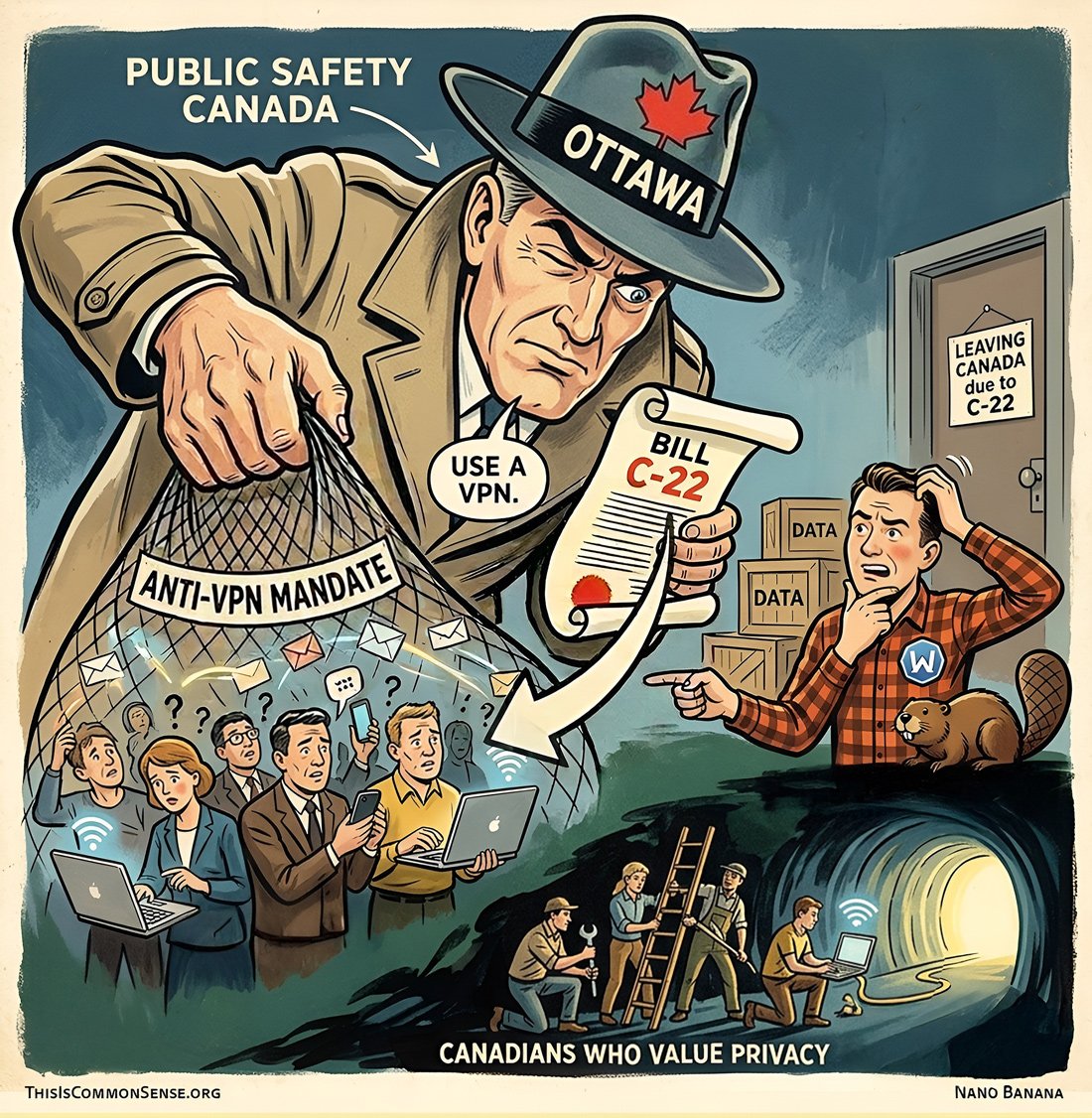
Public Safety Canada, an agency responsible for safety, security, emergency preparedness and this kind of thing, recently urged Canadians to protect themselves when using public Wi-Fi by also using a VPN. 

“Using a VPN protects your data,” the agency said. 

True.

Unless — unless others in the government succeed in requiring VPN companies to uniformly sabotage the privacy of their customers.

The mechanism for crippling VPN’s? That would be the pending legislation to force VPN providers to retain personal data which users expect them not to retain, in this way killing these companies’ very reason for being as well as Canadian Internet users’ reasons to employ these companies. 

We netizens want some security. A VPN required to track and store information  on customers seeking security is, ipso facto, insecure.

Bill C-22, or the Lawful Access Act, introduced by the Minister of Public Safety and Emergency Preparedness in March, would require customers’ data to be retained for a year. Everybody’s data, mind you, not just the data of persons suspected of a crime.

“Oh this is just rich,” says Windscribe, a VPN provider based in Toronto. “Bill C-22 is driving VPN businesses like ours out of Canada because of the required user logging. And in the same breath you tell people to secure their data with VPNs.”

If things go on like this, Ottawa’s impulse to destroy or try to destroy online privacy will override any contrary impulse to help people preserve online privacy. Thereby obliging Canadians who do value it to figure out a way to override the override.

This is Common Sense. I’m Paul Jacob.


PDF for printing

Illustration created with Nano Banana

See all recent commentary
(simplified and organized)
See recent popular posts
Categories
First Amendment rights Internet controversy privacy

Think of the VPNs

It’s for the kids. Let’s remember that. If bureaucrats and politicians get massive amounts of new power to lord over us, this is just a happy side effect.

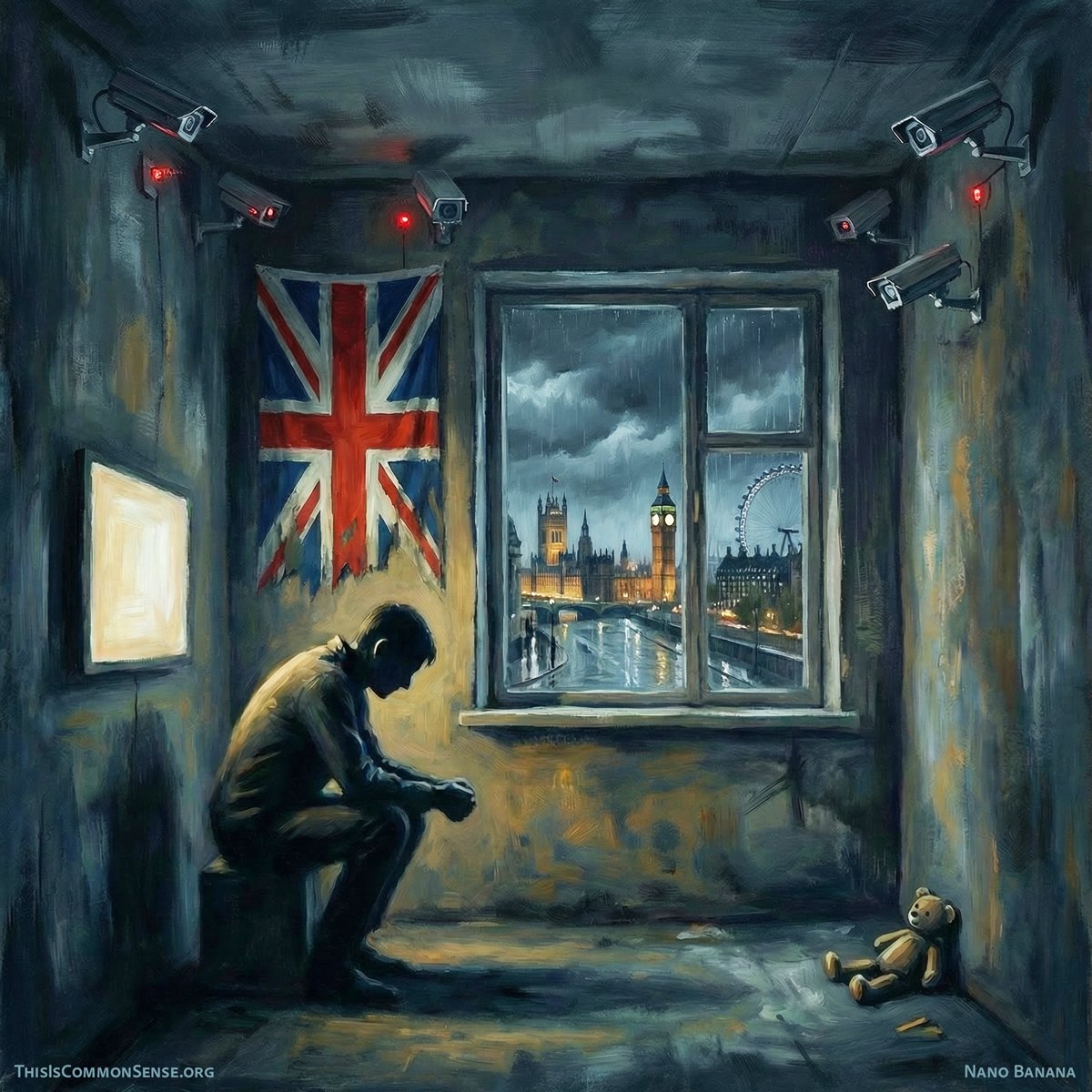
Reclaim the Net reports that during recent debate in the U.K.’s House of Commons about a Children’s Wellbeing and Schools Act, lawmakers rejected proposed amendments that would have required age verification to use virtual private networks (VPNs) and certain other services. 

That’s good. People use VPNs to avoid being tracked and identified by such tyrannical governments as those of China or the United Kingdom.

And any ID requirement would increase the chances that governments discover the identity of users no matter what rules VPN providers are supposed to follow to prevent this.

But Brits cannot relax just yet. Amendments that lawmakers did approve would compel Internet service providers to “restrict children’s access to specific online platforms, impose time-of-day limits on when services can be used, and mandate age verification across nearly any platform that enables users to post or share content.”

Time-of-day limits? Aren’t parents the ones who tell their kids when it’s bedtime?

If we do descend into a dark totalitarian night with no freedom, no privacy, a telescreen in every room, we’ll have to look on the bright side: It was for the kids. The kids needed to be protected from algorithms, choice, freedom, the deficiencies of merely parental oversight, and books with pages addictively connected to adjacent pages. 

Those kids. Always causing trouble.

This is Common Sense. I’m Paul Jacob.


PDF for printing

Illustration created with Nano Banana

See all recent commentary
(simplified and organized)
See recent popular posts

Categories
First Amendment rights international affairs Internet controversy social media

X Marks the Censor

The European Union’s censors are outraged that Elon Musk’s social media platform, Twitter-X, flouts their demands to gag users.

So they’re gearing up to fine X more than a billion dollars. The EU will also be demanding “product changes.”

Another EU investigation reported by The New York Times “is broader and . . . could lead to further penalties,” but amounts to the same thing: punishing Musk’s free-speech company for disobeying orders to prevent and punish speech.

All this is rationalized by a new EU law to compel social media platforms to police users. One would be hard put to find a clearer case of governmental censorship-by-delegation. It’s not even taking place behind closed doors, as was the case regarding the U.S. Government and Twitter before Mr. Musk bought the platform. 

These European censors brag about it.

X says it will do its best to “protect freedom of speech in Europe.”

If push comes to shove and EU goons do not back down, what X should do has been indicated by the smaller platforms social media platforms Gab and Kiwi Farms.

First, refuse to pay a penny of any imposed fine. 

Second, block access to X within the European Union, advising all account holders who try to log on why having an EU IP address is now a bad idea and why using a good virtual private network (VPN) to access X is now a good idea.

By disguising point of origin and encrypting traffic, a good VPN can help people living under tyrannical regimes like the European Union to evade censorship.

This is Common Sense. I’m Paul Jacob.


PDF for printing

Illustration created with Krea and Firefly

See all recent commentary
(simplified and organized)
See recent popular posts