 On January 18, 1689, Montesquieu, French satirist and philosopher, was born. His treatise “The Spirit of the Laws” was a major influence of America’s founding generation.
Categories
On January 18, 1689, Montesquieu, French satirist and philosopher, was born. His treatise “The Spirit of the Laws” was a major influence of America’s founding generation.
One hundred billion dollars isn’t chump change.
That’s the official amount of overpayments not recovered made by the federal government. According to the Financial Times, as reported on MoneyNews.com, “The OMB figures showed that in 2012 alone, 13 programs of the federal government made a combined $101.3 billion in improper payments – nearly $16 billion more than the highly charged budget sequester ended up cutting from government spending last year.”
Medicare overpayments make up the biggest slice of this mis-proportioned pie — a whopping $55.9 billion — but “the Internal Revenue Service had the highest error rate, a figure of 22.7 percent for the Earned Income Tax Credit program, amounting to $12.6 billion in improper payments in 2012.” Other agencies nudged up the numbers into the big time category: $6.2 billion for inappropriate unemployment insurance payments last year, $2.5 billion in mistaken “food stamp” outlays.
And just when you think the government has to be good at something. Like “writing checks” to some people at the expense of others.
Well, I guess the government is still “writing checks” and “making deposits.”
Just not doing it well.
The reason? Well, who would lose his or her job because his or her department disbursed funds to the wrong recipients? No one.
The federal workers administering these programs aren’t stupid. Aren’t dolts, or fools — that is, “chumps.” They’re simply behaving according to incentives.
Still, the more-than-chump-change errors make the city itself rather doltish. Call it Dolt City, shorten it to D.C.
This is Common Sense. I’m Paul Jacob.
 On January 17, 1937, Chicago School economist George Stigler was born. Stigler won a Nobel Memorial Prize for his work. His delightful autobiography is entitled “Memoirs of an Unregulated Economist.”
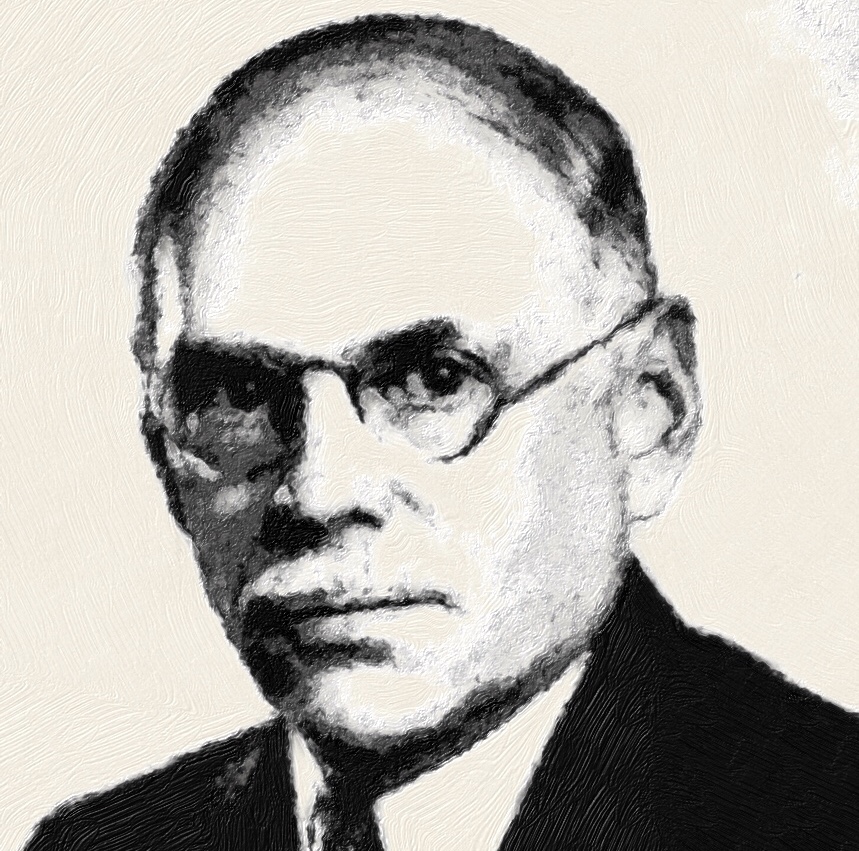
Goods move in response to price differences from points of low to points of higher price, the movement tending to obliterate the price difference and come to rest.
On January 16, 1930, conservative writer Norman Podhoretz was born.
We’re told that “economic inequality” is on the rise.
Ronald Bailey, at Reason’s site, does a pretty good job of setting the record straight. The rich may be getting richer, but the poor aren’t getting poorer.
Further, “the rich” aren’t the same folks one year to the next. There is still income mobility in America. Some poor folks become super-rich; a majority of super-rich “1-percent-ers” will fall out of that 1-percent category. Over time, most folks move from one quintile to at least the next.
What prevents widespread understanding of this? Intellectual muddles. The difference between income and wealth often get fuzzed up, for example. Take two high-income workers, earning the same pay: The one who saves will wind up with much more wealth than the other who spends it all. And rates of savings vary radically from person to person.
As does everything else.
Making things more complicated? Government policy. Bailouts are now an integral feature to aid some of the rich, to prevent their losses (we’re told) from spreading “financial contagion.”
Considering the moral hazard involved, I’d say “financial contagion” is endemic . . . on a whole different level.
And the same President Obama today decrying income inequality was yesterday bailing out rich folks.
A question for the inequality obsessed: Since the War on Poverty really set in, poverty rates have leveled off and even worsened (that is, the numbers of the officially impoverished have increased, despite increases in after-tax/after-subsidy incomes) — could you be missing the moral hazard that any sort of bailout portends?
Real economic justice, as I suggested in my most recent weekend column, is just that, justice. Establishment of good rules, no special privileges.
This is Common Sense. I’m Paul Jacob.
Graph on this page shows income per household, courtesy Cafe Hayek. Caution: Households changed complexion radically in the 1960s-1980s.
 Creativity represents a miraculous coming together of the uninhibited energy of the child with its apparent opposite and enemy, the sense of order imposed on the disciplined adult intelligence.
“Shame on Republicans for blocking the resumption of long-term unemployment benefits for 1.3 million Americans,” writes Democratic Party cheerleader and Washington Post columnist Eugene Robinson.
“And shame on Democrats for letting them,” he adds, meaning that talking-head Ds on your TV set aren’t currently bloviating enough about this R treachery to suit Mr. Robinson . . . as if more is even frighteningly possible.
Robinson calls the GOP resistance to the extension of benefits paid beyond 52 weeks an “exercise in gratuitous inhumanity.” He tells of folks who lost good jobs during the ongoing economic unpleasantness, who have been looking for work unsuccessfully for over a year. “They are people whose lives have been buffeted by forces beyond their control,” he explains.
True enough, agonizing enough. Only a fool wouldn’t consider that, as I so often heard growing up, “there, but for the grace of God, go I.”
Robinson then asks, “Isn’t it in society’s interest to give them a chance?”
Well, what is that chance? A functioning, diverse job-creating market economy — not a politician-centered redistribution regime.
Robinson argues that (a) unemployment benefit payments will create jobs (so that unemployment, in a roundabout way, creates employment?), (b) it’s been done before (compelling, eh?), and (c) that the $25 billion dollar price tag is “little more than a rounding error.”
Which brings us back to the Democrats.
Republicans demand that Democrats prioritize spending — since money doesn’t grow on taxpayers — and find enough cuts to offset this itsy-bitsy, teensy-weensy “rounding error.”
The answering silence? Profound.
This is Common Sense. I’m Paul Jacob.
 Variety of opinion is necessary for objective knowledge.
On January 15, 1777, New Connecticut (present day Vermont) declared its independence.