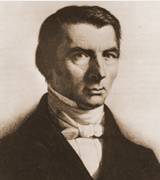
 To force men to dig wells by prohibiting them from taking water from the brook is to increase their useless labor, but not their wealth.
Categories
To force men to dig wells by prohibiting them from taking water from the brook is to increase their useless labor, but not their wealth.
On Feb. 13, 1633, Italian philosopher, astronomer and mathematician Galileo Galilei arrived in Rome to face charges of heresy for advocating Polish astronomer Nicolaus Copernicus’s theory that the Earth revolves around the Sun. In April, Galileo pled guilty before the Roman Inquisition in exchange for a lighter sentence. Put under house arrest indefinitely by Pope Urban VIII, Galileo spent the rest of his life at his villa in Arcetri, near Florence, before dying in 1642.
On Feb. 13, 1945, the bombing of Dresden by the Royal Air Force and the United States Army Air Force began, lasting for three days. The inner city of Dresden was largely destroyed and early reports estimated 150,000 to 250,000 deaths. The German Dresden Historians’ Commission, in an official 2010 report published after five years of research, but years after the war, concluded there were up to 25,000 civilian casualties.
A reader named Gert, commenting at National Review Online, repeats a notion heard often enough to become cliché.
Gert suggests that to debate Obamacare is “terribly premature. We just don’t have the data to know how it’s working yet.” Give it a chance to play out a bit more. Meantime, forget mere “anecdotes,” like those told by the millions who have lost their insurance despite the president’s repeated assurance that if they liked their coverage, they could keep it, “Period.”
Such advisors speak as if Obamacaresque interference in medicine were a species of interventionism utterly unlike anything before.
But Obamacare is a type of thing; if we know that this type of thing is destructive by its nature, we can expect Obamacare to also be so. We know enough already — from history, economics, philosophy, psychology — to know that persons free to make their own judgments and act on them peacefully are better off than persons whose every move is mandated or banned.
What enables human beings to produce wealth, solutions, and alternatives in any realm is freedom. With responsibility. Freedom to act and to profit from our actions by choosing, as producers, what goods to provide others; by choosing, as consumers, the products that best suit our needs and circumstances. And to reap the rewards of success, and learn from our failures.
To continue to destroy this freedom in the name of collecting more data is wrong-headed. If the history of mankind so far doesn’t provide enough info to convince someone of the value of liberty, what will?
This is Common Sense. I’m Paul Jacob.
[T]he kind of dependence that results from exchange, from commercial transactions, is a reciprocal dependence. We cannot be dependent on the foreigner without the foreigner being dependent on us. Now, this is the very essence of society. To break up natural relations is not to place ourselves in a state of independence, but in a state of isolation.
On Feb. 12, 1986, Soviet human rights activist Anatoly Scharansky was released after spending eight years in Soviet prisons and labor camps. The amnesty deal was arranged at a summit meeting between Soviet leader Mikhail Gorbachev and President Ronald Reagan. Scharansky had been imprisoned for his campaign to win the right for Russian Jews, forbidden to practice Judaism in the USSR, to emigrate.
On Feb. 12, 1909, the National Association for the Advancement of Colored People (NAACP) was founded.
On Feb. 12, 1593, approximately 3,000 Korean defenders led by General Kwon Yul successfully repelled more than 30,000 invading Japanese forces in the Siege of Haengju.
One of the reasons many of us find pleasure in sports is that it provides respite from life-and-death issues like politics.
But there is no respite: the current Winter Olympics now going on in Sochi, Krasnodar Krai, Russia, has been ultra-political from the get-go. Russia’s chest-baring potentate, Vlad “The Impulsive” Putin, has spent billions to showcase Russian greatness, and will spend billions of taxpayer rubles more.
But amidst talk of terrorism and toilets, undrinkable water and unthinkable discrimination, you will probably be the very opposite of “shocked, shocked” to learn that the Olympic Charter promotes something as odd as this:
The practice of sport is a human right. Every individual must have the possibility of practicing sport, without discrimination of any kind and in the Olympic spirit, which requires mutual understanding with a spirit of friendship, solidarity and fair play.
David Howden, at the Mises Institute’s Circle Bastiat, directs our attention to the peculiar framing of the issue of access to games and entertainment competition in terms of rights, which are not
founded on any rigorous analysis, but rather represent preferences. (The preferences of the United Nations, incidentally.) Perhaps the more dangerous problem is that the past century has seen such an inflation of human rights that each one’s value has diminished significantly.
My take’s slightly different: Human rights get cheapened when equated with mere entertainment — or other benefits provided by governments.
But there’s something like a right to sport within the right to pursue our happiness.
Despite Sochi’s broken toilets and the modern Olympics’ long history of politicians pursuing power, the words of our Declaration of Independence come to mind when I see a skier turning flips through the air on a big jump.
This is Common Sense. I’m Paul Jacob.
“Moving on from unfulfilling jobs, thanks to health-care law,” was the gleeful headline* on the story spoon-fed to The Washington Post by Families USA, a pro-Obamacare group that maintains a “database of people who have benefitted” from the law (a pretty easy gig, no doubt).
Polly Lower quit her job and says, “It was wonderful.” She didn’t want the job anymore, because she went from “doing payroll, which she liked, to working on her boss’s schedule, which she loathed.”
Take this job and . . .
Eddie Gonzales-Novoa left a job making $88,000 annually, because he wanted to help a cancer-surviving relative start a website for others battling the disease. Now he makes very little, but has more rewarding employment.
Well, if they can afford not to work or to make less in order to do what they want, good for them!
But, if you pay taxes (anyone?), it might not be so good for you. Under the Affordable Care Act, both Eddie and Polly are getting their health insurance subsidized by the taxpayers.
Gonzalez-Novoa’s job change is easy to sympathize with, but why should “the taxpayers” pay for the bill? Might not they have similar dreams of their own to finance?
Lower not only didn’t like her job, she was better off without one — so she receives even more in Obamacare subsidies. She told the Washington Post that she has “adjusted well” to not working.
Sadly, the Post offered no report on how well the taxpayers are adjusting to continuing to work to pay these new subsidies to others.
This is Common Sense. I’m Paul Jacob.
* Print headline was different than online headline.
On Feb. 11, 1990, after 27 years in prison, Nelson Mandela was released by South African authorities. Mandela had joined the African National Congress (ANC) in 1944, becoming deputy national president of the group in 1952. In 1961, Mandela was arrested for treason, and, although acquitted, was arrested again in 1962 for illegally leaving the country. Convicted and sentenced to five years at Robben Island Prison, he was put on trial again in 1964 on charges of sabotage, convicted and sentenced to life in prison along with several other ANC leaders.
In 1989, F.W. de Klerk became South African president and began dismantling apartheid. De Klerk lifted the ban on the ANC, suspended executions, and in February 1990 ordered the release of Nelson Mandela.
Mandela subsequently led the ANC in negotiating an end to apartheid and the establishment of a multiracial government. In 1993, Mandela and de Klerk were jointly awarded the Nobel Peace Prize. One year later, the ANC won the country’s first free elections, and Mandela was elected South Africa’s president.
Our theory is so little opposed to practice that it is nothing else but practice explained.
Michael Needham is a lobbyist. At least, he was called a “conservative lobbyist” repeatedly during his recent appearance on NBC’s Meet the Press.
Now, I don’t have anything against lobbyists, per se. We have the right to petition government, as individuals, or for businesses, civic leagues, unions. Disagree with a group? Balk at a group’s influence? Well, when millions and billions are handed out — or taken away — through programs, taxes and regulations enacted on any given day in Washington, a company neglects to hire the eyes and ears and mouth of a lobbyist at its own risk. How can we begrudge them their defense?
On the other hand, the right to plead for special favors doesn’t justify our government doing the bidding of those special-interest pleaders.
“The problem,” Needham explained, is “33,000 lobbyists” that mostly work to preserve the “status quo in Washington D.C.”
NBC’s Andrea Mitchell snarkily shot back, “And how are those lobbyists different from you as a lobbyist?”
Unfortunately, he didn’t get a chance to answer: time ran out.
Allow me.
Needham heads up Heritage Action, a 700,000 member grassroots “lobbying organization” that advocates for conservative policies promoted by the Heritage Foundation.
He is not asking for a bridge project, a tweak to the tax code, a money-making regulatory advantage. He is advocating for what he and thousands of Americans believe is the right set of general policies for the country.
I don’t always agree with Needham or Heritage Action, certainly, but it’s sad to see him slapped with the misleading “lobbyist” label — for the more you lobby for the public interest, the more loathed you are in Washington.
This is Common Sense. I’m Paul Jacob.