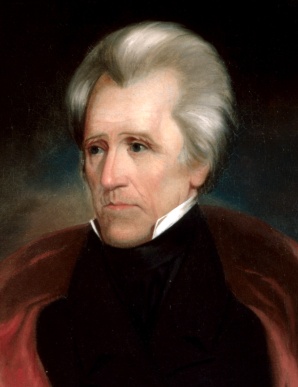
On December 1, 1824, with neither John Quincy Adams nor Andrew Jackson (pictured) receiving a majority of the total electoral college votes in the election, the United States House of Representatives was given the task of deciding the winner in accordance with the Twelfth Amendment to the United States Constitution. The House selected Adams.
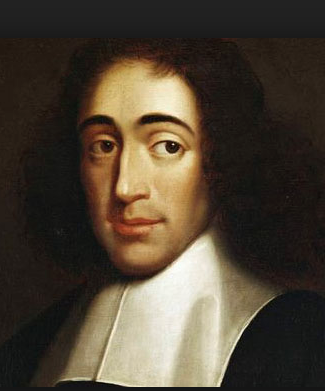
He whose honor depends on the opinion of the mob must day by day strive with the greatest anxiety, act and scheme in order to retain his reputation. For the mob is varied and inconstant, and therefore if a reputation is not carefully preserved it dies quickly.
On November 30, 1804, the United States House of Representatives began impeachment hearings against Supreme Court Justice Samuel Chase. The House thought he was too partisan, too “Federalist.” The Senate later acquitted Chase.
On 1835 on this date, Samuel Clemens was born, later to achieve world fame as author and humorist Mark Twain.
So long as a man imagines that he cannot do this or that, so long is he determined not to do it: and consequently, so long it is impossible to him that he should do it.
This weekend on Townhall, something more about the big story of the day. One injustice doesn’t justify another. On some level, we all know that. So on every level, we must make sure that this basic rule of morality holds all accountable the same.
Click on over, then back here for a little more reading.
For two days my message has been about thankfulness. I’m going for the trifecta.
This may disappoint Sheldon, a commenter at ThisisCommonsense.com, who pooh-poohed my earlier expression of gratitude. “It sounds as though one of the guests invited to your Thanksgiving table will be your very distant relative Pollyanna,” he teased.
Countering my view that “the abundance on our Thanksgiving tables” comes from “the freedom to work and produce and trade with each other,” he argued that this abundance “decreases yearly as government-produced inflation eats away at our purchasing power. Every single aspect of our ‘freedom to work and produce and trade’ and even to eat, drink, travel and enjoy life is surveilled, controlled, obstructed and regulated by ‘our’ government.”
Though I certainly didn’t notice any diminution of the “abundance” at yesterday’s feast, Sheldon nonetheless has a point. Heck, it sounds like he’s been reading these commentaries word-for-word!
There is, indeed, a lot that’s wrong in this world — and the power and arrogance of government is right there in the middle of most of it.
But in necessarily focusing on the problem, on our eroding freedom and lack of control over our lives, let’s not lose hope. Instead, let’s be thankful for what we do have: the ability to do something about it.
There are solutions. Even with all the political corruption and rules rigged to favor the insiders, we still have meaningful freedom to stand up, to speak out, to help create and organize and agitate for desperately needed change.
I’m thankful for that much freedom. Let’s use it to make more.
On November 28, 1893, women voted in a national election for the first time . . . in New Zealand. On the same date in 1917, the Estonian Provincial Assembly declared itself the sovereign power of Estonia. November 28 also marks the independence of Mauritania from France (1960), and East Timor from Portugal.
In 1894, on November 28, economics journalist Henry Hazlitt was born. Halitt went on to write “Economics in One Lesson,” “Time Will Run Back,” and several books criticizing Keynesianism. He was the main proponent of the work of Ludwig von Mises and F.A. Hayek in America during the 1940s and 1950s.
 On December 1, 1824, with neither John Quincy Adams nor Andrew Jackson (pictured) receiving a majority of the total electoral college votes in the election, the United States House of Representatives was given the task of deciding the winner in accordance with the Twelfth Amendment to the United States Constitution. The House selected Adams.
 He whose honor depends on the opinion of the mob must day by day strive with the greatest anxiety, act and scheme in order to retain his reputation. For the mob is varied and inconstant, and therefore if a reputation is not carefully preserved it dies quickly.
 On November 30, 1804, the United States House of Representatives began impeachment hearings against Supreme Court Justice Samuel Chase. The House thought he was too partisan, too “Federalist.” The Senate later acquitted Chase.