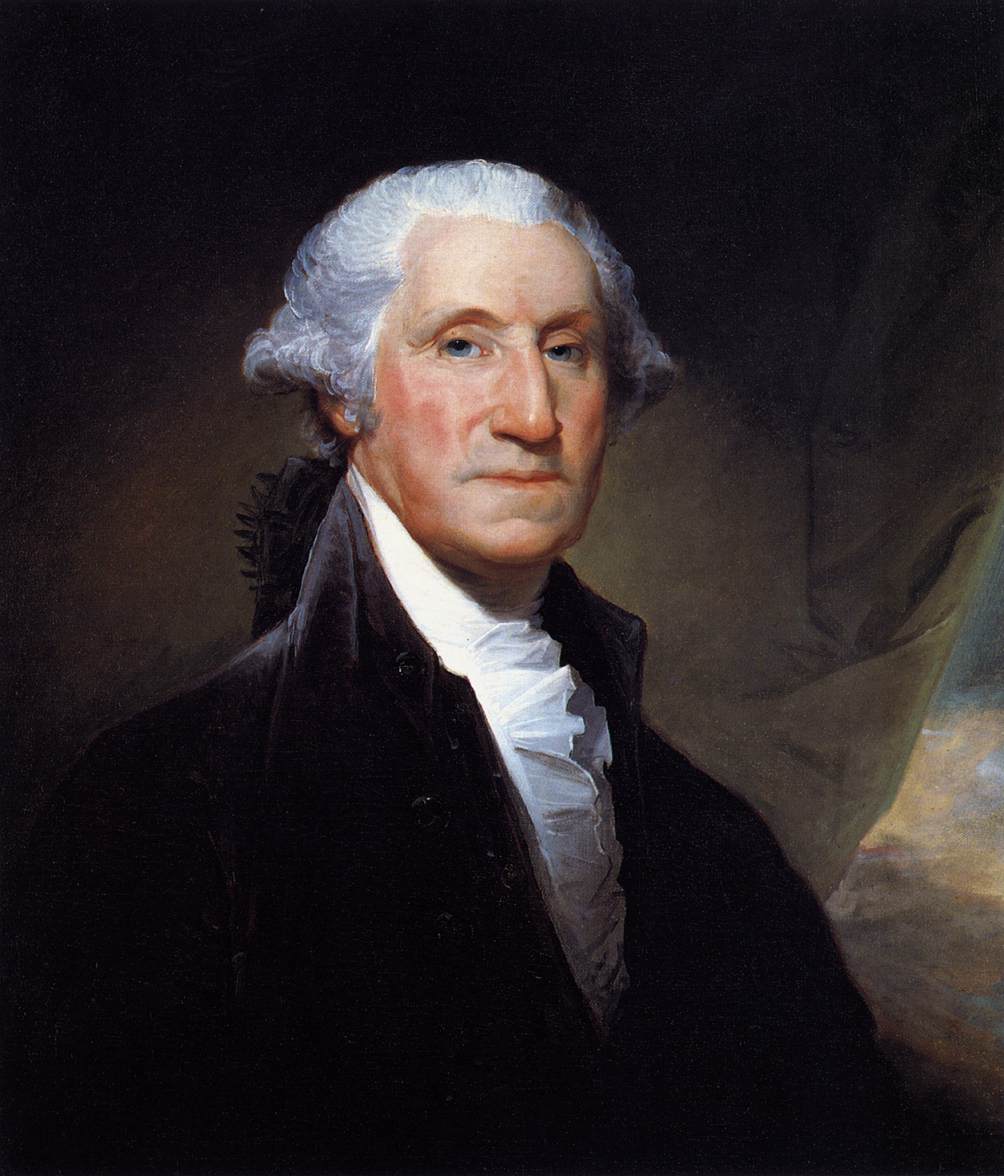
 On December 4, 1783, at Fraunces Tavern in New York City, General George Washington formally bade his officers farewell.
Categories
Day One Experience
A woman starts a new job. She has experience in accounting, learning, getting things done; no experience in that particular job in that particular office. Within days, though, she impresses her new boss with her skill and productivity. She knows what to do and she’s doing it.
True story.
Perplexed? Shocked? Can’t happen?
If that’s your response, I’m betting that you’re not anybody who has ever had to leave one job and start another — and make yourself worth your salary in that new job.
I’m betting that you are, rather, a would-be permanent officeholder facing term limits who has just been telling a reporter how long it takes — years, right? — to get the lay of the land. Then, just as you’re figuring out the difference between a bill and a law, boom! comes your term limit. Ergo, no matter how effectively term limits foster electoral competition or thwart political corruption, they must be repealed or at least drastically diluted.
Is that your story?
If so, I suggest that you resign and make way for a more conscientious student of life and work.
Leaders find ways to get a handle on complexities, to prioritize, to delegate. To the extent that knowing about the budget, lawmaking procedures, and so on would be helpful before starting the lawmaker job, how about studying up beforehand? If the budget is confusing, how about talking to policy analysts or accountants? I could get you in touch with some good ones.
This is Common Sense. I’m Paul Jacob.
Categories
James Monroe
 Our country may be likened to a new house. We lack many things, but we possess the most precious of all — liberty!
Categories
Not Witches
We all know about the Salem Witch Trials. But much more recently another, not-dissimilar-enough anti-witch craze plagued us. Remember “recovered memories”? Mass child sex abuse? Satanic rites?
Most of it was nonsense.
Frances and Daniel Kellar operated a day care business, and found themselves on the wrong end of this particular crowd madness. They were successfully prosecuted, as a fascinating Austin-American Statesman article relates, without any real evidence,
after three young children accused them of dismembering babies, torturing pets, desecrating corpses, videotaping orgies and serving blood-laced Kool-Aid in satanic rituals so ghastly, their names became synonymous with evil.
It was the early 1990s, when a cottage industry of therapists, authors and investigators argued convincingly — and, in hindsight, absurdly — that a national network of secretive cults was preying upon day care children for sex and other horrors.
Why fall for such tall tales?
Over at Reason, Elizabeth Nolan Brown characterizes the age in which the Kellars were railroaded as “at the height of American moral panic over just who was watching the children.”
So: guilt. Parents rightly feel a duty to care for their children. Outsourcing that job makes us uncomfortable. Those who feel guilty tend to lash out at others, imputing a far greater guilt.
It’s a theory, anyway.
The truth is that the Kellars were not guilty. Their accusers recanted; the evidence against them proved spurious or mistaken.
Released from prison last year, they now seek to be completely exonerated, declared innocent. It’s hard to get folks in government to admit they were wrong.
We, on the other hand, can honor their innocence by not allowing mass hysteria to corrupt justice under our watch, today and tomorrow.
This is Common Sense. I’m Paul Jacob.
Categories
James Monroe
The best form of government is that which is most likely to prevent the greatest sum of evil.
Categories
December 03, end of Cold War
On December 3, 1989, the leaders of the two world superpowers, the United States of America and the Union of Soviet Socialist Republics, declared an end to the Cold War, at a summit in Malta. A little over two years later not only had the Cold War ended, the Soviet Union was itself dissolved.
Categories
James Monroe
In the wars of the European powers in matters relating to themselves we have never taken any part, nor does it comport with our policy so to do.
Categories
December 02, Monroe Doctrine
 On December 2, 1823, U.S. President James Monroe delivered a speech establishing American neutrality in future European conflicts. The policy became known as the Monroe Doctrine.
Categories
Dead Document?
Could it be? We do not live under the Constitution of the United States. The document has been a dead letter for a century, maybe longer.
Ours is a Post-Constitutional America.
Surely, there have been great moments of executive usurpation.
Andrew Jackson, in defiance of the Supreme Court, and against all normal principles of law and justice, removed the Cherokee from their agrarian holdings in Georgia and contiguous southeastern United States, sending them marching to Oklahoma. The Supreme Court said his order was unconstitutional. Jackson’s response? Not really much different from “nyah nyah, nyah nyah, nyah nyah.”
Much of the Civil War and Reconstruction was undertaken on the shakiest of constitutional grounds. And then came the “great progressive” presidents.
 Republican Teddy Roosevelt and Democrat Woodrow Wilson defied the explicit intent of the Constitution’s authors — as written in The Federalist as well as in the state houses that adopted the new compact. Both presidents construed the Constitution as authorizing the federal government to do pretty much darn near anything not explicitly forbidden in the document.
That was not the original understanding.
And then there is war. The U.S. Congress hasn’t declared an explicit war since World War II. But we’ve been in a never-ending string of wars.
With Obama, the post-constitutional prevarication has reached new . . . effrontery. The current president says that, though he had previously declared the “Iraq War” a done deal, over, finito, he now says his new attacks upon ISIS are constitutionally justified by 2002’s Authorization for Use of Military Force against Iraq.
“Post-constitutional”? It means our leaders are liars, beyond the law.
This is Common Sense. I’m Paul Jacob.
Most people agree about the wrongness of police brutality, if not about whether a particular police action is an example of it.
But what about protester brutality? Again, most oppose it. Still, skeptics on this point have been particularly loud and insistent lately. Some even suggest (or scream) that violence against the innocent is fully justified if that’s what it takes to protest injustice.
But the existence of police brutality does not justify protester brutality, protester vandalism, protester indifference-to-evidence, or any other violence or irrationality.
The grand jurors in Ferguson were not dealing with injustice in the abstract, but with a particular incident and the relevant evidence. They were not asked to determine whether police ever wrongly shoot or kill, but whether there was evidence that a particular officer had done so, enough to justify a trial. Even assuming legitimate grounds to disagree with their conclusion, too many commenters declaim as if the evidence is irrelevant and the jurors’ motives not possibly honest. The man had to be indicted regardless.
Of course, had Officer Wilson been tried, on this assumed-guilty approach only one outcome would have then been deemed acceptable, regardless of evidence: conviction. Absent that conviction, violence against the innocent would still have been rationalized.
No injustice is properly fought by either sweeping aside facts or by attacking the innocent in the name of protecting the innocent. If we ignore the requirements of justice in order to advance a Cause, how can that Cause be justice?
This is Common Sense. I’m Paul Jacob.