If you’re living in New England and you’ve recently been buried under snow, you probably don’t want to hear how it’s somewhat the fault of (man-exacerbated) global warming. Nor that we can, maybe, tweak the weather to perfection if only we drastically curtail the carbon-emission needed to make boots, gloves and roofs, and to operate snow plows.
Perhaps you’re saying, “Warming? The snow is cold.”
But half-baked conclusions that the concluder is frigidly determined to reach regardless of evidence may be “based on” any set of facts under the sun.
 Patrick Michaels and Paul Knappenberger of the Cato Institute point out the silliness of regarding an unknown human contribution to climate patterns as co-responsible for any bad weather.
Blizzard Juno (like pretty much any storm) was “the result of a very complex system of physical interactions — the precise behavior of each one of which is not completely understood, much less perfectly predictable. This makes ascertaining the influence of human-caused climate change virtually (if not entirely) impossible.”
The authors present a graph of snowfall totals in NYC’s Central Park since the late 19th century. Lots of spikes, lots of troughs. In other words, natural variability in the weather is nothing new.
We can’t always predict the course of storms very exactly. But, these days, we sure can predict that when the storms come, humanity will be indicted along with Mother Nature . . . almost as if there were no weather on earth before human beings showed up.
This is Common Sense. I’m Paul Jacob.
 On January 31, 1849, the Corn Laws were abolished in the United Kingdom, one of the most impressive and far-reaching anti-protectionist moves of all time. “Corn” stood for all grains, including wheat, oats, barley, etc., and the free-trade agitation by John Bright and Richard Cobden (pictured) was one of the main impetuses for the reform.
 They keep telling us that in war truth is the first casualty, which is nonsense since it implies that in times of peace truth stays out of the sick bay or the graveyard.
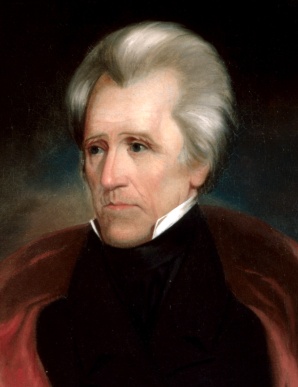 On January 30, 1835, Richard Lawrence attempted to shoot President Andrew Jackson, but failed. He was subdued by a crowd, including several congressmen. That was the first attempt on the life of a sitting U.S. president.
 The motive for the sadism? Critics of the royal family say that if you do anything to possibly undermine the country’s religious establishment, you’re also threatening Saudi Arabia’s ruling family, of which recently deceased King Abdullah (ruler since 2005) was one member. And the government is ruthless about protecting its turf.
 On January 29, 1761, Albert Gallatin was born. Gallatin served as the fourth United States Secretary of the Treasury — a post in which he served longer than any other in American history — advanced the anthropological and linguistic study of native Americans, and became the subject of a biography by Henry Adams. Called the “father of American ethnology,” he has been honored with a 1967 U.S. stamp (pictured) as well as many placenames, including the Gallatin National Forest in Montana.
 The American university system is enormous and it plays an enormous role in making the nation what it is — it is not too much to say, in fact, that it is an equal partner in the military-industrial-academic complex that essentially runs the country.