“It is better to risk sparing a guilty person than to condemn an innocent one.”
Voltaire, Zadig (1747)
“It is better to risk sparing a guilty person than to condemn an innocent one.”
Voltaire, Zadig (1747)
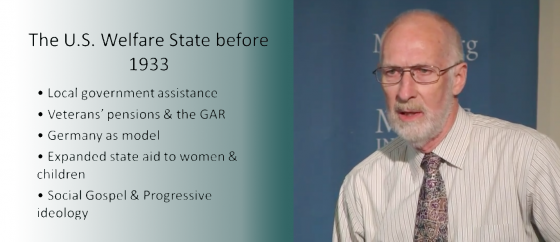
Economic historian Robert Higgs, author of the important book Crisis and Leviathan, and formulator of the important concept “regime uncertainty,” offers a sweeping (if brief) overview of government handouts as the background for our American experience.
“The history of civil liberty is made up of campaigns against abuses of taxation. Protectionism is the great modern abuse of taxation; the abuse of taxation which is adapted to a republican form of government. Protectionism is now corrupting our political institutions just as slavery used to do.”
William Graham Sumner, “Protectionism: the -ism which teaches that waste makes wealth” (1888)
Citizens have more power than they exercise. But folks in government aren’t exactly falling all over each other in the rush to help citizens participate and realize their potential.
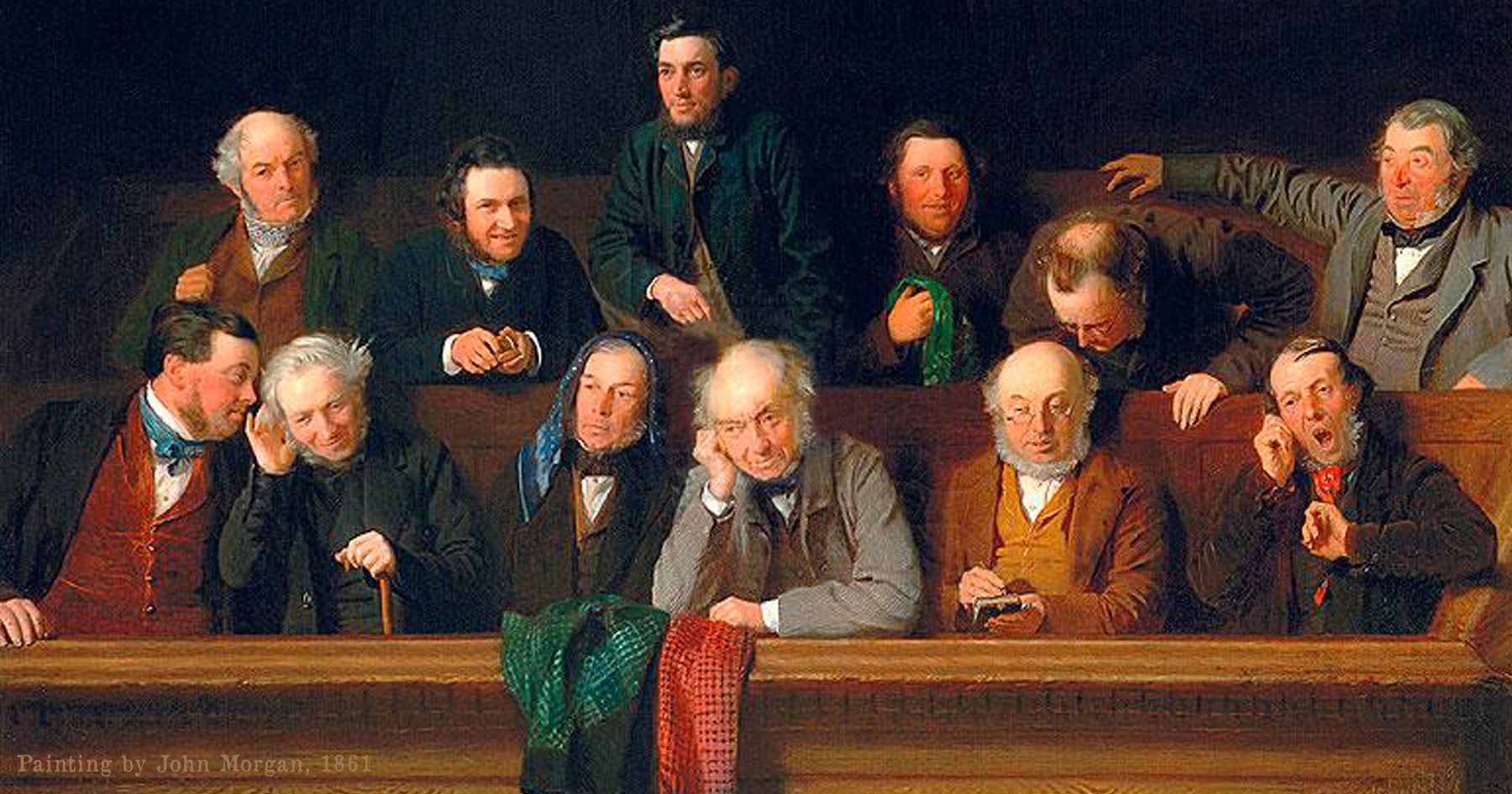
Take juries. There are few more awesome responsibilities than sitting on a jury. And one of the things you can do, as a juror, is to refuse to follow the law or the judge, instead making your decision contrary to the immediate, official directive. Disapprove of a bureaucracy’s “legal” prosecution of an individual or group? Judge the law as well as the facts. Acquit.
Glenn Reynolds, writing in USA Today, shows that this practice has a long, honorable history in our country — he not unreasonably mentions how northern abolitionists fought the Fugitive Slave Act — and, if you, the juror, push it, “there’s nothing anyone can do about it…
Of course, prosecutors have essentially the same power, since they’re under no obligation to bring charges against even an obviously guilty defendant. But while the power of juries to let guilty people go free in the name of justice is treated as suspect and called “jury nullification,” the power of prosecutors to do the exact same thing is called “prosecutorial discretion,” and is treated not as a bug, but as a feature in our justice system.
Reynolds concisely makes the case that jury nullification is, itself, a designed feature of our American constitutional tradition, and not nearly so buggy as “prosecutorial discretion.”
Why? Its tendency is to liberate us from usurping government action.
Prosecutors’ “discretion” (on the other hand) gives folks in government more power over our lives. And ruins many.
This is Common Sense. I’m Paul Jacob.
“Clever tyrants are never punished.”
Voltaire, Mérope, act V, scene V (1743)
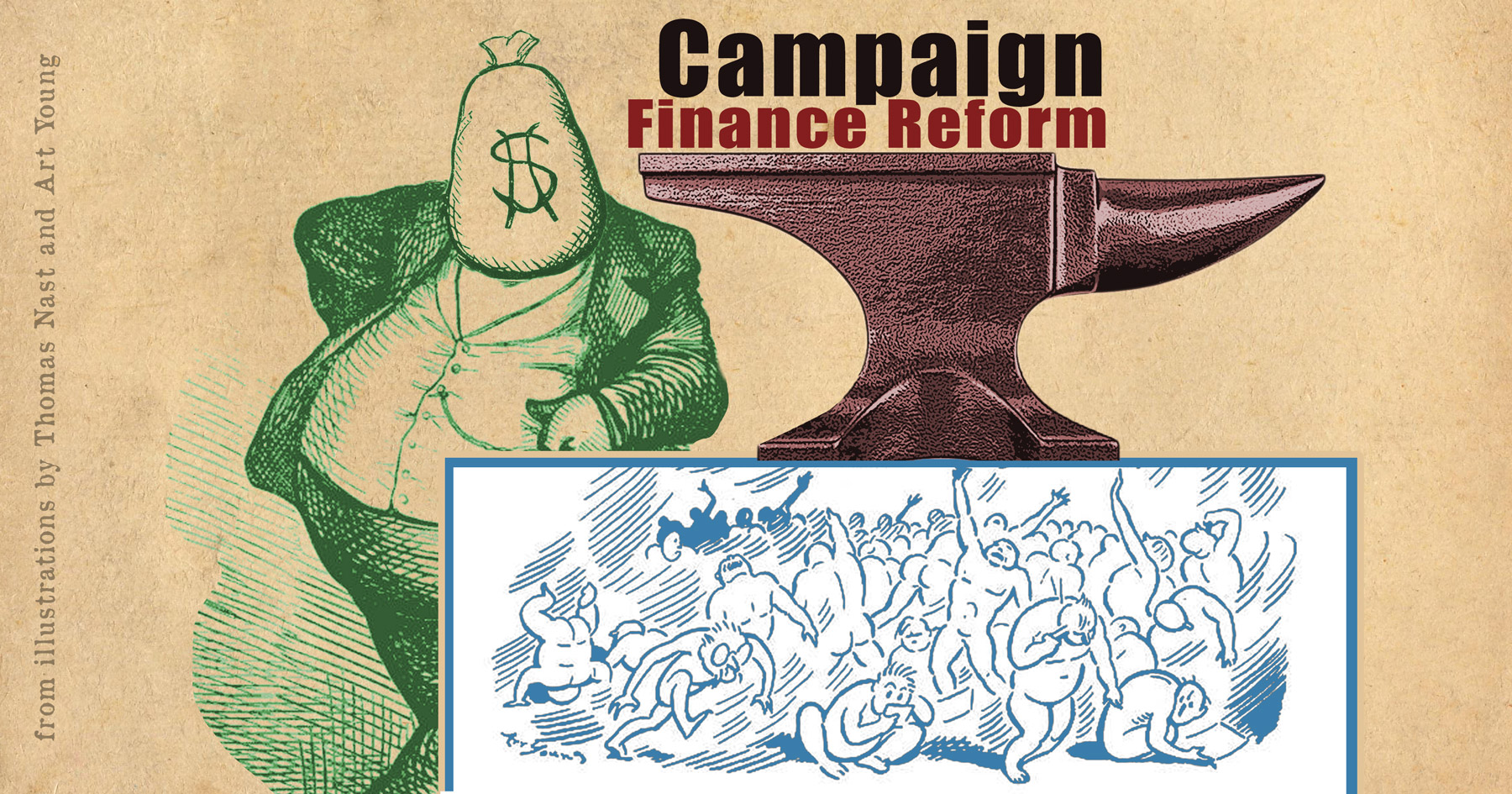
The system worked. The problem? The system doesn’t work.
Last year’s successful term limits ballot initiative in Grand Rapids pitted two pro-limits ladies with scant political experience against a united big business/big labor opposition campaign, sporting Dr. Glenn Barkan, professor emeritus of political science at Aquinas College, as treasurer.
Just before Election Day, Professor Barkan’s group stuffed mailboxes with advertisements warning residents: “Don’t let your vote be shredded.” The mailings seemed odd in two more respects: (1) there was no mention of “term limits,” and (2) according to campaign finance reports, the professor’s committee didn’t have enough money for mass mailings.
Then, after the election, the committee filed reports acknowledging big money raised and spent prior to the election.
“It just seemed odd that they could do all the mass mailings with little money,” said term limits advocate Bonnie Burke. “We ran a totally above-board campaign and they have these seasoned people and they weren’t sticking to the rules.”
Michigan’s Bureau of Elections concluded the professor’s committee “deprived voters from knowing the source and amount of more than half of the contributions it received. . . .” The group was fined $7,500.
The system worked! Reporting led to a violation, which led to a complaint, which led to an investigation, which led to the imposition of a fine.
But to what point?
As my colleague at Liberty Initiative Fund, Scott Tillman, who filed the complaint, explains, “Campaign finance laws do not stop connected insiders from gaming the system and hiding donations. Big money can ignore the laws and pay the fines if they get caught.”
Even worse, Tillman warned, “Campaign finance laws intimidate and discourage outsiders and grassroots activists from becoming active in politics.”
Is either result unintended?
This is Common Sense. I’m Paul Jacob.
“Civil liberty is the status of the man who is guaranteed by law and civil institutions the exclusive employment of all his own powers for his own welfare.”
William Graham Sumner, “The Forgotten Man” (1883)
Two wrongs don’t make a right.
It’s simple but true. And, as a corollary, let me add that using the power of the federal government to harass individuals or groups one happens to dislike or disagree with is wrong.
You might recall that our Declaration of Independence rebuked King George for sending “hither swarms of Officers to harass our people.” Or consider the recent civil-rights-violating behavior of the IRS against conservative groups during President Obama’s administration.
Yesterday, I proposed to end all taxpayer subsidies to Planned Parenthood. Obviously, I’m not a fan of the organization. And neither are the Republican presidential candidates — especially Louisiana Gov. Bobby Jindal.
“Planned Parenthood had better hope that Hillary Clinton wins this election,” Jindal boasted at last week’s JV presidential debate hosted by Fox News, “because I guarantee you that under President Jindal, January 2017, the Department of Justice and the IRS and everybody else that we can send from the federal government will be [looking] into Planned Parenthood.”
Speaking with reporters after the debate, Mr. Jindal doubled down, suggesting there might also be a role for the Environmental Protection Agency and perhaps other tentacles of the federal Leviathan.
Jindal has removed Planned Parenthood from Louisiana’s Medicaid program. That’s within his legitimate power. But directing an assault against anyone using the IRS and other federal agencies is both wrong and . . . against the law.
It promises not change but the same rotten, rights-robbing, goon-squad government we have now. Just with a different color shirt.
This is Common Sense. I’m Paul Jacob.
“The secret of being a bore is to tell everything.”
Voltaire, “Sixième discours: sur la nature de l’homme,” Sept Discours en Vers sur l’Homme (1738)

Common Sense generally steers clear of the abortion issue. Arguably, for “common sense” reasons.
I’ve always been pro-life, but I’ve also been skeptical of government’s ability to improve the situation, to save unborn lives via the criminal justice system.
No law forces women to have abortions; it’s voluntary. I’ve long hoped that ultrasounds and other technological advances will change hearts and minds, nudging couples to choose to abort less often, making abortion even more rare than when it was illegal. I gladly note that the number of abortions has fallen 12 percent since 2010.
Certainly, I’ve prioritized my political action in a different direction: affecting greater representation, better government, via citizen-initiated checks on power.
Yet, the recent videos showing doctors and other Planned Parenthood personnel chatting about the sale of fetal body parts implicates a lot more than just abortion. For starters, the footage triggered my gag reflex, and then my sense of justice for the unborn, and sense of decency in the treatment of their remains.
And what about justice and compassion for people deeply offended (myself among them) at being forced to fork over $528.4 million tax dollars each year to an organization performing the most abortions?
Let’s be pro-choice and abort the taxpayer subsidy to Planned Parenthood.
Those who continue to approve of Planned Parenthood’s work would remain free to support it. Personally. Voluntarily. Likewise, if you revile the organization, you should also be free to not fund it.
Isn’t such respect for each others’ heartfelt beliefs also just common sense?
I think so. I’m Paul Jacob.