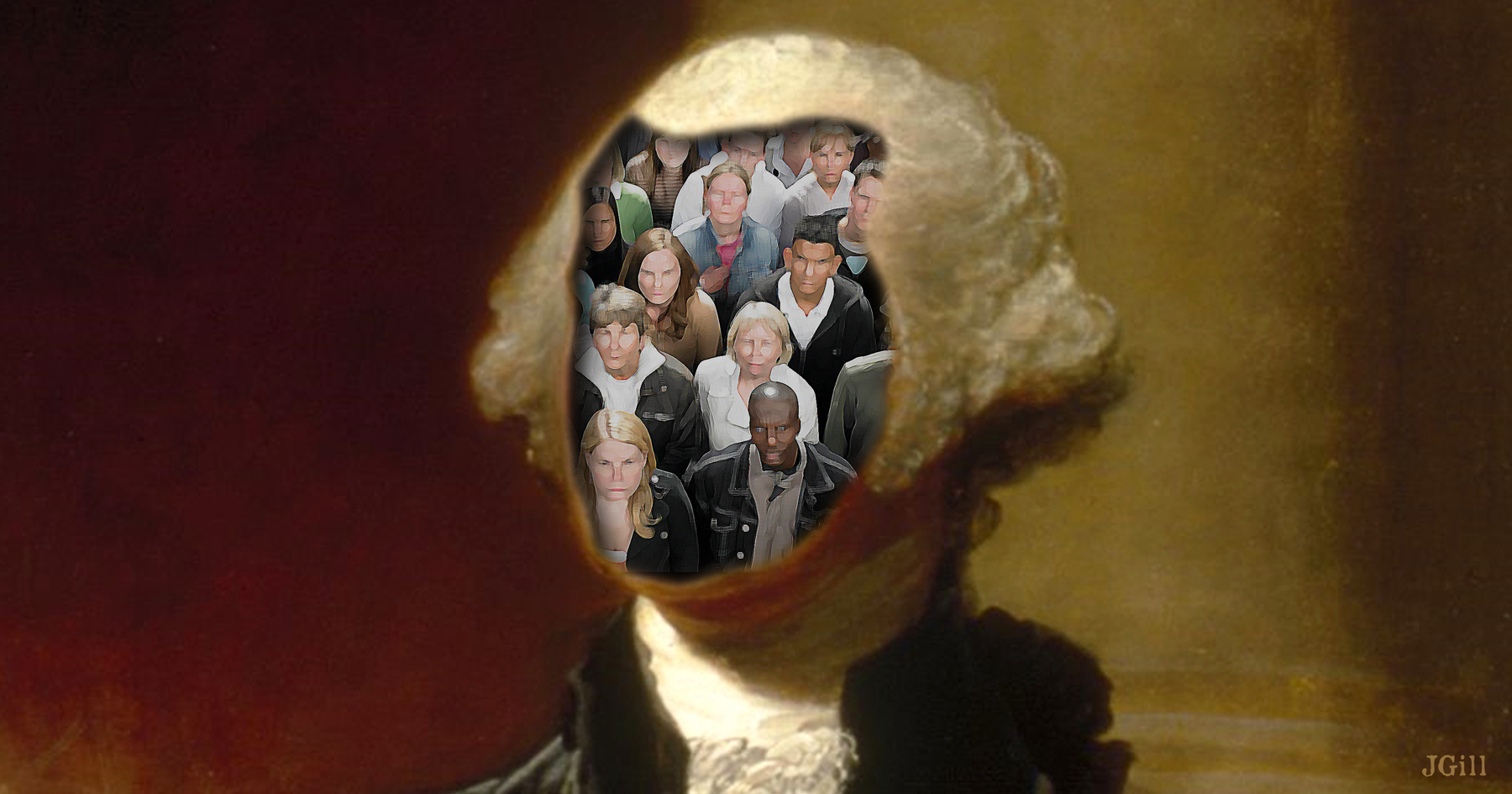
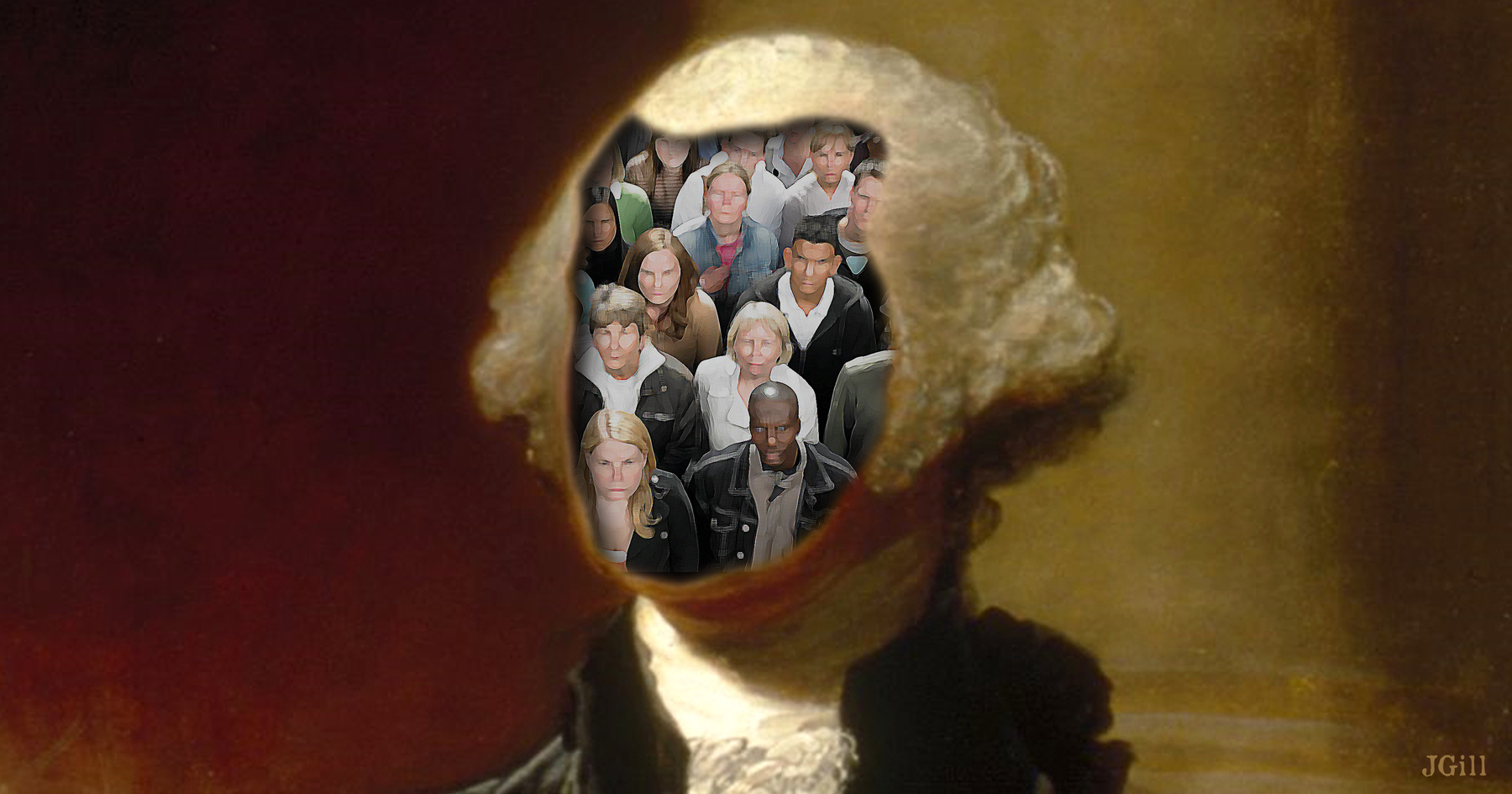
Free government is self-government. A government of the people by the people. The best government of this sort is that which the people think best.
Bounkham “Bou Bou” Phonesavanh was in the wrong place at the wrong time.
The Georgia toddler was badly burned by a flash grenade during a drug raid gone wrong. A remorseful sheriff’s department claims they could not have known what would happen.
But such botches are not rare.
The War on Drugs is habitually conducted via late-night, no-knock, violent intrusions into homes. That’s now a main part of the standard modus operandi.
The raids are often based on scanty and unconfirmed information. They proceed even if no dangerously violent criminal is known to be inside. The drug warriors’ primary concern, they say, is to stop suspects from flushing contraband down the toilet, not to avoid needlessly jeopardizing the lives of known and unknown occupants.
A couple of Georgia lawmakers have offered legislation to reduce the chances of such collateral damage. One would slightly restrict the circumstances in which no-knock warrants could be issued. Another would require most no-knock raids to be conducted between 6 a.m. and 10 p.m.
Though modest steps, they may help save some lives.
But the fundamental problem? The persistence of the War on Drugs.
Waging that war permits endless “botched raids” like the one that almost killed Bou Bou. So long as such invasions remain a standard means of trying to catch dealers with their stash — indeed, so long as the War on Drugs is being waged at all — innocent persons will always be needlessly at risk from the persons charged with protecting them.
This is Common Sense. I’m Paul Jacob.
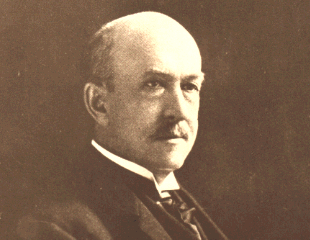
Walter Bagehot
Groundhog Day
On February 2, 1887, Punxsutawney, Pennsylvania celebrated the first Groundhog Day. On the same day in 1976, the Groundhog Day gale hit the north-eastern United States and south-eastern Canada.
In 2009, the Reserve Bank of Zimbabwe officially devalued the Zimbabwean dollar for the third and final time, making Z$1 trillion now only Z$1 of the new currency, equivalent to Z$10 septillion before the first devaluation. Politicians in Zimbabwe looked up, saw their shadow, and realized that they had only a couple months more of their inflation binge. Indeed, the legalization of trading currencies, the previous month, had sealed the fate of Zimbabwe’s independent dollar. The Zimbabwean dollar was abandoned officially on the 9th of April, 2009.
Hot or Not
“I should have been an engineer,” climatologist Dr. Roy Spencer laments. “I went into science with the misguided belief that science provides answers. Too often, it doesn’t. Some physical problems are simply too difficult. Two scientists can examine the same data and come to exactly opposite conclusions about causation.”
In other words, it’s like all sciences of complex phenomena. Like social science — economics, for instance.
But he’s not complaining that it’s hard. He’s complaining that it’s been taken over.
By ideologues.
When it comes to “climate change,” scientific nuance is gone:
We still don’t understand what causes natural climate change to occur, so we simply assume it doesn’t exist. This despite abundant evidence that it was just as warm 1,000 and 2,000 years ago as it is today. Forty years ago, “climate change” necessarily implied natural causation; now it only implies human causation.
This unscientific leap to the now-de rigueur “anthropogenic” conclusion depresses him.
Understandably. Take the latest news pitch, the NOAA and NASA reports that last year, 2014, stands as “the hottest on human record.”
No, it isn’t, Spencer says.
Such claims are based on compromised data that most respectable climate scientists now avoid: surface temperature recordings, not satellite data. Such “hottest ever” reports “feed the insatiable appetite the public has for definitive, alarming headlines. It doesn’t matter that even in the thermometer record, 2014 wasn’t the warmest within the margin of error.”
But journalists, often moonlighting as lazy political activists, “went into journalism so they wouldn’t have to deal with such technical mumbo-jumbo” as “margins of error.”
And politicians are worse.
I guess that leaves the job of common-sense skeptic to you and me.
This is Common Sense. I’m Paul Jacob.
Alexander Cockburn, First Rule of Journalism
Walter Bagehot
The great difficulty which history records is not that of the first step, but that of the second step. What is most evident is not the difficulty of getting a fixed law, but getting out of a fixed law; not of cementing . . . a cake of custom, but of breaking the cake of custom; not of making the first preservative habit, but of breaking through it, and reaching something better.
Townhall: Shovelfuls of Alarm
It is one thing to be alert to possible catastrophe. Quite another to yearn for it. Yes, it’s time again for the end of the world! Read all about it at Townhall. Click on over, then come back here for further reading. If you have time.
- “Blizzard Juno: Incredible time-lapse footage shows terrifying storm cover Boston in inches of snow,” by Kara O’Neill (Mirror)
- “Repeating News Story: Global Warming To Make Blizzards Worse,” by Paul C. “Chip” Knappenberger and Patrick J. Michaels (Cato at Liberty)
- “2014 as the Mildest Year: Why You are Being Misled on Global Temperatures,” by Dr. Roy Spencer, Ph.D.
- “2014 a Record Warm Year? Probably Not,” by Dr. Roy Spencer, Ph.D.
Video: All You Need?
I am in a meeting all day. The video I have been meaning to record is still unrecorded. So, maybe all I need is a #lastminute link. Or a hashtag:
Yes, this is satire. A satire, I like to think, on all the superficial, nonsensical activism out there.
But by the way, thanks for your all your super and sensible activism in recent years. #doitright
Corn Law repeal
On January 31, 1849, the Corn Laws were abolished in the United Kingdom, one of the most impressive and far-reaching anti-protectionist moves of all time. “Corn” stood for all grains, including wheat, oats, barley, etc., and the free-trade agitation by John Bright and Richard Cobden (pictured) was one of the main impetuses for the reform.
On Jan. 31, 1865, the United States Congress proposed the Thirteenth Amendment to the U.S. Constitution, submitting it to the states for ratification. The Amendment’s main section reads: “Neither slavery nor involuntary servitude, except as a punishment for crime whereof the party shall have been duly convicted, shall exist within the United States, or any place subject to their jurisdiction.”
On Jan. 31, 1990, the first McDonald’s fast food restaurant opens in the Soviet Union. Having once traveled to Moscow, I’m exceedingly thankful for this.