…bravely fighting income inequality one target at a time!
Click the image below for a high resolution version (great for screensaving and sharing).
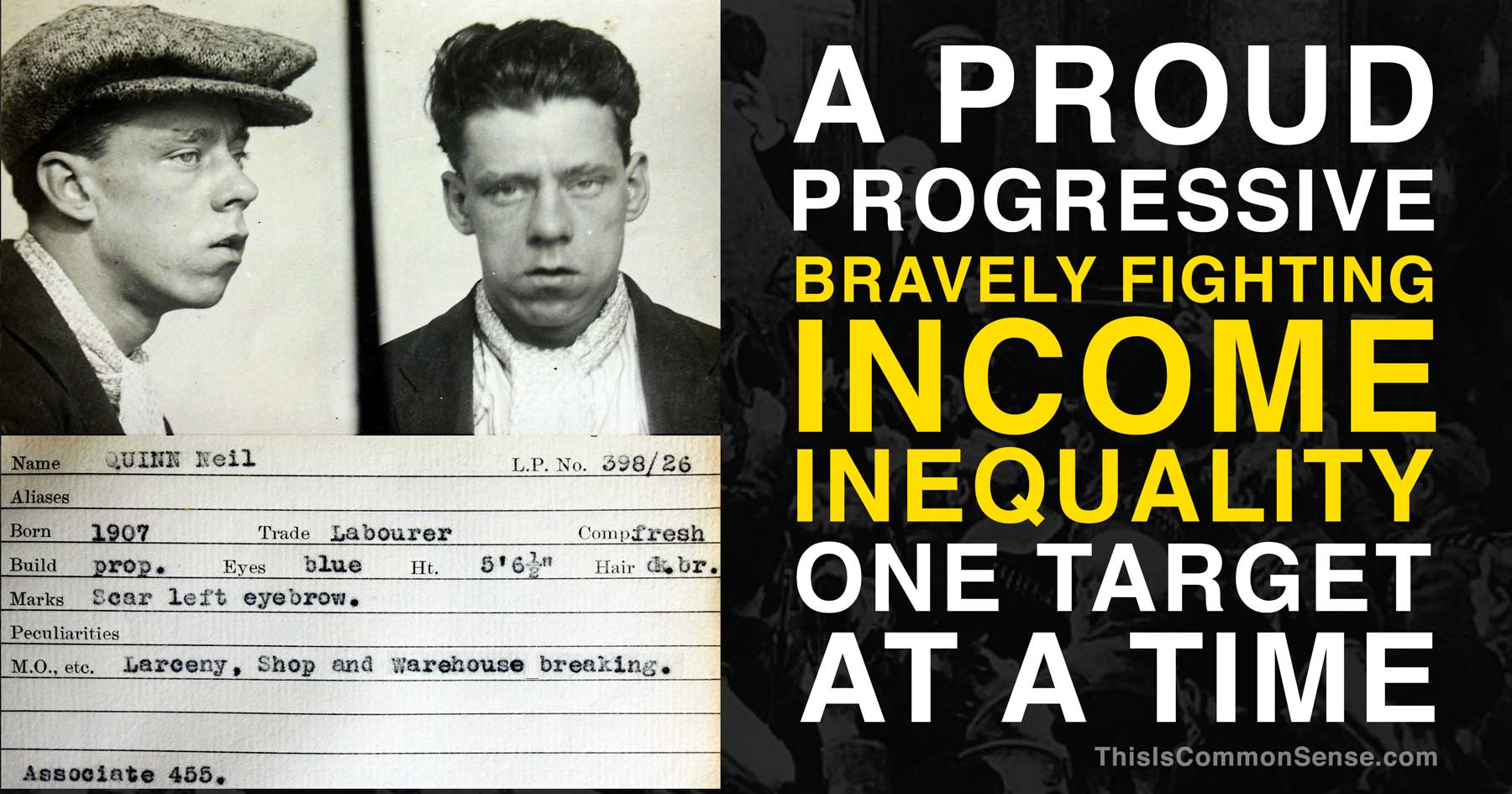
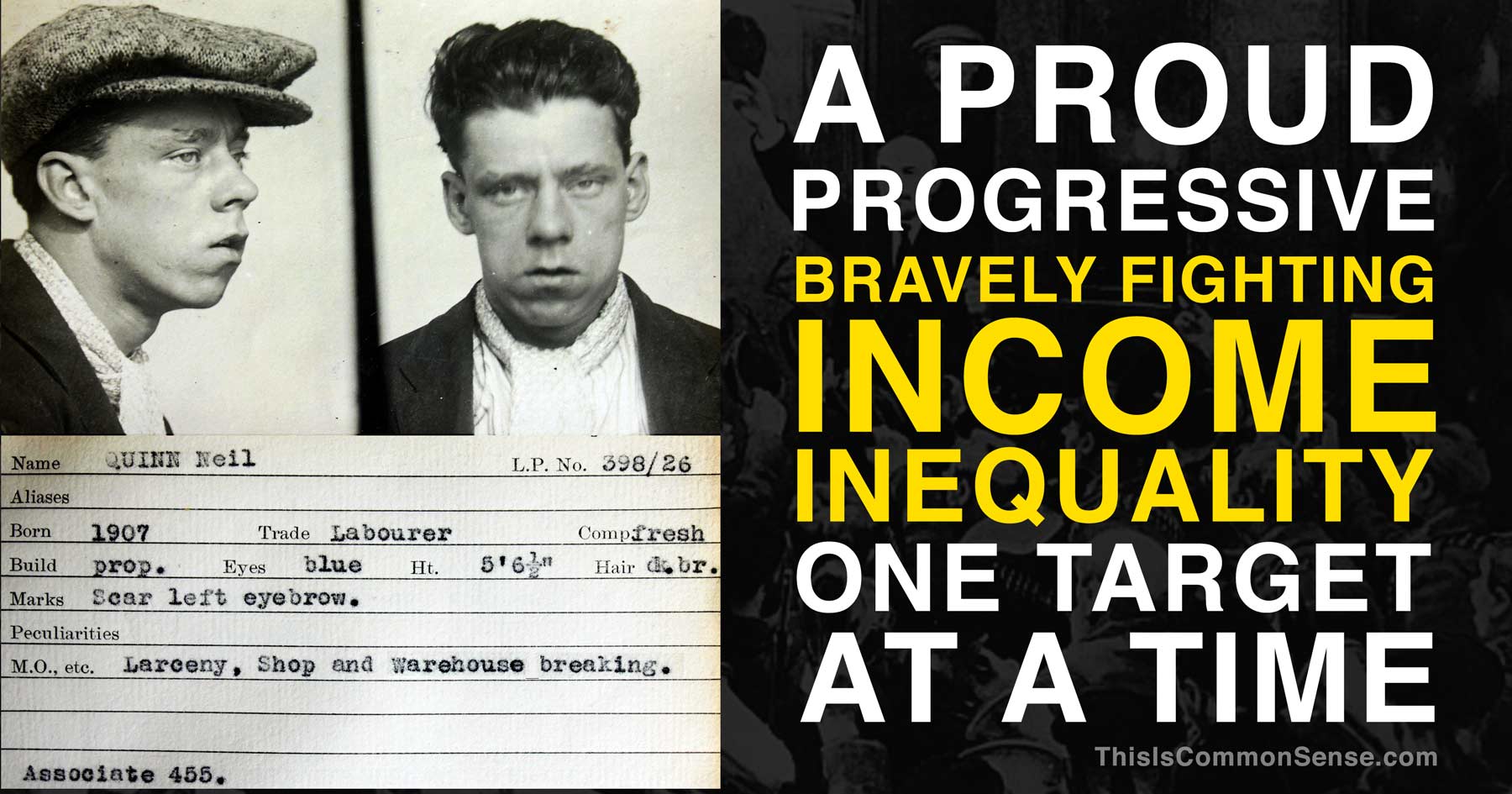
…bravely fighting income inequality one target at a time!
Click the image below for a high resolution version (great for screensaving and sharing).
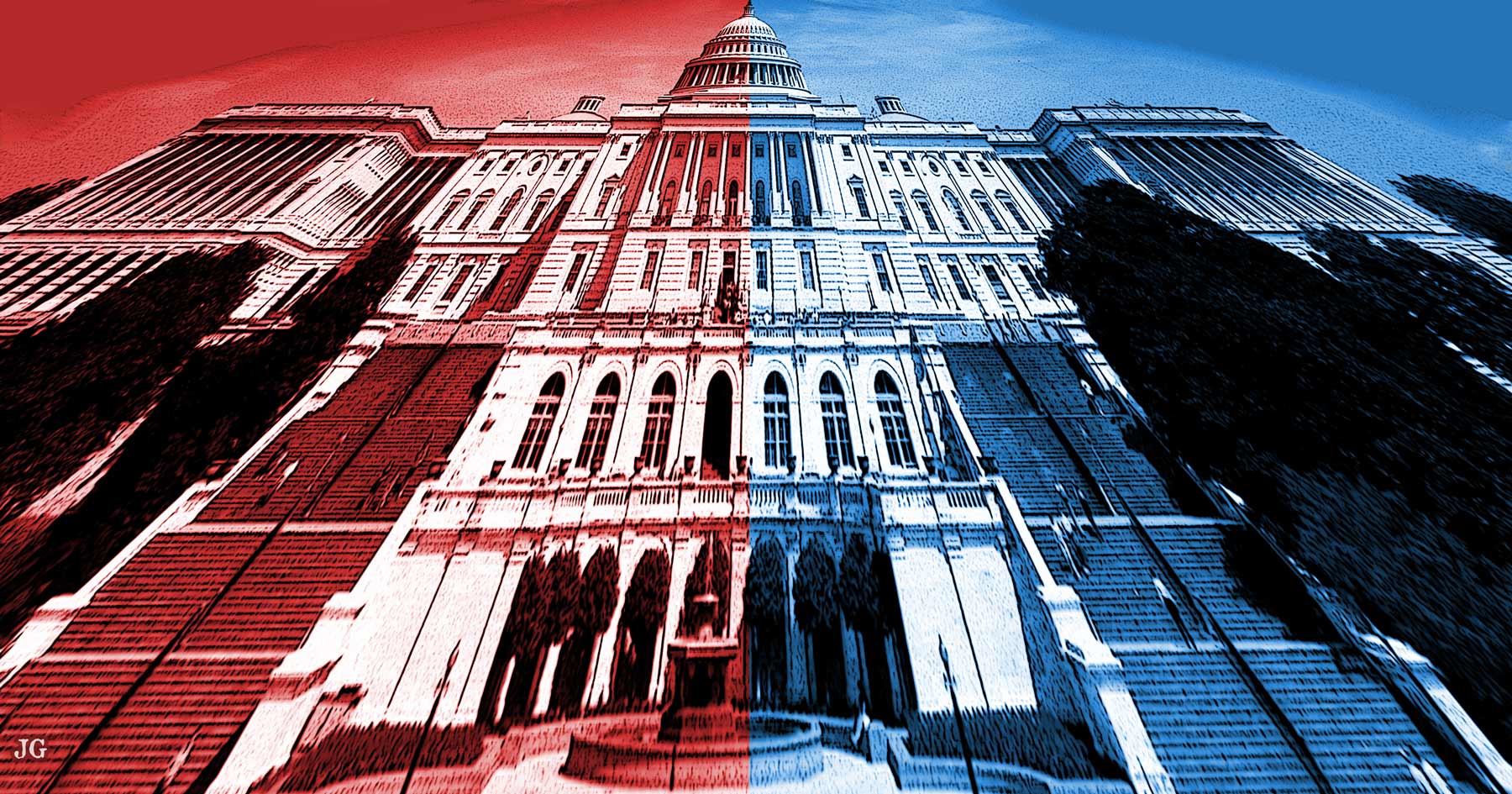
When I was a kid, both Democrats and Republicans sported “conservative” and “liberal” wings as well as “moderate” leaders and representatives.
Now, conservatives have pretty much corralled themselves into the GOP, and liberals into the Democratic Party.
Why? Birds of a feather?
Ezra Klein offers some interesting observations in “This is what makes Republicans and Democrats so different”:
Klein also draws on research by political scientists Matthew Grossmann and David Hopkins, who in their paper, “Policymaking in Red and Blue,” conclude that “the Republican Party is dominated by ideologues who are committed to small-government principles, while Democrats represent a coalition of social groups seeking public policies that favor their particular interests.”
Interest groups demanding that their “particular interests” be addressed with more “deliverables” from government would certainly explain a strong Democratic Party bias in favor of more government. Klein seems to be saying that Democrats are led, as if by an invisible hand, in the socialistic direction.
But why does a Republican Party supposedly “dominated” by those with “small-government principles” also advance policies that grow big government? “New policies usually expand the scope of government responsibility, funding, or regulation,” Grossmann and Hopkins point out.
Perhaps Republican politicians are more influenced by their own position in government than by the views of their base voters.
This is Common Sense. I’m Paul Jacob.

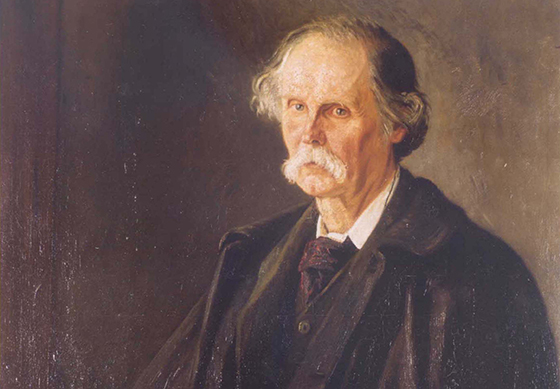
“Students of social science, must fear popular approval: Evil is with them when all men speak well of them.”
Alfred Marshall, as quoted by F. A. Hayek, speech at the Nobel Banquet, December 10, 1974.
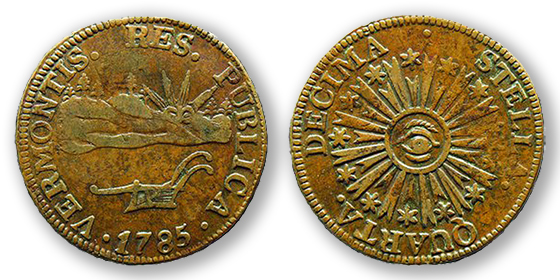
On January 15, 1777, New Connecticut declared independence from the crown of Great Britain and the colony of New York.
Delegates first named the independent state New Connecticut and, in June 1777, finally settled on the name Vermont, an imperfect translation of the French for Green Mountain.
This new “Vermont Republic” minted copper coins (see above), first struck in 1785. The people of Vermont took part in the American Revolution although the Continental Congress did not recognize the jurisdiction, because of vehement objections from New York, which had conflicting property claims.
In 1791, Vermont was admitted to the United States as the 14th state, upon which its minting of coins ceased.

On Tuesday, former (and perhaps soon to be again) First Daughter Chelsea Clinton attacked Vermont Sen. Bernie Sanders, her mother’s chief rival in the presidential primaries.
“Sen. Sanders wants to dismantle Obamacare, dismantle the [Children’s Health Insurance Program], dismantle Medicare, dismantle private insurance,” Chelsea charged, telling an Iowa audience that he “would strip millions and millions and millions of people off their health insurance.”
The Sanders campaign quickly fired back that the young Clinton was “wrong” and disingenuously ignoring the fact that Sanders would bestow government-paid healthcare coverage on every American. For free! (Unless you happen to pay taxes, that is. Then, it’d be very expensive.)
“It wasn’t an honest attack,” declared Democratic strategist David Axelrod on CNN.
But on ABC, Hillary defended her daughter, doubling-down by arguing, “that’s exactly what he’s proposed. To take everything we currently know as health care, Medicare, Medicaid, the CHIP Program, private insurance, now the Affordable Care Act, and roll it together.”
Strange, in 2008, when Hillary was promoting a single-payer system and Barack Obama took issue, Mrs. Clinton decried “tactics right out of Karl Rove’s playbook,” asking, “Since when do Democrats attack one another on universal healthcare?”
“This is wrong and every Democrat should be outraged,” the 2008 Hillary declared. “So shame on you, Barack Obama!”
Now it’s Hillary Clinton who knows no shame.
“More striking perhaps,” lamented Mark Halperin, a senior political analyst for MSNBC and Bloomberg News, “was a lack of interest that most of the news world had to [Chelsea’s] remarks.”
Maybe when Clintons “dismantle” the truth, it just isn’t news anymore.
This is Common Sense. I’m Paul Jacob.

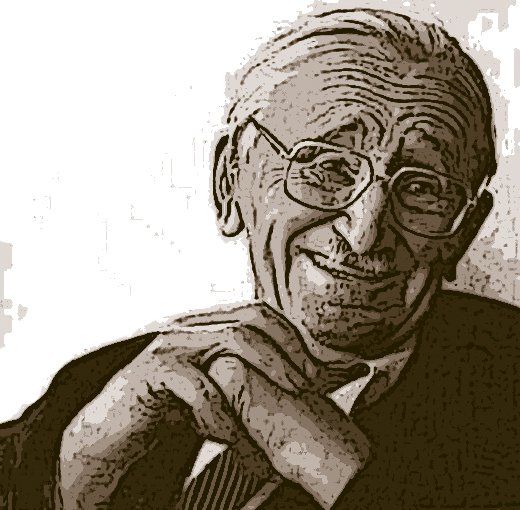
“[T]he Nobel Prize confers on an individual an authority which in economics no man ought to possess.
“This does not matter in the natural sciences. Here the influence exercised by an individual is chiefly an influence on his fellow experts; and they will soon cut him down to size if he exceeds his competence.
“But the influence of the economist that mainly matters is an influence over laymen: politicians, journalists, civil servants and the public generally.”
F. A. Hayek, speech at the Nobel Banquet, December 10, 1974.
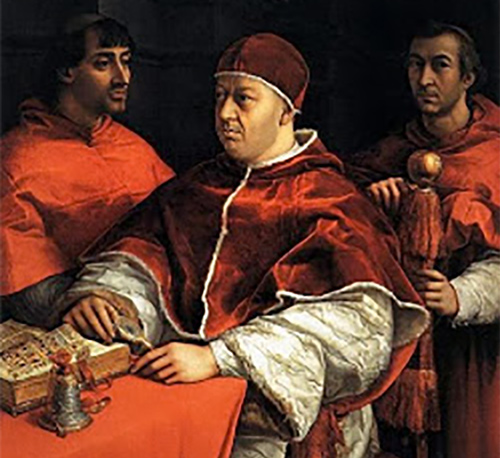
On January 14, 1514, Pope Leo X issued a papal bull against slavery. On the same date in 1639, the first written constitution to create a government, the “Fundamental Orders,” was adopted in Connecticut.
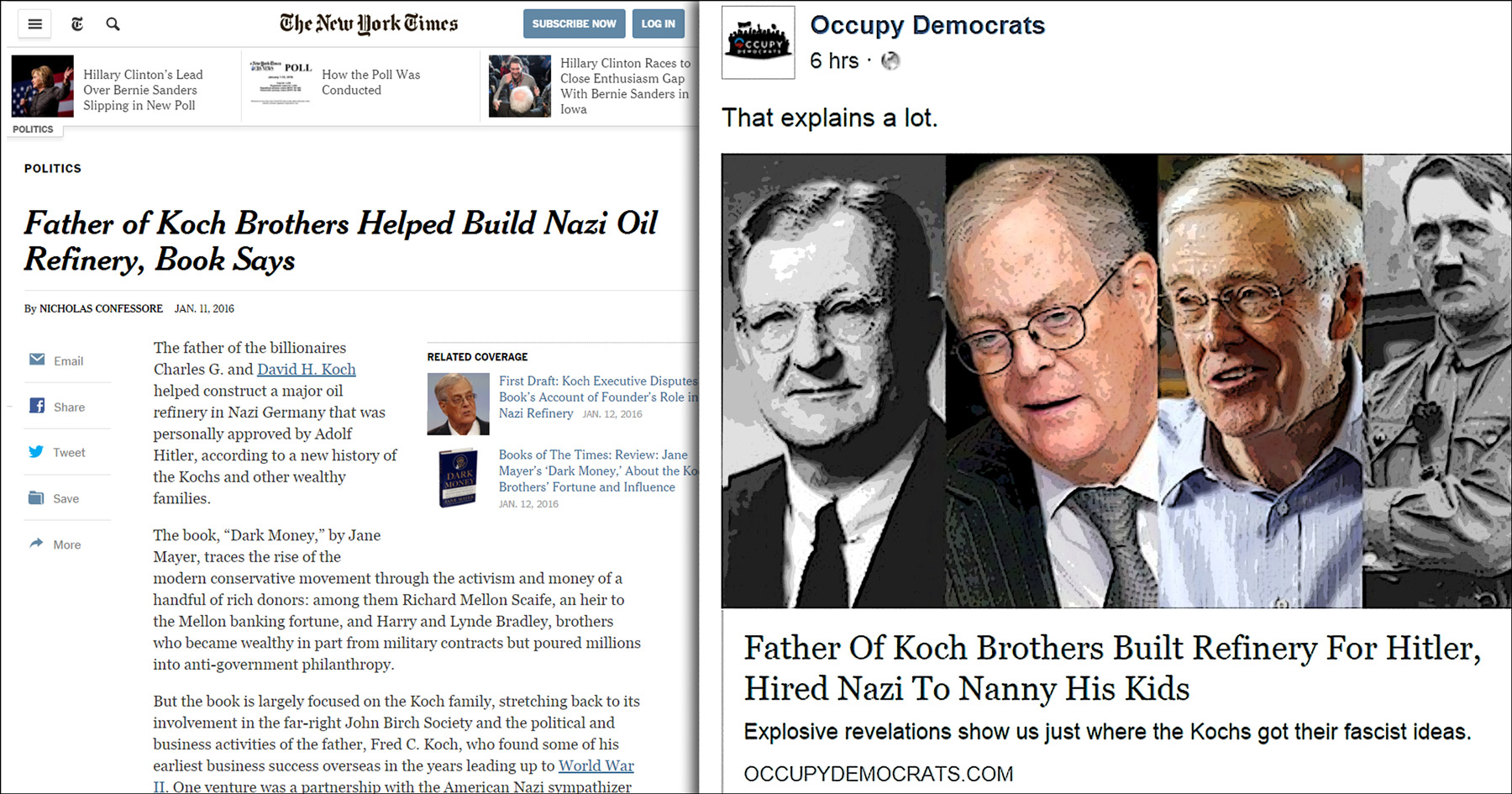
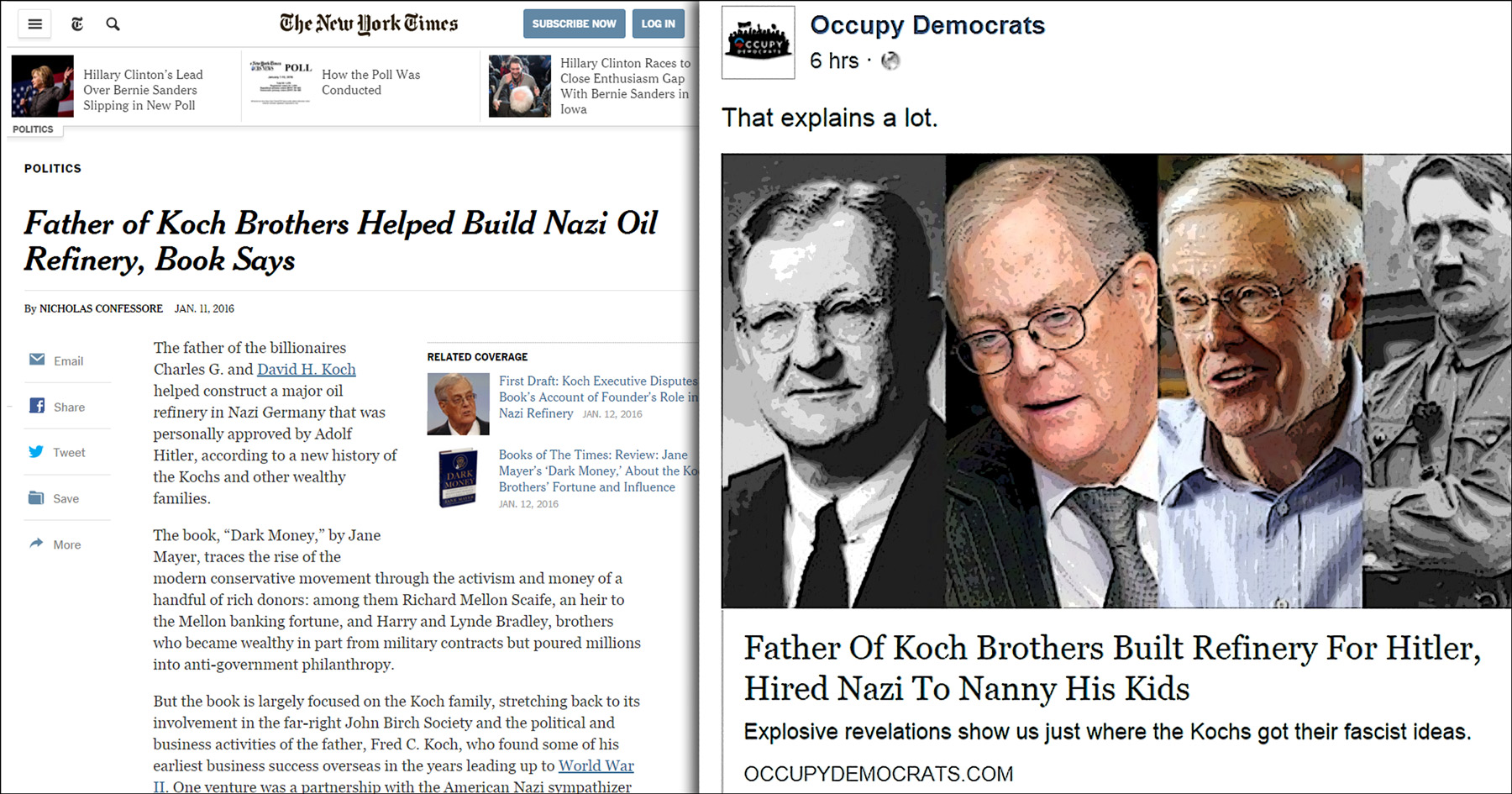
Do haters of Charles and David Koch, the billionaire philanthropists, know no bounds of decency?
Monday’s New York Times squib, “Father of Koch Brothers Helped Build Nazi Oil Refinery, Book Says,” is a grand case in point. The article is basically pre-release gossip about a book that hasn’t been published yet: Dark Money, by Jane Mayer, a New Yorker writer. The author focuses on the Kochs and other rich folks who, the article says, served as “the hidden and self-interested hands behind the rise and growth of the modern conservative movement.”
As usual with “progressive” minds, she just assumes that all the billionaires and foundations who have supported her causes over the years cannot also (or: better) be described as “self-interested.”
Her main charge, that the Koch brothers’ father had helped build “the third largest oil refinery in the Third Reich, a critical industrial cog in Hitler’s war machine,” is nothing more than guilt by association. As Dave Robertson, President and Chief Operating Officer of Koch Industries, notes in his official response, the plant in question was built before Hitler had proven himself a tyrant. It’s ridiculous to insinuate that the business deal demonstrates that a family of limited government proponents were somehow in favor of the big government tyrant, Adolf Hitler.
Calumny!
But once made, we may return volley.
Partisans often accuse their enemies of their own worst faults. I’m sure Ms. Mayer is not a Nazi, as such, but her economic ideas are a lot closer to the actual policies of the National Socialist Party than are the Kochs’.
Hence her need to smear first.
This is Common Sense. I’m Paul Jacob.
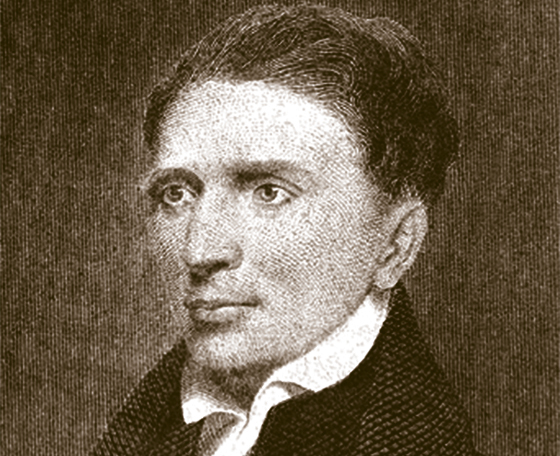
“A legislature is always badly set to work in manufacturing crime. To risk money in a wager is not a crime per se, whether the wager be on the result of a race, on the fate of a lottery ticket, on the turn of a dicebox, or on any other like contingency. It is folly, perhaps, in all cases, and it becomes crime and madness in some; but to draw the line between allowable folly and criminality, in a matter of this kind, is rather the office of publick opinion, than of the law.”
William Leggett, in an editorial in the Plaindealer, January 28, 1837, republished in A Collection of the Political Writings of William Leggett (1840), and titled “Gambling Laws.”
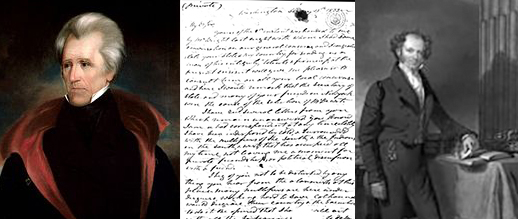
On January 13, 1833, United States President Andrew Jackson (pictured, top left) wrote to Vice President Martin Van Buren (pictured, top right) expressing his opposition to South Carolina’s defiance of federal authority in the Nullification Crisis. Jackson insisted that “the crisis must be now met with firmness” and “the modern doctrine of nullification & succession put down forever.”
South Carolina had blamed protectionist high tariffs for the severity of the economic slump of the time, and Andrew Jackson’s compromise Tariff of 1832 was still too much special-interest “protectionism” for South Carolina, which threatened to nullify the law as unconstitutional. Jackson, a nationalist at heart, had no sympathy for dissidents in the southern states. (The tariffs were designed by northern politicians to encourage the growth of industry. The belief among most economists of that time is that such high “protective” tariffs favored certain businesses at the expense of the general consumer, particularly farmers and agricultural producers.) After the crisis subsided, tariffs were further reduced from the 1832 level, much lower than of 1828’s “Tariff of Abominations,” which had been signed into law by President John Quincy Adams — and written mainly by Martin Van Buren as a way to precipitate the election of Jackson.
Since the somewhat ambiguous end to the Nullification Crisis, the doctrine of state prerogatives — “states’ rights” — has been asserted by opponents of the Fugitive Slave Act of 1850, proponents of California’s Specific Contract Act of 1863 (which nullified the Legal Tender Act of 1862), opponents of Federal acts prohibiting the sale and possession of marijuana in the first decade of the 21st century, and opponents of implementation of laws and regulations pertaining to firearms from the late 1900s up to 2013. State opposition to ObamaCare has also recently conjured up the issue.
On that same date in 1898, Émile Zola’s J’accuse exposed the Dreyfus affair.