Categories
Common Sense folly general freedom ideological culture national politics & policies

Case Closed . . . But Ticking

Irving, Texas, authorities — I use that term loosely — announced yesterday that the case has been closed. Over. Finito. These aren’t the droids you’re looking for.

What case? That of the 14-year-old clock-maker assumed to be a potential bomb-making/let’s-err-on-the-side-of-panic terrorist.

Perhaps it didn’t help that the youngster had the wrong last name: Mohamed. Or that his family had immigrated from Sudan.

Ahmed loves to tinker. On Monday, he brought one project, a clock, to school hoping to impress his engineering teacher. His teacher mistook the clock for an improvised bomb, and told Ahmed not to show it to anyone. When the clock’s alarm went off later, his English teacher took the clock and told him to pick it up after school.

Later, the principal pulled Ahmed out of class. Five policemen then interrogated the lad, eventually handcuffing and marching him to juvenile detention.

A police spokesman admitted there was never any threat made. And, of course, no bomb. Ahmed’s engineering teacher clearly wasn’t scared. Yet, this 14-year-old was still treated like a . . . terrorist.

Before being released.

Some charge this is a case of obvious bias against this student’s race or religion. Maybe that’s why even Hillary Clinton tweeted her support for the student and why President Obama invited Ahmed to bring his clock to the White House.

Though prejudice may be part of this story, I doubt it’s the main issue. Many students not named Mohamed have been treated similarly — for bringing a butter knife to cut an apple at lunch, or gnawing a PBJ sandwich into the shape of a gun, or (horrors!) “shooting” pointed fingers at classmates.

Public school’s zero-judgment zero-tolerance is equal opportunity insanity.

Not Common Sense. I’m Paul Jacob.


Printable PDF

Ahmed, clock, terrorism, terrorist, alarm, hysteria, collage, photomontage, illustration, political, chicken little, fear


Categories
Thought

Benjamin Constant

“Among the ancients, a successful war increased both private and public wealth in slaves, tributes, and lands shared out. For the moderns, even a successful war costs infallibly more than it is worth.”


Benjamin Constant The Liberty of the Ancients Compared with That of the Moderns, 1819

Categories
Accountability Common Sense government transparency ideological culture national politics & policies political challengers

Walker vs. Union Power

Governor Scott Walker, who is running for the U. S. Presidency, has cooked up a white paper on the subject for which he is nationally known: labor relations. It’s a doozy.

His main points are:

  • Reduce the power of union bosses by eliminating the National Labor Relations Board.
  • Eliminate big-government unions.
  • Take “right to work”
  • Protect state employees’ First Amendment rights.

And that’s not the whole of it. Some of his points are worth quoting at length, including this:

On Day One of my administration, I will put in place accountability and transparency rules. I will require online disclosure of union expenditures, including revealing the total compensation of union officers, itemizing union trust fund expenditures, increasing reporting requirements for local affiliates of government employee unions, and restoring conflict-of-interest reporting requirements.

Walker’s is not a detailed, in-depth policy paper. It’s a list of goals, really. It does not address how he would accomplish this, if elected. It’s obvious that many (perhaps most) of these reforms would require congressional compliance and even legislation.

Yet by focusing on the inordinate power of government workers’ unions, Gov. Walker advances what many of us were hoping for when we first heard that the surprisingly daring, surprisingly successful Wisconsin governor would make a bid for the top spot in the federal government. Something needs changing.

And that something is the general purpose for government: what and whom government serves, other than itself, and how.

Or, in Walker’s words, “commonsense reforms” to narrow “the federal government’s role. . . .”

He says let’s close “special-interest loopholes . . . once and for all.”

Is that possible? It’s worth a try.

This is Common Sense. I’m Paul Jacob.


Printable PDF

Taxes Make Us Strong


Categories
Thought

Simon Newcomb

“A common mistake is that the conclusions of the plain unlettered man differ from those of economists in being more immediately founded on observed facts and less on deduction. The truth is that the plain unlettered man is more prone to rely on deduction from unproved hypotheses than the economist is. All classes must equally use deduction, because it is only by this logical process that we form any conclusion about the future effect of any present cause. Drawing the conclusion that rain will follow a certain direction of the wind with certain appearances of the clouds is an act of logical deduction. The main point in which men’s logical methods differ lies in the care with which hypotheses are formed by induction from observed facts, and the readiness of men to test them. Now it is the plain man who is most prone to form hasty generalizations from insufficient facts, to consider the conclusions which he thence deduces as final, and to be blind to all facts which do not tally with his theory.”


Simon Newcomb, Principles of Political Economy, 1886, p. 40

Categories
Common Sense general freedom ideological culture media and media people national politics & policies political challengers too much government

Trump Blot

I’m almost professionally required to say something nice about Donald Trump — because mainstream media feel professionally required to ridicule him. So here goes: he’s doing us a great service in his presidential run.

Trump’s sort of a bung puller; he’s unstopped the cork of polite political society, and shown the massive voter dissatisfaction by giving more realistic voice to just how stupid government is. “Really stupid!”

But, beyond that, where does he stand? On too many issues, that’s murky. For economist David Henderson, a friend of mine from way back, this shows promise.

Henderson is a free-market economist. He’s not into the whole warfare/big stick bullying that some conservatives channel from the first Progressive president, Teddy Roosevelt. Trump, writes Henderson, stands out, by not having “foreign policy advisers.” Which Henderson regards as “refreshing, given the hawkish views of the vast majority of his Republican competitors.”

Henderson also acknowledges Trump’s downsides, including “Trump’s claim, in 2011, that the U.S. government, having won the war in Iraq, should have taken their oil.” This nationalist plunder idea is evil on its face. And disturbingly retro, harkening back to the days of rapine and pillage.

Understandably, Americans fixate on the man’s “charisma.” Should that make us comfortable? Of Max Weber’s three types of authority (traditional, charismatic, and rational-legal), charismatic is the least predictable, least stable. People will follow too far those they love too much. Or find too entertaining?

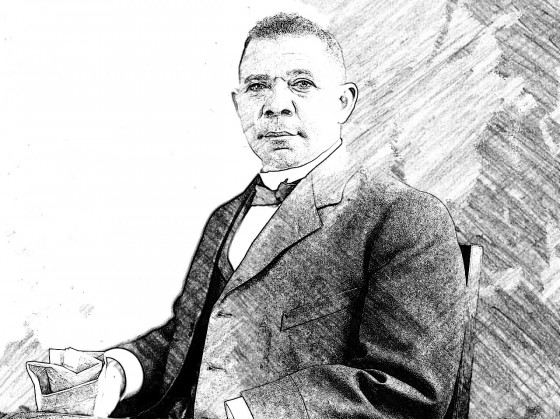
Trump serves, for now, as a sort of Rorshach inkblot test. What you see depends on your hopes, fears, or the context of Trump’s candidacy, as you understand it.

For my part, I don’t see an accountable proponent of responsible, limited government.

This is Common Sense. I’m Paul Jacob.

Printable PDF

Trump Blot, Rorshach, inkblot, editorial, political cartoon


Categories
Thought

Benjamin Constant

“The ancients, as Condorcet says, had no notion of individual rights. Men were, so to speak, merely machines, whose gears and cogwheels were regulated by the law. The same subjection characterized the golden centuries of the Roman Republic; the individual was in some way lost in the nation, the citizen in the city.”


Benjamin Constant The Liberty of the Ancients Compared with That of the Moderns, 1819

Categories
Common Sense First Amendment rights folly general freedom initiative, referendum, and recall Regulating Protest too much government

Citizen Registration Fee

It’s not about the ten bucks — or the thousand. An important principle is involved.

Professional lobbyists in Missouri are legally required to submit reports about the corporations, local governments, industries, associations, and special interests for whom they lobby, how much they are paid, and the goodies they bestow upon the politicians they seek to influence. The registration fee is $10.

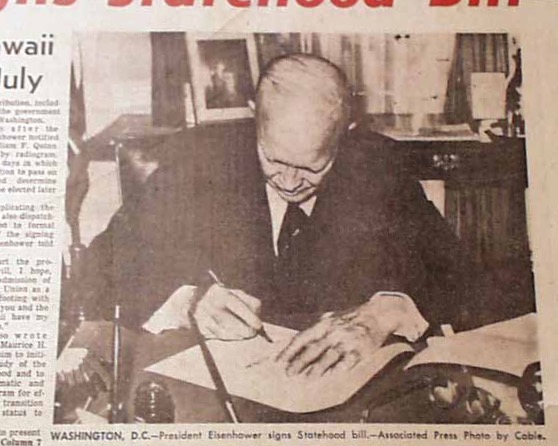
Problem is, as I revealed at Townhall yesterday, Ron Calzone isnt a lobbyist. So, naturally enough, he didn’t file.

Calzone is president of Missouri First, a group advocating constitutional governance and mobilizing fellow citizens for an enormous impact on Show-Me State government. He regularly treks to the capitol, while Missouri First helps folks who can’t get to Jefferson City submit testimony online . . . all to weigh in on issues like the Second Amendment, property rights, initiative petition rules, and cronyism.

It’s true that Calzone lobbies every time he speaks to a legislator. But hey: he’s not a lobbyist under the legal definition. Why? Because he earns not a penny. Missouri First doesn’t even have a bank account. And Calzone doesn’t represent various clients as a professional lobbyist would; he represents himself — and those citizens who agree with him.

Despite the letter of the law, last week the Missouri Ethics Commission fined Mr. Calzone $1,000 for not registering as a lobbyist. It also ordered him not to speak to any state legislator until he registers.

Ron Calzone — with the help of the Freedom Center of Missouri and the Center for Competitive Politics — is appealing the case.

And will win in court.

Yet, that an “ethics” agency is harassing a citizen volunteer speaking truth to power . . . speaks volumes.

This is Common Sense. I’m Paul Jacob.

Printable PDF

Ron Calzone, Missouri, citizenship, freedom, lobbyists


Categories
Thought

Benjamin Constant

“War precedes commerce. War and commerce are only two different means of achieving the same end, that of getting what one wants. Commerce is simply a tribute paid to the strength of the possessor by the aspirant to possession. It is an attempt to conquer, by mutual agreement, what one can no longer hope to obtain through violence. A man who was always the stronger would never conceive the idea of commerce. It is experience, by proving to him that war, that is, the use of his strength against the strength of others, exposes him to a variety of obstacles and defeats, that leads him to resort to commerce, that is, to a milder and surer means of engaging the interest of others to agree to what suits his own. War is all impulse, commerce, calculation. Hence it follows that an age must come in which commerce replaces war. We have reached this age.”


Benjamin Constant The Liberty of the Ancients Compared with That of the Moderns, 1819

Categories
links

Townhall: Show Me Tyranny

Ah, the establishment fights back. But citizens aren’t giving up. At least, not in the Show-Me State. Click on over to Townhall.com. Then come back here for more reading:

Categories
Thought

Yves Guyot

“Progress is in inverse ratio to the coercive interference of man with man, and in direct ratio to the control by man of external nature.”