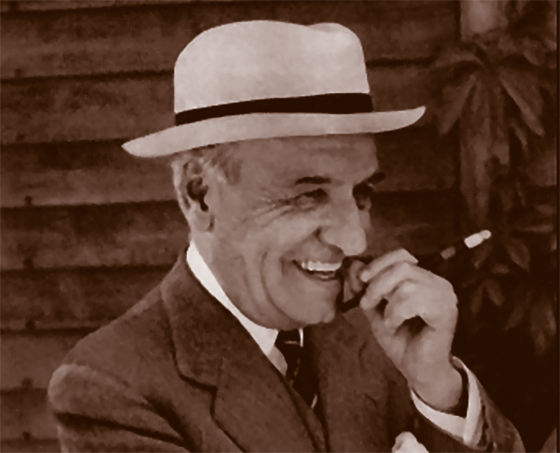
Isabel Paterson, The God of the Machine, 1943, p. 242.
The humanitarian in theory is the terrorist in action.
Categories
Isabel Paterson
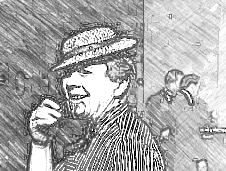
Isabel Paterson, The God of the Machine, 1943, p. 242.
The humanitarian in theory is the terrorist in action.
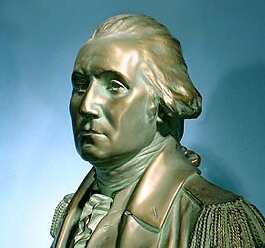
On May 14, 1787, delegates convened a Constitutional Convention, in Philadelphia, Pennsylvania, to write a new Constitution for the United States. George Washington presided over the convention.
On the same day a century later, Lysander Spooner — author of the pamphlets titled “The Constitution of No Authority” — died.
We know that the media in general, and Silicon Valley, too, have strong anti-conservative biases — even if, in another sense, the Fourth Estate serves as almost the embodiment of one understanding of the conservative impulse: relentlessly upholding established institutions, against all attacks. The American media strongly defends the modern state; every program, it seems, is sacrosanct: the only thing wrong with Big, Intrusive Government is that it is not as Big and Intrusive as it should be.
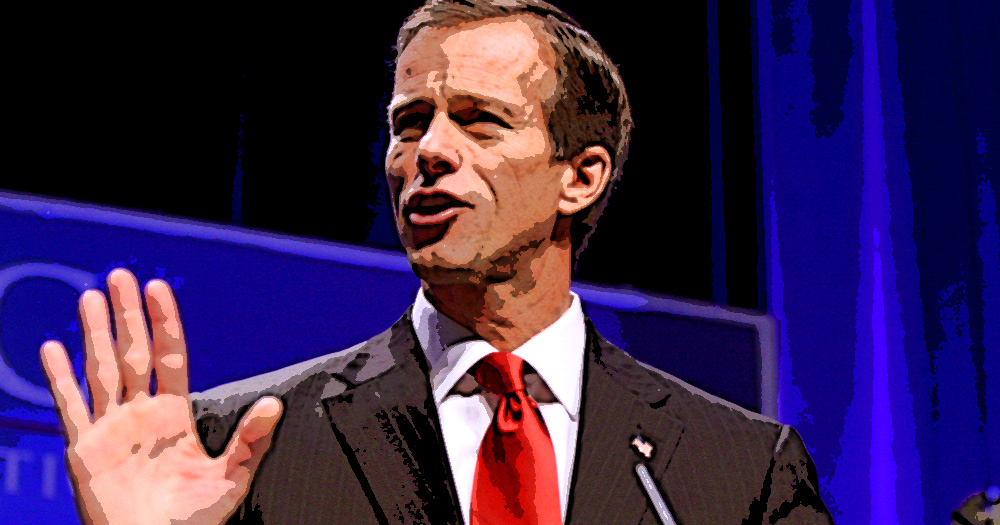
This week, several ex-Facebook news curators alleged systemic “political bias” in how stories receive the top spot in Facebook’s Trending news section. So Sen. John Thune (R-S.D.) intrudes. He wrote to Facebook CEO Mark Zuckerberg, in his official capacity on the U.S. Senate Committee on Commerce, Science and Communication. Thune says that if Facebook is, in effect, promoting stories by means of a hidden political agenda, this amounts to something like a public fraud, which lies within this committee’s purview.
I don’t see how. And I really would like such biases and pseudo-frauds to be dealt with by consumer pressure rather than government whip. And that should be without regard to the partisan stripe of the bias — or the whip.
Anthony L. Fisher, over at Reason, notes that the senator has a logic problem: he rests his case for government oversight of Facebook rules and consumer relations on the infamous “fairness doctrine,” which is not operative at this time, and which Thune has previously and repeatedly opposed.
And for good reason: the doctrine produced government-enforced muting of speech, not fairness.
But this all may mean almost nothing. I’d never even noticed Facebook’s Trending section.
Have you?
This is Common Sense. I’m Paul Jacob.
Photo of Sen. John Thune credit: Gage Skidmore on Flickr
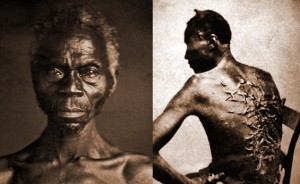
On May 13, 1888, Brazil abolished slavery with the passage of the Lei Áurea (“Golden Law”).
[T]he mass-man sees in the State an anonymous power, and feeling himself, like it, anonymous, he believes that the State is something of his own. Suppose that in the public life of a country some difficulty, conflict, or problem presents itself, the mass-man will tend to demand that the State intervene immediately and undertake a solution directly with its immense and unassailable resources. This is the gravest danger that to-day threatens civilisation: State intervention; the absorption of all spontaneous social effort by the State.
José Ortega y Gasset, Chapter XIII: The Greatest Danger, The State, The Revolt of the Masses, 1929.

The Democratic People’s Republic of North Korea isn’t.
That is, it isn’t democratic and it is not “the people’s” in any republican sense.
But it does exist . . . as the world’s most totalitarian dictatorship. A tyranny that would make the Pharaohs, Caesars, and Grand Poobahs of the ancient world wince in distaste.
Once dubbed The Land of the Morning Calm, North Korea is today the darkest place on Earth. Agitated, terrified — not calm.
In Pyongyang, the Seventh Worker’s Party Congress is going on, and Kim Jong Un, the nation’s tyrant, has laid out a blustery, challenging barrage of threats to the outside world, particularly South Korea and the United States, with 30,000 soldiers stationed on the peninsula.
Kim Jong Un has a new “five-year plan,” and his foreign policy, though backed by nukes, doesn’t seem so much Stalinesque as Husseinish.
He threatens offensive action, raining down destruction against his enemies.
But he also says he’d only use nukes in defense. Plus, his capabilities are much doubted.
No wonder many analysts dismiss his talk as a cover to keep his people in line. And to worship him. The subject North Koreans are weak in the face of such monstrous tyranny, and the more Un “challenges” the world, the bigger and more impregnable he seems.
And yet, when one individual rides herd so cruelly on so many, there’s a certain . . . frangibility about the whole system.
I hope.
Like the late Saddam Hussein, Un’s braggadocio is a sign of weakness, likely designed to discourage more powerful nations — China, South Korea, and our country — from intervention.
And we shouldn’t intervene.
But neither should we make any more stupid deals to provide him oil.
This is Common Sense. I’m Paul Jacob.

Please consider showing your appreciation by dropping something in our tip jar (this link will take you to the Citizens in Charge donation page… and your contribution will go to the support of the Common Sense website). Maintaining this site takes time and money.
Your help in spreading the message of common sense and liberty is very much appreciated!

On May 12, 1943, Axis forces in North Africa surrendered.
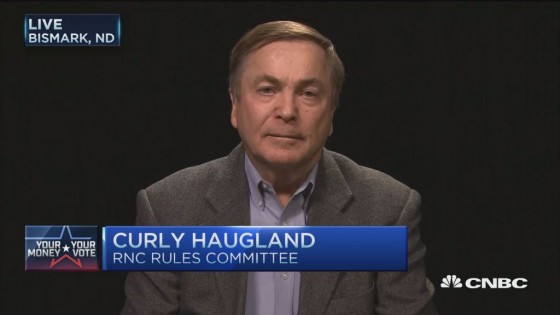
The biggest victory is one I’m going to have in a couple months. Up till now, I’ve basically been laying the groundwork.
Curly Haugland, as quoted in “The One Man Who Could Stop Donald Trump,” Erick Trickey, Politico, May 9, 2016.

Red Flag!
When leader worship is called a “people’s movement.”
It was just pointed out to me that it isn’t clear that the people on the left are Bernie supporters. . . so here’s a revised version of the meme:

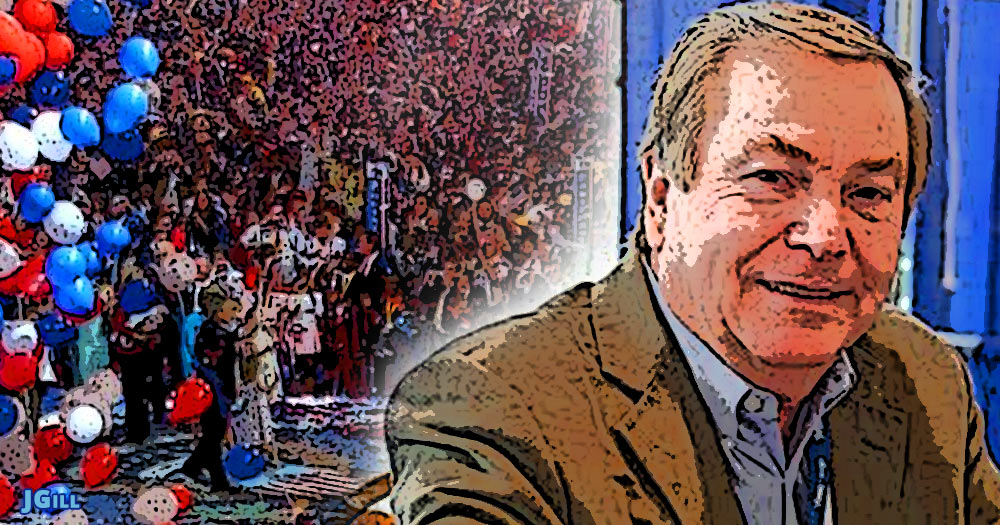
An article in Politico calls Curly Haugland a “rule-mongering crank,” a “gadfly,” “stubborn” (twice), a “pain in the ass,” and a “pedantic curmudgeon.”
And merely in the first paragraph!
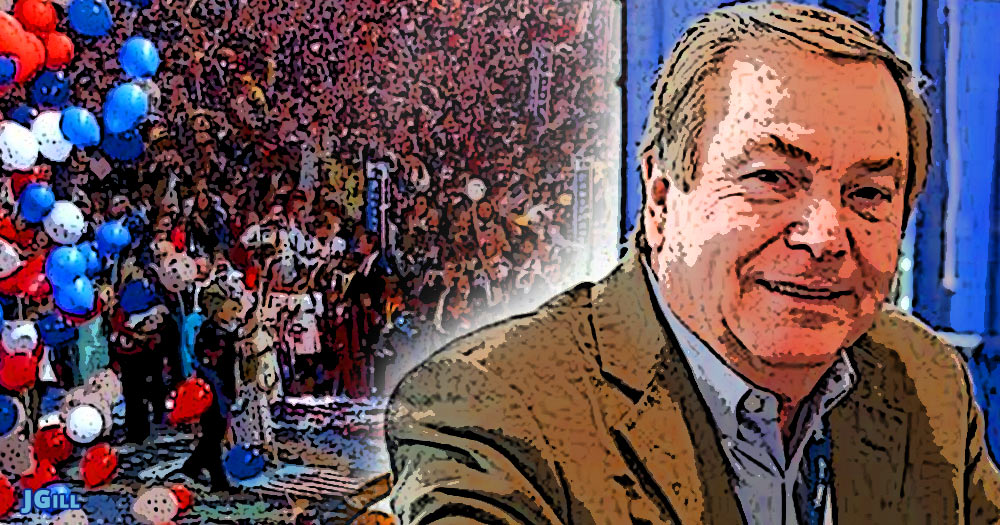
Who is this Curly fellow, you ask? Haugland’s a successful small businessman in Bismarck, North Dakota, and a member of the Republican National Committee. He’s also a no-nonsense member of the party’s Rules Committee.
Long before Trump was an issue in the party (or even “in” the party), Mr. Haugland was urging Republican leaders to do something anathema to Washington-types: follow the rules.
“The rule says, specifically,” Curly told CNBC, “that it’s a vote of the delegates at the convention to determine if there’s a majority, not a primary vote. . . . The media has created a perception that the voters will decide the nomination. Political parties choose their nominee, not the general public.”
The entire electorate chooses the president, of course, but it seems fair enough that parties choose their own nominee. They might be wise to do it through primaries including the broader public or through state conventions reserved to party members or any number of ways. But however done, it should be by the rules.
And without taxpayer money.
Delegates have been free to vote their conscience throughout the history of the GOP, from just prior to the Civil War, when Lincoln gained the nomination at a contested 1860 convention, until today. It’s been a rule. The only exception was in 1976, when President Ford’s campaign worked to change the rule, binding delegates to block Ronald Reagan’s insurgent candidacy. Coincidentally, the leader of that ’76 effort was Paul Manafort, who today is running Trump’s convention effort.
Curly Haugland’s beef isn’t with Trump, but with the media and the RNC leadership, for not telling folks the truth.
No telling if GOP delegates will vote their conscience in Cleveland, but thank you, Mr. Haugland, for speaking truth to power. Republican delegates may be listening.
This is Common Sense. I’m Paul Jacob.
P.S. If you missed the first two commentaries in this series, here they are:
Fat Lady Score – It’s a time for choosing.
Listen to Whom? – People in political parties have rights, too.
Please consider showing your appreciation by dropping something in our tip jar (this link will take you to the Citizens in Charge donation page… and your contribution will go to the support of the Common Sense website). Maintaining this site takes time and money.
Your help in spreading the message of common sense and liberty is very much appreciated!