On May 11, 1858, Minnesota was admitted as the 32nd U.S. State.
Nine years later to the day, the Grand Duchy of Luxembourg’s independence and neutrality were affirmed in the Second Treaty of London.

On May 11, 1858, Minnesota was admitted as the 32nd U.S. State.
Nine years later to the day, the Grand Duchy of Luxembourg’s independence and neutrality were affirmed in the Second Treaty of London.
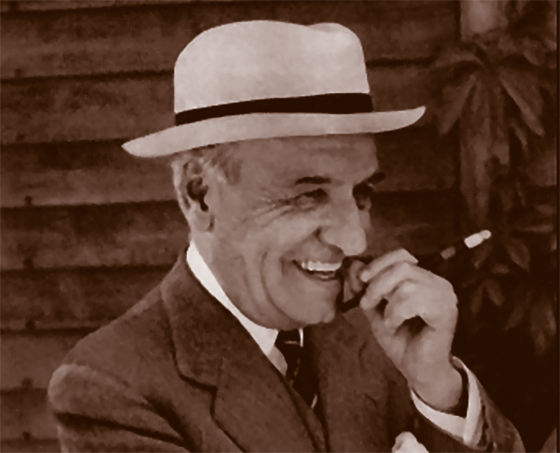
Strictly speaking, the mass, as a psychological fact, can be defined without waiting for individuals to appear in mass formation. In the presence of one individual we can decide whether he is ‘mass’ or not. The mass is all that which sets no value on itself — good or ill — based on specific grounds, but which feels itself ‘just like everybody,’ and nevertheless is not concerned about it; is, in fact, quite happy to feel itself as one with everybody else.
José Ortega y Gasset, The Revolt of the Masses, 1929.

It’s a time for choosing, I concluded yesterday, for Republican voters — between the so-called “establishment” Republicans endorsing Donald Trump’s candidacy and those, such as House Speaker Paul Ryan, Mitt Romney, and both President Bushes, who have declined to endorse.
Sen. John McCain’s admonition that, “You have to listen to people that have chosen the nominee of our Republican Party,” raises the imperative question: Who gets to choose?
Moreover, who should choose?
I’m a big fan of democracy — not pure democracy as a form of government, of course, but voting as a wonderful mechanism for people to control their government, and therefore, to protect our rights, our republic.
Yet, the Republican and Democratic Parties are private associations of citizens. We have a right to vote on who serves in public office, but not a right to decide who is nominated by a political party to which we do not belong.
“Without borders,” Mr. Trump has argued, “we don’t have a country.” To which a Republican friend recently added, “Without borders, we don’t have a party.”
People in political parties, as in any association, have rights, including who they nominate and how. Parties should be independent, not government-controlled.
Nor should political parties be advantaged in law, or their primaries and national conventions subsidized by taxpayers, as they are now.
Trump has railed that the GOP nomination process is rigged. Like most public-private partnerships, it is! But not the way you might think . . . as I’ll delve into tomorrow.
This is Common Sense. I’m Paul Jacob.

Please consider showing your appreciation by dropping something in our tip jar (this link will take you to the Citizens in Charge donation page… and your contribution will go to the support of the Common Sense website). Maintaining this site takes time and money.
Your help in spreading the message of common sense and liberty is very much appreciated!

On May 10, 1872, Victoria Woodhull became the first woman nominated for President of the United States.
In a landmark Supreme Court decision on May 10, 1893, the tomato was ruled a vegetable, not a fruit.
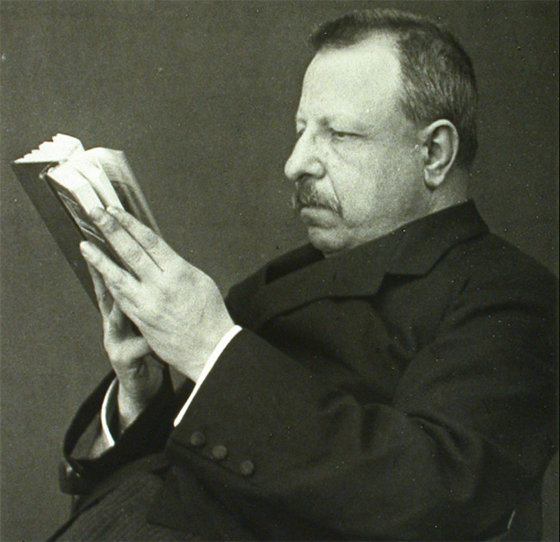
We must be severe, not only with ourselves, but with other also; exigent, not only with ourselves, but with others also; and so, on the contrary, benevolent not only towards others, but also toward ourselves; compassionate, not only toward others, but also towards this instrument of labour that we carry about with us and of which we sometimes demand too much; that is, our empirical individuality. Reality is neither democratic nor aristocratic, but both together; it abhors the privilege of some over others as much as that equality, according to which each one must have the same value as the other at every moment.
Benedetto Croce, The Philosophy of the Practical: Economic and Ethic, trans. Douglas Ainslie (1913, 1967), p. 429.

You’ve heard the news: Donald Trump is now the Republican Party’s “likely presumptive nominee” for president. It’s a very modern-sounding term.
His 16 opponents have, one by one, suspended their campaigns. In coming weeks, as the billionaire businessman wins uncontested primaries, we’re told he’ll be “awarded” enough delegates to reach the magic number of 1,237 — a majority.
For weeks, Mr. Trump had been yelling that the Republican National Committee was rigging the process to block his nomination. Now, RNC Chair Reince Priebus and a host of establishment Republicans have endorsed Mr. Trump, including former Senate Majority Leader Bob Dole, Sen. John McCain, the 2008 nominee, and Senate Majority Leader Mitch McConnell.
“You have to listen to people that have chosen the nominee of our Republican Party,” John McCain told CNN. “I think it would be foolish to ignore them.”
McCain raises several interesting issues, worth considering over the next few days.
Let’s consider foolishness, first. There is a pragmatic argument against Trump as the nominee. While polls show Trump losing to Hillary, with 28 percent viewing him favorably against 65 percent unfavorably, a Politico story argues that, “A generic Republican might have been a favorite for the White House.”
Yet, most of the opposition to Trump isn’t pragmatic, it’s a matter of hardworking, grassroots Republicans who sincerely believe his positions don’t fit the party’s principles, or that his behavior has fallen short. Agree or disagree, but those are worthy considerations.
It’s a time for choosing. More tomorrow.
This is Common Sense. I’m Paul Jacob.

Please consider showing your appreciation by dropping something in our tip jar (this link will take you to the Citizens in Charge donation page… and your contribution will go to the support of the Common Sense website). Maintaining this site takes time and money.
Your help in spreading the message of common sense and liberty is very much appreciated!
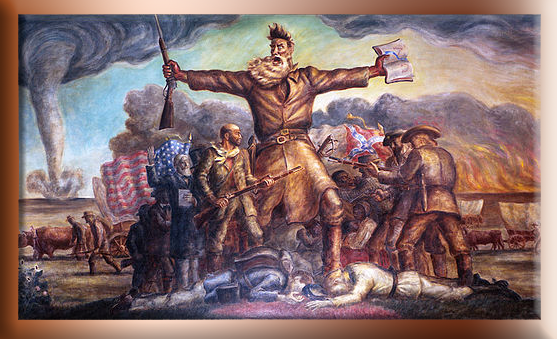
On May 9, 1800, abolitionist revolutionary (and, technically, terrorist) John Brown was born.
In 1883 on this date, Spanish philosopher José Ortega y Gasset was born.
The metaphor is perhaps one of man’s most fruitful potentialities. Its efficacy verges on magic, and it seems a tool for creation which God forgot inside one of His creatures when He made him. All our other faculties keep us within the realm of the real, of what is already there. The most we can do is to combine things or to break them up. The metaphor alone furnishes an escape; between the real things, it lets emerge imaginary reefs, a crop of floating islands. A strange thing, indeed, the existence in man of this mental activity which substitutes one thing for another — from an urge not so much to get at the first as to get rid of the second.
José Ortega y Gasset, “Taboo and Metaphor,” The Dehumanization of Art, 1925.

Can you identify Hillary’s apparent co-partner in anti-coal? This weekend Paul Jacob asks the question, and puts it in context.
Click on over to Townhall, then come back here for more reading.
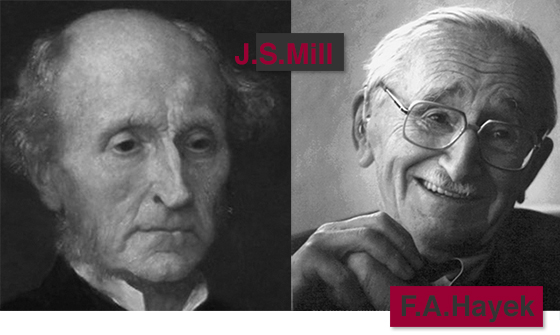
On May 8, 1899, Austrian-English economist and philosopher Friedrich August von Hayek was born. He signed the bulk of his books written in the English language as “F.A. Hayek,” and is best known for The Road to Serfdom, The Constitution of Liberty, The Fatal Conceit, and many essays, several of them which are widely cited, including “Individualism, True and False” and “The Use of Knowledge in Society.”
Years earlier, on the same date in 1873, English philosopher and economist John Stuart Mill died. Now best known for On Liberty and Utilitarianism, Mill’s letters to his wife were edited into book form by Hayek.
On May 8, 1946, two Estonian school girls (Aili Jõgi and Ageeda Paavel) blew up the Soviet memorial which stood in front of the Bronze Soldier in Tallinn.