Categories
crime and punishment folly general freedom media and media people national politics & policies too much government

Not Buying a Stairway to Riches

I am not a writer by trade. I don’t make a living off of these daily and weekly writing gigs. I give this stuff away, for free. The donations I ask for are there to cover bandwidth, website expertise, artwork, etc. They don’t cover my contributions.

But that doesn’t disqualify me from my occasional wonder and amazement (and worse) at how intellectual “property” is handled in America.

This week a Los Angeles jury found that the great rock band “Led Zeppelin did not plagiarize the opening chords of the rock epic Stairway to Heaven from the U.S. band Spirit,” the BBC reports. “It said the riff Led Zeppelin was accused of taking from Spirit’s 1967 song Taurus ‘was not intrinsically similar’ to Stairway’s opening.”

So, my surprise, and perhaps yours too, is that a riff, a mere riff, taken from one song and put into another, could be actionable at law. It seems to me that this would be like suing over an essay title (one has no private property rights to your headlines, no matter how original), or clever turn of phrase. Writers copy this stuff all the time. Even more commonly, they inadvertently regurgitate these writerly “riffs” from the far corners of their minds, or even think up these things separately.

But honestly, I didn’t think one could sue over a riff. Riffs and chord progressions vary in originality, but some of the best songs use the same three chords, so there is a lot of apparent “stealing” going on.

Thankfully, the jury wisely knew the difference between What Is and What Should Never Be.

This is Common Sense. I’m Paul Jacob.


Printable PDF

Led Zeppelin, copyright, lawsuit


Categories
Thought

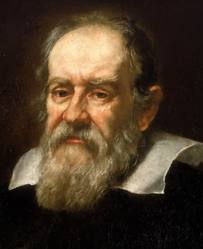
Galileo Galilei

Philosophy is written in this grand book — I mean the universe — which stands continually open to our gaze, but it cannot be understood unless one first learns to comprehend the language in which it is written.


Galileo Galilei, Il Saggiatore (1623), as translated in The Philosophy of the Sixteenth and Seventeenth Centuries (1966), by Richard Henry Popkin, p. 65.

Categories
Today

Bitter Bierce

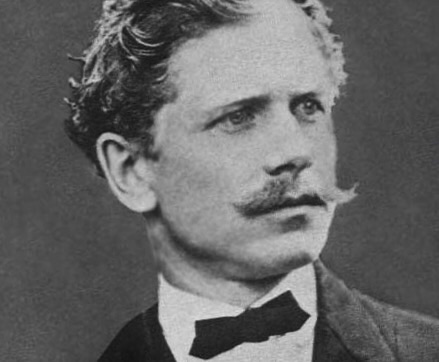
June 24 birthdays include Henry Ward Beecher, clergyman and reformer (1813); Ambrose Bierce [pictured], author of “An Occurrence at Owl Creek Bridge” and The Devil’s Dictionary — his dark, cynical wit earned him the epithet “Bitter Bierce” (1842); Karin Pilsäter, Swedish politician of the Liberal People’s Party (1960).

Categories
Thought

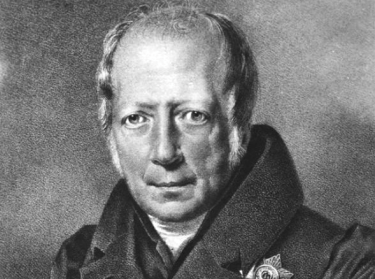
Wilhelm von Humboldt

It is only through extremes that men can arrive at the middle path of wisdom and virtue.


Wilhelm von Humboldt, The Limits of State Action (1792), English edition The Sphere and Duties of Government, as translated by Joseph Coulthard (1854).

Categories
Accountability crime and punishment folly free trade & free markets general freedom ideological culture nannyism national politics & policies

Digs at the Gig Economy

In Texas’s progressive enclave of Austin, the government has regulated Uber and Lyft out of the city.

Massachusset’s uber*-progressive Sen. Elizabeth Warren cautions that the “much-touted virtues”of the “gig economy” that these services represent are actually dark signs of the times, providing workers a false “step in a losing effort to build some economic security in a world where all the benefits are floating to the top 10 percent.”

Vermont’s Sen. Bernie Sanders, the independent candidate for the Democratic Party’s presidential nomination, is also no fan. Why? These services are not regulated.

Sanders’s charge that these person-to-person (P2P) ride-sharing services are “unregulated” is of course the opposite of the truth. They are self-regulated for safety and efficiency in ways that taxi services never were. How much extra value did governments add, with their regulations of the taxicab industry? They just reduced competition and made cabs more expensive.

P2P online cooperation is revolutionary. And “progressives” are stuck in the past, itching to suppress that revolution. “Initially,” writes Jared Meyer in the July issue of Reason, “hostility mostly came from state and municipal governments, at the behest of local special interests.” But as the services became more popular, opposition shifted. To the national Democrats like Sanders, Warren and . . . Hillary Clinton. She promises to “crack down on bosses who exploit employees by misclassifying them as contractors or even steal their wages.”

Par for the course: the Internet provides more opportunity than ever, and all some progressives see are the old socialist fears of “exploitation” and “greed” . . . while they greedily suck up to unions and special interests.

The bright side, Meyer argues, is that they are on the losing side.

This is Common Sense. I’m Paul Jacob.
 

*I guess the pun here is intended. Or not. You choose, P2P style.


Printable PDF

Uber, Lyft, sharing, economy, HIllary, Bernie, illustration


Categories
Today

Estonia’s Victory Day

Today is Estonia’s Victory Day, which has been celebrated on June 23 every year since 1934. The date recalls the victory in the 1919 Battle of Vonnu of the Estonian military forces (and Latvian North brigade) and their allies over German forces (Baltische Landeswehr) who sought to re-assert Baltic-German control over the region. The battle was part of the 1918-1920 Estonian War of Independence, where the main adversary of the newly independent Estonia was Communist Russia.

Today, Victory Day also marks the contributions of all Estonians in their fight to regain and retain their independence. Estonian celebration of June 23 is ceremonially tied to the following Midsummer Day celebrations on June 24.

According to Estonian laws, the state flags are not to be lowered during the night between days.

Categories
Thought

Wilhelm von Humboldt

Reason cannot desire for man any condition other than that in which not only every individual enjoys the most absolute, unbounded freedom to develop himself out of himself, in true individuality, but in which physical nature, as well, need receive no other shaping by human hands than that which is given to her voluntarily by each individual, according to the measure of his wants and his inclinations, restricted only by the limits of his energy and his rights.


Wilhelm von Humboldt, The Limits of State Action (1792), English edition The Sphere and Duties of Government, as translated by Joseph Coulthard (1854).

Categories
Accountability ideological culture media and media people nannyism national politics & policies property rights responsibility

The Climate Cassandra

Thirty years ago, in June, 1986, the Senate Environment and Public Works Committee met to consider the problems of ozone depletion, the greenhouse effect, and climate change.

Present at those hearings was today’s climate Cassandra, James Hansen, then of the Goddard Institute of Space Studies. And he was predicting that “global temperatures should be nearly 2 degrees higher in 20 years,” according to Associated Press reporting at that time.

There was some sloppiness either in Hansen’s account, or the AP’s, for in one part of his testimony Hansen claimed that his institute’s climate models projected, for “the region of the United States, the warming 30 years from now is about 1 1/2 degrees C, which is about 3 F.”

Ronald Bailey, the science writer over at Reason, tries to make sense of this mess of numbers, models, and predictions.

Oh, and actual, tabulated results.

Hansen’s predictions went, as Bailey put it, “definitively off the rails when tracking the temperature trend for the contiguous U.S. between 2000 and 2016. Since 2000, according to the NOAA calculator, the average temperature trend has been downward at -0.06 F degree per decade.”

That’s not the whole picture, though: “global temperatures have increased by 0.51 C degree since 1986, so perhaps the man-made global warming signal has finally emerged.”

No matter, though, as Bailey notes, “the United States and the Earth have warmed at considerably slower pace than Hansen predicted 30 years ago.”

Which suggests that Hansen’s models may be inspired more by wish, fear, and ideology than genuine science.

So, to those who wish to rush to “do something” (anything?) to combat “climate change,” take it slow. Follow the pace of the Earth itself.

This is Common Sense. I’m Paul Jacob.

Printable PDF

Global warming, climate change, illustration


Categories
Today

Giants

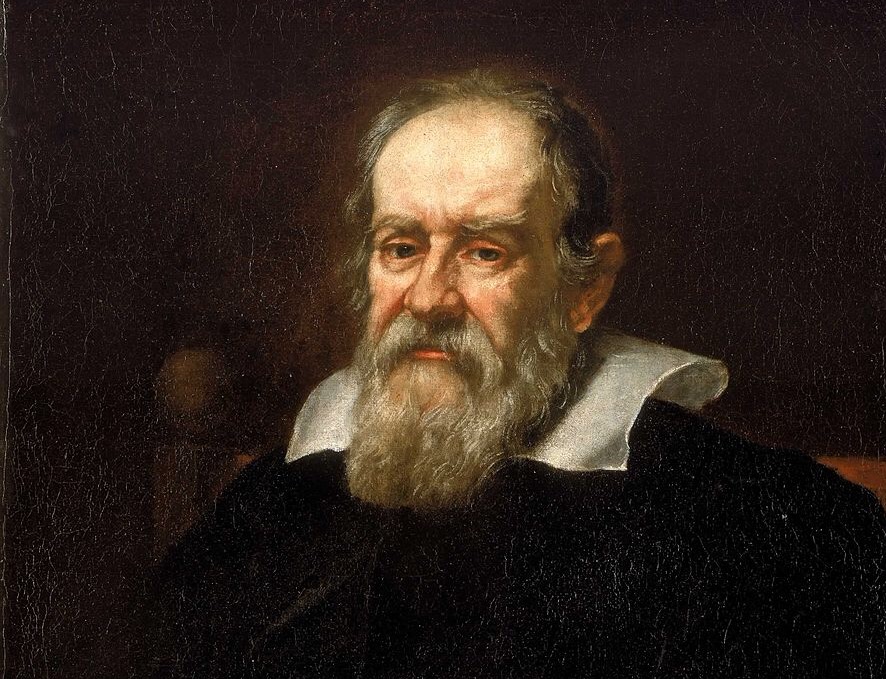
On June 22, 1633, astronomer Galileo Galilei recanted his belief in heliocentrism, the idea that the Earth revolves around the sun. He didn’t do this based on scientific research, but under pressure from the Holy Office in Rome.

Three hundred forty-five years later, to the date, American astronomer James W. Christy discovered Charon, a moon for what was then called “the ninth planet,” Pluto. This put Christy in an august company of satellite discovers, including Galileo, who had discovered four of Jupiter’s moons in 1610.

When Pluto was later “demoted” to “dwarf planet” status, in 2006, no one was put under house arrest for objecting, or for not changing his or her mind, as had Galileo been centuries before.

Categories
Thought

Galileo Galilei

I do not feel obliged to believe that the same God who has endowed us with senses, reason, and intellect has intended us to forgo their use and by some other means to give us knowledge which we can attain by them.


Galileo Galilei, Letter to the Grand Duchess Christina (1615).