Bernie manages to pack quite a lot into one statement…
Click below for a high resolution version of this image:
Progressives are becoming increasingly defensive about nearly all forms of Big Government, relentlessly telling us that we need government for everything from money and roads to food inspection and subsidies and . . . well, the list is endless.
Food safety is one of their favorite subjects, but I’m increasingly skeptical. Do we really need to be protected from our neighbors’ produce and cooked goods, as can be found in community bake sales and potlucks?
In Arizona, legislators had long carved out an exemption from commercial food safety regulations for potluck and similar “noncommercial social events.” Great. But there was an unfortunate limitation to the exemption: it applied only to such events that took place at a workplace.
Home or church? Potlucks there are still against the law.
So of course officials took the occasion of said “loophole” to crack down on some neighborly events in an Apache Junction mobile home park, in Pinal County.
I’m sure hundreds, perhaps thousands of these events are routinely ignored by Arizona’s police. Indeed, I bet half of the state’s better cops engage in such activities themselves — just because potlucks are part of everyday life all over the country.
But the idiotic regulation allowed public servants (loosely so called) discretionary powers to attack a few people for reasons tangential to community safety. Thankfully, Rep. Kelly Townsend has introduced HB 2341, which would extend potluck freedom beyond the office or warehouse workplace.
Let us be clear: this was not a problem waiting to be solved by Big Government. It is a Big Government problem to be solved by new legislation to de-regulate home and community potlucks.
This is Common Sense. I’m Paul Jacob.

“[T]here are three great disturbers of monetary standards: Governmental policies — especially but not exclusively in war time; banking policies usually linked with the Governmental; and fluctuations in gold production.”
Irving Fisher, The Money Illusion (1928).
On Feb. 12, 1986, Soviet human rights activist Anatoly Scharansky was released after spending eight years in Soviet prisons and labor camps. The amnesty deal was arranged at a summit meeting between Soviet leader Mikhail Gorbachev and President Ronald Reagan. Scharansky had been imprisoned for his campaign to win emigration rights for Russian Jews — who had been forbidden to practice Judaism in the USSR.
On Feb. 12, 1909, the National Association for the Advancement of Colored People (NAACP) was founded.
On Feb. 12, 1593, approximately 3,000 Korean defenders led by General Kwon Yul successfully repelled more than 30,000 invading Japanese forces in the Siege of Haengju.
On February 28, the Academy of Motion Picture Arts and Sciences (AMPAS) will announce the winners of its annual movie awards. Many Americans watch this Academy Awards show as a rite, treating the “The Oscars” as if it were a big deal.
It certainly isn’t immune to controversy.
This year, a cry went up under the banner “#OscarsSoWhite.” Unlike in the recent past, no black actors or directors were nominated in the big categories. Charges of racism flew fast and wild.
AMPAS is a large but private membership organization, and its membership is overwhelmingly white. So one could “explain” the nomination list entirely on racial grounds.
But it’s not as if the organization doesn’t try to be fair: the voting process, for the final awards, is nothing as crude as America’s bizarre system, which combines first-past-the-post vote counting and selection by the Electoral College. AMPAS uses a form of ranked choice voting, instead.
“Since 2009, the Academy has used instant runoff voting to determine the winner of the coveted Best Picture award,” explains Molly Rockett at Oscar Votes 1-2-3.
The Academy has an interest in ensuring that winners at least enjoy majority support, so the selection process measures overall support, not picking the winner merely by a small plurality of first place votes in a crowded field.
Ms. Rockett tells us that the Academy is trying to racially diversify its membership. Maybe that will change something. Or maybe nothing needs to be changed — it’s not as if the Oscar nominees should be selected by racial quota.
But it is worth remembering that the Oscars sport a more rational democracy than the United States.
This is Common Sense. I’m Paul Jacob.
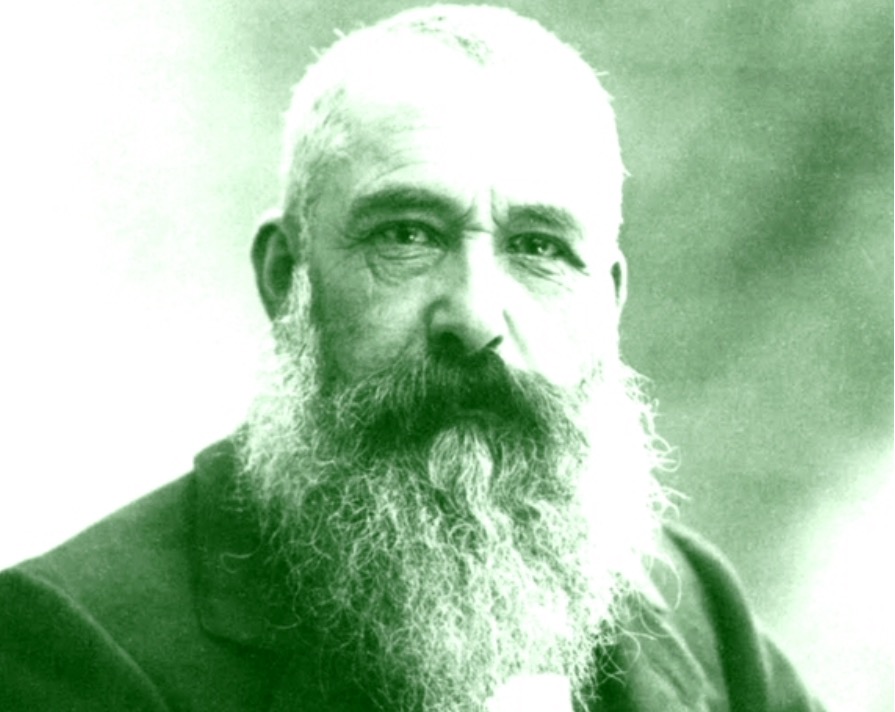
On Feb. 11, 1990, after 27 years in prison, Nelson Mandela was released by South African authorities.
Mandela had joined the African National Congress (ANC) in 1944, becoming deputy national president of the group in 1952. Arrested for treason in 1961, he was acquitted — but then arrested again in 1962 for illegally leaving the country. Convicted and sentenced to five years at Robben Island Prison, he was put on trial again in 1964 on charges of sabotage. He was convicted and sentenced to life in prison along with several other ANC leaders.
In 1989, F.W. de Klerk became South African president and began dismantling apartheid. De Klerk lifted the ban on the ANC, suspended executions, and in February 1990 ordered the release of Nelson Mandela.
Mandela subsequently led the ANC in negotiating an end to apartheid and the establishment of a multiracial government. In 1993, Mandela and de Klerk were jointly awarded the Nobel Peace Prize. One year later, the ANC won the country’s first free elections, and Mandela was elected South Africa’s president.
“Some writers have so confounded society with government, as to leave little or no distinction between them; whereas they are not only different, but have different origins. Society is produced by our wants, and government by our wickedness; the former promotes our happiness positively by uniting our affections, the latter negatively by restraining our vices. The one encourages intercourse, the other creates distinctions. The first is a patron, the last a punisher.”
Tom Paine, Common Sense (1776).
Donald Trump and Bernie Sanders winning in New Hampshire is as good an indicator as any that Americans — or at least Live Free or Die staters — are tired of the bipartisan Establishment. Victories for a billionaire iconoclast and a self-designated socialist.
Both are “players” in their distinct ways: the former a publicity-minded entrepreneur who boasts of having been a briber of politicians, the latter as a long-term senator with a consistently pro-government-growth voting record.
But both are plausibly outsiders, too. Trump speaks off the cuff and in an entertainingly anti-PC manner, and Sanders proclaims a love of government so strong that he willingly embraces a label with a very negative record throughout the last century.
Indeed, Trump’s many words and Sanders’s One Word serve to negate these two candidates’ “establishment feel.”
But if elected, would either rock the Establishment boat?
Based on his voting record, Sanders is liable to continue the bipartisan “War, Always War” strategy abroad, along with the same domestic policy of “Spend, Always Overspend.”
That is Establishment.
Trump is less of a warmonger than Sanders, oddly enough: The Donald has criticized the Iraq War, argued that Russia should take care of its nearby Syria problem, and offered that China should worry about North Korea . . . in other words, he can conceive of foreign areas being outside of American purview.
But Trump is as protectionist as Sanders, and loves taking property from private individuals (with “just compensation”) and giving it to developers . . . like himself. You cannot get more Establishment than that.
Still, New Hampshire voters know something, and that something is undoubtedly that something must change.
This is Common Sense. I’m Paul Jacob.
“An American is quite lost if he tries to think of the dollar as varying. He cannot easily think of anything by which to measure it. Even with our gold standard we have a dollar fluctuating in buying power. Yet we think of the dollar as fixed. It is fixed only in the sense that it is redeemable in a fixed number of grains of gold. It is not fixed in the amount of goods and benefits it can command.”
Irving Fisher, The Money Illusion (1928).