Although only a few may originate a policy, we are all able to judge it.
Pericles, as quoted in Karl Popper, The Open Society and Its Enemies, Book II (1945), Chapter 40.
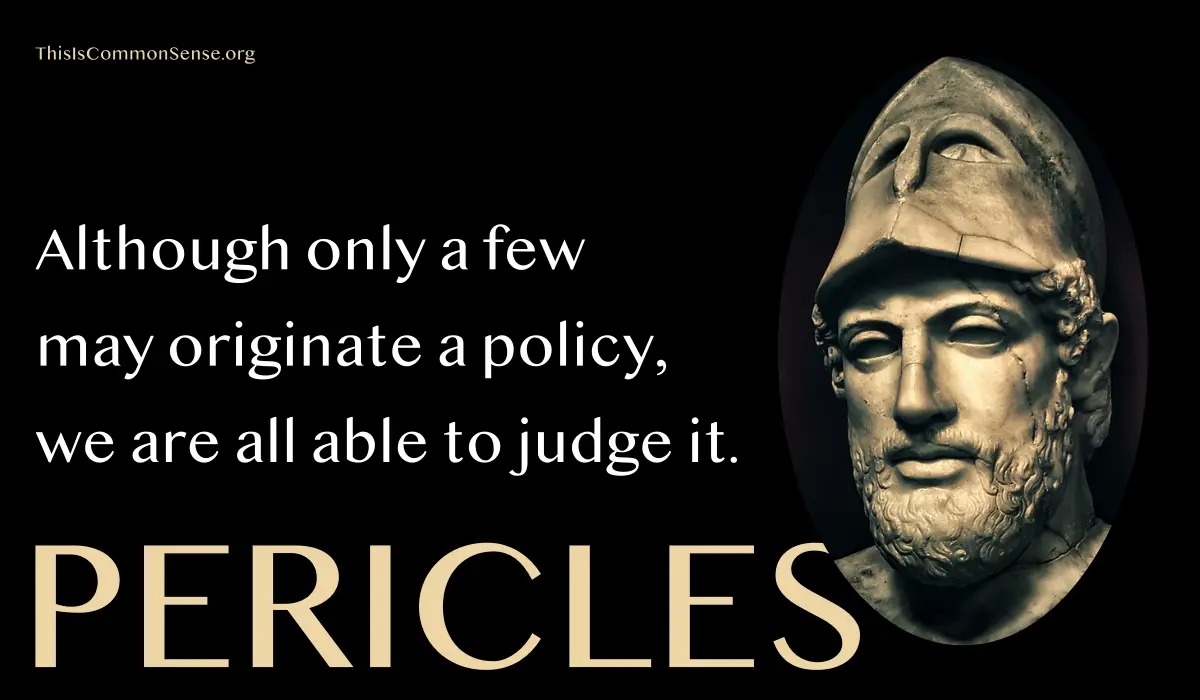
Although only a few may originate a policy, we are all able to judge it.
Pericles, as quoted in Karl Popper, The Open Society and Its Enemies, Book II (1945), Chapter 40.

In 1913, Ford Motor Company launched a new manner of production for the Model T: a continuously moving assembly line.
Earlier in the year, Ford employees had assembled magnetos using this technique, improving efficiency to a marked degree: “Instead of each worker assembling his own magneto, the assembly was divided into 29 operations performed by 29 men spaced along a moving belt,” explains History.com. “Average assembly time dropped from 20 minutes to 13 minutes and soon was down to five minutes.”
The chassis was added on such a line on October 7, so that “all the major components of the Model T were being assembled using this technique,” which, when combined with high wages, came to be known as “Fordism.”
The consequence? A complete commercial success for Henry Ford, so much so that “by 1916 the price of the Model T had fallen to $360 and sales were more than triple their 1912 level. Eventually, the company produced one Model T every 24 seconds, and the price fell below $300.”
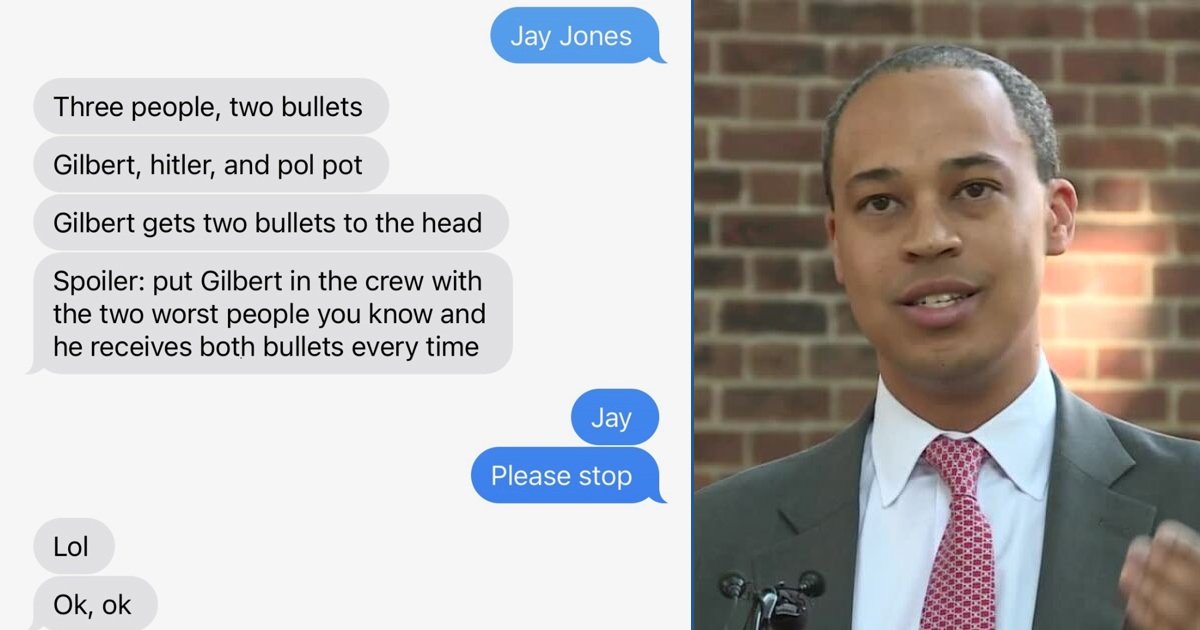
With 280,000 people having already voted in Virginia’s race for attorney general, polls show Jones leading.
“Like all people,” Jones excused himself, “I’ve sent text messages that I regret.”
Have all of us sent texts such as these?
“If those guys die before me,” Jones messaged Republican House Delegate Carrie Coyner, “I will go to their funerals to piss on their graves.”
Jones, who had resigned as a state legislator, was incensed that Speaker Gilbert had offered too strong a public eulogy over the death of a retired Democratic delegate. Apparently, that delegate had committed the unforgivable sin of being a moderate.
Jones boasted that if he had Hitler, Pol Pot and the Virginia House Speaker in a room, and only two bullets, Speaker “Gilbert gets two bullets to the head.”
In one message, Del. Coyner “chastised Jones” for telling her over the phone how he hoped “Jennifer Gilbert’s children would die” in her arms to make the Speaker change his political views.
“Rather than deny that he had wished death on the children,” National Review explained, “Jones responded by saying, ‘Yes, I’ve told you this before. Only when people feel pain personally do they move on policy.’”
“I mean do I think Todd and Jennifer are evil? And that they’re breeding little fascists?” he asked in another text.
To which he answered: “Yes.”
Jay Jones for attorney general? No.
This is Common Sense. I’m Paul Jacob.
See all recent commentary
(simplified and organized)
See recent popular posts

This book raises issues that might not be apparent from the table of contents.
Karl Popper, The Open Society and Its Enemies (1945), Introduction.
It sketches some of the difficulties faced by our civilization — a civilization which might be perhaps described as aiming at humanness and reasonableness, at equality and freedom; a civilization which is still in its infancy, as it were, and which continues to grow in spite of the fact that it has been so often betrayed by so many of the intellectual leaders of mankind. It attempts to show that this civilization has not yet fully recovered from the shock of its birth — the transition from the tribal or “enclosed society,” with its submission to magical forces, to the “open society” which sets free the critical powers of man. It attempts to show that the shock of this transition is one of the factors that have made possible the rise of those reactionary movements which have tried, and still try, to overthrow civilization and to return to tribalism.

On October 6, 1683, immigrant families found Germantown, Pennsylvania, in the first major immigration of German people to America. More Americans, today, consider themselves as deriving from German ethnic stock than from any other ethnicity.

“If you’re in our hemisphere, if you’re in the Caribbean, if you’re north of Venezuela and you want to traffic drugs to the United States, you are a legitimate target of the United States military,” in an interview with Fox News’s The Sunday Briefing.
“We have every authorization needed. These are designated as foreign terrorist organizations,” Hegseth insisted. Two days ago another boat of “narco-terrorists” was bombed in the Caribbean under Hegseth’s direction.
This is all comes under the rubric of “fighting terrorism” as authorized after 9/11.
This is how the Trump Administration is ramping up the War on Drugs, a preoccupation of both major political parties and the federal government in the 20th century.
The previous Tuesday, Hegseth had made waves denying to women any easier physical qualification standard to get in the military, demanding a return to pre-2015 qualification standards. And advised his audience of big brass that just as rank-and-file military personnel should be fit, so too should U.S. generals and admirals not be fat.
At least that, we can hazard, is a constitutionally fit and proper — fully authorized — judgment of the Secretary of, er, Defense.
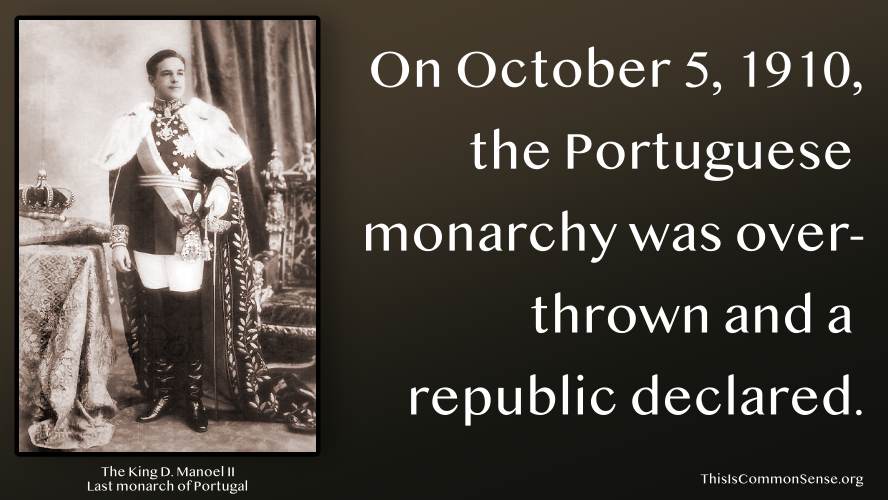
On October 5, 1910, the Portuguese monarchy was overthrown and a republic declared.

Every failure is a step to success. Every detection of what is false directs us towards what is true: every trial exhausts some tempting form of error. Not only so; but scarcely any attempt is entirely a failure; scarcely any theory, the result of steady thought, is altogether false; no tempting form of Error is without some latent charm derived from Truth.
William Whewell, Lectures on the History of Moral Philosophy in England, Lecture 7 (1852).
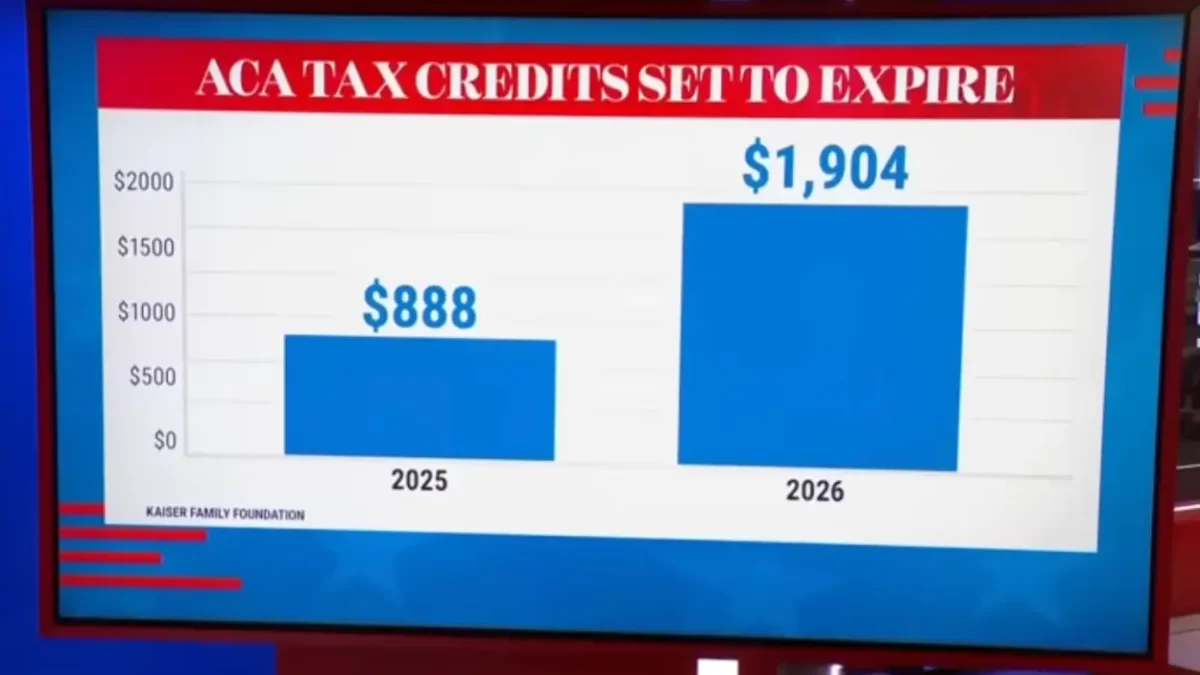
The Democrats pushed the government into shutdown because they insisted that Obamacare be re-upped, and that the medical expenses of immigrants, legal and illegal, be paid from federal government coffers. This was the upshot of Paul Jacob’s Thursday and Friday commentaries.
But Democrats do not want to admit the latter part of top agenda item (in Maxine Waters’ words). Here is NBC trying to make the Democrats’ case:
The argument can be broken down into multiple pieces, but take just the first minute, describing why Democrats insist that the Obamacare re-up be dealt with now, not after the CR. They say it must happen now, because people are making their plans on it. Republicans are not negotiating in good faith, Democrats complain. (Sound familiar?) But by scuttling the CR, now the Obamacare re-up issue is postponed further.
And Democrats knew that going in.
They aren’t dummies. Are they?
So it is really about something else. Not the American people and their medical insurance. Something else. . . .

Many secrets of art and nature are thought by the unlearned to be magical.
Roger Bacon, as cited by Peter Nicholls The Encyclopedia of science fiction: an illustrated A to Z (1979), p. 376.