On April 20, 1657, freedom of religion was granted to the Jews of New Amsterdam, which was later renamed New York City.
Categories
New Amsterdam
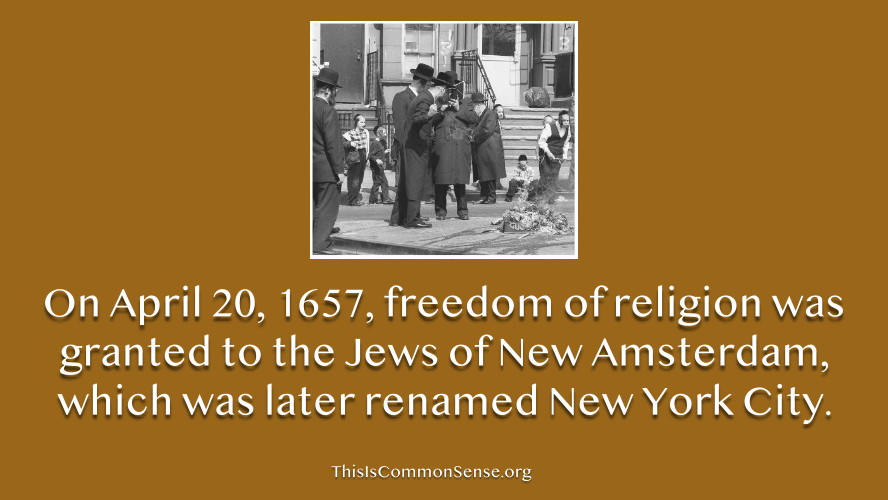
On April 20, 1657, freedom of religion was granted to the Jews of New Amsterdam, which was later renamed New York City.
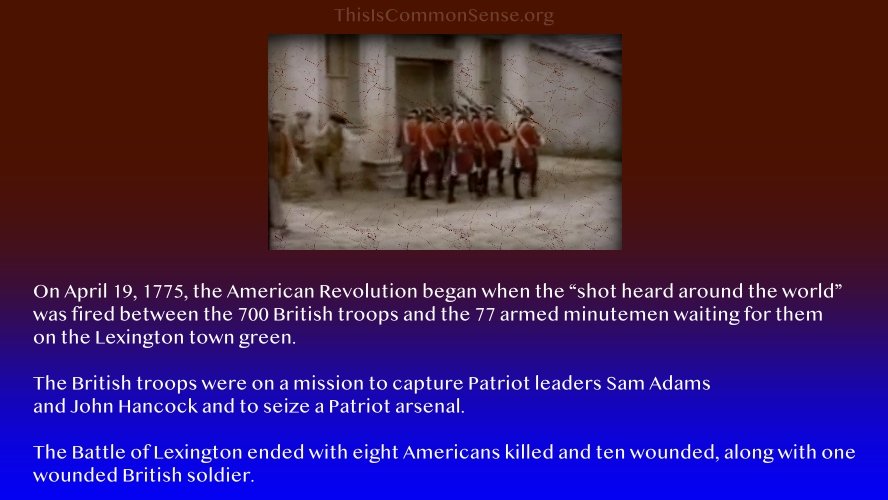
On April 19, 1775, the American Revolution began when the “shot heard around the world” was fired between the 700 British troops and the 77 armed minutemen under Captain John Parker waiting for them on the Lexington town green.
The British troops were on a mission to capture Patriot leaders Sam Adams and John Hancock and to seize a Patriot arsenal.
The Battle of Lexington ended with eight Americans killed and ten wounded, along with one wounded British soldier.
In Concord, a couple of hours later, British troops were encircled by hundreds of armed Patriots. The British commander ordered his men to return to Boston without directly engaging the Americans, but on the 16-mile journey they were constantly attacked by Patriot marksmen firing at them Indian-style from behind trees, rocks, and stone walls. By the time the British reached the safety of Boston, nearly 300 soldiers had been killed, wounded, or were missing in action. The Patriots suffered fewer than 100 casualties.
On April 19, 1782, John Adams secured the Dutch Republic’s recognition of the United States as an independent government.

On April 18, 2019, a redacted version of the Mueller Report was released to the United States Congress and the public. President Donald Trump claimed that it exonerated him. “It was called, ‘No collusion. No obstruction,’” quoth the president. “I’m having a good day. There never was [collusion], by the way, and there never will be. . . . This should never happen to another president again, this hoax.”

On April 17 1824, Russia abandoned all North American claims south of 54° 40’N.
1907 — The Ellis Island immigration center processed 11,747 immigrants, more than on any other day.
1942 — French prisoner of war General Henri Giraud escaped from his castle prison in Königstein Fortress.
1969 – Communist Party of Czechoslovakia chairman Alexander Dubček was deposed.

Dr. Martin Luther King, Jr., penned his Letter from Birmingham Jail while incarcerated in Birmingham, Alabama, for protesting segregation, on April 16, 1963.

On April 15, 1945, the Bergen-Belsen concentration camp was liberated.
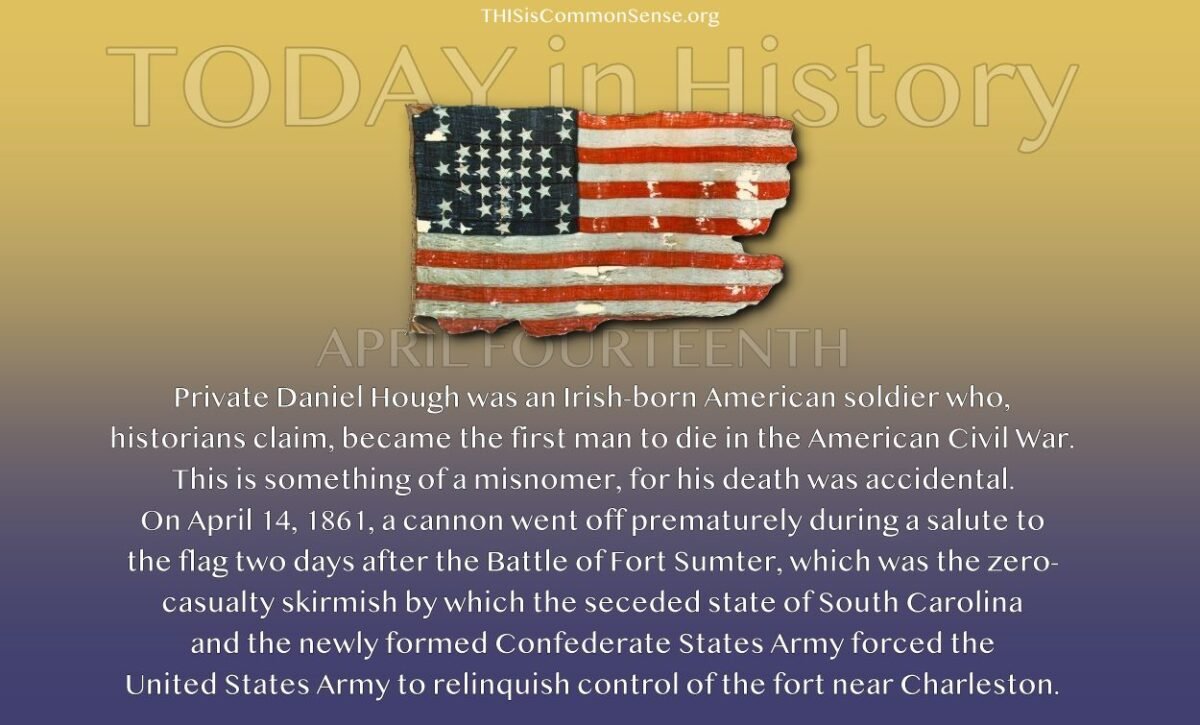
Daniel Hough was an Irish-born American soldier who, historians claim, became the first man to die in the American Civil War. This is something of a misnomer, for his death was accidental. On April 14, 1861, a cannon went off prematurely during a salute to the flag two days after the Battle of Fort Sumter, which was the zero-casualty skirmish by which the seceded state of South Carolina and the newly formed Confederate States Army forced the United States Army to relinquish control of the fort near Charleston.
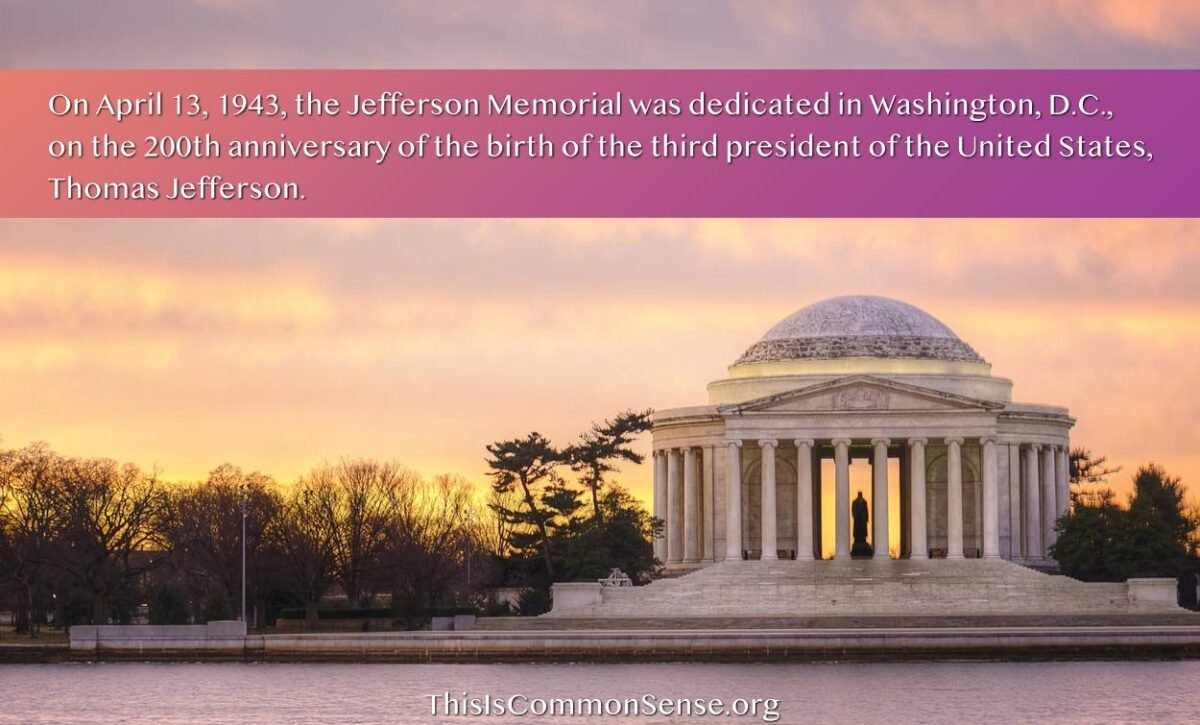
On April 13, 1943, the Jefferson Memorial was dedicated in Washington, D.C., on the 200th anniversary of the birth of the third president of the United States, Thomas Jefferson.

On April 12, 1861, the Confederate attack on Fort Sumter marked the start of the American Civil War. Firing on the Union-held fort for 34 hours, the Confederate bombardment killed no soldiers in the exchange of artillery fire.
The Union garrison, led by Major Robert Anderson, surrendered on April 13, 1861, and was allowed to evacuate without loss of life.
During the evacuation on April 14, however, an accidental explosion of a cannon during a salute to the U.S. flag did lead to one casualty.

On April 11, 1945, the American Third Army liberated the Buchenwald concentration camp, near Weimar, Germany, a camp that would later be judged second only to Auschwitz in the horrors it imposed on its prisoners.
Among those in the camp saved by the American soldiers was Elie Wiesel, who would go on to win the Nobel Peace Prize in 1986.
Shown in photograph: German citizens ushered to the camp by American soldiers, post-conquest.