Categories
Thought

Thomas Szasz

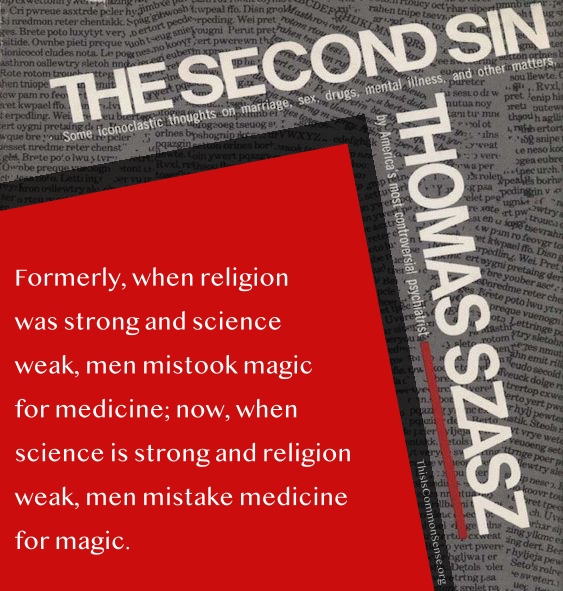
Formerly, when religion was strong and science weak, men mistook magic for medicine; now, when science is strong and religion weak, men mistake medicine for magic.

Thomas Szasz, The Second Sin (1973), “Science and Scientism,” p. 115.
Categories
Thought

Leszek Kołakowski

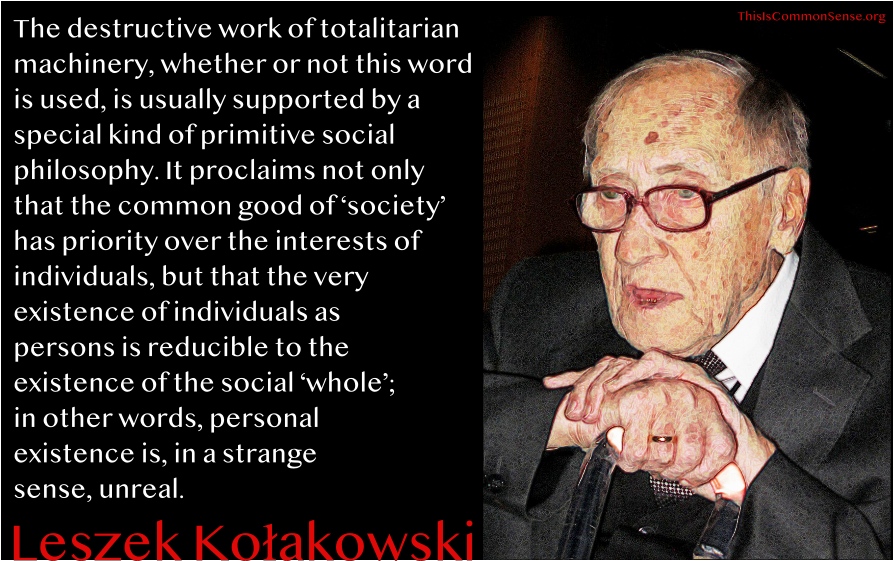
The destructive work of totalitarian machinery, whether or not this word is used, is usually supported by a special kind of primitive social philosophy. It proclaims not only that the common good of ‘society’ has priority over the interests of individuals, but that the very existence of individuals as persons is reducible to the existence of the social ‘whole’; in other words, personal existence is, in a strange sense, unreal. This is a convenient foundation for any ideology of slavery.

Leszek Kołakowski, “Totalitarianism and the Virtue of the Lie,” as quoted in Is God Happy? Selected Essays(2013), Basic Books, p. 57.
Categories
Thought

Thomas Szasz

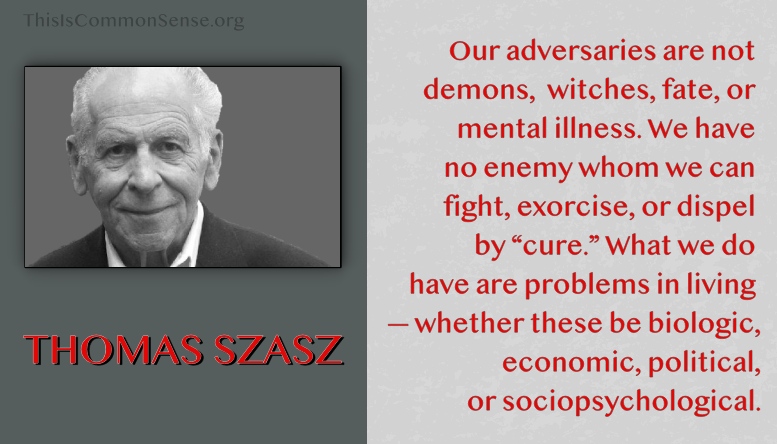
Our adversaries are not demons, witches, fate, or mental illness. We have no enemy whom we can fight, exorcise, or dispel by “cure.” What we do have are problems in living — whether these be biologic, economic, political, or sociopsychological.

Thomas Szasz, ”The Myth of Mental Illness” in American Psychologist, Vol. 15 (1960), p. 115.
Categories
Thought

Gnaeus Naevius

Semper pluris feci ego
potioremque habui libertatem [multo] quam pecuniam.

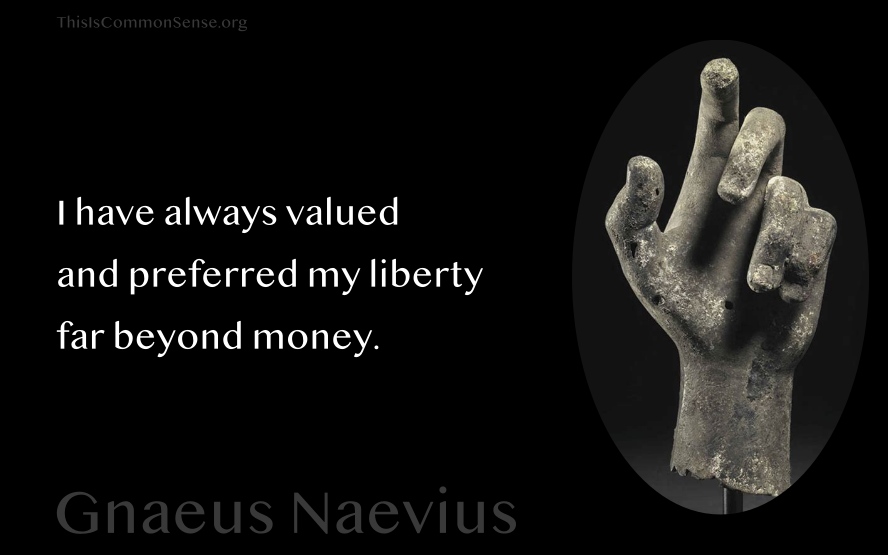
I have always valued and preferred my liberty far beyond money.

Gnaeus Naevius (c. 270 – c. 201 BC), translated by W. F. H. King, Classical and Foreign Quotations, 3rd ed. (1904), no. 2388.
Categories
Thought

John Adams

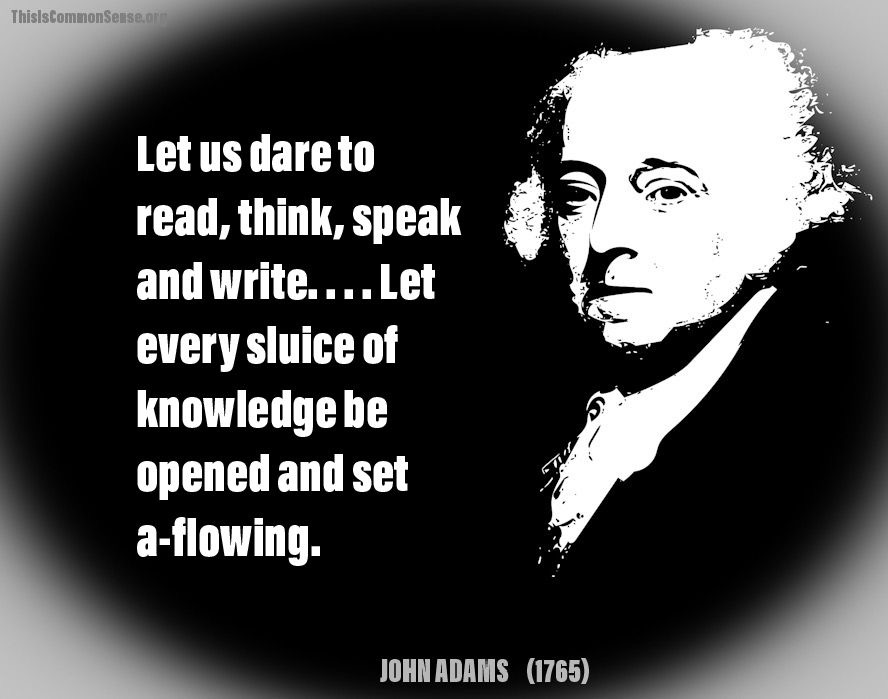
Let us dare to read, think, speak, and write. . . . [L]et every sluice of knowledge be opened and set a-flowing.

John Adams, A Dissertation on the Canon and Feudal Law (1765).
Categories
Thought

David Hume

Art may make a suit of clothes; but nature must produce a man.

David Hume, “The Epicurean,” in Essays, Moral, Political, and Literary (1741-2; 1748).
Categories
Thought

Ortega y Gasset

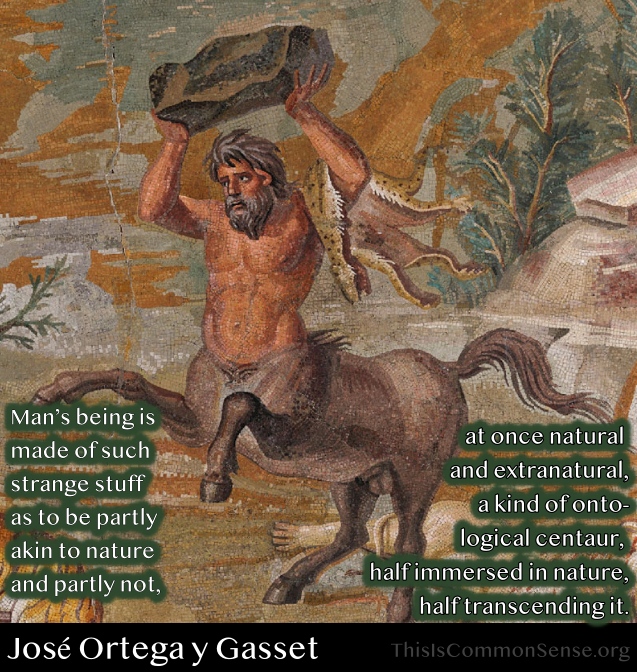
Man’s being is made of such strange stuff as to be partly akin to nature and partly not, at once natural and extranatural, a kind of ontological centaur, half immersed in nature, half transcending it.

José Ortega y Gasset, “Man Has No Nature,” in History as a System (1962).
Categories
Thought

David Hume

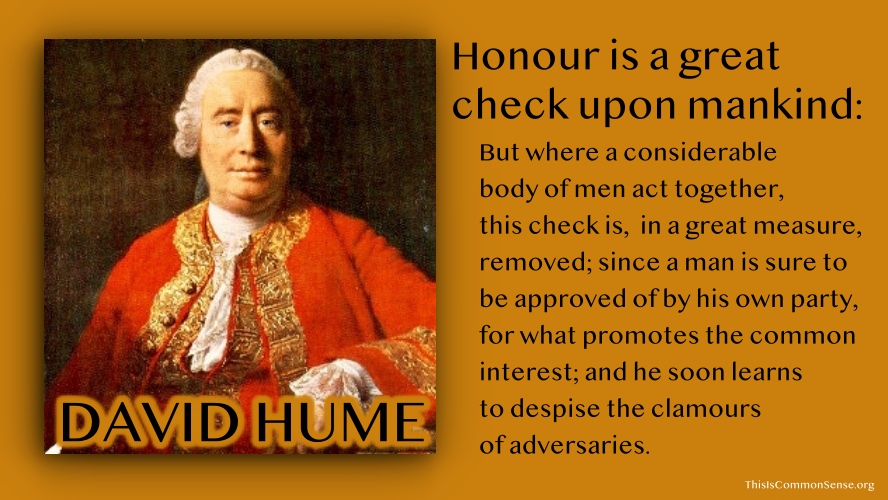
Honour is a great check upon mankind: But where a considerable body of men act together, this check is, in a great measure, removed; since a man is sure to be approved of by his own party, for what promotes the common interest; and he soon learns to despise the clamours of adversaries.

David Hume, “Of The Independency of Parliament,” in Essays, Moral, Political, and Literary (1741-2; 1748).
Categories
Thought

Ortega y Gasset

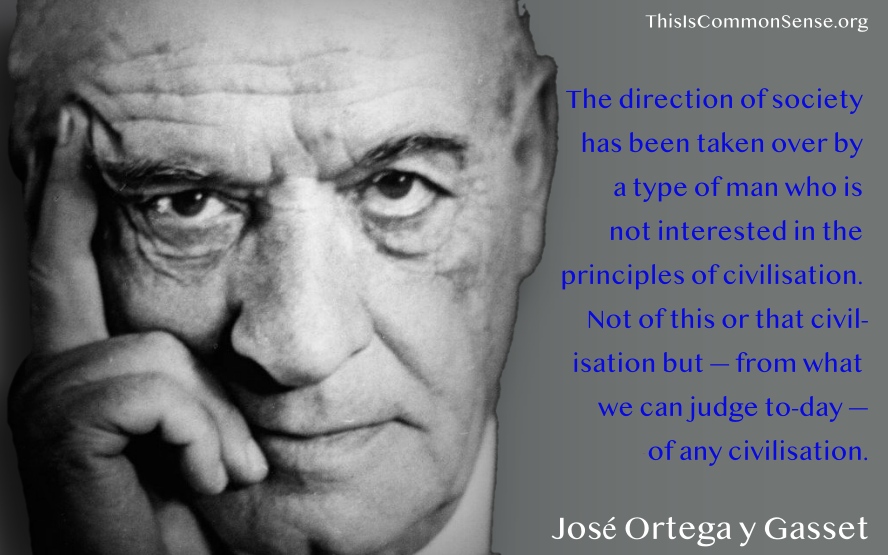
[T]he direction of society has been taken over by a type of man who is not interested in the principles of civilisation. Not of this or that civilisation but — from what we can judge to-day — of any civilisation.

José Ortega y Gasset, The Revolt of the Masses (1929), Chap.IX: “The Primitive and the Technical.”
Categories
Thought

Mary Wollstonecraft

It is justice, not charity, that is wanting in the world.

Mary Wollstonecraft, A Vindication of the Rights of Woman (1792), Chapter 4.