Categories
Thought

J. H. Levy

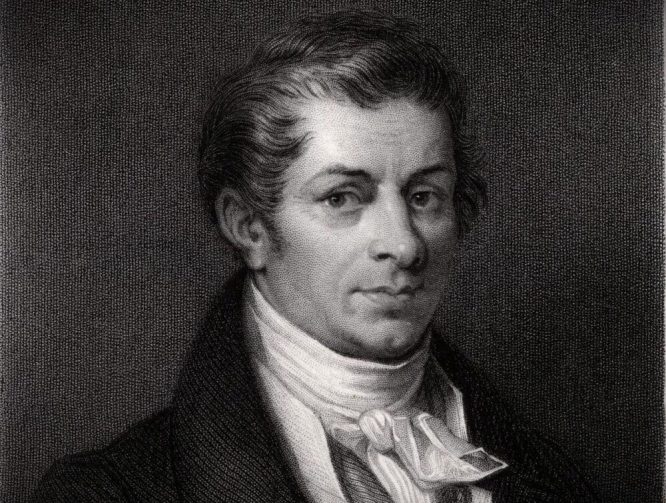
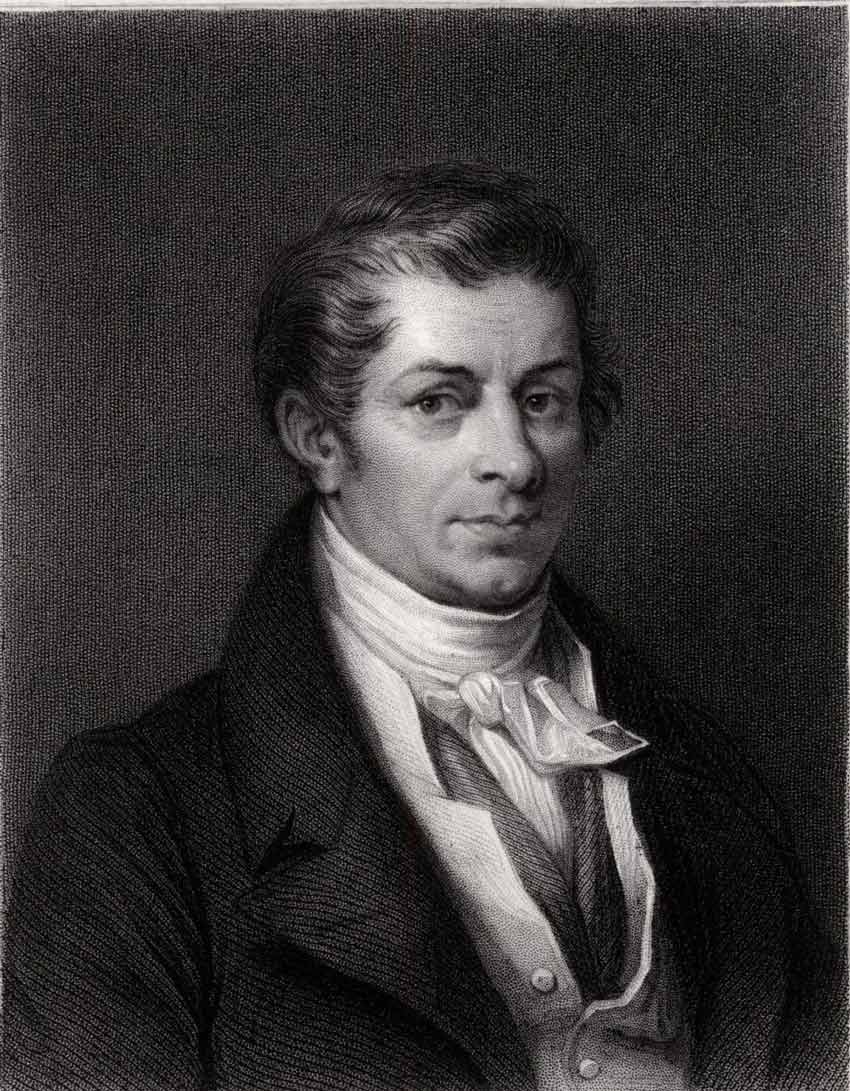
Looked at from an economic point of view, I hold socialism to be the active or direct distribution of products by the state. Regarded from its more general or political aspect, I designate as socialistic any extension of state interference or activity beyond the point up to which that interference is necessary in order that freedom may be at the maximum. Individualism postulates that some government — that is, some compulsory cooperation for political purposes — is needed in order to keep freedom at this point, that so much government is justifiable and good, and that all government beyond this is unjustifiable and mischievous. This quantum of government desiderated by the individualist constitutes a norm from which anarchism diverges on one side and socialism on the other. If we are suffering from a poison we find it advantageous to take a second poison, which acts as an antidote to the first. But, if we are wise, we limit our dose of the second poison so that the toxic effects of both combined are at the minimum. If we take more of it, it produces toxic effects of its own beyond those necessary to counteract, so far as possible, the first poison. If we take less of it, the first poison, to some extent, will do its bad work unchecked.


Joseph Hiam Levy, The Outcome of Individualism (1892), Chapter Two.

Categories
Thought

Samuel Butler

Life is like playing a violin solo in public and learning the instrument as one goes on.

Samuel Butler, Speech at the Somerville Club, February 27, 1895.
Categories
Thought

C. S. Peirce

In all the works on pedagogy that ever I read — and they have been many, big, and heavy — I don’t remember that any one has advocated a system of teaching by practical jokes, mostly cruel. That, however, describes the method of our great teacher, Experience.

C.S. Peirce, “Pragmatism and Pragmaticism” (1903).
Categories
Thought

Samuel Butler

The most important service rendered by the press and the magazines is that of educating people to approach printed matter with distrust.


Samuel Butler, Notebooks (1951).

Categories
Thought

C. S. Peirce

Consider what effects, that might conceivably have practical bearings, we conceive the object of our conception to have. Then, our conception of these effects is the whole of our conception of the object.

The first formulation of “the pragmatic maxim,” by C.S. Peirce, “How to Make Our Ideas Clear,” Popular Science Monthly, v. 12 (January 1878), pp. 286-302.
Categories
Thought

Aristotle

One swallow does not a summer make, nor one fine day; similarly one day or brief time of happiness does not make a person entirely happy.

Aristotle, Nichomachean Ethics.
Categories
Thought

C. S. Peirce

The early Greek philosopher, such as we read about in Diogenes Laertius, is certainly one of the most amusing curiosities of the whole human menagerie. It seems to have been demanded of him that his conduct should be in marked contrast with the dictates of ordinary common sense. Had he behaved as other men are supposed to do his fellow-citizens would have thought his philosophy had not taught him much.

C.S. Peirce, Reasoning and the Logic of Things: The Cambridge Conferences Lectures of 1898, Kenneth Laine Ketner, ed. (1992).
Categories
Thought

Patrick Henry

Suspicion is a virtue as long as its object is the public good, and as long as it stays within proper bounds. . . . Guard with jealous attention the public liberty. Suspect every one who approaches that jewel.

Patrick Henry, Virginia Ratifying Convention (June 5, 1788), speech regarding the Federal Constitution.
Categories
Thought

Camille Paglia

Society is a system of inherited forms reducing our humiliating passivity to nature. We may alter these forms, slowly or suddenly, but no change in society will change nature.

Camille Paglia, Sexual Personae: Art and Decadence from Nefertiti to Emily Dickinson, p. 1.
Categories
Thought

Gavin McInnes

Only use lizard sources.

Gavin McInnes, on The Gavin McInnes Show, characterizing modern p.c. University standards of essay writing, making fun of postmodern pedagogy. For full context, see:
The relevant section begins about 3:34 in the video. The full quotation makes complete sense.