I think a bill can be big or it can be beautiful. But I don’t know if it can be both.
Elon Musk, referring to Donald Trump’s ballyhooed “Big Beautiful Bill,” to CBS Sunday Morning, aired June 1, 2025.
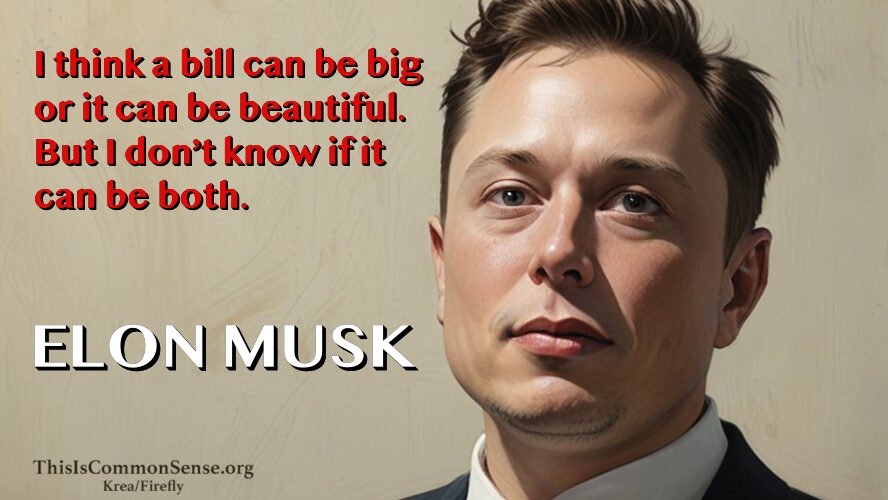
I think a bill can be big or it can be beautiful. But I don’t know if it can be both.
Elon Musk, referring to Donald Trump’s ballyhooed “Big Beautiful Bill,” to CBS Sunday Morning, aired June 1, 2025.
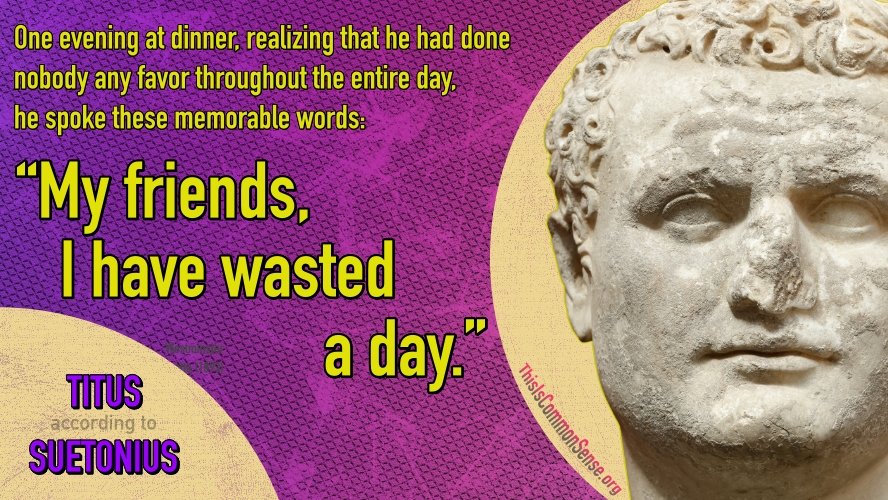
Atque etiam recordatus quondam super cenam, quod nihil cuiquam
toto die praestitisset, memorabilem illam meritoque
laudatam vocem edidit: “Amici, diem perdidi.”
One evening at dinner, realizing that he had done nobody any favour throughout the entire day, he spoke these memorable words: “My friends, I have wasted a day.”
Suetonius on Titus Flavius Vespasianus, in The Twelve Caesars, Robert Graves and Michael Grant, translators (Harmondsworth, 1979), Chapter 8.
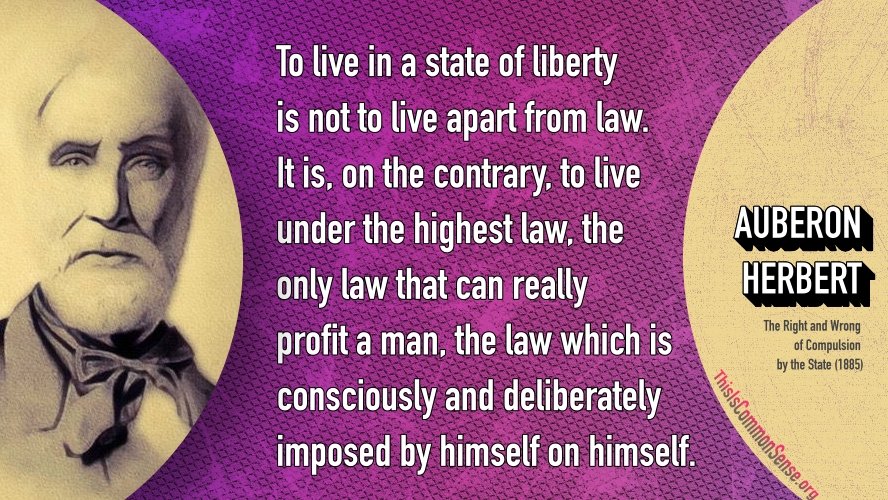
Auberon Herbert, The Right and Wrong of Compulsion by the State (1885).
To live in a state of liberty is not to live apart from law. It is, on the contrary, to live under the highest law, the only law that can really profit a man, the law which is consciously and deliberately imposed by himself on himself.

Reprehendenti filio Tito, quod etiam urinae vectigal commentus esset, pecuniam ex prima pensione admovit ad nares, sciscitans num odore offenderetur; et illo negante: “Atqui,” inquit, “e lotio est.”
Titus complained of the tax which Vespasian had imposed on the contents of the city urinals. Vespasian handed him a coin which had been part of the first day’s proceeds: “Does it smell bad?” he asked. And when Titus said “No” he went on: “Yet it comes from urine.”
Money doesn’t stink.
“Pecunia non olet” is a popular recasting of a famous conversation between Emperor Vespasian [Titus Flavius Vespasianus] to his son Titus Flavius Vespasianus [the future emperor Titus], upon the latter’s objection to a tax on Rome’s urinals — as quoted by Suetonius [above], in The Twelve Caesars, Robert Graves and Michael Grant, translators (Harmondsworth, 1979).

Art is the means we have of undoing the damage of haste. It’s what everything else isn’t.
Theodore Roethke, Poetry and Craft (1965).
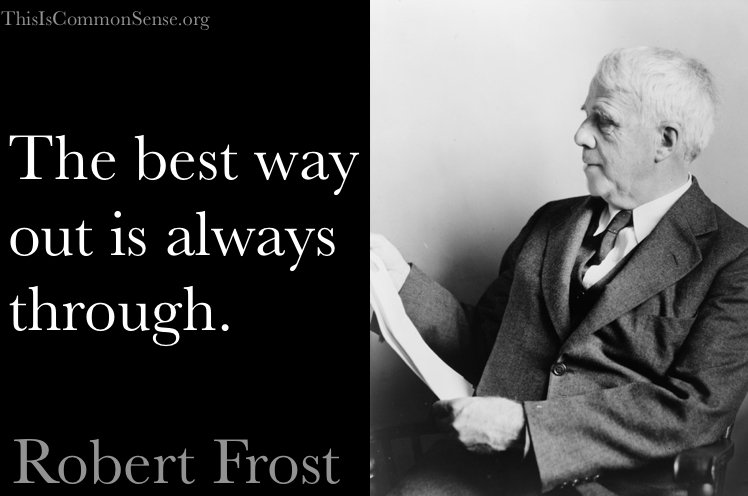
The best way out is always through.
Robert Frost, “A Servant of Servants,” North of Boston (1914).
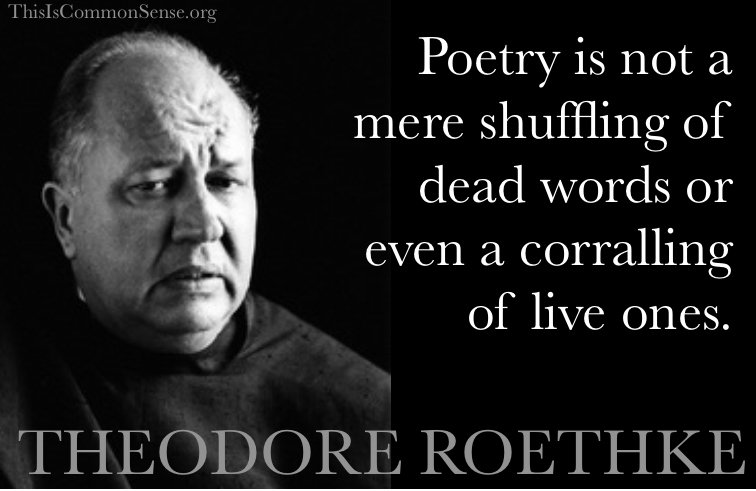
Poetry is not a mere shuffling of dead words or even a corralling of live ones.
Theodore Roethke, Poetry and Craft (1965).

O, it is excellent
To have a giant’s strength; but it is tyrannous
To use it like a giant.William Shakespeare, Measure for Measure (c.1604; 1623), Act 2, scene 2.
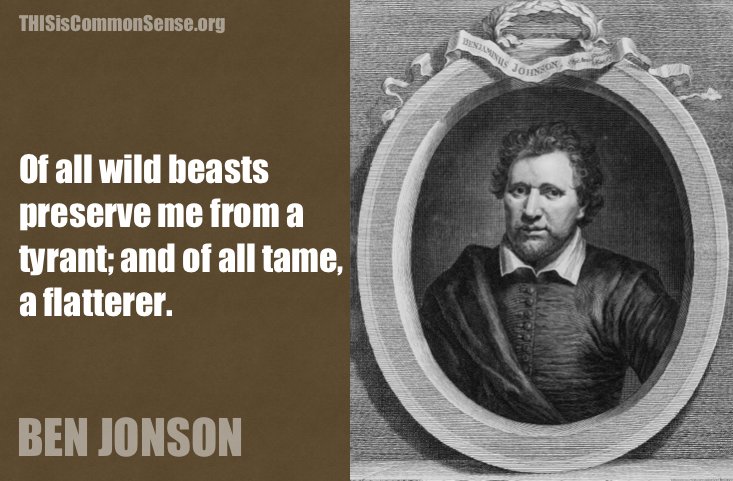
Of all wild beasts preserve me from a tyrant; and of all tame, a flatterer.
Ben Jonson, Sejanus (1603), Act 1.
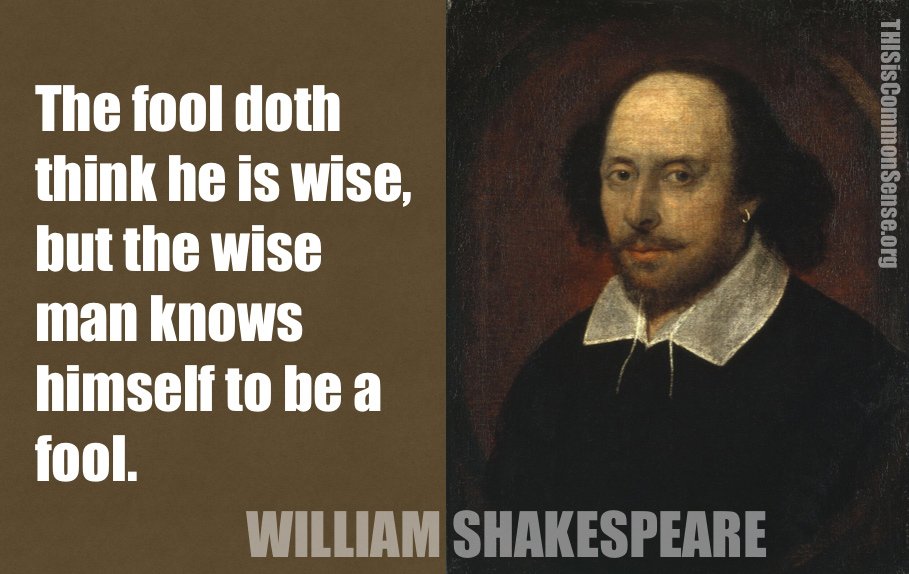
The fool doth think he is wise, but the wise man knows himself to be a fool.
William Shakespeare, As You Like It (c.1599-1600), Act V, scene 1, line 34.