Categories
Thought

Zora Neale Hurston

I am not tragically colored. There is no great sorrow dammed up in my soul, nor lurking behind my eyes. I do not mind at all. I do not belong to that sobbing school of Negrohood who hold that nature somehow has given them a lowdown dirty deal. Even in the helter-skelter skirmish that is my life, I have seen that the world is to the strong regardless of a little pigmentation more or less. No, I do not weep at the world — I am too busy sharpening my oyster knife.

Zora Neale Hurston, “How It Feels to Be Colored Me,” in The World Tomorrow (May 1928).

Categories
Thought

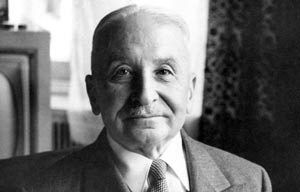
Ludwig von Mises

Freedom is to be found only in the sphere in which government does not interfere. Liberty is always freedom from the government.

Categories
Thought

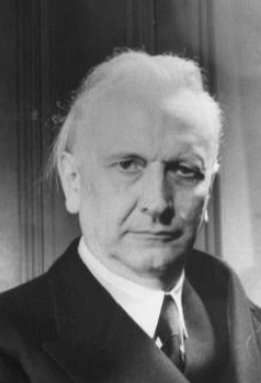
Karl Jaspers

Man is always something more than what he knows of himself. He is not what he is simply once and for all, but is a process…

Categories
Thought

Hugo Grotius

A man cannot govern a nation if he cannot govern a city; he cannot govern a city if he cannot govern a family; he cannot govern a family unless he can govern himself; and he cannot govern himself unless his passions are subject to reason.

Categories
Thought

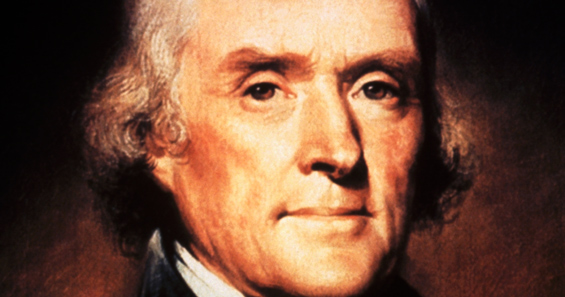
Thomas Jefferson

The taxes with which we are familiar class themselves readily according to the basis on which they rest. 1. Capital. 2. Income. 3. Consumption. These may be considered as commensurate; Consumption being generally equal to Income, and Income the annual profit of Capital. A government may select either of these bases for the establishment of its system of taxation, and so frame it as to reach the faculties of every member of the society, and to draw from him his equal proportion of the public contributions; and, if this be correctly obtained, it is the perfection of the function of taxation. But when once a government has assumed its basis, to select and tax special articles from either of the other classes, is double taxation. For example, if the system be established on the basis of Income, and his just proportion on that scale has been already drawn from every one, to step into the field of Consumption and tax special articles in that, as broadcloth or homespun, wine or whiskey, a coach or a wagon, is doubly taxing the same article. For that portion of Income with which these articles are purchased, having already paid its tax as Income, to pay another tax on the thing it purchased, is paying twice for the same thing; it is an aggrievance on the citizens who use these articles in exoneration of those who do not, contrary to the most sacred of the duties of a government, to do equal and impartial justice to all its citizens.


Thomas Jefferson, note to Destutt de Tracy’s Treatise on Political Economy.

Categories
Thought

G. Poulett Scrope

Interference of any kind . . . in the spontaneous direction of industry, and the free employment by their owners of the great agents in production, labour, land, and capital, has the certain effect of benumbing their power and lessening the sum of production, and consequently the shares, of the producing parties; as well as of needlessly, and therefore unjustly, curtailing their freedom of action.


G. Poulett Scrope, M.P., Principles of Political Economy, Deduced from the Natural Laws of Social Welfare, and Applied to the Present State of Britain (1833), p. 231.

Categories
Thought

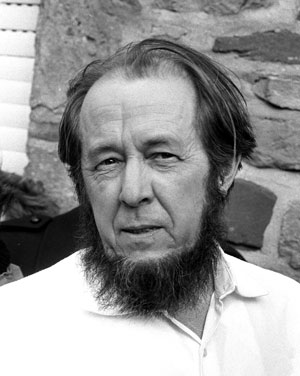
Aleksandr Solzhenitsyn

In different places over the years I have had to prove that socialism, which to many western thinkers is a sort of kingdom of justice, was in fact full of coercion, of bureaucratic greed and corruption and avarice, and consistent within itself that socialism cannot be implemented without the aid of coercion. Communist propaganda would sometimes include statements such as ‘we include almost all the commandments of the Gospel in our ideology.’ The difference is that the Gospel asks all this to be achieved through love, through self-limitation, but socialism only uses coercion.


Aleksandr Solzhenitsyn, in Joseph Pearce, “An Interview with Alexander Solzhenitsyn,” St. Austin Review 2 no. 2 (February, 2003).

Categories
Thought

Destutt de Tracy

It is manifest that, to banish bad sentiments born of oppression and insolence, it is necessary that laws be equal for everyone, and even for everyplace.


Destutt de Tracy, as quoted by Mme. Victor de Tracy, Death Notice on Destutt de Tracy (translated by Iris Hartman, 1852)

Categories
Thought

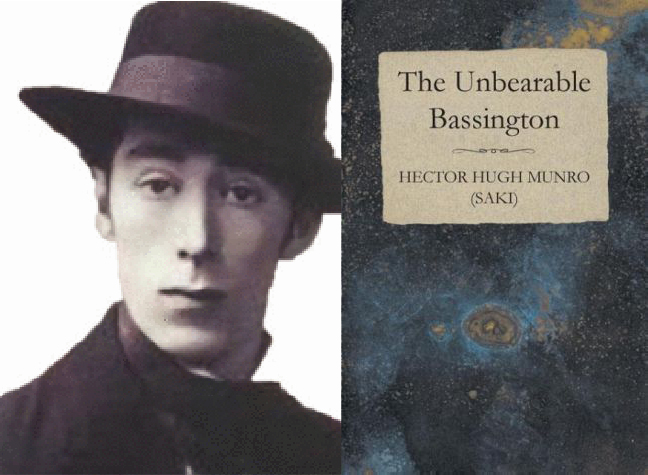
Saki

We all know that Prime Ministers are wedded to the truth, but like other wedded couples they sometimes live apart.


Saki, The Unbearable Bassington, ch. 13 (1912).

Categories
Thought

Destutt de Tracy

We can scarcely conceive at first that the great effects . . . have no other cause than the sole reciprocity of services and the multiplicity of exchanges. However this continual succession of exchanges has three very remarkable advantages.
First, the labour of several men united is more productive, than that of the same men acting separately. . . .
Secondly, our knowledge is our most precious acquisition, since it is this that directs the employment of our force, and renders it more fruitful, in proportion to its greater soundness and extent. . . .
Thirdly, and this still merits attention: when several men labour reciprocally for one another every one can devote himself exclusively to the occupation for which is fittest, whether from his natural dispositions or from fortuitous circumstances; and thus he will succeed better. . . .
Concurrence of force, increase and preservation of knowledge, and division of labour, — these are the three great benefits of society. They cause themselves to be felt from the first by men the most rude; but they augment in an incalculable ratio, in proportion as they are perfected, — and every degree of amelioration, in the social order, adds still to the possibility of increasing and better using them.

Antoine Louis Claude Destutt, comte de Tracy, A Treatise on Political Economy (Georgetown, D.C.: Joseph Mulligan, publisher; W. A. Rind & Co., printer, 1817) Thomas Jefferson, ed. of translation, from the section entitled “The First Part of the Treatise on the Will and Its Effects: Of Our Action,” chapter one, “Of Society.”