Categories
Thought

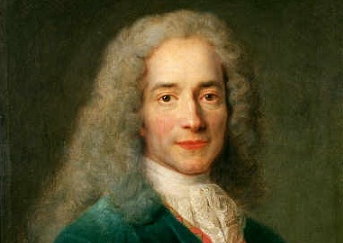
Volney

“Alas, if man is blind, shall his misfortune be also his crime? I may have mistaken the voice of reason; but never, knowingly, have I rejected its authority.”


C. F. Volney, The Ruins, or, Meditation on the Revolutions of Empires (1793; first English-language edition, 1802)

Categories
Thought

Scott Adams

If you are engineering, or you’re in science, or even if you are building a product, yeah, yeah: you totally want to get the facts right. You want to use the best reasoning, the best thinking, etc. But in the realm of politics facts don’t matter. Now, let me clarify that. Facts do matter to the outcome. Of course. If you walk in front of a truck, the truck is a fact, the truck kills you — that matters. But the way people make decisions is so divorced from facts, and always has been, that Trump doesn’t actually add anything that wasn’t already there. All he does is he does it better. Let me say that again: the world of politics was always a hundred percent bullshit. Always. It was just different bullshit. The thing that Trump has added is that he just does more of it and he does it better.

Categories
Thought

Adam Smith

It is not from the benevolence of the butcher, the brewer, or the baker that we expect our dinner, but from their regard to their own interest.

Categories
Thought

Adam Smith

How selfish soever man may be supposed, there are evidently some principles in his nature, which interest him in the fortunes of others, and render their happiness necessary to him, though he derives nothing from it, except the pleasure of seeing it. Of this kind is pity or compassion, the emotion we feel for the misery of others, when we either see it, or are made to conceive it in a very lively manner. That we often derive sorrow from the sorrows of others, is a matter of fact too obvious to require any instances to prove it; for this sentiment, like all the other original passions of human nature, is by no means confined to the virtuous or the humane, though they perhaps may feel it with the most exquisite sensibility. The greatest ruffian, the most hardened violator of the laws of society, is not altogether without it.

Categories
Thought

Denis Diderot

Beware of the man who wants to set things in order. Setting things in order always involves acquiring mastery over others — by tying them hand and foot.

Denis Diderot, as translated by Derek Coleman, in Diderot’s Selected Writings (1966).
Categories
Thought

Sarah M. Grimké

The system of slavery is necessarily cruel. The lust of dominion inevitably produces hardness of heart, because the state of mind which craves unlimited power, such as slavery confers, involves a desire to use that power, and although I know there are exceptions to the exercise of barbarity on the bodies of slaves, I maintain that there can be no exceptions to the exercise of the most soul-withering cruelty on the minds of the enslaved. All around is the mighty ruin of intellect, the appalling spectacle of the down-trodden image of God.


Sarah M. Grimké, from An Epistle to the Clergy of the Southern States, New-York, 12th Mo. 1836.

Categories
Thought

Edmond About

Each of us enters at birth into the heritage of a sovereignty which renders his person inviolable. In principle, if not in fact, we are all equal, because we all share the same august character. We are all free-born in this sense, that no one has a title to subject another to his will by force.


Edmond About, Handbook of Social Economy; or, The Worker’s A B C, (New York: D. Appleton & Co., translated from the final French edition, 1873), p. 3.

Categories
Thought

Denis Diderot

No man has received from nature the right to give orders to others. Freedom is a gift from heaven, and every individual of the same species has the right to enjoy it as soon as he is in enjoyment of his reason.


Denis Diderot, Article on Political Authority, Vol. 1, (1751) as quoted in Selected Writings (1966) edited by Lester G. Crocker.

Categories
Thought

Mary Wollstonecraft

Men . . . submit every where to oppression, when they have only to lift up their heads to throw off the yoke; yet, instead of asserting their birthright, they quietly lick the dust and say, let us eat and drink, for to-morrow we die. Women, I argue from analogy, are degraded by the same propensity to enjoy the present moment; and, at last, despise the freedom which they have not sufficient virtue to struggle to attain.

Mary Wollstonecraft, A Vindicaton of the Rights of Woman (1792), chapter 4.
Categories
Thought

John Hospers

The greater the hold of government upon the life of the individual citizen, the greater the risk of war.