Categories
Thought

Herbert Spencer

Since the days of persecution, a curious change has taken place in the behavior of so-called orthodoxy towards so-called heterodoxy. The time was when a heretic, forced by torture to recant, satisfied authority by external conformity: apparent agreement sufficed, however profound continued to be the real disagreement. But now that the heretic can no longer be coerced into professing the ordinary belief, his belief is made to appear as much opposed to the ordinary as possible.

Herbert Spencer, The Data of Ethics (1879), Preface to Part I of The Principles of Ethics “When First Issued Separately.”

Categories
Thought

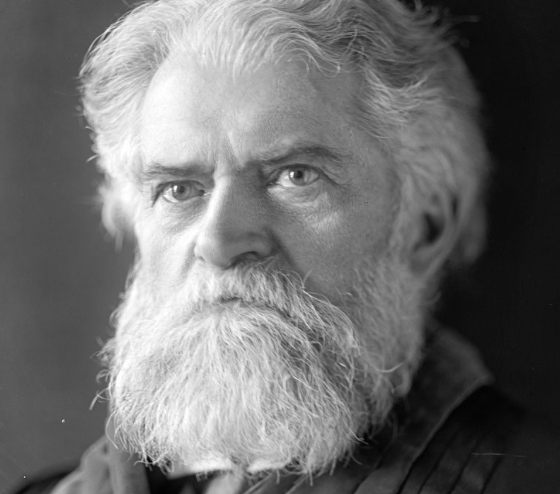
R. Buckminster Fuller

Something hit me very hard once, thinking about what one little man could do. Think of the Queen Mary — the whole ship goes by and then comes the rudder. And there’s a tiny thing at the edge of the rudder called a trimtab.

It’s a miniature rudder. Just moving the little trim tab builds a low pressure that pulls the rudder around. Takes almost no effort at all. So I said that the little individual can be a trimtab. Society thinks it’s going right by you, that it’s left you altogether. But if you’re doing dynamic things mentally, the fact is that you can just put your foot out like that and the whole big ship of state is going to go.

So I said, call me Trimtab.


R. Buckminster Fuller, Barry Farrell interview, Playboy (February 1972).

Categories
Thought

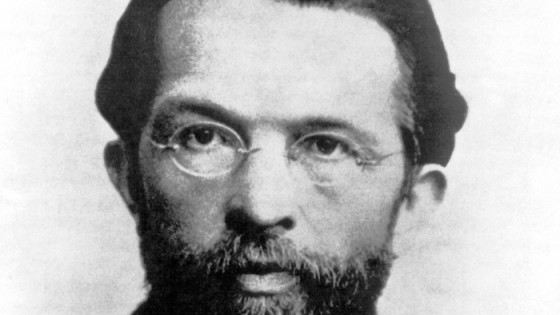
Carl Menger

The propensity of men to trade must accordingly have some other reason than enjoyment of trading as such. If trading were a pleasure in itself, hence an end in itself, and not frequently a laborious activity associated with danger and economic sacrifice, there would be no reason why men . . . should not trade back and forth an unlimited number of times. But everywhere in practical life, we can observe that economizing men carefully consider every exchange in advance, and that a limit is finally reached beyond which two individuals will not continue to trade at any given time.


Carl Menger, Principles of Economics (1871; English translation, 1950), Spring 1977, chapter IV, “The Theory of Exchange.”

Categories
Thought

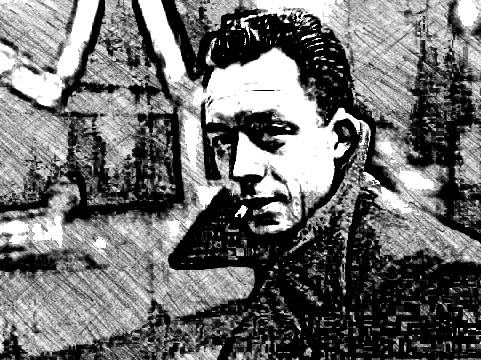
Albert Camus

The only way to deal with an unfree world is to become so absolutely free that your very existence is an act of rebellion.

Categories
Thought

Simon Newcomb

“Scientific method consists in applying to those subjects which lie without the range of our immediate experience those same common-sense methods of reasoning which successful men of the world apply in judging of matters which concern their own interests.”


Simon Newcomb, Principles of Political Economy, 1886, chapter III, “Of Scientific Method”

Categories
Thought

Herbert Spencer

Sympathy which, a generation ago, was taking the shape of justice, is relapsing into the shape of generosity; and the generosity is exercised by inflicting injustice. Daily legislation betrays little anxiety that each shall have that which belongs to him, but great anxiety that he shall have that which belongs to somebody else. For while no energy is expended in so reforming our judicial administration that everyone may obtain and enjoy all he has earned, great energy is shown in providing for him and others benefits which they have not earned. Along with that miserable laissez-faire which calmly looks on while men ruin themselves in trying to enforce by law their equitable claims, there goes activity in supplying them, at other men’s cost, with gratis novel-reading!

Herbert Spencer, Principles of Ethics, Vol. 2, Part IV: “Justice” (1891), Chapter 5, “The Idea of Justice.”
Categories
Thought

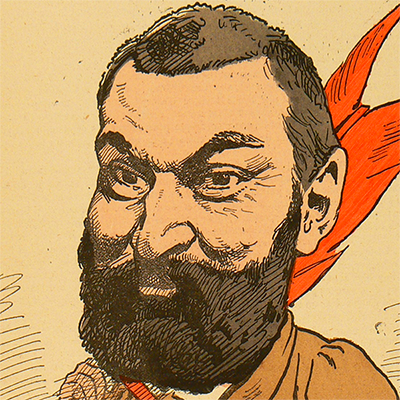
Yves Guyot

We must not confound liberty with anarchy. Liberty is the reciprocal respect for personal rights, according to certain fixed rules known by the name of law. Anarchy is the privilege of some and the spoliation of others, according to the caprices and arbitrary will of the cunning and the violent, and the feebleness and lack of energy of the timorous.

Categories
Thought

Samuel Butler

Happily common sense, though she is by nature the gentlest creature living, when she feels the knife at her throat, is apt to develop unexpected powers of resistance, and to send doctrinaires flying, even when they have bound her down and think they have her at their mercy.

Samuel Butler, Erewhon (1872), chapter 26.
Categories
Thought

Benjamin Constant

“The ancients, as Condorcet says, had no notion of individual rights. Men were, so to speak, merely machines, whose gears and cogwheels were regulated by the law. The same subjection characterized the golden centuries of the Roman Republic; the individual was in some way lost in the nation, the citizen in the city.”


Benjamin Constant The Liberty of the Ancients Compared with That of the Moderns, 1819

Categories
Thought

Frederick Douglass

“I had very strangely supposed, while in slavery, that few of the comforts, and scarcely any of the luxuries, of life were enjoyed at the north, compared with what were enjoyed by the slaveholders of the south. I probably came to this conclusion from the fact that northern people owned no slaves. I supposed that they were about upon a level with the non-slaveholding population of the south. I knew they were exceedingly poor, and I had been accustomed to regard their poverty as the necessary consequence of their being non-slaveholders. I had somehow imbibed the opinion that, in the absence of slaves, there could be no wealth, and very little refinement. And upon coming to the north, I expected to meet with a rough, hard-handed, and uncultivated population, living in the most Spartan-like simplicity, knowing nothing of the ease, luxury, pomp, and grandeur of southern slaveholders. Such being my conjectures, any one acquainted with the appearance of New Bedford may very readily infer how palpably I must have seen my mistake.”


Frederick Douglass, Narrative of the Life of Frederick Douglass, 1845