Categories
Thought

Theodore Dalrymple

“In my study of communist societies, I came to the conclusion that the purpose of communist propaganda was not to persuade or convince, not to inform, but to humiliate; and therefore, the less it corresponded to reality the better. When people are forced to remain silent when they are being told the most obvious lies, or even worse when they are forced to repeat the lies themselves, they lose once and for all their sense of probity. To assent to obvious lies is . . . in some small way to become evil oneself. One’s standing to resist anything is thus eroded, and even destroyed. A society of emasculated liars is easy to control.”


Categories
Thought

Montesquieu

“Government should be set up so that no man need be afraid of another.”

Categories
Thought

Milton Friedman

Fundamentally, there are only two ways of coordinating the economic activities of millions. One is central direction involving the use of coercion — the technique of the army and of the modern totalitarian state. The other is voluntary co-operation of individuals — the technique of the market place.

Milton Friedman, Capitalism and Freedom (1962), Ch. 1 The Relation Between Economic Freedom and Political Freedom.
Categories
Thought

Montesquieu

Useless laws weaken the necessary laws.

Charles de Secondat, Baron de Montesquieu, De l’esprit des lois (The Spirit of Laws,1748), Book XXIX: Of the Manner of Composing Laws, Ch. 16: Things to be Observed in the Composing of Laws.
Categories
Thought

Arthur Latham Perry

By far the most important of all the conditions, under which the production of material commodities goes broadly forward, is liberty of action on the part of the individual; because, wherever such liberty is conceded, association and invention and all other needful conditions follow right along by laws of natural sequence.

Arthur Latham Perry, Principles of Political Economy, 1891.
Categories
Thought

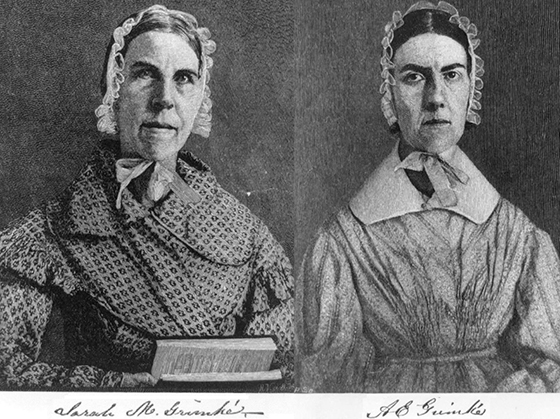
Sarah M. Grimké

The system of slavery is necessarily cruel. The lust of dominion inevitably produces hardness of heart, because the state of mind which craves unlimited power, such as slavery confers, involves a desire to use that power, and although I know there are exceptions to the exercise of barbarity on the bodies of slaves, I maintain that there can be no exceptions to the exercise of the most soul-withering cruelty on the minds of the enslaved. All around is the mighty ruin of intellect, the appalling spectacle of the down-trodden image of God.

Sarah M. Grimké, from An Epistle to the Clergy of the Southern States, New-York, 12th Mo. 1836.
Categories
Thought

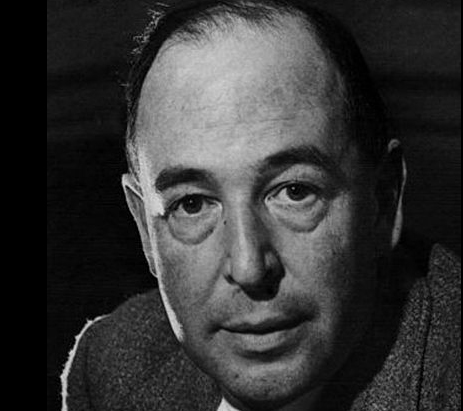
C. S. Lewis

Of all tyrannies, a tyranny sincerely exercised for the good of its victims may be the most oppressive. It would be better to live under robber barons than under omnipotent moral busybodies. The robber baron’s cruelty may sometimes sleep, his cupidity may at some point be satiated; but those who torment us for our own good will torment us without end for they do so with the approval of their own conscience. They may be more likely to go to Heaven yet at the same time likelier to make a Hell of earth. This very kindness stings with intolerable insult. To be ‘cured’ against one’s will and cured of states which we may not regard as disease is to be put on a level of those who have not yet reached the age of reason or those who never will; to be classed with infants, imbeciles, and domestic animals.

C. S. Lewis, “The Humanitarian Theory of Punishment,” reprinted in God in the Dock (1970).


Categories
Thought

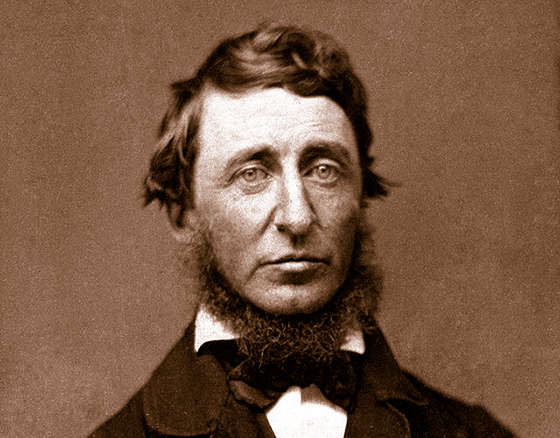
Henry David Thoreau

I wish my countrymen to consider, that whatever the human law may be, neither an individual nor a nation can ever commit the least act of injustice against the obscurest individual without having to pay the penalty for it. A government which deliberately enacts injustice, and persists in it, will at length even become the laughing-stock of the world.

Henry David Thoreau, “Slavery in Massachusetts,” July 4, 1854.
Categories
Thought

Irving Kristol

The inner spiritual chaos of the times, so powerfully created by the dynamics of capitalism itself, is such as to make nihilism an easy temptation. A ‘free society’ in Hayek’s sense gives birth in massive numbers to ‘free spirits’ — emptied of moral substance but still driven by primordial moral aspirations. Such people are capable of the most irrational actions. Indeed, it is my impression that, under the strain of modern life, whole classes of our population — and the educated classes most of all — are entering what can only be called, in the strictly clinical sense, a phase of infantile regression. With every passing year, public discourse becomes sillier and more petulant, emotions become, apparently, more ungovernable. Some of our most intelligent university professors are now loudly saying things that, had they been uttered by one of their students twenty years ago, would have called forth gentle and urbane reproof.

Irving Kristol, “‘When virtue loses all her loveliness’ — some reflections on Capitalism and ‘the free society,’National Affairs, No. 21, Fall 1970.
Categories
Thought

Henry David Thoreau

They who have been bred in the school of politics fail now and always to face the facts. Their measures are half measures and makeshifts merely. They put off the day of settlement indefinitely, and meanwhile the debt accumulates.

Henry David Thoreau, “Slavery in Massachusetts,” July 4, 1854.