The need for Government is the need for force; where force is unnecessary, there is no need for Government.
Categories
Rose Wilder Lane
The need for Government is the need for force; where force is unnecessary, there is no need for Government.
Those animals which are incapable of making binding agreements with one another not to inflict nor suffer harm are without either justice or injustice; and likewise for those peoples who either could not or would not form binding agreements not to inflict or suffer harm.
Epicurus, Principle Doctrine XXXII
Benedetto Croce, The Philosophy of the Practical: Economic and Ethic, trans. Douglas Ainslie (1913, 1967), p. 429.
We must be severe, not only with ourselves, but with others also; exigent, not only with ourselves, but with others also; and so, on the contrary, benevolent not only towards others, but also toward ourselves; compassionate, not only toward others, but also towards this instrument of labour that we carry about with us and of which we sometimes demand too much; that is, our empirical individuality. Reality is neither democratic nor aristocratic, but both together; it abhors the privilege of some over others as much as that equality, according to which each one must have the same value as the other at every moment.
Kraus, Die Fackel, no. 46 (October 9, 1917).
War: first, one hopes to win; then one expects the enemy to lose; then, one is satisfied that the enemy too is suffering; in the end, one is surprised that everyone has lost.
Stanislav Andreski, Social Sciences as Sorcery (1972), p. 187.
Like many other things, the laudable ideal of combining education and research has its seamy side, in that graduate teaching offers an opportunity to recruit cheap (and in a way forced) labour for the captains of the research industry.

The seventeenth century is everywhere a time in which the state’s power over everything individual increases, whether that power be in absolutist hands or may be considered the result of a contract, etc. People begin to dispute the sacred right of the individual ruler or authority without being aware that at the same time they are playing into the hands of a colossal state power.
Jacob Burckhardt, Reflections on History
Karl Kraus, about his newsletter, Die Fackel.
I and my public understand each other very well: it does not hear what I say, and I don’t say what it wants to hear.
Nothing in the world is better suited to laziness than orthodoxy. If you gag your mouth, stop up your ears and put a blinder over your eyes, you can sleep peacefully.
Jacob Burckhardt was a teacher and reserved, cautious mentor to Friedrich Nietzsche.
Cranks are a byproduct of free thought and a consequence of liberation from orthodoxies.
Michael Malice, The New Right: A Journey to the Fringe of American Politics (2019), p. 5.
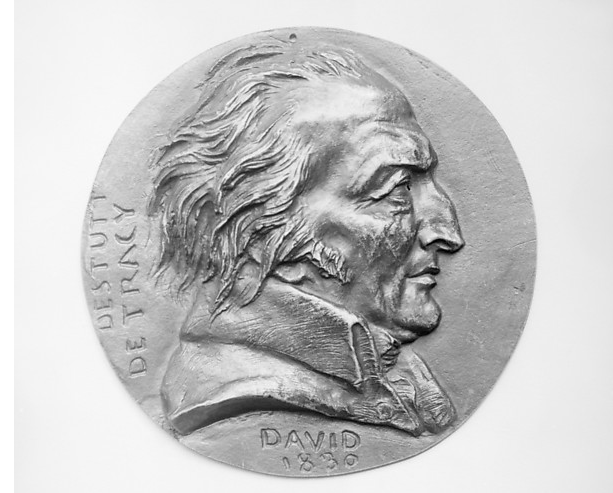
Society is purely and solely a continual series of exchanges. It is never anything else, in any epoch of its duration, from its commencement the most unformed, to its greatest perfection. And this is the greatest eulogy we can give to it, for exchange is an admirable transaction, in which the two contracting parties always both gain; consequently society is an uninterrupted succession of advantages, unceasingly renewed for all its members.