Categories
Thought

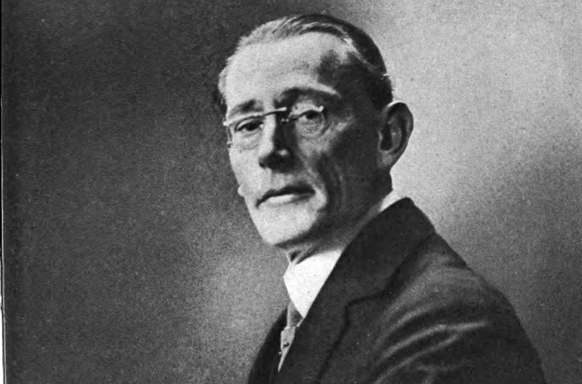
Joseph Hiam Levy

Elevation of purpose, though a condition of the best achievements, is also a condition of the worst. The maximum of evil is never done save by the agency of men and women of disinterested lives and virtuous intentions.

J. H. Levy, biographical introduction to Yves Guyot, The Tyranny of Socialism, (London: Swan Sonnenschein and Co., 1894).
Categories
Thought

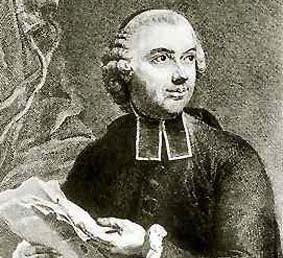
Étienne Bonnot de Condillac

Commerce presumes two things: surplus production on the one hand, and on the other consumption to be made.

Commerce and Government considered in their mutual relationship, by the Abbé de Condillac of the Académie Française & Member of the Royal Society of Agriculture of Orléans (1776).
Categories
Thought

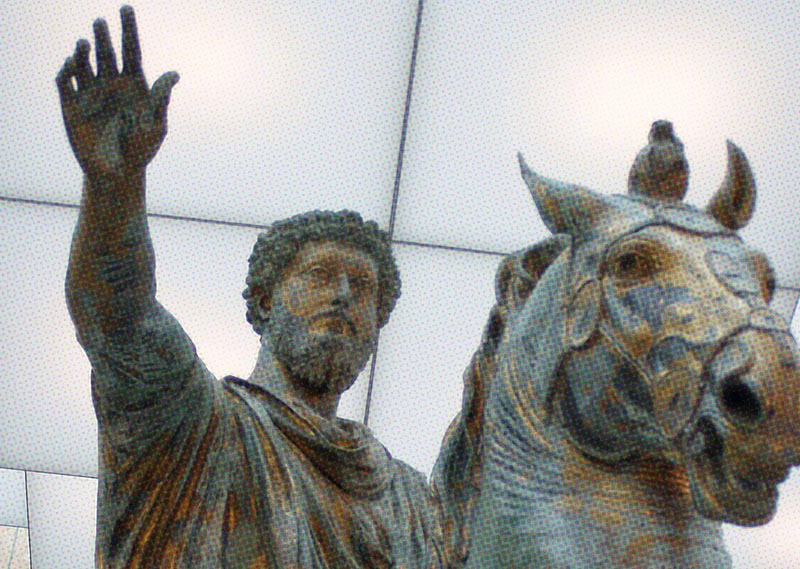
Marcus Aurelius

Never let the future disturb you. You will meet it, if you have to, with the same weapons of reason which today arm you against the present.

Imperator and Pontifex Maximus Marcus Aurelius, Meditations, VII, 8 (Penguin Classics edition, translated by Maxwell Staniforth).

Categories
Thought

Herbert Spencer

Speaking broadly, every man works that he may avoid suffering. Here, remembrance of the pangs of hunger prompts him; and there, he is prompted by the sight of the slave-driver’s lash. His immediate dread may be the punishment which physical circumstances will inflict, or may be punishment inflicted by human agency. He must have a master; but the master may be Nature or may be a fellow man. When he is under the impersonal coercion of Nature, we say that he is free; and when he is under the personal coercion of some one above him, we call him, according to the degree of his dependence, a slave, a serf, or a vassal. . . .

Men may work together in a society under either of these two forms of control: forms which, though in many cases mingled, are essentially contrasted. Using the word co-operation in its wide sense, and not in that restricted sense now commonly given to it, we may say that social life must be carried on by either voluntary co-operation or compulsory co-operation; or, to use Sir Henry Maine’s words, the system must be that of contract or that of status—that in which the individual is left to do the best he can by his spontaneous efforts and get success or failure according to his efficiency, and that in which he has his appointed place, works under coercive rule, and has his apportioned share of food, clothing, and shelter.

The system of voluntary co-operation is that by which, in civilized societies, industry is now everywhere carried on. . . . This voluntary co-operation, from its simplest to its most complex forms, has the common trait that those concerned work together by consent. There is no one to force terms or to force acceptance. It is perfectly true that in many cases an employer may give, or an employee may accept, with reluctance: circumstances he says compel him. But what are the circumstances? In the one case there are goods ordered, or a contract entered into, which he cannot supply or execute without yielding; and in the other case he submits to a wage less than he likes because otherwise he will have no money wherewith to procure food and warmth. The general formula is not—“Do this, or I will make you”; but it is—“Do this, or leave your place and take the consequences.”

Herbert Spencer, ”From Freedom to Bondage,” in Thomas Mackay, ed., A Plea for Liberty (1891).
Categories
Thought

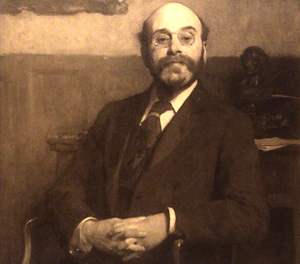
William J. Locke

The only remedy against the malady of life is life itself. The bane is its own antidote.

William J. Locke, The Glory of Clementina (1911).
Categories
Thought

Herbert Spencer

It is not, then, chiefly in the interests of the employing classes that socialism is to be resisted, but much more in the interests of the employed classes. In one way or other production must be regulated; and the regulators, in the nature of things, must always be a small class as compared with the actual producers. Under voluntary co-operation as at present carried on, the regulators, pursuing their personal interests, take as large a share of the produce as they can get; but, as we are daily shown by Trades Union successes, are restrained in the selfish pursuit of their ends. Under that compulsory co-operation which socialism would necessitate, the regulators, pursuing their personal interests with no less selfishness, could not be met by the combined resistance of free workers; and their power, unchecked as now by refusals to work save on prescribed terms, would grow and ramify and consolidate till it became irresistible. The ultimate result, as I have before pointed out, must be a society like that of ancient Peru, dreadful to contemplate, in which the mass of the people, elaborately regimented in groups of 10, 50, 100, 500, and 1000, ruled by officers of corresponding grades, and tied to their districts, were superintended in their private lives as well as in their industries, and toiled hopelessly for the support of the governmental organization.

Herbert Spencer, ”From Freedom to Bondage,” in Thomas Mackay, ed., A Plea for Liberty (1891).
Categories
Thought

Marcus Aurelius

If mind is common to us, then also the reason, whereby we are reasoning beings, is common. If this be so, then also the reason which enjoins what is to be done or left undone is common. If this be so, law also is common; if this be so, we are citizens; if this be so, we are partakers in one constitution; if this be so, the Universe is a kind of Commonwealth.

Imperator and Pontifex Maximus Marcus Aurelius, Meditations

Categories
Thought

Theodore Parker

I do not pretend to understand the moral universe; the arc is a long one, my eye reaches but little ways; I cannot calculate the curve and complete the figure by the experience of sight; I can divine it by conscience. And from what I see I am sure it bends towards justice.

Theodore Parker, Ten Sermons of Religion (1853)
Categories
Thought

Theodore Parker

Justice is moral temperance in the world of men. It keeps just relations between men; one man, however little, must not be sacrificed to another, however great, to a majority, or to all men.

Theodore Parker, Ten Sermons of Religion (1853)
Categories
Thought

Marcus Aurelius

The object of life is not to be on the side of the majority, but to escape finding oneself in the ranks of the insane.

Imperator and Pontifex Maximus Marcus Aurelius, Meditations