“A people that values its privileges above its principles soon loses both.”
Categories
Dwight D. Eisenhower
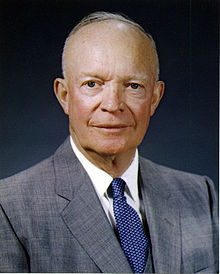
“A people that values its privileges above its principles soon loses both.”

“There is only one boss: The customer. And he can fire everybody in the company from the chairman on down, simply by spending his money somewhere else.”

[T]o say that a bad government must be established for fear of anarchy is really saying that we should kill ourselves for fear of dying.
Richard Henry Lee (January 20, 1732 – June 19, 1794), letter to Edmund Jennings Randolph (August 10, 1753 – September 12, 1813), Governor of Virginia, October 16, 1787.
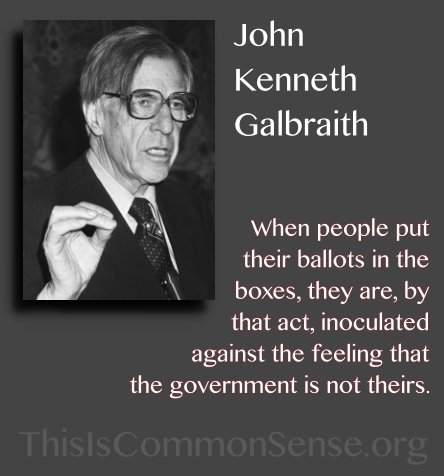
When people put their ballots in the boxes, they are, by that act, inoculated against the feeling that the government is not theirs. They then accept, in some measure, that its errors are their errors, its aberrations their aberrations, that any revolt will be against them. It’s a remarkably shrewd and rather conservative arrangement when one thinks of it.
John Kenneth Galbraith, The Age of Uncertainty (1977), p. 330.
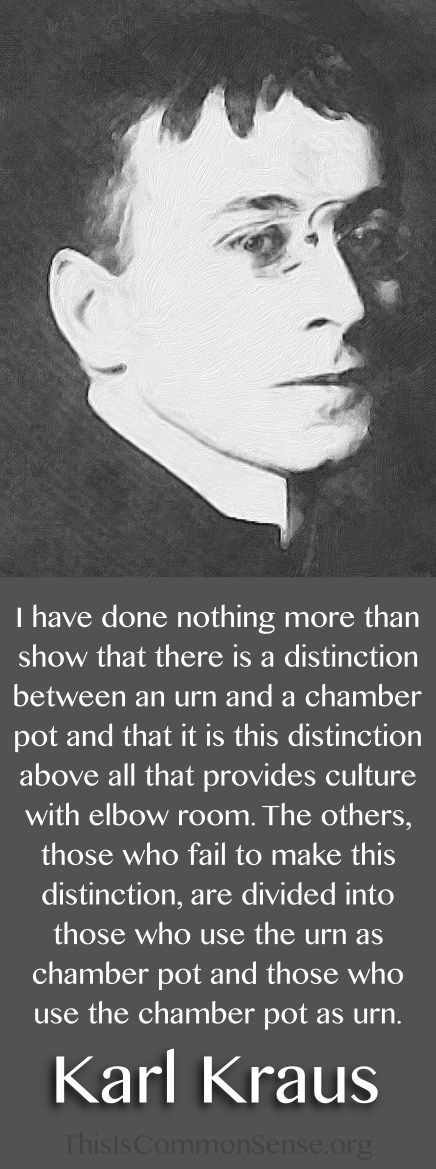
I have done nothing more than show that there is a distinction between an urn and a chamber pot and that it is this distinction above all that provides culture with elbow room. The others, those who fail to make this distinction, are divided into those who use the urn as chamber pot and those who use the chamber pot as urn.
Karl Kraus, as quoted in Thomas Szasz, Karl Kraus and the Soul Doctors (1977).

For, in reason, all government without the consent of the governed is the very definition of slavery: but in fact, eleven men well armed will certainly subdue one single man in his shirt.
Jonathan Swift, The Drapier’s Letters, letter iv (October 13, 1724).
Shirt on Zazzle.com.
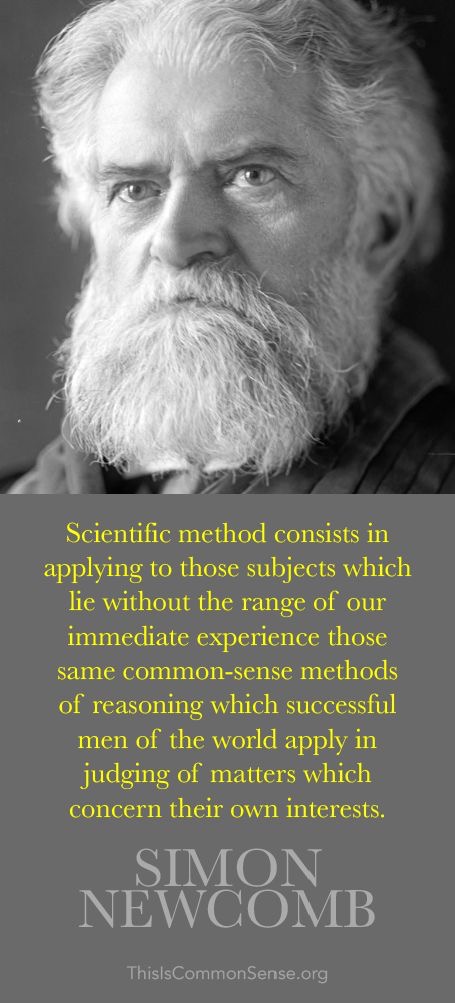
Scientific method consists in applying to those subjects which lie without the range of our immediate experience those same common-sense methods of reasoning which successful men of the world apply in judging of matters which concern their own interests.
Simon Newcomb, Principles of Political Economy, 1886, chapter III, “Of Scientific Method”
Strangely enough, the fall from favor of the money-maker coincides with an increase in his social usefulness.
Bertrand de Jouvenel, in F.A. Hayek (ed.), Capitalism and the Historians (1954).
It is customary to see the radical innovations that capitalism brought about in the substitution of the mechanical factory for the more primitive and less efficient methods of the artisans’ shops. This is a rather superficial view. The characteristic feature of capitalism that distinguishes it from pre-capitalist methods of production was its new principle of marketing. Capitalism is not simply mass production, but mass production to satisfy the needs of the masses. The arts and crafts of the good old days had catered almost exclusively to the wants of the well-to-do. But the factories produced cheap goods for the many.
Ludwig Edler von Mises, “Liberty and Property”(1958).

Without free, self-respecting, and autonomous citizens there can be no free and independent nations. Without internal peace, that is, peace among citizens and between the citizens and the state, there can be no guarantee of external peace.
Václav Havel, Living in Truth (1986), “An Anatomy of Reticence.”