Life is fired at us point blank.
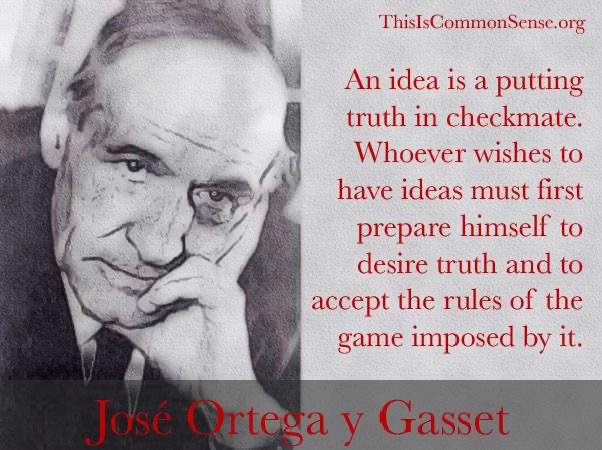
Ortega y Gasset
Life is fired at us point blank.
It is dangerous to be right in matters on which the established authorities are wrong.
Whether he be an original or a plagiarist, man is the novelist of himself.
José Ortega y Gasset, “Man has no nature,” in History as a System (1962).
It is pointless to do with more what can be done with fewer.
This statement, and others like it in William of Ockham’s work, has led philosophers to express the idea with precision as “Ockham’s razor” — specifically, in the phrase, nowhere found in Ockham, of “Don’t multiply [explanatory] entities beyond necessity.”
Wolves are not killed because they are gray, but because they eat sheep.
The curious task of economics is to demonstrate to men how little they really know about what they imagine they can design. To the naive mind that can conceive of order only as the product of deliberate arrangement, it may seem absurd that in complex conditions order, and adaptation to the unknown, can be achieved more effectively by decentralizing decisions and that a division of authority will actually extend the possibility of overall order. Yet that decentralization actually leads to more information being taken into account.
[T]he direction of society has been taken over by a type of man who is not interested in the principles of civilisation. Not of this or that civilisation but — from what we can judge to-day — of any civilisation.
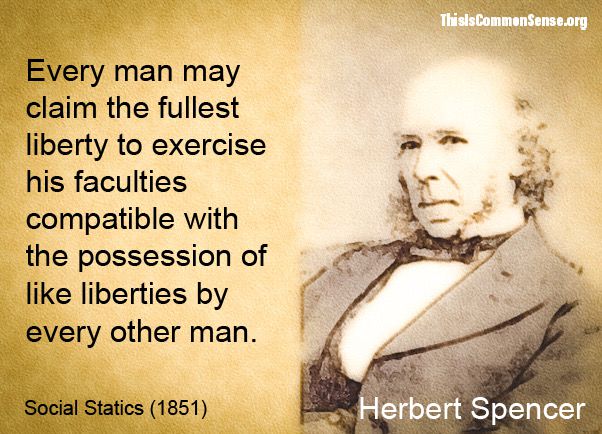
All men have equal rights to liberty, to their property, and to the protection of the laws.
One of the chief objects of medicine is to save us from the natural consequences of our vices and follies. The moment it becomes moral it becomes quackery. A scientific physician should have no opinions about the ethical standards and deserts of his patient.
H. L. Mencken, Minority Report: H. L. Mencken’s Notebooks (1956), p. 7.
We can have exactly as many paupers as the country chooses to pay for.
Thomas Mackay, Methods of Social Reform (London: John Murray, 1896), p. 210.