Categories
Accountability general freedom ideological culture initiative, referendum, and recall local leaders moral hazard national politics & policies

Reactionary America

With the meteoric transit of Anthony Scaramucci — into the Trump Administration and then, in an eye-blink, out of it — I have never been more convinced of the vital importance of state and local activism.

Yes, it’s been a chaotic week in Trumptown. The new White House Director of Communications vulgarly communicated himself into administrative excommunication. So to speak.

Everybody’s heard the vulgarisms; we’ve all processed the insanity. It looks like Mr. Scaramucci is one of those professionals who think everybody else is an idiot, and in so thinking it, proves himself to be what he himself despises. @#$%&?!

The man nicknamed “The Mooch” screwed the pooch, as we now say, and we can all shake our heads and . . .

what?

What is the lesson?

We have long known the worst: our national politics is broken. It has been for a very long time. Is it possible we never recovered from the LBJ and Tricky Dick fiascos of my childhood? The parties have become more ideological and less regional, while the regions have become . . . less rational. The only word seems to be . . .

reactionary.

The press reacts to the president’s tweets, and the president tweets in response to media reaction.

Progressives hate progress; conservatives conserve nothing.

“Reactionary” is the apt word, despite all the term’s past Marxist associations, because no one seems able to think forward, independent of partisan oppositionalism.

Don’t drive yourself crazy with this. Look homeward; think locally, act locally, and let’s build on a solid foundation.

This is Common Sense. I’m Paul Jacob.


Printable PDF


Categories
Accountability folly free trade & free markets general freedom ideological culture moral hazard nannyism national politics & policies too much government

ObamaCare’s Casualties

We all know the truth: Partisan “warfare” yields the usual war casualty, truth itself. Now, because of the increasing weight of federal government presence in healthcare markets, partisan untruth incurs medical costs.

Take the goofy Republican plan(s) to “repeal and replace” ObamaCare — pushed with so many half-truths and downright lies that one wonders where to begin. But before die-hard Republicans get too incensed about this judgment, let’s note that the supporters of the mis-named “Affordable Care Act” are no better.

Probably worse.

“Fact-checking,” writes David Harsanyi on the media mishandling of ObamaCare, “has evolved from an occasionally useful medium to an exercise in revisionism and diversion.” Journalists now seem more like spin doctors.

And their patient? The reputation of ObamaCare’s namesake.

One journalist, for example, insists that “Obama didn’t lie or ‘mangle facts’ or mislead anyone,” Harsanyi writes.

What does this journalist claim Obama did in repeatedly promising “if you like your doctor you can keep your doctor”?

Well, “he gave a ‘misguided . . . pledge.’ The word ‘misguided’ intimates that Obama wasn’t misleading anyone on purpose.”

It helps the former president save face if he accidentally got us in this fix. He had the best intentions, you know.

Worse yet, as both sides snipe about these little untruths, they lose sight of the biggest truth, which I wrote about this weekend: that “government-run” means “government-decided,” and that, in turn, means

government deciding matters of your life and your death.

It would be helpful if our leaders took this all a bit more seriously, daring to speak truth . . . to us . . . as well as to themselves and each other.

This is Common Sense. I’m Paul Jacob.

Printable PDF


Categories
Accountability crime and punishment general freedom local leaders moral hazard nannyism national politics & policies privacy property rights responsibility too much government U.S. Constitution

The Minimal Use of a Finger

Drivers in Washington State have a new law to . . . swerve from?

“New distracted driving law starts Sunday, July 23,” the Washington State Department of Transportation (WSDOT) tweeted last week. “The law forbids,” Washingtonians were told,  “virtually all use of handheld gadgets such as phones, tablets, laptop computers and gaming devices while driving.”

The idea is to prevent accidents. Though distracted driving’s danger has been contested, texting while driving certainly seems a kind of crazy.  

Thankfully, it’s possible to talk “hands free.”

Which, it turns out, the new law does allow. Drivers may activate and de-activate hands-free devices (and apps) with the “minimal use of a finger.”

Eating and drinking while driving are also disallowed, but those are “secondary offenses,” which police are not allowed to pull you over for.

At this point, another meaning of “minimal use of a finger” may occur to some readers. What starts out as secondary offenses have been known to be upgraded, legally and practically, to primary offense status.

Does a shiver runs down your back?

Yet another rule! More fines!

More interactions with police.

And if all this doesn’t feel “police state-y” enough for you, there is argument in Seattle about whether pedestrians should be prohibited from “distracted walking.”

Yes, some are actually considering that.

I’m reminded of an argument against socialism: government-run enterprises tend to be run “ruthlessly and with special attention to prosecution (and overburdening) of the poor.” Why would anyone want such techniques writ society-wide, in every sector?

Meanwhile, we apparently must live and drive with more rules and more fines and more harassment.

This is Common Sense. I’m Paul Jacob.

Printable PDF


Categories
folly general freedom local leaders moral hazard national politics & policies responsibility

Syria & Sanity

President Trump has decided to end the CIA’s covert* program to arm and train moderate Syrian rebels battling the government of Bashar al-Assad,” the Washington Post first reported last week, immediately adding that it was “a move long sought by Russia.”

This insinuation that the policy change was simply a concession to Russia belies the recent history of U.S. involvement — and failure — in Syria.

President Barack Obama had intervened.

Very ineffectively.

“Calling” for regime change.

In 2012, Reuters disclosed that the president had signed “a secret* order authorizing U.S. support for rebels seeking to depose Syrian President Bashar al-Assad and his government.” In 2013, after accusing the Assad regime of using chemical weapons, Obama announced the U.S. would provide direct military aid to rebel groups.

But Obama’s execution seemed more designed to make it look like the U.S. was trying really hard than actually toppling Mr. Assad.**

This may have been a good thing, though, seeing that some of the best-organized rebel groups in Syria are aligned with al-Qaeda and ISIS.

U.S. Rep. Tulsi Gabbard (D-Hawaii) has introduced “The Stop Arming Terrorists Act”*** to prevent American weaponry and material from being handed to terrorists. She cheered Trump’s move, explaining to Tucker Carlson on Fox News that “providing direct and indirect” aid to the “very same terrorist group that attacked us on 9/11” made no sense.

Also lacking in sense is the Obama Administrations claim that the congressional Authorization for the Use of Military Force, which specifically authorizes action against al-Qaeda, also covered the attack upon Assad’s regime. Surely arming rebel groups aligned with al-Qaeda couldn’t be justified under such an AUMF.

This is Common Sense. I’m Paul Jacob.
 

* It was not very covert. And not secret.

** In 2015, the Administration abandoned a separate $500 million program to put together a moderate rebel force opposed to both ISIS and the Syrian Government of Basher al-Assad after training only 4 or 5 soldiers. The BBC suggested much of the problem was indecisiveness, observing that, “US President Barack Obama never seemed to want a train-and-equip programme for Syrian rebels.”

*** The Senate bill is SB 532, introduced by Sen. Rand Paul (R-Ky).


Printable PDF


Categories
education and schooling free trade & free markets general freedom ideological culture media and media people national politics & policies privacy property rights responsibility too much government U.S. Constitution

According to Economics

“Everywhere you look, economics is despised,” writes Tom Woods in his Tuesday email letter.

You know what isn’t despised? A daily email letter.*

But I digress; back to economics.

“The gimme-free-stuff people hate it because they don’t like being told that there might be undesirable side effects from seizing other people’s things.”

Well, true enough. But turn it around: many people demand free stuff at least in part because they do not understand the bigger picture . . . which Mr. Woods ably provides in his daily podcast and on his weekly Contra Krugman podcast with economist Bob Murphy.

“Politicians hate it, because it imposes logical constraints on what political activity can accomplish.”

True, but, like many in the general public (from whence they come), politicians’ prior lack of economic knowledge also leads, in part, to their hubris.

“Even some folks in the business world hate it, because (1) they’d rather agitate for special privileges than hear the case for free markets, and (2) they’d rather have low interest rates than be warned about the causes of the business cycle.”

Yes, too true. But, again, business people are generally just people, most of whom haven’t even been exposed to something beyond boring and misleading textbook econ, if that. Mr. Woods knows that, since that’s what his mission is, exposing more folks to ideas beyond what he calls “the index card of allowable opinion.”

Well, I’m all about allowing the unallowable — if it’s right!

This is Common Sense. I’m Paul Jacob.
 

* Historian Woods is now doing what I’ve been doing since 1999, providing a daily common-sense thought that is short and easy-to-read and dropped into your email box every weekday. Mine goes up online at ThisIsCommonSense.com; I don’t see his on his website . . . but I do see a lot of books and podcasts!


Printable PDF


Categories
Accountability folly free trade & free markets general freedom moral hazard nannyism national politics & policies responsibility too much government U.S. Constitution

According to Logic

“Polling on every possible option confounds all logic,” or so writes Tiana Lowe about ObamaCare and its repeal, at National Review.

“Americans overwhelmingly dislike the individual mandate and prioritize lowering the cost of health care over all other health problems in the country,” Ms. Lowe elaborates, “but a majority of Americans do not want to roll back Obamacare’s guaranteed coverage of pre-existing conditions. Just a quarter of Americans are happy with Obamacare as-is, but a mere 12 percent favor the now-dead Senate health-care bill.”

Perceptively, she notes that the situation is as bad or worse for politicians, who want to “have their cake and eat it too.” The problem with politicians is pretty obvious: they lie because they are afraid of confronting the truth.

But it seems to me, on the evidence Lowe herself provides, Americans mostly have it right.

We want to lower costs of health care. Well, that should be the first priority. It should’ve been government’s highest priority, since government caused our predicament.

A huge supermajority is unhappy with ObamaCare, which makes sense. The Affordable Care Act is not affordable. But the Senate health-care bill was worse than ObamaCare, so folks were right to oppose it.

The only real issue? Many Americans don’t seem to understand that the “pre-existing coverage” mandate necessarily raises costs. Forcing insurance companies to pay for non-eventualities* requires them to pass those extras onto customers in general. Here is where leadership would be of help.

And where it has failed, our President most of all.

Lowe criticizes Trump for not pushing the Senate’s bill more effectively. I’m thankful for that.

This is Common Sense. I’m Paul Jacob.

 

* Insurers wager against unpredictable future illness or accident, not the sucker’s bet of paying for an existing predicament.


Printable PDF


Categories
Accountability crime and punishment government transparency moral hazard national politics & policies property rights responsibility too much government U.S. Constitution

The Police State Is in Sessions

U.S. Attorney General Jeff Sessions threatens to make himself one of the biggest threats to your liberty.*

President Donald Trump’s pick for Attorney General just promised to encourage police departments to seize the personal property (cars, houses, cash) of criminal suspects.

The practice is called asset forfeiture. It comes in two forms, criminal and civil. Compelling objections have been raised against civil forfeiture, which accounts for nearly 90 percent of all forfeitures. Abuse is rampant in cities, counties and states around the country, routinely used against people who have not even been charged, much less prosecuted and convicted. (Often not really even suspected of criminality.)

“No criminal should be allowed to keep the proceeds of their crime,” he told conference attendees in Minneapolis, Minnesota, on Monday.** But how can our top federal law enforcement officer ignore the profound difference between a suspect and a criminal?

No one is a criminal, before the law, until proved in court. Taking away property to make it harder for suspects to defend themselves — which is what RICO laws and other Drug War reforms intended to do — is obviously contrary to the letter of the Fourth and Fifth Amendments as well as the spirit of the U.S. Constitution.

Sessions announced he’ll soon offer a “new directive on asset forfeiture — especially for drug traffickers.” Unless he clearly indicates that it will only be used against the property of persons legally convicted of crimes, Sessions will be merely making charges of an “American Police State” stick.

America’s top lawman argues completely contrary to American principles of justice.

This is Common Sense. I’m Paul Jacob.

 

* Bigger than Eric Holder was. Bigger than Loretta Lynch.

** Sessions also went on to say that “sharing with our partners” — local police departments around the nation — is a good thing. This is, systemically, the most dangerous aspect of it all, for it encourages police departments to take things for their own benefit.


Printable PDF


Categories
Accountability folly general freedom ideological culture moral hazard nannyism national politics & policies property rights responsibility too much government

The Worst Is the Enemy of the Cure

You’ve heard the adage: “the perfect is the enemy of the good.” This can be true in politics, where opposing an ameliorating reform because it is not ideal means, sometimes, getting stuck with unmitigated policy disasters.

But there’s a corollary: in politics the worst is likely to emerge . . . when practiced compromisers succumb to fearing the best, because unpalatable, or perhaps not in line with political interests.* Trying to avoid the “best is the enemy of the good,” we’re left with the outrageously awful.

Cures worse than the disease are not uncommon. The Democrats’ “Affordable Care Act” (ObamaCare) was a clumsy, badly drafted hodgepodge designed to fix problems by doing the opposite of what made sense.

And it immediately started having ill effects, pushing up costs for many, many health-care and medical insurance consumers.

No wonder Republicans ran year after year promising repeal.

But now that Republicans have the chance for a real cure, they’re chickening out. The Senate just debuted their ObamaCare replacement. And Senator Rand Paul (R-Ky) calls it “worse than ObamaCare.”

Why worse?

Because Republican politicians are better at promising than delivering. Fearing how those who directly benefited from ObamaCare might squawk, and how badly the GOP would be treated in the media because of this, moderates went with what they know: snake oil.

Fortunately, Rand Paul’s opposition may kill the bill. If one other senator joins Dr. Paul — and Sen. Susan Collins (R-Maine) who announced her opposition for other reasons — in not voting for the monster, it will not pass.

Which is great, because going for a cure worse than the previous cure leaves us all with the worst possible outcome.

This is Common Sense. I’m Paul Jacob.
 

* Like many cures. Politicians these days no longer have the knack for the necessary “spoonful of sugar” to help medicine go down. They prefer distributing just sugar pills.


Printable PDF


Categories
Accountability crime and punishment folly free trade & free markets local leaders nannyism national politics & policies too much government

Messed Up State

After lamenting Illinois’s fiscal decline into America’s “most messed up” state yesterday, lo and behold, today we find the State of Nevada messed up, too.

On marijuana.*

Question 2, passed by voters last November, legalized recreational use of what we used to call “weed” by those 21 years of age and older. The measure also stipulated that — for the first 18 months only — alcohol distributers are solely permitted to carry marijuana from wholesalers to the new retail dispensaries.

Why provide a monopoly to alcohol distributors?

“[T]he state’s powerful alcohol lobby worried that legalized weed would cut into liquor store sales,” explained the Los Angeles Times. Proponents added that provision as “a concession.”

But still not a single alcohol distributor has been approved to distribute marijuana.

So, with pot now flying off the shelves of Nevada’s 47 marijuana dispensaries, there is no lawful way to replenish those shelves. Nevada’s DOT (which requested from the governor an official declaration of a state of emergency) warns: “this nascent industry could grind to a halt.”

That’s not just a bummer for pot smokers; it has the governor and the DOT in a state, too. “A 10% tax on sales of recreational pot — along with a 15% tax on growers — is expected to generate tens of millions of dollars a year for schools and the state’s general fund reserves,” notes the Times.

Legalize marijuana, sure. And realize that the politics of it can be more toxic than the drug itself.

This is Common Sense. I’m Paul Jacob.
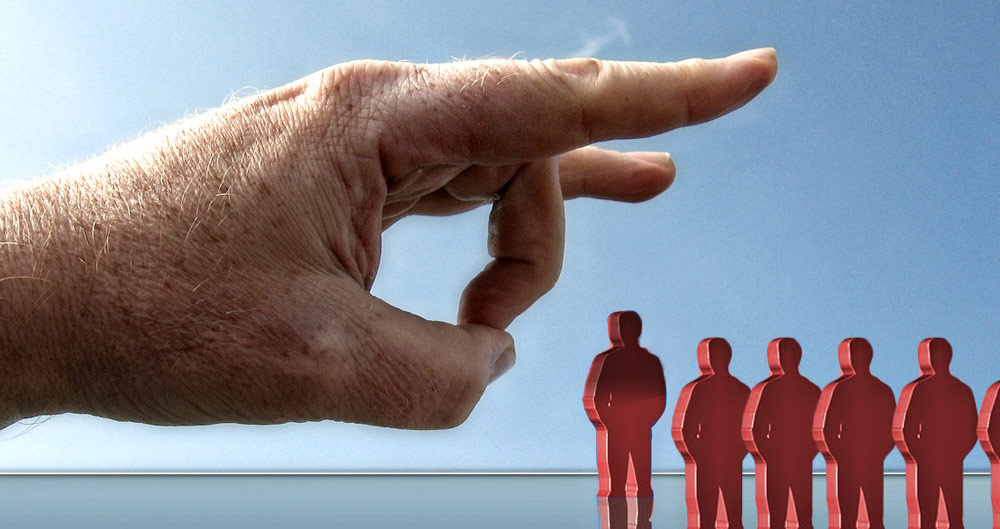
 

*Is that why the slogan “A World Within, A State Apart” is now featured on the state’s website?


Printable PDF


Categories
free trade & free markets general freedom nannyism national politics & policies property rights responsibility

Mr. Jetson, Call Your Office

Increasingly, people are worrying about robots.

They’re taking our jobs, we’re told. Soon, all we’ll have left are robots. Massive unemployment!

While some find this scenario utopia and bliss,* it sounds dreadful to me.

Silver-plated lining is, I doubt it. This kind of worry about technology making laborers obsolete has been around at least since Ned Ludd, who broke factory machinery to save jobs back in 1779.

How is this next wave of technology any different? If technology destroyed jobs on net, we’d all be unemployed now.

Economist Deirdre McCloskey takes this historical view. Writing in Reason, she says today’s high-tech “innovations have actually raised real wages, correctly measured, because a human supplied with a better tool can produce more outputs. And the point of an economy is production for consumption, not protection of existing jobs.”

We’ve always been losing jobs. And new ones are created. Our worry shouldn’t be the jobs lost to new tech, but the lack of new ones coming into existence because of the oldest tech of all: government.

But you know what industry is least resistant to jobs vanishing to robots? Government itself. Sure, some reductions in public sector jobs have occurred, mainly as a result of decreased revenues in the recent “recession.” The job losses there have not been filled by robots, though. Permanent employee positions have been destroyed . . . too frequently replaced by outsourced consultants.

Could robots replace large swaths of public employees? Maybe that wouldn’t be good, actually. The worst-case scenario might be this: government becoming efficient.

We don’t want bad and efficient government.

Kludge may be better.

This is Common Sense. I’m Paul Jacob.
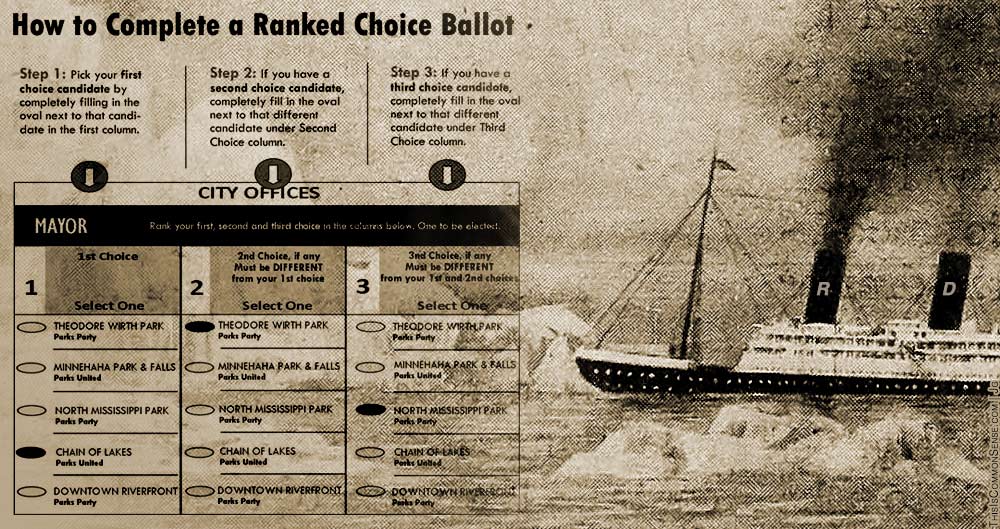
 

* Some even see in this development a sort-of science-fiction rationale for making socialism at long last plausible — robots as the new slave class; all the humans in the leisure class! Yeah, right.


Printable PDF