Categories
ideological culture links

Townhall: Racist Anti-Racism

This weekend’s Townhall column is about race. It is long, in part because talking about race is still so tricky that brief discussions can be easily taken out of context.

And there’s so much to say.

I expand on some comments I made on Friday. But I try to spell out the logic at greater length. So it doesn’t get missed. Racism is an affront to justice. Justice tries to mete out what people deserve, individually. It is especially concerned about establishing basic rules of how to behave. It doesn’t answer every problem of society. It answers crime with punishment and restitution, answers torts with redress. But it does so based on individual responsibility.

Racism is wrong because it judges individuals not on their merits, but by their race. It’s stupid as well as ugly and unjust.

Progressives, however, have been trying to overthrow the old idea of justice as personal freedom and individual responsibility since Progressivism first became an Era.

So it’s no wonder they spread a response to racism that is itself racist. They don’t understand what justice is. So they make an unjust response to an injustice.

Anyway, go over to the column and give it a read. Come back here and tell me what you think.

You will probably be brimming with ideas, complaints, responses. Fine. Me too. One idea I couldn’t include in the column was the sources for some of today’s inner-city African-American problems. It sure seems like they’ve been selected, by racists, for some horrible burdens. But I wouldn’t be hasty on this.

It’s certainly true that official policy has played a huge role in destroying a lot of lives in the inner cities (especially but not limited to African-Americans) — the progressive trifecta of minimum wage raises, welfare aid to families without in-home fathers, and the war on drugs, has devastated the culture of many inner city blacks. Some folks call one of more of these policies “racist,” but the intent, usually, has seemed to be color-blind. That these policies have hit African-American communities especially hard may be more of an accident of history than a policy of repression. But I could be wrong.

Writers from my perspective were once called liberal. Self-defined “Progressives” took over that word in the FDR era. But that hasn’t stopped us from continuing to uphold a commonsense view of justice. Important contributions to the study and advocacy of this concept of justice as they relate to racial issues include

  • The Economics of the Colour Bar, by W.H. Hutt
  • The Other Side of Racism, by Anne Wortham
  • Race and Culture, by Thomas Sowell
  • Black Rednecks and White Liberals, by Thomas Sowell
  • The State Against Blacks, by Walter Williams

These are all books worth looking up. For further reading about the links between laissez-faire individualism and true anti-racism, you couldn’t do better than start your reading here:

Categories
ideological culture national politics & policies

New-Fashioned Racism

“A deeply divided Supreme Court squared off Wednesday over the future of affirmative action in college admissions,” reports the Washington Post, covering the admissions policy of the University of Texas. The arguments for and against race-based admissions preferences were mostly old hat, but got weird when Justice Alito noted a policy of preferring the children of minority professionals over more-qualified, but poorer, non-minorities:

“I thought the whole purpose of affirmative action was to help the disadvantaged,” Alito said. He asked why a minority child of the “1 percent” should get a “leg up against, let’s say, an Asian or a white applicant whose parents are absolutely average in terms of education and income?”

State universities are allegedly all about equality of opportunity. Favoring the under-performing children of wealthy minority folks doesn’t exactly qualify. As a friend of mine put it, “If the elites have to choose between rubbing elbows with the poor or hanging out with the under-performing children of upper middle class professionals, there’s no contest: administrators much prefer racial diversity over a diversity of economic class and ideas.”

What we have here is a new classism using “anti-racism” as a wedge.

But it is itself racism. It’s just not “old-fashioned racism.”

Barack Obama, way back in 1994 — in the earliest recording of our current president arguing policy — used that phrase (“good old-fashioned racism”) to attack Charles Murray and defend reverse discrimination and massive increases in welfare programs. So, in keeping with his terminology, perhaps we should call today’s race-based “compensatory” policies “new-fashioned racism.”

After all, these policies favor some over others not based on their relevant qualifications — or on the “content of their character” — but, instead, based on their race.

This is Common Sense. I’m Paul Jacob.

Categories
free trade & free markets ideological culture national politics & policies

China Syndrome, 2012

The two major presidential candidates, incumbent Obama and challenger Romney, must spend their final weeks of the campaign appealing to

  1. Members of their respective parties disappointed enough to stay home on election day — or vote the dreaded “Third Party” ticket;
  2. Independent voters apt to find something distasteful about both candidates;
  3. The apathetic and the uninformed.

How to appeal to all three groups simultaneously? Well, go for the old standby: fear and hatred of foreigners.

This year, it’s the Chinese.

Romney started the China-bashing by calling our Chinese trading partners “cheaters.” Apparently he is much vexed about how the Chinese don’t respect established intellectual property rights, “stealing” our technology, “everything from computers to fighter jets.” Of course, this mainly happens after “we” set up manufacturing plants for that technology there. He charged that President Obama has not deigned to “stand up to China.”

Earlier, he had accused China of manipulating its money in its favor. He seems to have dropped that, perhaps out of embarrassment — our own Fed’s monetary manipulations, after all, dwarf China’s.

The Obama campaign responded by avoiding the intellectual property issue just as Romney now avoids the monetary one, calling Romney himself a “cheater.” You see, in his Bain Capital days, Romney invested in firms that relocated jobs to “low wage countries like China.” Romney, we are told, has “never stood up to China.”

By which is meant: Romney engaged in globalism and opposed protectionism.

Is Mr. Obama really suggesting that prosperity will come if we shrink from global competition and enact barriers to international trade in goods and services?

The biggest problem the U.S. economy faces isn’t Beijing; it’s Washington.

This is Common Sense. I’m Paul Jacob.

Categories
First Amendment rights ideological culture video

Video: A “Free Speech Wall” Falls

If you agree to a “free speech wall,” you can’t complain about the speech that offends you, can you? Well, if you run a college, I guess you can:

Note that it wasn’t the use of the vulgar “f-bomb” that upset the professors. It was the use of one against the current U.S. president.

Categories
ideological culture tax policy

Curvewise, Gainswise

The so-called “Laffer Curve” — the graphic representation of the varying relationship between tax rates and tax revenues — really bugs people left of center.

The curve maps an economic reality, showing that not all increases in tax rates can increase tax revenues. Why object to reality?

Perhaps because, on the left, taxes are seen less as a practical means to raise government revenue than as an expression of one’s values. The more “leftist” one is, the more equality matters, which too often boils down to: the more one wants to punish the rich. Higher rates stifle the economy and garner less revenue? Big deal. Consequences be damned. One’s values must be expressed.

This came out in Barack Obama’s first presidential campaign. He famously didn’t care whether a capital gains tax rate increase would decrease revenues, as has happened in the past. For him, “fairness” was more important.

Interestingly, it appears that capital gains tax rates tend to top out Laffer-Curve-wise much lower than income taxes. The reason? One seeks a return on capital from invested savings, but one also fears the possibility of loss.  Risk. Pile higher tax rates onto the already palpable negative of uncertainty, and the investor will be tempted to consume his capital rather than engage further in risking his wealth for less reward.

But I confess: I sort of sympathize with the left’s attitude towards taxation. I don’t really want the government to maximize revenue, either. Government misspends most everything it takes in, so I’d prefer lower rates for reasons maximizing quality, not equality.

I bet that the poor, though, would be far better off were the rich not targeted for extra penalties. But that’s not an egalitarian concern, for me. It’s a humanitarian concern.

This is Common Sense. I’m Paul Jacob.

Categories
ideological culture national politics & policies political challengers

Polled American!

More people view Mitt Romney unfavorably (49 percent) than view Barack Obama unfavorably (45 percent), according to the most recent Reason-Rupe Poll. This, despite Romney being the challenger, while President Obama must live down his sorry record.

By this measure, and others in the poll, Obama’s re-election seems ever more likely. And if you think that’s depressing, wait till you read about the general views of taxing the rich more. The “soak the rich” mentality remains quite strong. But some of this “the rich don’t pay their fair share” notion is based on misinformation. Get a load of this:

Last year, the government collected about $1.8 trillion dollars in income tax revenue. If you were to estimate, about what PERCENTAGE of this total tax revenue do you think the top 5 percent of households probably contributed? Would you say…

<1% . . . . . . . . . . . . . . . . . . .  3%

1% to less than 20% . . . . . . . 29%

20% to less than 40% . . . . . . 19%

40% to less than 60% . . . . . . 15%

60% to less than 80% . . . . . . 11%

80% or more . . . . . . . . . . . . . 8%

Don’t Know/Refused . . . . . . . 16%

The truth is that America’s Top 5 percenters pay more than 60 percent of income taxes collected. The vast majority of those polled (66 percent) thought the Top 5 should pay less than they currently do.

I’m not going out on a limb, here, to infer a lesson: Were Americans to learn a few more truths about their government, about taxes, and (hey, why not?) real life, they might change their minds on a few crucial political notions.

Education — and by this I don’t mean schooling — is obviously important to political betterment.

This is Common Sense. I’m Paul Jacob.

Categories
First Amendment rights ideological culture

Half Clocked

Outside the U.N. General Assembly, Iranian President Mahmoud Ahmadinejad was asked if Salmon Rushdie remained under a death sentence. Iran’s Supreme Leader, Ayatollah Ruhollah Khomeini, had issued a fatwā for the author’s fourth novel, The Satanic Verses, in 1989. Though that specific death sentence was rescinded a decade later, others have renewed the call for Mr. Rushdie to be killed.

Ahmadinejad responded jokingly, “Is he here in the United States? . . . If he is . . . you shouldn’t broadcast it for his own safety.”

Clearly, Mahmoud never completed a Dale Carnegie course.

On the bright side, nothing so clearly articulates the superiority of our system of government over Iran’s as does our embrace of free speech and their rejection of it.

Tragically, political leaders in the West often fail to stand up for this freedom. The Iranian leader cited a German law to claim the West has a double standard. He argued that Germany’s prohibition on publicly denying that the Nazi Holocaust ever happened makes it a criminal offense to “embark on historical research.”

Now, Mr. Ahmadinejad is a Holocaust denier, his point about historical research is moronic, and the tyrannical government he figure-heads would really, really like nuclear weapons, making him extremely dangerous, to boot. But, more tragically, he has a point here.

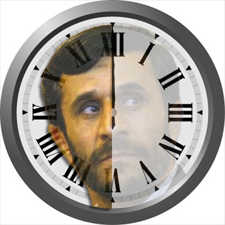
He’s half as good as a stopped clock.

Germany’s abridgment of freedom in this instance doesn’t help battle Nazism, much less Islamofascism; it hurts by undercutting a key value. We have nothing to fear from free speech. Indeed, it’s important to hear fully what both our friends and our enemies are thinking.

This is Common Sense. I’m Paul Jacob.

Categories
ideological culture too much government

Togetherness

“We’re all in this together,” folks say. I’ve even said it. But are we?

Yesterday, I discussed Mitt Romney’s secretly recorded comments on the “47 percent” he believes are hell-bent on supporting President Obama . . . and an apparently different 47 percent not paying federal income taxes. Romney expressed a not unreasonable fear that government bailouts and handouts and entitlements will cause dependency, and there will come a breaking point where those working and producing will be unable to shoulder that burden.

But Mr. Romney shouldn’t go along with the bifurcation of the American public facilitated by the structure of the federal income tax and the payroll taxes for Social Security and Medicare. Most people of all incomes are paying a lot more in taxes than they should have to, even when they do not pay federal income taxes.

Moreover, while no doubt some folks wallow in dependency through welfare or crony insider deals, the vast majority of Americans desire to stand on their own two feet. Part of the 47 percent not paying income taxes are people on Social Security, as noted in an online comment by John C. Bisely:

To lump Social Security in with the other parasites is very disturbing to me. I didn’t ask for SS, it was a government run insurance for my retirement that made sense, actually. The politicians used it as a cash cow and stole billions to buy votes — plus the fact, I gave them real dollars at the time I paid into it and they give me, inflated fiat!!!

Mr. Bisely, like most Americans, is not a parasite. He’s earned his way in this world. He deserves a less parasitic government.

This is Common Sense. I’m Paul Jacob.

Categories
ideological culture national politics & policies political challengers too much government

Bite the Hand

I’m not sure there’s much percentage in talking about percentages.

Divvying folks into groups, and then relying on people to “stay” within their group — behaving according to one’s specifications — seems . . . kind of creepy.

Last year’s “Occupy” movement, with its relentless pitching of the “99 percent,” demonstrated that creepy/icky factor pretty well.

But Mitt Romney had to horn in on the action. “There are 47 percent of the people who will vote for the president no matter what,” he said. These wards of the state, he went on to say, believe that

  • they are victims
  • government has a responsibility to care for them
  • they are entitled to health care, to food, to housing, to you-name-it

Furthermore, “these are people who pay no income tax,” Romney stated. “I’ll never convince them they should take personal responsibility and care for their lives.”

Well, not all folks who are somehow “dependent on government” — a group ranging from Social Security retirees and the non-working poor to federal employees and agribusinesses and Solyndras feeding at the federal trough — necessarily want to increase their own ranks. Not a few are savvy enough to notice that the system that feeds them would, if larded up with more recipients, be made less capable of feeding them.

As for the logic of “not biting the hand that feeds you,” the advice of the late Thomas Szasz is pertinent: “maybe you should, if it prevents you from feeding yourself.”

After all, many of the people who may qualify, technically, as being “dependent on government” would rather not be. And might like the option of being less encumbered by government “help.”

Mitt, I wouldn’t write them off yet.

This is Common Sense. I’m Paul Jacob.

Categories
ideological culture

That’s Rich

What have the rich got that we haven’t got? Besides money?

Well, many assaults on their money.

Less cash-encumbered mortals also get our pockets picked by those with political pull. But persons of certain envious bent are particularly eager to assail the wealthiest among us. (You know who you are, envious people and wealthy people.)

Peter Schiff took a camera to the Democratic Convention and asked attendees what they felt about the idea of curtailing or outlawing corporate profits. Interviewee upon interviewee exclaimed in grateful agreement, “Oh yes! Great idea. Love to see that!” Outlawing profit, killing enterprise, destroying economic life, turning the earth into a barren landscape, sure, let’s do it!!!

Forward!null

Then there’s the Chicago Teachers Union’s strike bulletin, which was issued on September 8 but has apparently been memory-holed from the web page where the Illinois Policy Institute found it. Among the chants for union members hoping to pad their on-average $76,000 per annum salaries with a 30 percent hike were such beauties as “The war on unions is a joke. Tax the rich that made us broke. How to fix the deficit? Tax, tax, tax the rich!”

Blame the rich? While some rich people and businesses rigged and gamed the system to take huge government subsidies, thus helping “make us broke,” everyone with their hand in the cookie jar contributed. The problem is the cookie jar itself.

And I note that the teachers’ chant isn’t “Stop, stop, stop subsidizing some corporations and appeasing the ridiculous demands of teachers unions!”

This is Common Sense. I’m Paul Jacob.