Categories
general freedom ideological culture media and media people

Follow the (Media) Money

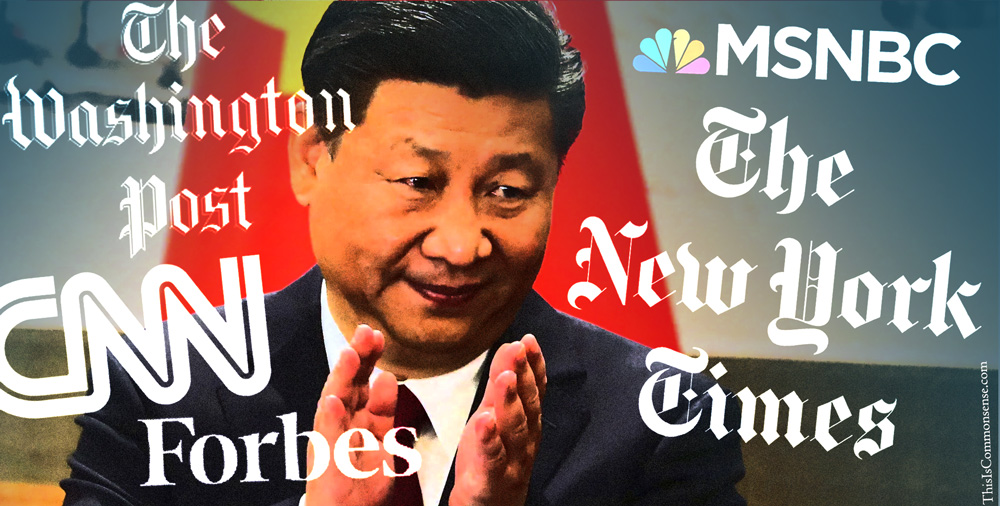
“[A]t a time of rising tensions with China” is “the objectivity of news” . . . dead? 

Wounded?

So wonders Arthur Bloom, lamenting for The American Conservative, in “China’s Long Tentacles Extend Deep Into American Media.”

“We’ve got this tremendous disconnect between what the American people actually think about China and what the media has been telling us,” Bloom explained to Fox New’s Tucker Carlson. “Something like 70% of Americans blame China for [the spread of the coronavirus], and yet that’s not what we’ve been getting. So, why?”

Bloom suggests part of the reason is that media corporations are “in business with them.”

“Comcast which owns NBC Universal” is “building a big theme park in Beijing” offered Bloom . . . “a multibillion dollar investment.”    

Last December, the Free Beacon informed,“China routinely broke federal law by not disclosing how much it spent to publish regime propaganda in the New York Times, the Washington Post, and other newspapers,” adding that “China Daily gave media outlets millions to publish ads disguised as news stories.”

During his short-lived presidential run, Michael Bloomberg soft-peddled China’s totalitarian threat to its own people, Hong Kong, neighboring democratic Taiwan and the rest of us. With Bloomberg News having done business in China for years, the former mayor told Americans that President Xi Jinping was “not a dictator.”

“Six years ago, Bloomberg News killed an investigation into the wealth of Communist Party elites in China, fearful of repercussions by the Chinese government,” National Public Radio revealed last week. “The company successfully silenced the reporters involved. And it sought to keep the spouse of one of the reporters quiet, too.”

Using legal non-disclosure agreements. 

Regarding China, is non-disclosure the operating principle of our media?

This is Common Sense. I’m Paul Jacob.

PDF for printing

China, media, communism, socialism

See all recent commentary
(simplified and organized)
See recent popular posts
Categories
ideological culture political economy

The “Failure” of Capitalism?

“As the lock-downs come to an end,” writes economist Daniel Kian Mc Kiernan, “it will be expected by many — including many not on the political left — that the economy will pick-up at about where it was before the lock-downs.”

Mc Kiernan thinks a popular misconception will get in the way. 

Those who see the economy as “a kernel of processes that take inputs and produce outputs based upon purely technologic considerations” will let this techocratic model cloud their thinking. Viewing this “kernel” as producing not only “everything necessary to maintain itself” but also, and more importantly, a surplus that they treat as a zero sum affair — requiring the State to redistribute — they will regard the re-start as if a mere flipping on of a switch.

But the economy is not something to be un-plugged and plugged back in, and the lock-down super-quarantine was not a mere interruption of service. It was a huge blow that will demand uncountable adjustments. Those quite necessary adjustments may seem random, even wild, and because of this those on the “political left” will, Mc Kiernan predicts, do what they always do: “diagnose the failure to restore the economy quickly as ‘a failure of capitalism.’”

In other words, the bully knocks the victim down, stomps on him, and then taunts him for not getting up right away. 

Still worse: those taunts will become excuses for more kicking and stomping. And the flailing economy will be seen as all the more justification for more of the bully-boy Big Government policies that caused the “failure.”

This is Common Sense. I’m Paul Jacob.


PDF for printing

bully, economy, Covid, corona virus, Wuhan, epidemic, pandemic,

See all recent commentary
(simplified and organized)
See recent popular posts
Categories
ideological culture media and media people

News, Bias & Winning

In late February, ABC News suspended a veteran correspondent, David Wright, after Project Veritas released video in which the reporter acknowledged he was a socialist and criticized his network’s political coverage.

“Oh yeah,” Wright responded, when asked if he were a democratic socialist. “More than that I would consider myself a socialist.”

He also critiqued his network: “We don’t hold [Trump] to account. We also don’t give him credit for what things he does do.”

“David Wright has been suspended,” ABC said in a statement, “and to avoid any possible appearance of bias, he will be reassigned away from political coverage when he returns.”

But what if ABC’s removal of the reporter were more about hiding bias than combating it? 

That story came to mind while considering Sen. Bernie Sanders’ suspension of his presidential campaign. I was amazed at how — just when it seemed the Vermont senator might have an actual shot at capturing the Democratic nomination — a whirlwind of harsh media coverage was unleashed. Simultaneously, other candidates rushed to end their campaigns in a coordinated coronation of former Vice-President Joe Biden.

“Many of Sanders’ allies believe he was inundated with unfair attacks after his Nevada win,” The Boston Globe reported, with “some Democrats and pundits warning he would lose to Trump because he’s too far to the left.”

Meanwhile: “The Biden campaign is expected,” noted The New York Times, “to highlight a series of policy positions that show how he has moved closer to Mr. Sanders on health care and other issues.”

For Democrats and uber-progressive major media outlets, was Bernie’s problem that he’s a socialist? Or his openness and honesty about it?

Seems winning trumps everything. Pun intended.

This is Common Sense. I’m Paul Jacob.


PDF for printing

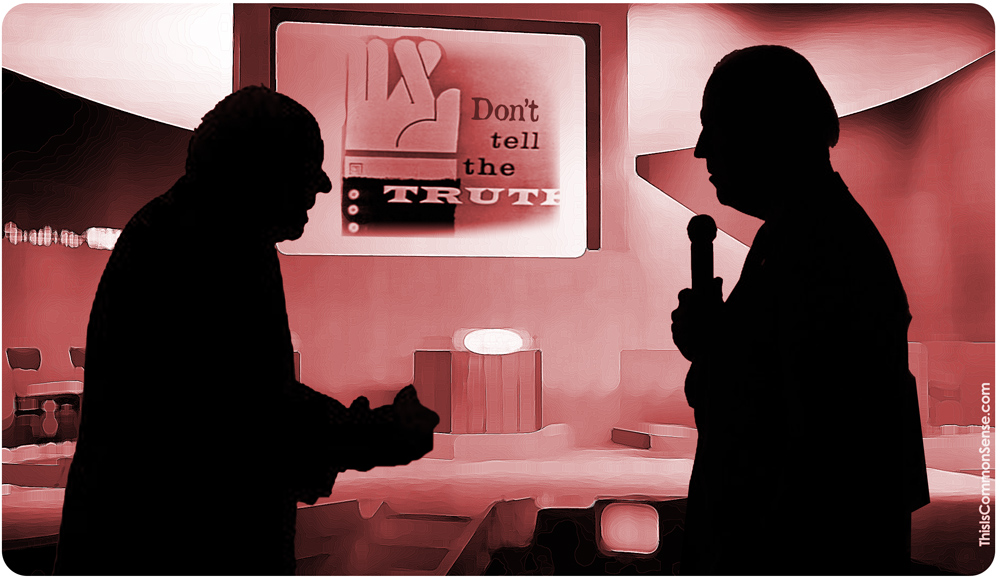
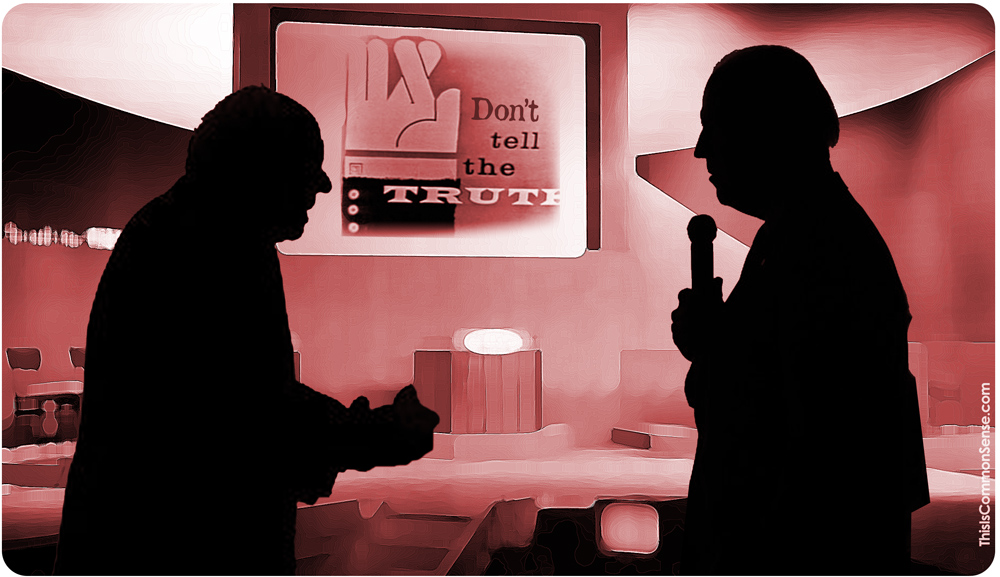
To Tell The Truth, Bernie Sanders, Joe Biden, socialism,

See all recent commentary
(simplified and organized)
See recent popular posts

Categories
free trade & free markets ideological culture media and media people

Dead Economists Walking?

Zombies don’t exist. Not like in the movies.

Or like in the pages of The New York Times.

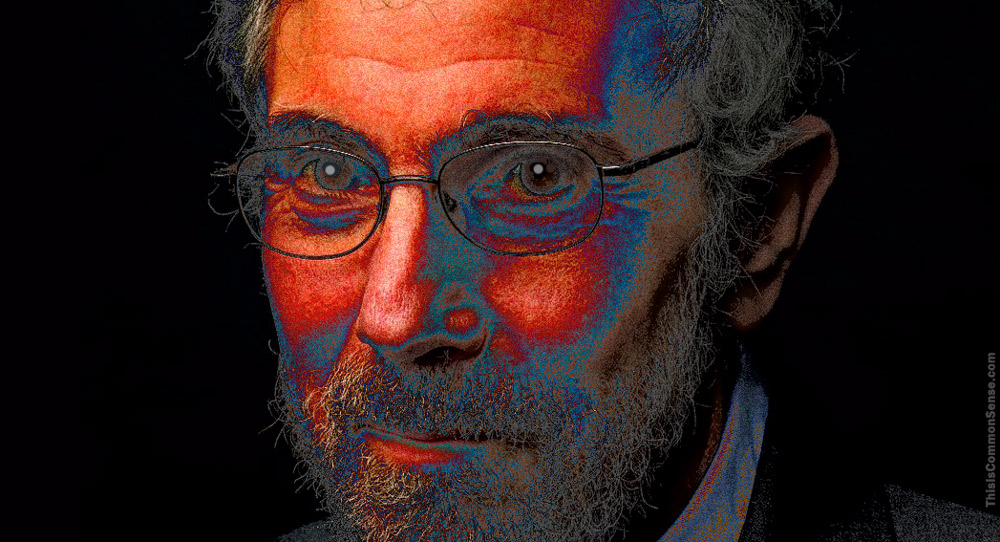
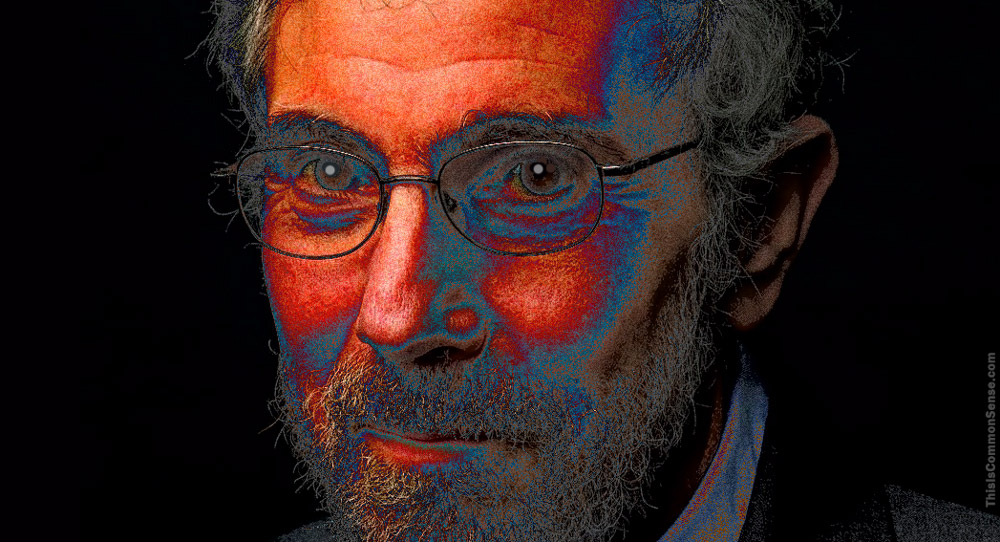
The Times’s economist Paul Krugman has a new book out, Arguing with Zombies, and, if I ever had the tiniest margin of utility nudging me towards reading it, John Goodman’s review in Forbes has dissuaded me. For Krugman doesn’t argue with anyone — he argues against economists whom he mischaracterizes.

No, that’s apparently too kind. He argues against, says Goodman, economists who don’t exist. “Zombies are economists who believe that every tax cut pays for itself with increased revenue,” Goodman explains. “They hate the poor. They are closet racists. They do the bidding of billionaire puppet masters who pay their salaries and fund their research. Their goal in life is to make the rich richer and the poor poorer.”

Goodman concludes by noting that Krugman knows better, for “if you are thinking that Krugman has never met a Republican, you might be inclined to cut him some slack.” But no, “it turns out Krugman actually worked in the White House during the Reagan administration. That means he knows the tax cuts weren’t devised by economists whose motivation was to make the rich richer. He knows his fellow economic advisors to the president weren’t puppets, doing the bidding of billionaires. He knows they weren’t closet racists. He knows they didn’t hate the poor.”

Krugman — a Nobel Laureate — calls his enemies the worst names imaginable. Yet, Krugman the Zombie Hunter is one reason our political culture is so monstrous right now.

Not zombie-monstrous, partisan-monstrous. 

Meanwhile, the two sides that hate each other are united at least in one way, in creating another monster: the $2.2 trillion bailout, and the record new deficit.

This is Common Sense. I’m Paul Jacob.


PDF for printing

Paul Krugman, economist, propaganda,

See all recent commentary
(simplified and organized)
See recent popular posts

Categories
government transparency ideological culture responsibility

People Power in the Republic of China

Which country has handled this worldwide pandemic best?

The question was asked on Facebook, by one friend, and answered this way by another: 

“Government: South Korea; People: Japan.”

My response?

“Combo of people and government: Taiwan.”

There is a lot in the Taiwanese response to explore. 

“The first cause of Taiwan’s success,” write Javier Caramés Sanchez and William Hongsong Wang on Mises Wire, “is the transparency of information, which stopped the rapid growth of infection.” While on Mainland China the corrupt government was no more transparent than the very murky Yellow River, in the Republic of China (commonly called Taiwan, and once listed on the globe as “Formosa”) the Ministry of Health and Welfare began informing the public as early as December 31.

The second reason? “The type of quarantines established by the Taiwanese government are mostly self-quarantines. The Taiwanese government acknowledges that it is crucial to rely on people’s voluntary actions to resist the pandemic.” In Japan the people regularly don masks when sick. That kind of compliance is cultural there. In Taiwan, there has been a lot of spontaneous and “all you need to ask” compliance with social distancing and the like.

“The key is that the Taiwanese government and the Taiwanese people understand that the individual’s own responsibility and actions are essential to suppressing the coronavirus pandemic, not a mandatory massive shutdown,” the authors conclude. “This is what the world needs to learn.”

Responsibility is what a free people practice. And learn to master.

This is Common Sense. I’m Paul Jacob.


PDF for printing

responsibility, command, politicians, control, self reliance,

See all recent commentary
(simplified and organized)
See recent popular posts

Categories
ideological culture The Draft too much government

How Un-Warlike

It’s war!

A common refrain regarding the coronavirus. “This is our World War II,” say media mavens and politicians . . . who have never had to endure anything like World War II.

The utter vapidity of the “war” response was explained very well by Peter Schiff on a recent episode of The Tom Woods Show. Schiff is famously bearish on the American economy, which he has argued for years is addicted to debt and consumption but not production and responsibility. He notes how different this new “war” is. 

Folks today, he argues, have no more idea how World War II was won than how the economy works.

  1. Politicians increased taxes during the war.
  2. Americans were not bailed out: they had to struggle to survive, even on the home front, as
  3. they had to do without creature comforts. Taxes on goods and services sky-rocketed, to pay for the war . . .
  4. in which many young men died.
  5. Middle-class wealth was tapped like never before, to win the two-front war, and one mechanism to aid the effort was the withholding tax . . .

which now we are talking about suspending.

What is widely being proposed today is not the “socialism” of war, where lives and wealth are conscripted.* What is being proposed is the “socialism” of bailouts and sugar-plum fairies, where consumers are coddled.

And unlike in World War II, Schiff contends, there is no vast private wealth to tax to pay for what is deemed necessary. Instead, we have debt. 

It is indeed a strange war where we fight the threat of any harm coming to us, or any sacrifice required.

This is Common Sense. I’m Paul Jacob.


* We should oppose the conscription of individuals, as was done in the First and Second World War as well as Korea and Vietnam. Not only does it violate the Thirteenth Amendment’s prohibition against involuntary servitude, it was not needed then, nor is it now. More on this later in the week.

PDF for printing

From a photo by Nick M

See all recent commentary
(simplified and organized)
See recent popular posts

Categories
free trade & free markets ideological culture

Gouging vs. Kicking

New crisis, old reactions.

The market has failed, we are told, to handle the coronavirus pandemic . . . even though it has just begun.

We hear demands for vast public takings (California Gov. Gavin Newsom commandeering hotels to add quarantine stations and hospital beds), huge transfer programs (including gargantuan Federal Reserve quantitative easing), and even war socialism (an old staple courtesy of John Dewey in 1918 — oops, John Cassidy, 2020, in The New Yorker).

But most galling?

Complaints of medical supply shortages while cracking down on “price gouging.”

The most astounding case is of the man who scoured the countryside to hoard a truckload of hand sanitizer to sell later at higher prices — moving goods from a period of low, normal value to a time of higher value — only to discover that he was not allowed to sell them, by Amazon and eBay, not government.* The big Internet trading platforms object to normal entrepreneurial action, buying low and selling high, in times of crisis.

But how scandalous is it? In buying up a supply he sent a signal quicker to producers to ramp up production. And he took goods away — very temporarily — from early panicky buyers (who seized the same opportunity in a near-future scarcity but to hoard for personal use) to offer to truly needy people who would value the product enough to buy at higher prices.

Foolish enough to prohibit crisis pricing — or, here, kum-bah-yah prohibitions in solidarity. But then to castigate markets for being inefficient!

Banning “price gouging” and blaming the market is like taunting your victim on the ground as you kick him.

You’re the bully, not a noble savior.

And all that hand sanitizer goes unused.

This is Common Sense. I’m Paul Jacob.


* There are numerous anti-gouging laws around the country, too. The online market companies are merely mimicking very old political tropes.

PDF for printing

price gouging, price freeze, scalping,

See all recent commentary
(simplified and organized)
See recent popular posts


Categories
ideological culture political challengers

Mistaken Misogyny

Are Democratic Party women . . . misogynists?

Last week, Massachusetts Senator Elizabeth Warren dropped out of the presidential race after coming in third in her home state and faring no better in any of the first 18 state primaries and caucuses.

“Warren seemed to be the ideal candidate,” informed Erin Templeton, a Dean at Converse College, in The Guardian, but, as the headline explained, “there was only one problem . . . she was a woman.” 

House Speaker Nancy Pelosi attributed “a certain element of misogyny” to the senator’s defeat.

“For the second time in four years, an exceptionally qualified female candidate lost to her male counterparts — some objectively far less qualified,” argued Ella Nilsen and Li Zhou at Vox.

“Sexism was a big factor in Warren’s loss,” they asserted, concluding: “America apparently isn’t ready for a woman president — at least not yet.”

Yet, it was Democrats, not all Americans, who voted for two white men instead of her. And women constitute a clear majority of Democratic voters.

“She’s female,” Annie Linskey and Amy Wang chorused in The Washington Post, identifying the factor “many believe contributed significantly to her loss.”

Noting that Warren’s “departure came just days after another prominent female senator, Amy Klobuchar, dropped out,” they neglected to discuss why Klobuchar endorsed former Vice-President Joe Biden, a man, and not her homogametic comrade, Senator Warren.

The biggest problem with doling out verbal recriminations against people who did not vote for Warren? 

If everything is sexism, nothing is sexism.

Which only makes it harder to fight actual sexism . . . as the Democratic National Committee changes the rules to keep the only remaining woman in the race, Hawaii Rep. Tulsi Gabbard, off the debate stage.

This is Common Sense. I’m Paul Jacob.


PDF for printing

Tulsi Gabbard, shadow, silhouette, misogyny,

See all recent commentary
(simplified and organized)
See recent popular posts


Categories
ideological culture international affairs too much government

All the Tyranny in China

Are you going to make a big fuss?

I mean, about China — dominated by the ruling Chinese Communist Party (CCP). Because some people get all bent out of shape over their totalitarian government placing a million or two Muslim Uighurs into re-education camps surrounded by high walls and razor wire in order to browbeat, brainwash and torture away their ethnic heritage, language, and religious beliefs

Folks also complain about the insidious social credit system and the massive surveillance state, both of which would make Orwell blush; the ugly history of Chinese repression in Tibet; threats to invade peaceful neighboring Taiwan and snuff out their budding democratic experiment; not to mention Tiananmen Square. 

Some cannot get over the estimated 400 million babies murdered by the CCP against the will and amidst the anguished cries of their loving parents. Of course, that old “One Child Policy” has been “liberalized” . . . now permitting two children.  

Moreover, the CCP’s assault on free inquiry and public dialogue is no longer limited to just silencing their own citizens — as infamous attempts to squelch criticism from universities in Australia and here in America, as well as basketball players, show.

Presidential candidate and former New York City Mayor Michael Bloomberg said months ago that Chinese President Xi Jinping was “not a dictator” and “has a constituency to answer to.” At Wednesday night’s debate, he was asked about those remarks.

“In terms of whether he’s a dictator,” Bloomberg explained, “he does serve at the behest of the Politburo, of their group of people, but there’s no question he has an enormous amount of power.”

“But he does play to his constituency,” he reiterated. Sure, all 25 unelected communist insiders (ruling over 1.4 billion disenfranchised Chinese).

Acknowledging that their human rights record is “abominable,” Bloomberg agreed that “we should make a fuss, which we have been doing, I suppose.” 

But . . . “make no mistake about it, we have to deal with China if we’re ever going to solve the climate crisis. We have to deal with them because our economies are inextricably linked.”

Yes, indeed . . . with eyes wide open to the totalitarian brutality of the CCP’s Xi Jinping-led, 25-person dictatorship. 

We need a lot bigger fuss.

This is Common Sense. I’m Paul Jacob.


PDF for printing

See all recent commentary
(simplified and organized)
See recent popular posts


Categories
ideological culture

Beautiful Colors, Ugly Terms

“My friends were asking for the ‘skin-color’ crayon,” explains 9-year-old Bellen Woodard. 

She realized the request was for the peach-colored crayon but, being the only black kid in her third grade Loudoun County, Virginia, classroom, she also knew her skin wasn’t peach-colored. As her mother told Washington Post columnist Theresa Vargas, it made her daughter feel “uncomfortable.”

Bellen used the term “dis-included.”

She and her mom discussed what to do and her mom proposed, “Just hand them the brown one instead.” But Bellen had an even better idea: “I think I just want to ask them what color they want because it could be any number of beautiful colors.”

Indeed.

“So that’s what she did,” wrote Vargas. “She started saying those words. She then heard her teacher say them, too. And soon, her entire class was talking about skin color in a way that went beyond peach.”

The third-grader also designed a kit called “More Than Peach” featuring not just peach-colored crayons but also colors such as “apricot,” “burnt sienna” and “mahogany.” In no time, her kits have been requested across the nation and now the Virginia Museum of History & Culture is adding one to their collection.

People come in so many wonderful hues and colors. It is something to celebrate — just as young Bellen Woodard has done.

Which reminds me of my distaste for the term “persons of color.” 

This term of art has become ubiquitous. Unlike Bellen’s efforts offering inclusion and understanding, “persons of color” serves to separate us. Because I’m labeled “white” . . . I’m “dis-included.” 

But I’m not white (a color) or translucent; I’m peachy — perhaps tan sometimes or bright red when sunburned. 

We are all persons of color. Beautiful colors. 

This is Common Sense. I’m Paul Jacob. 


PDF for printing

crayons, flesh, race,

See all recent commentary
(simplified and organized)
See recent popular posts