Categories
Common Sense general freedom ideological culture

Thankful for Tomorrow

Tomorrow will be a day of Thanksgiving, a wonderfully unpretentious holiday in a terribly pretentious time.

Thanksgiving is a national celebration about simply having enough food to eat and about eating it together . . . and recognizing, at least for a moment, how great that is.

The “dining together” part is so important that enormous controversy has erupted in recent years as retailers jump the next day’s usual start of the Christmas season, “Black Friday,” by daring to open up on Thanksgiving Day itself. Many complain that stores are frustrating the feast by “forcing” their workers to work.

Last year, I made the point that families truly committed to eating a meal together could find a way to do so, and that workers are not “forced to work,” but actually enjoy a meaningful degree of freedom in when they work. And I remember being very grateful for the opportunity to earn a living by working on a holiday.

In fact, the abundance on our Thanksgiving tables every year is only possible through the freedom to work and produce and trade with each other. This American holiday is also about giving thanks for that freedom.

Freedom has, like it or not, led to long lines of eager customers waiting for those retail doors to open. I’m no big fan of shopping, but more power to those who are.

Still, freedom has also led to a full-throated public discussion — and backlash. A New York Post article credits social media with mobilizing public sentiment against stores opening on the holiday and causing some stores to roll back their hours.

Brian Rich runs Boycott Black Thursday, a Facebook page with over 100,000 likes. “We are not anti-capitalism,” says the Idahoan, who suggests shoppers spend to their hearts’ content on Friday, but celebrate “a good old-fashioned holiday at home” on Thursday.

I’m thankful stores can open if they wish and that customers have money to trade for products they want. And I’m mighty glad that we don’t have to shop if we don’t want to and that we can speak out freely against stores opening and in favor of folks spending more time with loved ones.

On Thursday, I’m grateful for all those in my family and my wife’s with whom I’ll get to break bread. On Friday, well, my youngest daughter will get me up way too early to take her shopping.

And, doggone it, as painful as it is: I’m thankful for that, too.

This is Common Sense. I’m Paul Jacob.


Categories
general freedom national politics & policies political challengers

Mike Lee’s Fix of Congress

“What too few in Washington appreciate — and what the new Republican Congress must if we hope to succeed — is that the American people’s current distrust of their public institutions is totally justified.”

So wrote Sen. Mike Lee (R-Utah) in The Federalist shortly after the big election earlier this month. “Americans are fed up with Washington, and they have every right to be.”

Lee starts off with the need to earn trust. Will many readers simply shrug? His notion of a “more open-source strategy development model that includes everyone” sure sounds nice. But after Obama’s promise of the most “transparent” presidency in history, and delivery of one of the least, skepticism is natural.

At least Lee knows his challenges: “Republicans in fact can’t ‘govern’ from the House and Senate alone — especially without a Senate supermajority.” He sees the necessity of working with Democrats, but insists that the congressional majority not compromise away the whole enchilada.

“Anti-cronyism legislation is win-win for the GOP,” he writes, and views “taking on crony capitalism” as a test of the GOP’s “political will and wisdom.” Fighting the corrupt Washington culture of insider deals is sure to test Democratic lawmakers, too.

“[A] new Republican majority must also make clear that our support for free enterprise cuts both ways,” argues the Senator. “To prove that point, we must target the crony capitalist policies that rig our economy for large corporations and special interests at the expense of everyone else— especially small and new businesses.”

Echoes of Ralph Nader, but with deep free-market rumblings. Not discord, but harmony. Music to my ears.

This is Common Sense. I’m Paul Jacob.

Categories
general freedom

A Wall Fell

It is a day of celebration for freedom lovers.

On November 9, 2014, Germans festooned the 15-kilometer path on which the Berlin Wall had once stood with 8,000 lighted helium balloons, which were then released into the sky. Reuters says that the release symbolizes the breaching of the Wall. I think of it as symbolizing how so many trapped souls could at last freely and individually ascend.

Twenty-five years ago, in culmination of a series of protests and negotiations, a half million people demanding freedom of emigration gathered at the Alexanderplatz in East Berlin — some two years after Ronald Reagan had exhorted Mikhail Gorbachev to “Tear down this wall!” On November 9, 1989, an official announced that refugees could freely travel directly from East Germany to West Germany. A barrier brutally dividing West from East Berlin since 1961 was finally torn down.

Soon the two halves of Germany were reunited. Not without problems. But certainly without the problem that faced them all during the Cold War — the risk of being shot and killed for seeking a better life.

Many of us grew up knowing no other world but one in which the Berlin Wall loomed.

It stood, marking the most visible portion of barriers that had persisted for decades.

Like Communism itself, the Berlin Wall seemed immovable. Yet ideas and choices are what created such a reality; so other ideas and choices could create something better. When prospects for freedom seem bleakest, that’s what we need to remember.

This is Common Sense. I’m Paul Jacob.

Categories
general freedom ideological culture U.S. Constitution

Principled, and Un-

Can one “rise above principle”?

Aren’t most (all?) who think they “rise above principle” actually sinking below it?

Economist David Henderson called our attention to this notion in reference to legal theorist Richard Epstein’s call for a war against ISIS. On AntiWar.com, he challenged Epstein’s support for the president’s war on ISIS on constitutional grounds, and wondered why constitutional scholar Epstein hadn’t addressed this concern.

Then Epstein addressed it — using that curious phrase “rise above principle.”

Henderson’s response? Characteristically astute:

In which times of crisis do you need to “rise above principle?” What are the criteria for doing so? If you don’t specify criteria, then I think you’re saying that anything goes. If you do specify criteria, don’t those criteria amount to a principle? In that latter case, are you really rising above principle?

It’s not just a matter of constitutionality, though. Just war requires coherent goals. And a debate and vote in Congress over going to war against ISIS could help establish those goals.

Clearly, the continuing interventions in the Islamic East have suffered from massive confusion. A year ago, President Obama called for regime change in Syria and wanted to bomb government forces; today, we are bombing ISIS, the main opposition to that same government.

Sinking below principle on matters of warfare is the least excusable abandonment of law. It’s the suppression of hasty warfare — individual, group, or national — upon which the rule of law rests. Upon which civilization rests.

There’s no “rising above.” There’s no acceptable abandonment. There is only sticking to principle upon the issues that matter most.

This is Common Sense. I’m Paul Jacob.

Categories
general freedom ideological culture

How to Occupy Hong Kong

The fight for freedom doesn’t stop at the border.

Hong Kongers, we are with you.

Your protest against continued tyranny by mainland China is a just cause. The Communist Party of China may no longer be in Marx’s pocket, but its members remain greedy and dictatorial and oppressive.

Leung, the governor of Hong Kong, refuses to step down. Tyrants do cling to power. (No term limits for them!) But the people have every right to demand his ouster under a principle established in our own revolution: Government must rest upon the consent of the governed.

I have no idea how this will all turn out. Ever since the Tiananmen protests, a generation ago, I’ve harbored hope: a freer future for the Chinese. But I know they are up against a juggernaut, an extremely entrenched exploiter class. The Tiananmen protests were violently put down, suppressed. Will Hong Kong’s be?

I think the people of Hong Kong know what they’re up against. All Chinese people know how corrupt and dangerous their government is. But the details, the exact history of the crimes? Not so much. Kept under wraps. Still, the people of Hong Kong developed a taste for freedom under the Brits. If not a taste for democratic elections. Now they are demanding both electoral democracy and democratic freedoms.

The protesters “occupying” Hong Kong have American analogues. But are they “Occupier” or “Tea Party”?

They aren’t demanding socialistic levels of more government. And they aren’t trespassing, or committing crimes. And they pick up after themselves.

That’s the way to “occupy” a city: For freedom, responsibly.

This is Common Sense. I’m Paul Jacob.

Categories
general freedom

Truly “Green” Energy

“The remarkable thing about fossil fuels,” says science writer Matt Ridley, “is that when we use them, no other animal is deprived of its livelihood.”

In a fascinating talk, Ridley, the author of The Rational Optimist and other brilliant, eye-opening books, calls our attention to what really should be an obvious fact: “No other animal [than us Homo sapiens sapiens] wants to eat coal, or oil, or gas.” But, he insists, when we fell a tree for our fuel, “we deprive a woodpecker of its life.”

This helps explain why, in so much of the world, animal species are coming back, their populations growing. They are renewing because of our use of non-renewable energy. (Renewable energy, he says, is quite bad for the ecosystem.)

But that’s just one reason burning fossil fuels is a good thing. Another is increased carbon dioxide (CO2).

“What?!?!” — I can hear the enviro-shrieks from here in my bunker. This weekend there were protests around the world about climate change.

But climate change may be a good thing.

Well, at least, the planet is getting greener. The Sahara’s getting greener. Much of the world’s landmasses are re-foresting — that’s even happening in Bangladesh.

I read about widespread reforestation in The Atlantic years ago. I’ve written about this and other greening before. But the reason isn’t simply because our fossil fuel reliance has made agriculture more efficient, thus requiring less land — that disused land can then grow wild, or cultivate non-agribiz plantlife. It’s also because CO2 feeds plants.

The Amazon, Ridley says, is greener than it was mere years ago.

Could later industrial civilization be saving the planet from the depredations of earlier industrial civilization?

Yes.

This is Common Sense. I’m Paul Jacob.

Categories
crime and punishment general freedom

Police Officer Un-indicted

We’re naturally worried about the potential for police abuse of power — cops who roust people for no good reason, then claim that the other party was “resisting arrest” or some such thing.

But sometimes it’s the person on the other side of the badge who reconstructs history.

Several days ago, a story broke about Django Unchained actress Danièle Watts, who is African-American, being accosted along with her white boyfriend by a police officer who wanted to see their IDs. Both later suggested that they were targeted by police for racial reasons. On her Facebook page, Watts reported that she “was handcuffed and detained by two police officers . . . after refusing to agree that I had done something wrong by showing affection, fully clothed, in a public place.”

But audio of the encounter that has come to light shows an officer politely asking for ID, and explaining that he was responding to a call. (The caller had claimed the couple were having sex in public.) The officer is calm; Watts is persistently histrionic. She brings up race; he says race wasn’t the issue, sexual activity in public was.

We can argue about whether the officer should have handcuffed the actress in response to her recalcitrance. (Apparently, an accusation is all that is required to trigger police power, a demand to “see our papers.” It’s hard not to be on Ms. Watts’s pro-freedom side on that.) But now that this recording is out there, her original version of the encounter just won’t stand.

Enough reason to put video-recording devices onto every police lapel . . . in L.A., in Ferguson, everywhere.

This is Common Sense. I’m Paul Jacob.

Categories
free trade & free markets general freedom ideological culture

The Uber Rebellion

Customers in Germany and elsewhere have flouted irrational attacks on the popular ride-sharing service Uber.

As I have explained before, Uber’s software lets passengers and drivers connect in a way that bypasses regularly regulated taxicabs. Cabbies don’t necessarily oppose the innovation. Many see Uber’s app as a nifty way to get customers. And, of course, many riders see it as a nifty way to get rides.

But taxi dispatchers? Well, that’s another story.

At least it is in Germany, where an organization for dispatchers called Taxi Deutschland has kvetched that the San Francisco company lacks the Necessary Permits to do electronic dispatching in Deutschland. Thanks to TD’s loud complaints, a German court issued a temporary injunction against Uber, prohibiting it from conjoining ride-seekers and ride-givers in happy synchrony.

Uber decided to keep operating in the country anyway, despite the threat of huge fines.

They’ve gotten lots of moral support. In response to the injunction, customers quietly but firmly told regulators “Laissez nous faire!” — a.k.a. “You’re not the boss of me!” — by doubling, tripling and even quintupling demand for Uber’s app. Matthew Feeney of Cato Institute points to jumps in signups in the days following the court’s order: in Frankfurt a 228 percent jump, Munich 329 percent, Hamburg 590 percent.

Last July, in the U.K., Brits surged their signups eight times over after protests against the company.

Keep up the good work, rebels.

This is Common Sense. I’m Paul Jacob.

Categories
First Amendment rights general freedom ideological culture

Registering Dissent in Russia

Russian politics — does it consist in anything but the progressive unraveling of what modest liberalization of civic life the Russians benefited after the crackup of the Soviet Union?

The latest assault on liberty? The government targeting of Russian bloggers. The most popular ones — those with 3,000 or more daily readers — must now register with the government or risk being shut down. As Bloomberg’s Ilya Khrennikov puts it, “Russian President Vladimir Putin is taking names. Potentially thousands.”

The registrants must supply real names, real addresses.

Mother Russia says it’s doing this to combat inaccurate or defamatory information — i.e., opinions it dislikes; i.e., any too critical of the government. Putin already has authority to shut down “extremist” web pages sans judicial oversight. The new law tightens the noose.

It seems there’s little we can do about this in the West except express our sympathy for Russians fighting the commissars.

Well, one other thing, at least; and not so little. Western tech firms can refrain from abetting such repression the way Yahoo did when, several years ago, it turned over user info on Chinese dissidents Wang Xiaoning and Shi Tao to the Chinese government and thus enabled their imprisonment. Facebook, Google+ and other hosts of Russian-language blogs can flatly reject demands to censor or delete these blogs — or to supply the Russian government with identifying info on the authors.

Obviously, predictions of the end of history have indeed proven premature. We’re not all liberal democrats now.

This is Common Sense. I’m Paul Jacob.

Categories
general freedom ideological culture

You Own You, I Own Me

There’s been a lot of talk about Robert Draper’s New York Times article on a possible “libertarian moment.” On Townhall, “last weekend,” I focused on the partisan political aspect of the movement. There was a lot of curious stuff in the article, and I haven’t seen anyone comment on one of its stranger passages.

Call it a moment of culture shock.

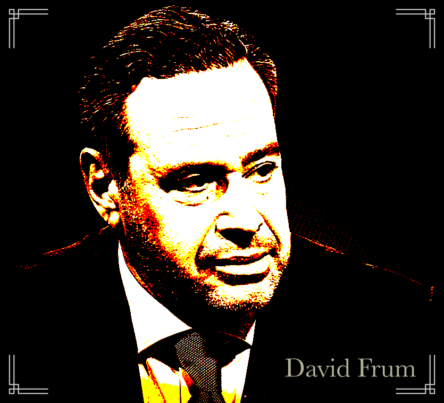
“What does that mean, ‘I own myself?’ ” David Frum, a former speechwriter for George W. Bush and Republican commentator, sputtered in exasperation when we spoke later. “Can I sell myself? If I can’t, I don’t own myself.”

Taken at face value, one could simply answer Frum by mentioning that in olden times people could sell themselves — into slavery.

Or one could make an extended political point. “Haven’t we all sold ourselves long ago?” That might be unnerving.

But the informed answer is this: “We can’t sell ourselves because our ‘self-propriety’ (as Richard Overton put it long ago) differs from other kinds of ownership. Our self-ownership is inalienable. That’s why it’s so important.”

It’s like this: You own you, I own me — we are free.

It turns out, Mr. Frum, that this “inalienability” idea was central to much discussion of rights at the founding of our country. Funny you don’t seem to know anything about that.

This is Common Sense. I’m Paul Jacob.