Categories
education and schooling national politics & policies

The Bloomberg Limit

Afraid that scandal-alluring Hillary Clinton may prove too flawed a presidential candidate, some Democrats are talking to billionaire and former three-term New York City Mayor Michael Bloomberg about a 2016 presidential run.

Mrs. Clinton’s “slide is accelerating,” writes New York Post columnist Michael Goodwin. “A damaging new poll goes to the Achilles’ heel of her candidacy: People simply don’t trust her.”

Goodwin gushes, instead, at the “intriguing” possibility of Mr. Bloomberg.

“Wall Street wants Michael Bloomberg to run for president,” reports Business Insider, “but the billionaire isn’t budging.”

And for good reason. He can’t win.

It’s not just me saying so; it’s Michael Bloomberg himself. Last year, he told CBS Face the Nation that he’d consider running . . . “If I thought I could win.”

His honor should know, having spent more of his own money chasing public office than any person in American history.

Why did incumbent Mayor Bloomberg have to spend so much dough? He double-crossed voters on term limits. Bloomberg promised to oppose city council attempts to weaken the limits, but flipped to grab a third mayoral term for himself.

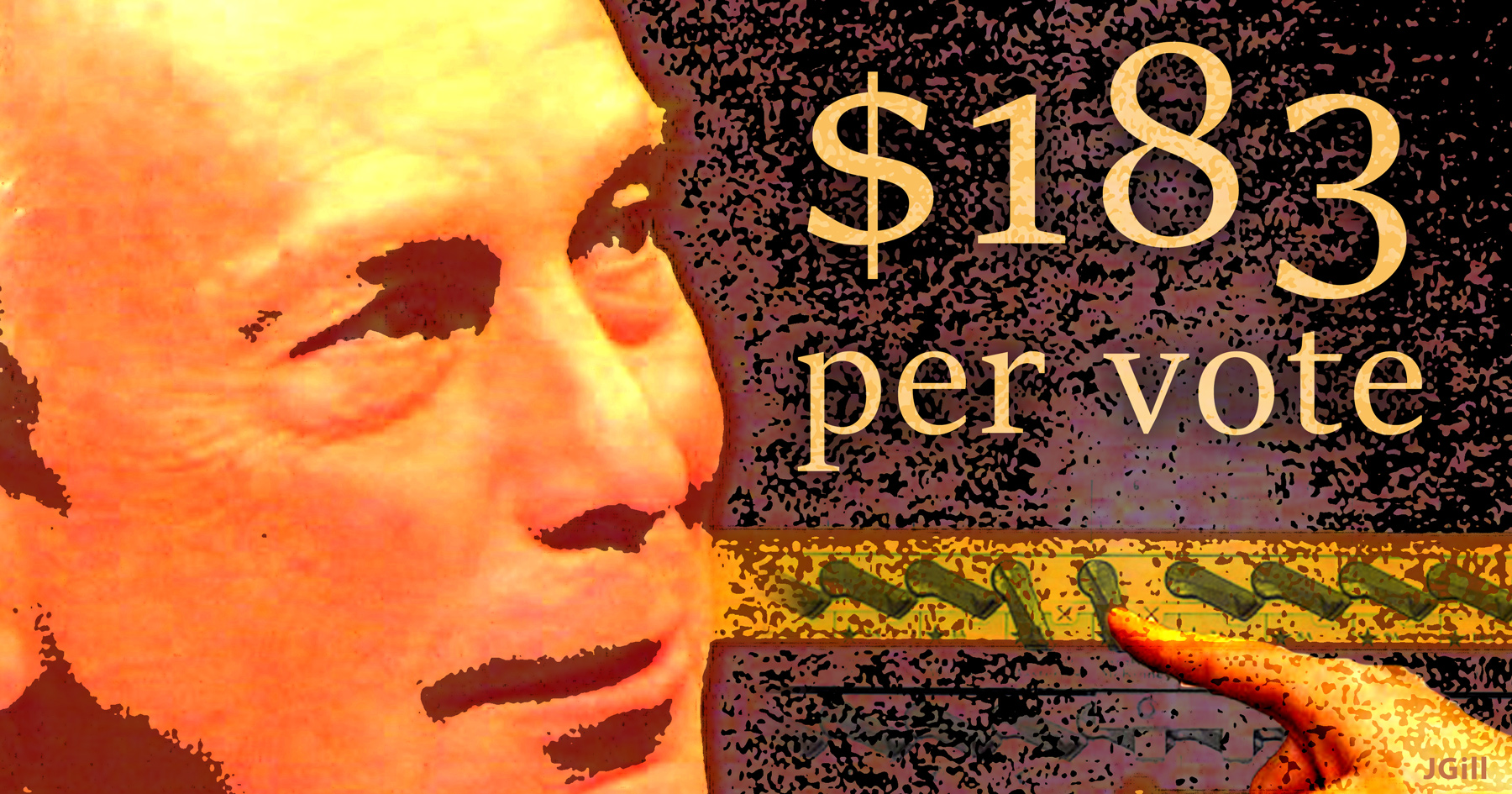
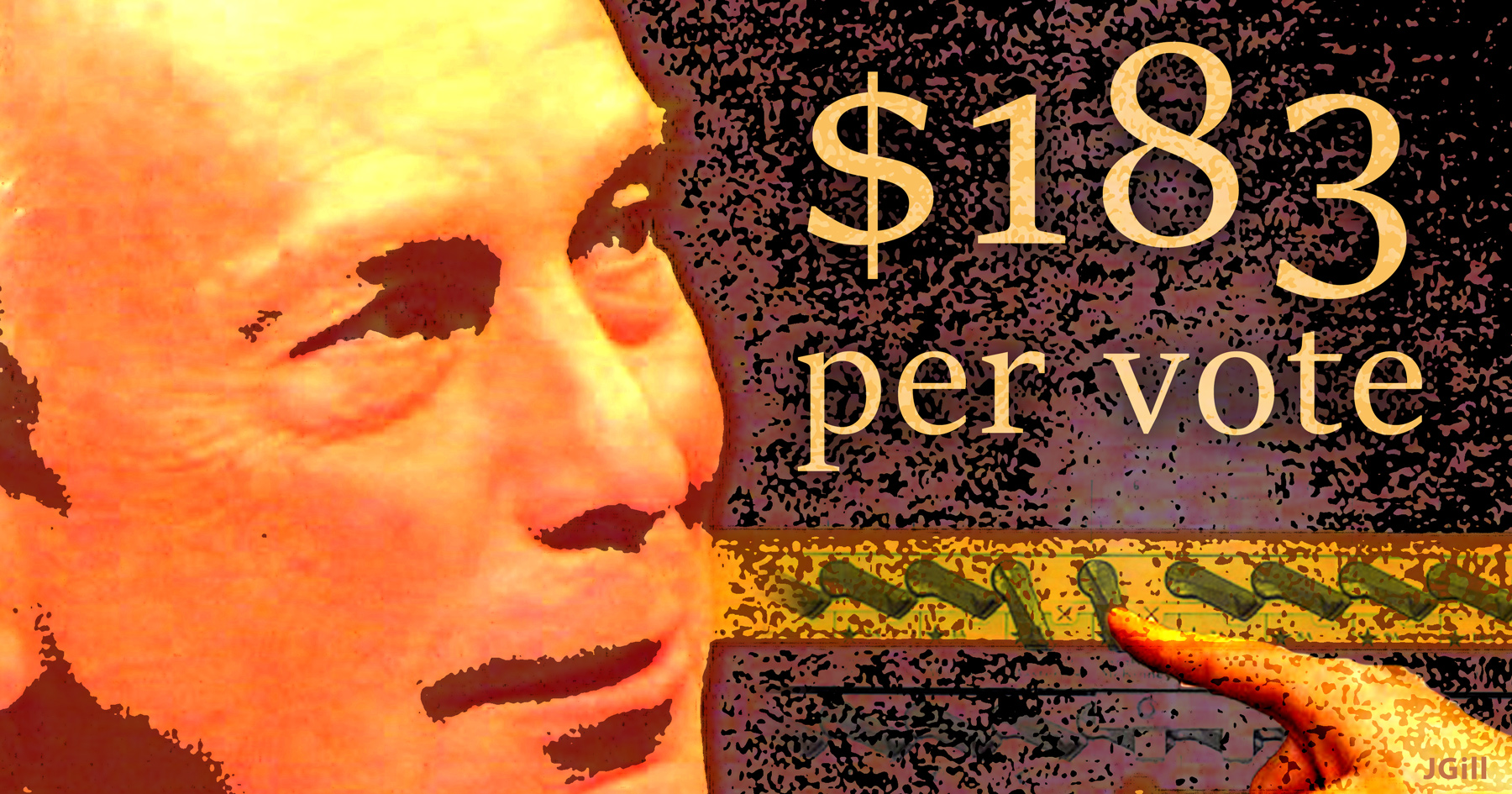
Voter anger “over his maneuver to undo the city’s term limits law,” reported The Times, became . . . well, a big problem. “To eke out a narrow re-election victory over the city’s understated comptroller, Mayor Michael R. Bloomberg spent $102 million of his own money, or about $183 per vote,” explained the New York Times in 2009, “. . . making his bid for a third term the most expensive campaign in municipal history.”

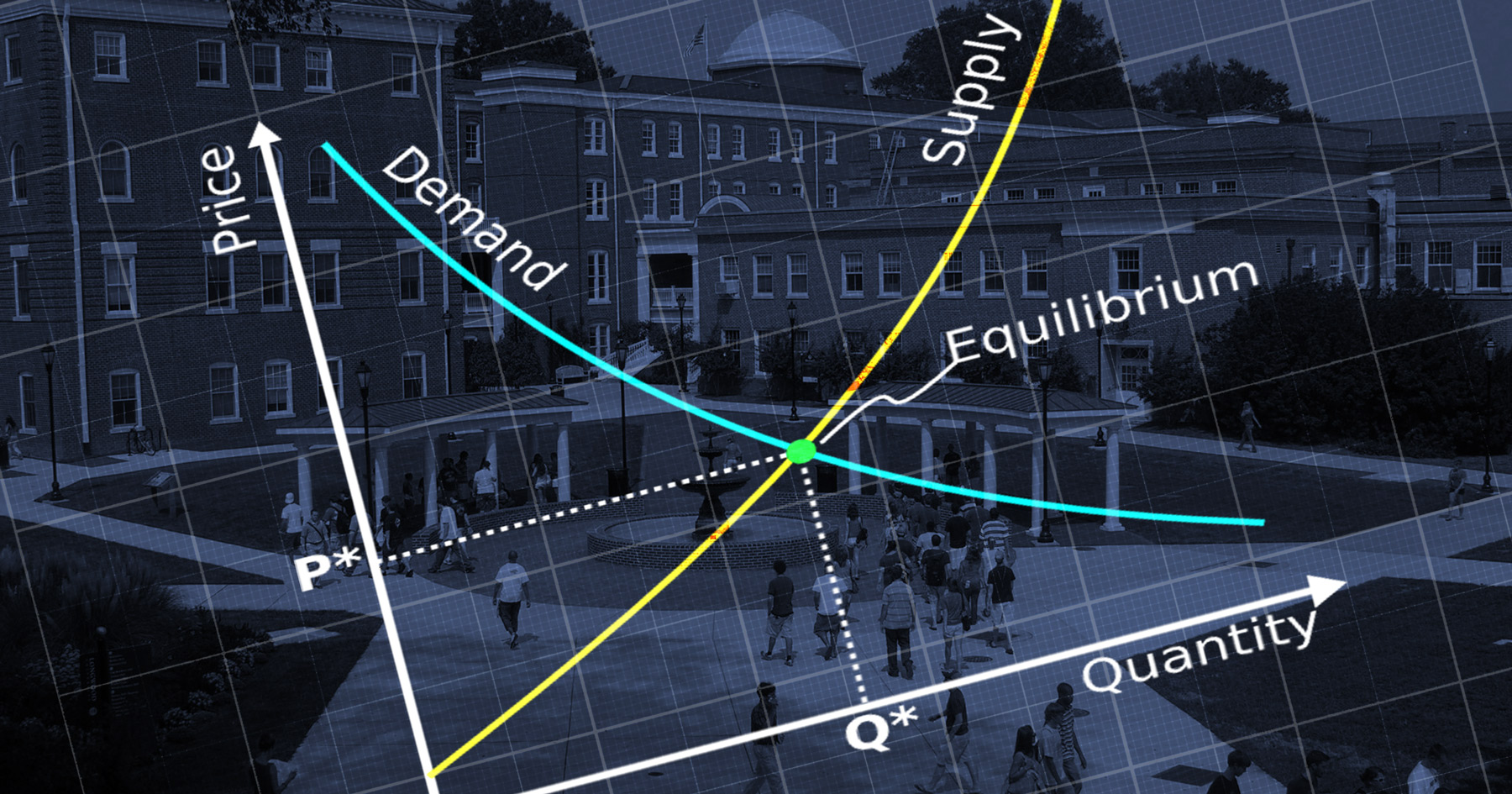
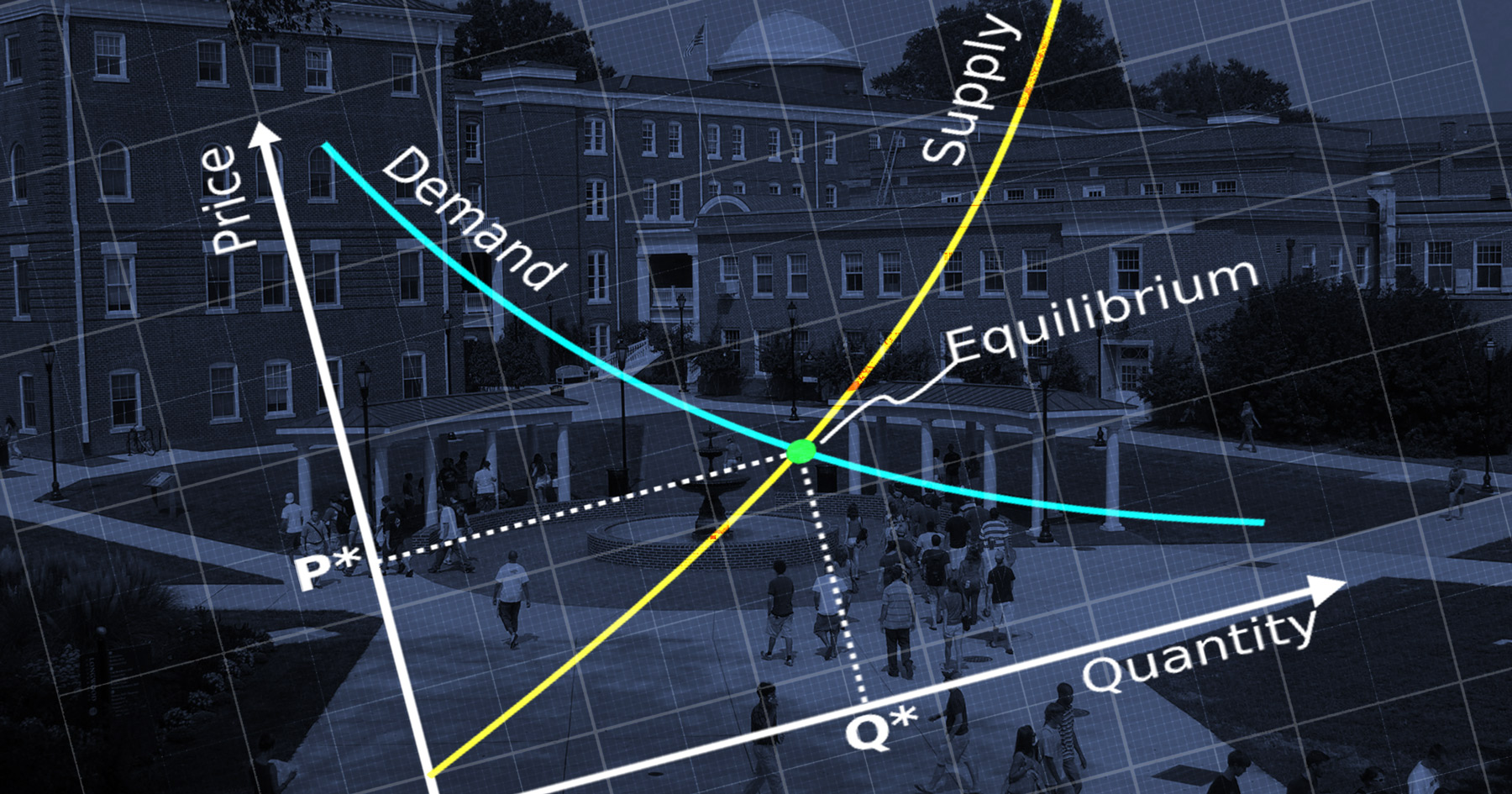
A similar price tag in a presidential race stands at roughly $23 billion. That’s a lot for anyone.

This is Common Sense. I’m Paul Jacob.

Printable PDF

Bloomberg Votes


Categories
education and schooling folly

Learning Zone or War Zone

Given the stated purposes of the university — discovering, learning, teaching, engaging in open intellectual discourse — you might suppose that the pitched battles on campus would be primarily intellectual in nature. Persons set forth a view, others criticize it or elaborate a positive alternative, etc.

Open intellectual change, however heated, is indeed often what transpires.

But on many campuses, we also witness efforts to muzzle opponents of ideas or policies. The censors contend that disagreement as such constitutes a kind of assault on them, one from which their delicate selves must be forcibly and un-delicately protected.

Thus, campus activists at Northwestern University have reported Professor Laura Kipnis for “sexual harassment” for arguing, in The Chronicle of Higher Education, that “Sexual Paranoia [Is Striking] Academe,” as exemplified by prissy new rules about dating, jokes, the simplest of standard human interactions. According to her accusers, her article somehow creates a “hostile environment” for students eager to impose not only a Victorian screen on dating and talking, but also a screen, or lid, on any discussion of the Victorian screen. It’s just one example of a syndrome that could be multiplied ad infinitum.

What to do?

One thing, if you’re applying to college: omit as a prospect any school rife with the politics of repression. Boycott the anti-academic academy.

The second, larger solution: bypass the modern university altogether.

Modern technology can help with that. There are more and more ways to learn, and teach, with every day that passes.

This is Common Sense. I’m Paul Jacob.

Printable PDF

College Safe Zones


Categories
education and schooling

Private School Choice Works

Private school choice is “in,” writes Patrick Wolf. “Far from being rare and untested, private school choice policies are an integral part of the fabric of American education policy.”

Now, these “new ideas” really upset some folks. I’m not one of them. School choice is greater freedom.

Freedom works.

Public schooling, on the other hand, is based on very different principles — and principals. It’s no wonder that a system based on compulsion (taxes, attendance, etc.) tends to have so much trouble performing well: it’s not the forced sector of the economy that booms.

Enter school choice. As long as kids must be forced to “attend” a school, I (as a parent) would rather decide which school, for both my sake and my children’s. And if I’m paying taxes, and other kids are getting tax moneys for their education, vouchers are more fair.

Wolf, writing in The Daily Signal, offers evidence that these eminently sensible policies lead to great results. “In Washington, D.C., use of an Opportunity Scholarship increased the likelihood of a student graduating by 71 percent.” Research into the effects of Milwaukee’s program show it “significantly increased the rates of high school graduation, college enrollment and persistence in college for the low-income students. . . .”

Researchers at Brookings Institution and Harvard found similar results for New York City’s “privately funded K-12 scholarship program.”

In his 1859 philosophical polemic, On Liberty, John Stuart Mill argued that parents have a duty to educate their children — and society an interest in seeing these duties met. But that doesn’t entail setting up government schools.

It’s time to catch up with Mill’s 1859 wisdom.

This is Common Sense. I’m Paul Jacob.

Printable PDF

Vouchers Work


Categories
crime and punishment education and schooling folly general freedom too much government

Under Their Thumb

What if police grabbed your children off the street and held them for five hours?

Alexander and Danielle Meitiv of Silver Spring, Maryland, have been investigated three times. First, when their children were discovered playing by themselves in a park a block from their home. The second time when police picked up the kids walking home from a park about a mile away. The third investigation was launched when the Meitiv’s 10-year-old son and 6-year-old daughter were arrested and held for five hours for walking home from a different park.

Nothing came of the first investigation. In the second, CPS originally found the couple guilty of “unsubstantiated neglect.” But last week, the Meitivs received a letter from Maryland’s Child Protective Services (CPS) now ruling out neglect in the second investigation.

Gee whiz, it’s good news. But the Meitivs still have investigation No. 3 to contend with. And CPS remains completely mum on whether the agency’s letter means the Meitivs and other parents can now freely allow their kids to walk to and from public parks and other venues.

Or not.

Can we really live in the “Land of the Free” and our children not be free to walk in public? What kind of freedom is that?

If the Constitution isn’t sufficient to stop police and child welfare [sic] agencies from snatching kids off the street, terrifying them, investigating their parents and threatening to take those children, we need to pass new laws granting children the right to walk down the street . . .

. . . as long as it’s okay with their parents.

This is Common Sense. I’m Paul Jacob.


Printable PDF

Free Range Kids


Categories
crime and punishment education and schooling folly Second Amendment rights

Pop Gun Tart

America is often said to be a land of second chances.

Just not for 7-year-olds. At least, not when they’re in the public school system.

Back in 2013, a boy then in second grade in Anne Arundel, Maryland, was suspended for two days for what was deemed a “gun-related” offense.

It was also a Pop Tart-related offense.

No, he didn’t shoot a Pop Tart; he bit his Pop Tart into the shape of a gun. There’s a dispute as to whether he then pointed the high-calorie weapon at the ceiling or at other students. Either way, unless the strawberry filing was piping hot (it wasn’t), there wasn’t really anything to fear.

Still, school officials pretty much freaked out.

Of course, the incident did occur just months after the Newtown, Connecticut, school shooting, when six- and seven-year-olds were feeling the full weight of adult hysteria about guns, pastries, pointed fingers, etc.

Fast-forward to the present: the Maryland lad’s parents are still fighting to clear this gun-related black mark from his permanent record, fearful it could damage him even decades from now.

I don’t blame them.

Unfortunately, last week the Maryland State Board of Education upheld the suspension. A spokesperson for the local schools claimed it was warranted because of the lad’s “long history of disciplinary issues,” adding that the school “has gone to every conceivable length to assist that student.”

The attorney for the family says they will appeal.

My kids have been homeschooled, but next year my youngest will attend a public high school. I just hope we can find a good, inexpensive attorney to go with her.

This is Common Sense. I’m Paul Jacob.

Printable PDF

Categories
education and schooling folly nannyism

Well-Substantiated Insanity

In what sort of place are children taken from their parents, or parents investigated by the authorities with that in mind, because they allowed their 10- and 6-year-olds to walk to a park to play?

Not a forced 20-mile march across Death Valley, mind you, but a Saturday stroll of less than a mile under normal earth conditions.

What sort of place? These United States Silver Spring, Maryland, to be specific.

Thats where Danielle and Alexander Meitivs two kids, Rafi and Dvora, were picked up by police, on their way home from a neighborhood park.

A two-month Montgomery County Child Protective Services (MCCPS) investigation followed. Now, theres no law against youngsters walking in public by themselves. Local public schools dont provide bus service for kids within a mile of the school, deeming that close enough to walk. Nevertheless, this week, authorities announced that the Meitivs were found responsiblefor unsubstantiated child neglect.

The good news is that the neglect charge is completely unsubstantiated.The bad news is that official Free State busybodies seem to have not one clue as to what that word means.

MCCPS will keep a file on the suspicious family for five years. We dont know if we will get caught in this Kafkaesque loop again,says Mrs. Meitiv, noting that the agency left unanswered the question of what might happen if they ever again dare allow their kids to walk outside the house without adult supervision.

The family is appealing the nonsensical MCCPS finding.In the meantime, the Meitiv children will continue to walk in public as if its a free country.

This is Common Sense. Im Paul Jacob.


Printable PDF

Categories
education and schooling national politics & policies

The Education Nightmare

Ever have a nightmare . . . about school?

I can’t remember enduring a “dog ate my homework” or “naked in front of the class” dream recently — it’s been a long time since graduation — but economist Bryan Caplan discusses a different variety on EconLog: those nightmares in which one “realizes” that one lacks a credit to have graduated, and so must go back to college, late in life, etc., etc.

Caplan says many people have such unsettling dreams.

More interestingly, he muses that “I’ve never ever heard of someone dreaming about suddenly forgetting whatever job skills they learned in school.”

That is, people worry about trivial infractions of arcane qualifiers for a credential, but people don’t worry about the alleged purpose for going to school and getting credentials: learning something.

This Kafkaesque comedy rests on our “deeply rooted beliefs” that

crossing educational finish lines has a big effect on employability but little effect on job skills. The nightmare isn’t that you suddenly can’t do your job. The nightmare is that you’re the same person you were yesterday, but society throws you into limbo because your papers aren’t in order.

Caplan is writing a book titled The Case Against Education. He argues that we’ve come to rely too much on credentials, that pushing schooling and accreditation has not produced a net benefit to society.

He, a college professor, happily admits that, for bright people who test well, schooling can provide enormous private benefits. But that’s no ground for public subsidy.

Policy should surely encourage increasing skills, not making it easier for some folks to get jobs regardless of skills.

This is Common Sense. I’m Paul Jacob.

Categories
crime and punishment education and schooling

Play Gun Theater

Stop me if I repeat myself . . . but maybe we don’t need elaborate explanations for poor performance in America’s public schools.

Maybe it comes down to this: they are run by people as unhinged as the administrators of the Stacy Middle School in Middleford, Massachusetts.

Yes, it’s time again for American Play Gun Theater, in which children (usually boys) pretend to have toy guns in their empty hands, emit fake gun sounds from their mouths, and scare the living Horace Mann’s out of government employees.

The current case? That of Master Nickolas Taylor,. He formed his hand to vaguely resemble a revolver (index finger as barrel, thumb as hammer — don’t try this at home, kids!) and mimicked some ray gun sounds towards two girls in lunch line, and then blew his finger tip, as if smoke drifted up from firing.

I am not aware of ray guns needing this, but it does have panache.

His punishment? Suspension. The 10-year-old malefactor needed to be taught a lesson, by gum.

Had he done something truly dishonorable, like cut in line, some punishment was probably in order. But if all he did was pretend to have a toy gun (two layers of pretense here at least!), then the worst probably should have been to put him in Pretend Jail, with no bars and no irons and some irony.

The lad’s father and grandmother came to his defense; the local newspaper put him on the front page.

The lesson? For supporters of today’s abysmal public schools: Don’t reload. Rethink.

And if I’ve said this before, point a finger at me and make ray gun noises.

But hey: I may raise my special Deflect-o-shield.

This is Common Sense. I’m Paul Jacob.

Categories
education and schooling national politics & policies responsibility

Sack Lunch

On the face of it, the idea that the federal government should be involved in school lunches is . . . weird.

And yet Congress and a long line of presidents have pushed the notion of federally funded and controlled lunches; recently the First Lady, Michelle Obama, made a big deal about revamping the federal school lunch program. But as Baylen Linnekin explains, “Whatever past successes [the national school lunch] program may point to, by any objective measure, the USDA’s school lunch program has since earned a failing grade.”

Instead of going through another alleged upgrade, maybe the best idea would be to, as Linnekin puts it, “Separate School Lunch and State.”

And this isn’t an oddball, contrarian proposal. As Linnekin relates, “More than 1,400 school districts have opted out of the USDA School Lunch Program since 2010.”

Linnekin tells the tale of Meghan Hellrood, a high school student in Wisconsin who leveraged Facebook to hold a one-day protest boycott of her school’s lunch. “It’s not actually giving us healthy foods,” she said.

Maybe Hellrood’s protest strategy should become the norm. Brown bag it, America. Declare your independence!

Parents can make a sack lunch. Older kids can pack their own. And as Adam Carolla, king of the podcasters, has so often opined, even the poor can afford to make their kids a bean sandwich. We can do this.

Reform of public schools might best begin with lunchtime. Locally. With parents regaining some control and responsibility.

This is Common Sense. I’m Paul Jacob.

Categories
education and schooling

Tech/Knock/Crazy

When Bill Nye “The Science Guy” spoke out in defense of Common Core, he succumbed to the urge to carry baggage from other disputes. He laid much of the blame for opposition to Common Core on the creation/evolution debate, basically just blurting out that people who objected were objecting to “science.”

Amusingly for someone with “science” in his moniker, Nye missed the fact that science isn’t part of Common Core. Math and English are. There are many ways to learn and teach both. I see no reason to standardize either. The “science is settled” meme doesn’t translate to English studies — “the English” is definitely not settled.

More recently, Bill Gates trumpeted that the issue seemed to him a “technocratic” one (his words, not mine; thanks, Bill), like which electrical socket standard to choose, or which gage of rails to adopt.

Now, it’s worth noting that American railways standardized the bulk of its gages ages ago, and without government help. So standardization, when it really matters, can happen without appointing a Technocrat in Chief. Or a Department of the Technocracy.

For my part, I’m glad my wife and I homeschooled our daughters. We could avoid the latest trends in the education biz.

It’s harder for schools under the federal thumb.

Common Core’s “mathematics” looks like a slightly renovated “New Math,” a goofy experiment that wreaked havoc on public schooling when I was young. Some teachers might teach such innovative and oddball methods well; some students might learn best with it. Pushing it down all gullets seems not merely bad educational policy, but bad “technocracy.”

And heck, even bad “science.”

This is Common Sense. I’m Paul Jacob.