Categories
Accountability

Is It Fraud Fraud?

The subpoena of the week was filed by Virginia’s attorney general, Ken Cuccinelli, against the University of Virginia. Cuccinelli demands to see the work product — emails and other documentation — of one of the august institution’s former professors, Michael Mann, a well-known advocate of global warming catastrophism. He was one of those whose emails with British climatologists outed him as a savvy, perhaps fraudulent manipulator of data.

The attorney general filed the demand for information under the Virginia Fraud Against Taxpayers Act, which allows the state to prosecute and receive damages from employees and vendors who make false claims for payment, or submit false records in a contract with the state, or defraud the state.

Former Professor Michael Mann proudly confessed, in his most notorious email, to fiddling with the data to concoct the infamous “hockey stick” graph of global warming. Now he insists that everything he did was legit. His critics counter that his treatment of the data was deliberately propagandistic, not scientific at all.

But did it amount to fraud?

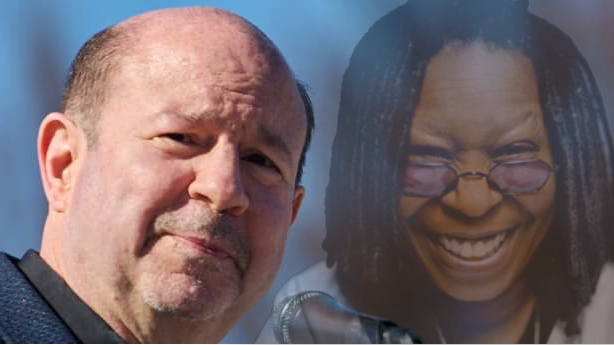
It’s some kind of fraud, surely. But is it less than the legal real deal or is it, as Whoopi Goldberg might put it, “fraud fraud”?

Well, I guess that’s why the attorney general is fishing: To find out.

Predictably, Mann and other academics have protested the investigation. It will have a chilling effect on research, they say.

Well, if it has a chilling effect on fraudulent research, all to the good, I say.

This is Common Sense. I’m Paul Jacob.

Categories
Accountability free trade & free markets too much government

Krugman’s Crazy Crotchets

Paul Krugman is getting sillier and sillier these days. He’s supposed to be an economist, and not long ago some people in Sweden gave him an award for his economic work. So why would he suggest that economic incentives just don’t matter?

The New York Times columnist bashed Republican Senator Jon Kyl for stating that generous unemployment benefits can reduce the incentive to look for new work. Krugman says that this isn’t the textbook view of things shared by himself and the Democrats. “What Democrats believe,” Krugman says, “is what textbook economics says.”

Gee. So what does textbook economics say?

James Taranto of the Wall Street Journal actually checked a textbook in economics. According to this textbook, “Public policy designed to help workers who lose their jobs can lead to structural unemployment as an unintended side effect. . . . In other countries, particularly in Europe, benefits are more generous and last longer. The drawback to this generosity is that it reduces a worker’s incentive to quickly find a new job.”

Interesting. So who wrote this textbook? Yes, that’s right: Paul Krugman.

This partisan fellow, Krugman, often seems to go out of his way to be contradictory as possible. Does he believe his own babbling? Or is he just trying to get a rise out of us?

Or is it to please his editors over at the Times?

Call it an economic incentive.

This is Common Sense. I’m Paul Jacob.

Categories
Accountability national politics & policies U.S. Constitution

Ron Paul’s Gold Standard Version of Principle

They call him Dr. No.

But medical doctor and Congressman Ron Paul does more than vote against awful and unconstitutional legislation. He has also proposed many bills to roll back the government’s assault on our liberties — bills to get rid of the income tax, minimum wage laws, antitrust laws.

Of course, to advocate undoing decades of ever-more-brazen governmental interference in our lives is to swim against the tide. To most congressmen, the idea of limiting federal governance to constitutionally authorized functions is so old-fashioned as to be perverse. So Paul hasn’t had much luck with his initiatives.

But one of them is now back on the table: A bill authorizing the GAO to audit the Federal Reserve. Paul first advanced it in the early ’80s, and since then it’s been gathering dust. But thanks to the way the Fed has been conducting itself during the financial crisis, with all its massive yet secretive bailouts and interventions, the bill is now popular.

It has a good shot at passing.

Ron Paul himself won’t be voting for it, however. It’s going to be packaged with other legislation to impose new financial regulations, regulations he opposes. Paul says: “I won’t vote for a bill that’s a disaster because one or two or five percent of it is an improvement.”

Can’t argue with that. If only all our representatives had such scruples.

This is Common Sense. I’m Paul Jacob.

Categories
Accountability initiative, referendum, and recall

Ionosphere Laughter

Government is a business — a big business, employing more people than any other. It dominates by regulating, restricting, taxing and subsidizing.

Government is also “too big to fail,” which is why, increasingly, politicians and public employee union bosses have ascended to the top of the heap of a growing army of competing lesser groups, always asking — no, demanding — more money.

This growing sector depends not on the decisions of dispersed customers and donors and investors, but on decisions concentrated in Washington, and, to a lesser extent, the state capital . . . and city hall.

The federal boys splurge far over their revenues — by the trillions, beyond the Ionosphere — courtesy of foreign creditors and the printing press. Governments at the state and local level tend to be more restrained, existing nearly on the same level as the rest of society, in a sort of Stratosphere (if not Troposphere) of finance.

Indeed, they are constitutionally forced to balance budgets, can be limited in their power to tax, and are not allowed to print money. Often, they must even ask voters for permission to borrow.

Add on the initiative and referendum, and we can gain some control over governments closest to home.

Not so at the federal level, where often the only effective response to government corruption and excess is a sort of recycling program by late-night comedians.

This makes our laughter at national politicians a tad bittersweet. Or just bitter.

This is Common Sense. I’m Paul Jacob.

Categories
Accountability general freedom

Neither Left Nor Right

Sometimes you just have to scratch your head.

Nathan Koppel, in an article at the Wall Street Journal’s online site, finds it odd that a former Bush administration attorney is now in private practice arguing against a prosecutor who fabricated evidence in a murder suit. A similar piece at law.com, by Tony Mauro, proclaims that, “To Build Practice, Ex-Bush [Solicitor General] Embraces Liberal Clients.”

Now, I’m not exactly a conservative, but I make common cause with conservatives all the time. Many of my best friends are conservative, and so are some of my best ideas. So I ask you: Since when is defending a wrongfully convicted man against a lying, unjust prosecutor any more “liberal” than “conservative”?

Does conservatism really mean letting governments cook up evidence to throw innocents into prison?

No.

And yet both of these writers characterized former Solicitor General Paul Clement as somehow liberal and un-conservative for “embracing” — yes — “liberal clients.”

Well, a hug was involved. But if a lawyer ably defended you against a malign, immoral agent of the state, mightn’t you offer a hug?

Embraces aside, the issue at hand is neither conservative nor liberal. Americans — of any party — oppose injustice. Right?

Or: left?

This is not a matter of left-right disagreement. Or party politics. Or, even, America vs. other nations. It’s simple justice.

This is Common Sense. I’m Paul Jacob.

Categories
Accountability insider corruption

Nutty Acorn Shenanigans Never Stop

ACORN, a government-funded community activist group long noted for hard-left stances, has been earning more and more notoriety for sundry shady practices.

During the presidential campaign, the organization got in trouble for voter fraud. ACORN officials blamed a few bad apples. But phony registrations filed by its employees have been discovered in a slew of states. In 2008, 14 states began investigating the group for fraud.

Then there’s the ease with which many ACORN employees are willing to advise sex slave traders on how to avoid taxes.

As you no doubt know, in September of this year, Hannah Giles and James O’Keefe posed as a prostitute and a pimp at many ACORN offices. They pretended to seek advice on how to avoid paying taxes for income from the child prostitutes they said they were importing into the country. They recorded these visits with a hidden camera, and employees in all too many offices proved eager to help. ACORN responded by firing implicated employees . . . and suing Giles and O’Keefe.

Now it is coming to light that — to save money — ACORN bosses have been telling paid employees to work for them as volunteers, instead, and earn their pay by collecting unemployment insurance. This, as blogger Michael McCray notes, would be a form of fraud.

A fraud to match other ACORN policies, I guess, and the handout mentality that permeates our nation’s capital.

This is Common Sense. I’m Paul Jacob.

Categories
Accountability national politics & policies too much government

Drop Out of the Bucket

Does $40.3 million seem like a lot of money to you? It does to me.

But to the Social Security Administration? It’s a drop in the bucket.

Or, a drop out of the bucket.

You see, while the federal government is scheduled to soon reinstate the estate tax on the wealth of deceased people, we now learn that it has also been giving money to the dearly departed.

Yes, an internal audit of the Social Security Administration revealed that it paid out more than $40 million to over six thousand dead people.

These benefits were given out weeks, months, years after receiving death certificates. The bureaucracy had been duly notified. And yet it went blithely on, continuing to send monthly checks.

Bureaucratic error. Hey, we all make mistakes. But it’s worth noting that this was an internal audit. Who knows what we’d catch if it were an external audit, with teeth?

Lately, the federal government has been talking over car companies and banks. Now the president and Congress plan to take control of the medical sector of our economy. They tell us they’ll cut medical costs by cutting waste. Yeah, right.

On a cheerier note, we needn’t fear the institution of those so-called “death panels” to cut costs. The way the feds work, there’d be no savings — they’d still be paying for care long after the patients were dead and gone.

This is Common Sense. I’m Paul Jacob.

Categories
Accountability government transparency

Cuz You Constituents Work for Me!

This summer, many congressmen held town-hall meetings about health care and other hot political topics.

Sometimes they were not entirely statesmanlike. Clips of their more embarrassing moments now reside on YouTube. For instance, you can watch Congresswoman Sheila Jackson Lee chat on a cellphone while a constituent is asking her a question — taking rudeness to congressional levels.

Congressman Baron Hill was determined to avoid this sort of thing. He wasn’t going to be on YouTube in any “compromising position,” not him. So he actually tried to ban any videotaping of his event. I kid you not. The evidence is on, uh, YouTube:

Constituent: “—why can’t I film this? Isn’t this my right?”

Hill: “Well, this is my town-hall meeting, and I set the rules, and I’ve had these rules—

“Let me repeat that one more time! This is my town-hall meeting for you. And you’re not going to tell me how to run my congressional office! Now, the reasons why I don’t allow filming is because usually the films that are done end up on YouTube in a compromising position.”

Oh, those pesky constituents!

Anyway, sir, too late. The technology is out there. The genie won’t go back in the bottle. Every audience you ever face will include folks who can record your words. With that in mind, you might want to, uh, watch your words from here on out.

This is Common Sense. I’m Paul Jacob.

Categories
Accountability local leaders national politics & policies

Mysteriously Missing Politicians

I almost feel sorry for politicians so afraid of angry freedom-loving constituents that they couldn’t even hold a townhall meeting this summer to spout reassuring lies about the Democrats’ medical reform proposals.

I say, “almost feel sorry” . . . well, not quite “almost” — Okay, I don’t feel sorry for them at all.

Neither does blogger Leslie Eastman. Recently, Leslie and 300 other nefariously well-dressed California citizens visited the local offices of U.S. Senators Barbara Boxer and Dianne Feinstein. They merely wished for these office-holders — who until now have strenuously abstained from conducting public meetings to defend their plans for more government intervention in medical care — to emerge from their hidey-holes and defend their notions. Live and in person.

No luck.

In fact, an office supervisor admitted that Senator Boxer had not graced her San Diego office with her presence in over two years. Says Leslie, “I think there was a revolution [once] because of taxation without representation, but I digress.”

Maybe we can help Leslie find the missing politicians. Another blogger, Ed Morrisey over at hotair.com, is hot on the trail, being very helpful with a post entitled “Who Are Your Milk Carton Politicians?” During the August recess, many politicians across the nation headed for the hills, unwilling to squarely face constituents and defend their pro-government takeover of American medicine.

Is your congressman on the list?

This is Common Sense. I’m Paul Jacob.
Categories
Accountability national politics & policies

The Rush to Non-Judgment

Politicians often don’t read the bills they pass. And what they do read they often don’t trouble themselves to actually understand.

There’s plenty of evidence for these claims in the cap-and-trade and healthcare debates. Lawmakers have been much more concerned about hurtling to the finish line than with making sure they can understand and explain what they’re foisting on the rest of us.

Some say they gotta rush because, otherwise, the economy would fall over the cliff. But what if what’s in these Tolstoy-novel-sized bills is what pushes the economy over the cliff?

Well, if lawmakers don’t read the murky and complicated, important bills, do they pause over the simple, unimportant ones? Heck no. Yet you can tuck poison into any bit of legislation. No matter how seemingly trivial.

Back in the ’70s, a Texas lawmaker named Tom Moore decided to play an April Fool’s joke on his colleagues. He sponsored a resolution to commend one Albert de Salvo for his impact on community and country.

The resolution talked about how DeSalvo’s “devotion to his work has enabled the weak and the lonely . . . [to] achieve and maintain a new degree of concern for their future.” How the state of Massachusetts had “officially recognized” DeSalvo’s unconventional “population control techniques.” The lawmakers passed the resolution unanimously.

Just one problem. DeSalvo was the serial killer otherwise known as the Boston Strangler.

This is Common Sense. I’m Paul Jacob.