Categories
free trade & free markets too much government

Viral Michigan

Michigan is a state divided.

While Gov. Gretchen Whitmer (D) has become a veritable dictator, in her stated desire to curb the contagion, the infection and death rate in the U.P. (which stands for “Upper Peninsula”) would look like a success story . . . were anyone to believe that her policies deserved credit.

But to some extent, “social distancing” is just society-as-usual for rural Yoopers.

Whitmer’s stay-at-home orders are the most restrictive of any of our states. All public gatherings are shut down, as are most stores and shops, though lottery sales are still allowed. And enforcement has not been slack, as Reason informs us: “Police stopped landscaper Brandon Hawley for carrying on with his business, although he lives in the northern city of Alpena, which confirmed its first COVID-19 case on Saturday.”

Not on board with every one of the governor’s executive orders are four sheriffs in westside counties of the main part of the state. They have proclaimed they will not be enforcing every single one of her edicts. “While we understand her desire to protect the public,” they wrote in a joint statement, “we question some restrictions that she has imposed as overstepping her executive authority.”

And Michiganders have started to rebel, with the state experiencing our nation’s largest protests.

So far.

Recognizing that the state has the third highest coronavirus death count, though most are in the southeastern part of the state, does this menace justify the governor’s restrictive measures?

Well, that will be an ongoing debate in Michigan — as elsewhere.*

The perception of costs will grow rapidly as negative results from the shut-down become more numerous and more obvious.

This is Common Sense. I’m Paul Jacob.


* The most startling report shows the virus forming the same pattern of contagion and lethality everywhere, regardless of “mitigation” measures (as Dr Anthony Fauci dubbed them), i.e. shut-down or no shut-down. Meanwhile, a few contrasts: the 2017-2018 flu season was quite bad, with 80,000 deaths, including “high severity across age groups”; the U.S. coronavirus death count hasn’t hit half that yet, which is worth keeping in mind as projections of the contagion’s extent and death rate plummet in most models.

Gretchen Whitmer, pandemic, corona virus, covid, epidemic,

See all recent commentary
(simplified and organized)
See recent popular posts

Categories
general freedom too much government

Tyranny Resurrected

Right after 9/11, much overkill was directed at the unsuspecting.

Friends of the Dumb Joke Brigade told dumb jokes when everybody was On Edge. It soon became clear that tasteless jocularity had morphed into an actionable offense.

And should anyone on September 12 have had the temerity to sit in a theater studying credits when all others had filed out? Heaven forfend! What schemes might the nonconforming cinephile be plotting alone in the dark?

Twenty years later, we’re at it again. 

We can argue (we do) about which social-distancing strictures are properly enforceable in our efforts to slow the pandemic. 

But surely some lines inarguably should not be crossed.

I don’t refer to the lone paddle-boarder or to the man who played catch with his kid in a park. I refer to parishioners who attended worship services at King James Bible Baptist Church in Greenville, Mississippi in their cars. Listened to the sermon on the radio in their cars. If the metal-and-glass shells in which attendees were encased couldn’t block the corona-fumes, what the heck could?

Nonetheless, eight Greenville police officers showed up to distribute $500 fines.

The state’s governor discourages but has not banned drive-in church services. It was Greenville Mayor Errick Simmons who has banned them.

The church is suing. Its lawyer, Jeremy Dys, says, “Americans can tolerate a lot if it means demonstrating love for their fellow man, but they will not . . . tolerate churchgoers being ticketed by the police for following CDC guidelines at church. This has to stop now.”

Beyond violating fundamental human rights, the city’s position also makes no sense.

Unfortunately, nonsense is, in these days of panic, not uncommon.

This is Common Sense. I’m Paul Jacob.


PDF for printing

Corona Virus, Covid, epidemic, pandemic, hysteria, panic, religion, freedom,

Photo from Joel Bradshaw

See all recent commentary
(simplified and organized)
See recent popular posts


Categories
national politics & policies too much government

The Ratchet Racket

Various models and curves and soothsayers predict that the coronavirus will lay off as the summer sun waxes. And then rush back in the autumn.

So we should not look at just near-term threats, but also look at cycles of contagion month-to-month, year-to-year. 

Yet, it is not just the dreaded coronavirus that must be seen over time. “Crisis measures are often ineffective,” writes Matthew Feeney, at Cato Institute, “and can survive the crisis they are implemented to counter.”

Because government power and interference tend to ratchet up with each crisis, there is a whole lot of reason to suspect that we will not go back to normal. Indeed, “the new normal” is now a catchphrase.

The quarantine shutdown has been, if not total, totalistic. Feeney acknowledges such extremist (he didn’t use that word) measures may sometimes be justifiable. But warns of that ratchet, of new powers given to government not devolving after the crisis.

Ted Galen Carpenter, also at Cato.org, draws a “fundamental lesson” from the panic: “Americans need to resist the casual expansion of arbitrary governmental power in response to the current coronavirus crisis.”

The extreme measures of the shutdown — called by economist Gene Epstein “The Great Suppression” — should have been widely discussed before the contagion hit. Instead, they were discussed in meetings behind closed doors.

But most of us were already up to our necks in the political muck fighting off the everyday kludge of the old normal level of too-much-government.

You know, from the previous turn of the ratchet.

This is Common Sense. I’m Paul Jacob.


PDF for printing

ratchet, coronavirus, Covid, pandemic, epidemic, law, regulations, government,

See all recent commentary
(simplified and organized)
See recent popular posts


Categories
national politics & policies too much government

Name Your FDA Poison

We’re dealing with a pandemic, here, and the Food and Drug Administration insists upon poisoning us.

Or, more accurately, the FDA sticks to Prohibition-Era poisoning schemes, no matter how unreasonable or counter-productive.

Private enterprise is stepping up to the plate. “Local distilleries like Restorative Republic and rum-maker Cotton & Reed are making artisanal hand cleaner, the primary ingredient in which is high-proof alcohol,” writes Peter Suderman at Reason. “And anyone who buys a bottle of their booze also gets a small bottle of what you might call hipster Purell.”

This should be a feel-good story. But government regulators are not in the feel-good biz.

What is the FDA saying to the 500 or so distilleries across the country who want to pitch in, making up for the supply crunch?

The regulatory agency insists that they denature the alcohol in the sanitizer.

Denatured alcohol is, Wikipedia succinctly states, “ethanol that has additives to make it poisonous, bad-tasting, foul-smelling, or nauseating to discourage recreational consumption.”

The feds thus carry on the old prohibitionists’ tradition of poisoning products to discourage drinking. 

It’s an idiotic practice: Preventing children from destroying themselves with alcohol by making the easiest-to-access alcohol unpalatable. But kids have been known to sneak drinks even those they find disgusting and vile, just to get the alcohol buzz. So: let’s kill the kids! That’ll teach ’em.

And insisting that distilleries denature their alcohol means that distilleries would ruin their equipment for making drinkable alcohol.

Though some liquor distillers are trying to up hand sanitizer production, ten times more could be produced were the FDA to change its rules, Suderman explains.

Get out of the way, government.

This is Common Sense. I’m Paul Jacob.


PDF for printing

FDA, hand, sanitize, virus, pandemic,

See all recent commentary
(simplified and organized)
See recent popular posts

Categories
Accountability national politics & policies too much government

A Funny Thing Happened on the Way to a Quorum

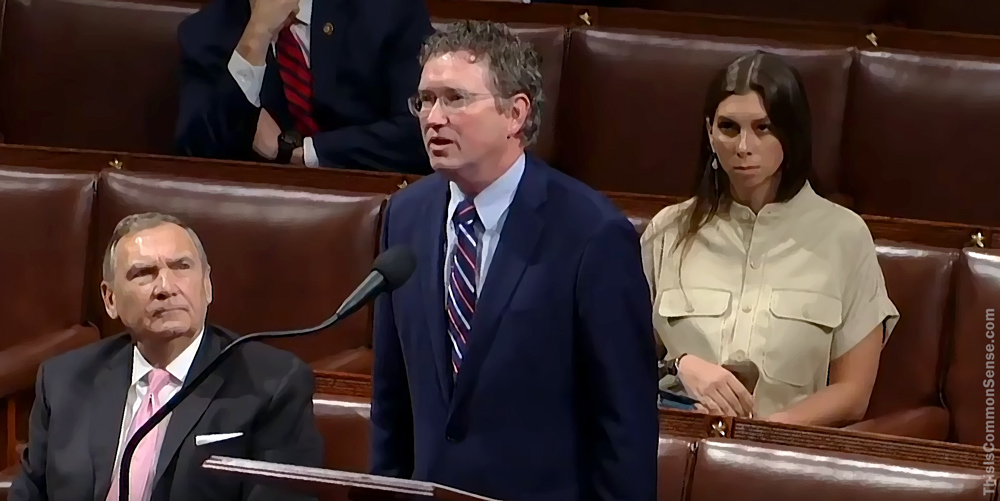
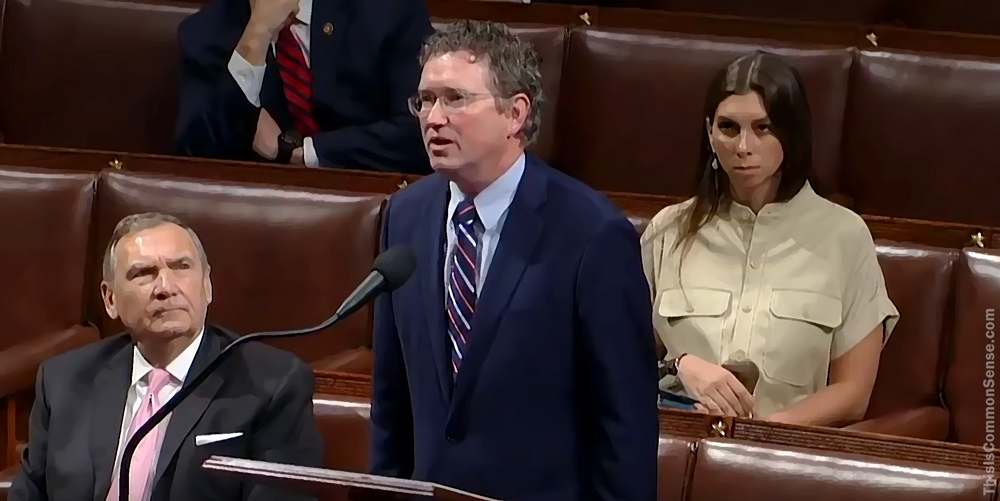
On Friday, the talking heads and Twitterati excoriating Rep. Thomas Massie (R-Kent.) were so scandalized that they couldn’t quite get to telling us what terrible thing he had done.

“GOP’s Massie outrages House,” screamed The Washington Post headline. The paper informed that “the Republican from northern Kentucky has frequently voted no on issues large and small, even against the wishes of GOP leaders.” 

Wow, is that allowed?

With Congress poised to shovel $2.2 trillion to citizens and businesses by unanimous consent, i.e., without a recorded roll call vote, Mr. Massie balked, thereby requiring a quorum to physically come to the capitol to vote on the relief package. 

“I came here to make sure our Republic doesn’t die by unanimous consent in an empty chamber,” Massie declared on the House floor, “and I request a recorded vote.”

President Trump urged the “third rate Grandstander” be tossed out of the Grand Old Party. And former U.S. Senator and 2004 Democratic presidential candidate John Kerry noted — of all things — his complete agreement with Trump, tweeting that “Massie has tested positive for being an a**hole. He must be quarantined to prevent the spread of his massive stupidity.”

Rep. Max Rose (D-N.Y.) offered that Massie was “disgusting” and “inhumane,” and that if the vote was pushed “back 24 hours there will be blood on [his] hands.”  

Speaker of the House Nancy Pelosi (D-Calif.) boasted of having asked the congressman, “Why don’t you just back off?”

Facing the biggest spending bill of all time, Massie’s notion of Congresspeople voting on the record? Hardly radical. But in the face of the COVID-19 threat, bringing legislators back to the capitol entailed real risk. 

Yet come back they did. And just to show Massie how wrong he was in alleging a cover-up, they agreed to a roll-call vote so that there was full accountability. 

Take THAT, Massie! 

Wait . . . Congress didn’t go on the record?! 

They came back and yet, as Massie pointed out, “they still refused to have a recorded vote.”

This is Common Sense. I’m Paul Jacob.


Note: One spending item, which Massie had specifically complained about, was $25 million for the Kennedy Center. Then, mere hours after President Trump signed the legislation, the Kennedy Center honchos fired the National Symphony Orchestra, informing them “that paychecks would end this week.”

PDF for printing

Thomas Massie, Coronavirus, pandemic, virus, House of Representatives, Congress,

See all recent commentary
(simplified and organized)
See recent popular posts


Categories
ideological culture The Draft too much government

How Un-Warlike

It’s war!

A common refrain regarding the coronavirus. “This is our World War II,” say media mavens and politicians . . . who have never had to endure anything like World War II.

The utter vapidity of the “war” response was explained very well by Peter Schiff on a recent episode of The Tom Woods Show. Schiff is famously bearish on the American economy, which he has argued for years is addicted to debt and consumption but not production and responsibility. He notes how different this new “war” is. 

Folks today, he argues, have no more idea how World War II was won than how the economy works.

  1. Politicians increased taxes during the war.
  2. Americans were not bailed out: they had to struggle to survive, even on the home front, as
  3. they had to do without creature comforts. Taxes on goods and services sky-rocketed, to pay for the war . . .
  4. in which many young men died.
  5. Middle-class wealth was tapped like never before, to win the two-front war, and one mechanism to aid the effort was the withholding tax . . .

which now we are talking about suspending.

What is widely being proposed today is not the “socialism” of war, where lives and wealth are conscripted.* What is being proposed is the “socialism” of bailouts and sugar-plum fairies, where consumers are coddled.

And unlike in World War II, Schiff contends, there is no vast private wealth to tax to pay for what is deemed necessary. Instead, we have debt. 

It is indeed a strange war where we fight the threat of any harm coming to us, or any sacrifice required.

This is Common Sense. I’m Paul Jacob.


* We should oppose the conscription of individuals, as was done in the First and Second World War as well as Korea and Vietnam. Not only does it violate the Thirteenth Amendment’s prohibition against involuntary servitude, it was not needed then, nor is it now. More on this later in the week.

PDF for printing

From a photo by Nick M

See all recent commentary
(simplified and organized)
See recent popular posts
Categories
free trade & free markets too much government

The Exceptions Disprove the Rules

“I’ve instructed my prosecutors not to charge certain low-level nonviolent offenses to avoid people being held in jail unnecessarily,” Maryland’s Attorney General Marilyn Mosby informed the state’s Republican governor. She also urged the governor “to release all inmates in state prisons who are over 60,” explains The Washington Times, “approved for parole or scheduled to complete their sentences within the next year.”

This is all to avoid a prison pandemic. Meanwhile, the “Food and Drug Administration (FDA) announced Monday that it would permit states to create laboratories for designing COVID-19 tests,” Reason magazine tells us, adding that the FDA “has also decided to permit pharmacists to make their own alcohol-based hand sanitizers.”

Reason’s Robby Soave asks the obvious question: “Why do the people who are working hardest to fight the coronavirus have to ask a slow federal bureaucracy for permission to save lives?”

The New York Times reports that Dr. Helen Y. Chu, an infectious disease expert in Seattle, tried mightily to perform tests on subjects, early in the epidemic, to track how the virus was spreading. She was stymied every which way.

By bureaucracies.

The kludge of bad regulations and laws merely adds cost and annoyance during normal times; during emergencies they present major stumbling blocks to public health.

So, when our leaders make special exceptions, they demonstrate that the regulations were always bad — now just worse.

Real leadership would nix these rules, permanently.

And, for that matter, end the war on drugs — and prostitution and other victimless crimes.

One of the infractions Maryland’s AG decided to go lax on, however, is public urination. That crime has victims and ought to remain a public health violation.

Though perhaps not worth imprisonment.

This is Common Sense. I’m Paul Jacob.


PDF for printing

freedom, prohibition, rules, regulations, red tape, bureaucracy,

See all recent commentary
(simplified and organized)
See recent popular posts
Categories
general freedom too much government

Are We Graduating from Plastic?

In The Graduate (1967), the young man played by Dustin Hoffman gets advice from an elder. “Just one word: plastics.” “Exactly how do you mean, sir?” “There’s a great future in plastics.”

When the world bans all plastic in 2021, that will be the end of that market opportunity. Other components of civilization will be discontinued in 2022.

Maybe I’m being too pessimistic. After all, there’s always the black market.

A plastic-bag ban is underway in New York City. Four states and five territories have already banned disposable plastic bags, as have countries around the world. New Yorkers are reportedly two-to-one in favor. A friend who lives there confirms this widespread resignation.

“I’m not happy about what it [plastic] does to the environment,” says one New Yorker. “But . . . what it does to my environment if I don’t have them is a nightmare.”

“This is a good thing because it’s helping the environment,” says another.

The problem of trash disposal has been solved. We use garbage cans, pickups, landfills. It’s a problem that must be continuously re-solved. Like many other problems . . . such as how to carry groceries.

We adopted plastic bags because they are much more convenient than paper. Convenience, efficiency, effectiveness: many man-made components of civilization serve these goals.

Reduction to absurdity can persuade only if the listener rejects the absurd. In 1967, the idea of banning plastic bags and plastic straws seemed, to most, absurd. Today, maybe two thirds of New Yorkers lament the inconvenience but add whaddyagonnado . . . when you gotta protect the environment?

That this measure will not protect much of anything, but merely allow activists to think well of themselves is, itself, absurd.

This is Common Sense. I’m Paul Jacob.


PDF for printing

plastic, environmentalism, California, law, prohibitions, bans,

See all recent commentary
(simplified and organized)
See recent popular posts

Categories
insider corruption too much government

Engineering Government Limits

Lord Acton’s Law of Power states the chief problem of government: “Power tends to corrupt and absolute power corrupts absolutely.”

It has broad application.

Take traffic lights. They are there to prevent accidents and make navigating roads a better experience for all. The basic idea is to establish and enforce a few basic rules and then let civilization proceed at the pace set by the people themselves. It won’t be perfect, but it won’t be tyranny, either.

But controlling traffic lights is a kind of power. 

And thus open to corruption.

Just ask Mats Järlström. After his wife got a “running a red light ticket” in Beaverton, Oregon — a town characterized on the show Veronica Mars as completely wholesome and innocent of guile — Mr. Järlström researched the yellow light timing system.

Using a sophisticated “extended kinematic equation,” obtained from his work background in Sweden, he sought to right the wrong that led to his wife’s ticket and found himself mired in government overreach.

You see, the Oregon Board of Examiners for Engineering and Land Surveying objected to his practicing engineering without a license.

The board sought to bury his findings about how yellow lights have been calibrated in Oregon — which he had shown encouraged behavior that would allow governments to maximize revenue . . . not safety.

That’s corruption. The intersection lights’ setup turned a safety measure into a means to fleece motorists — and the engineering board corruptly twisted its mission to suppress the truth. 

Thankfully, the Institute for Justice stepped in, and Järlström won in court.

Oregon now has new intersection lighting standards, and the power of the government professional board has been curbed.

A win for limited government!

And Common Sense, which This Is. I’m Paul Jacob.


PDF for printing

Oregon, licensing, Mat, traffic,

See all recent commentary
(simplified and organized)
See recent popular posts

Categories
property rights too much government

Zoned Out

There are ways of cultivating community standards without resorting to zoning and similar regulatory regimens by state and local governments. They have been studied, written about, and they can be found here and there around the country, though most famously in Houston, Texas.

But zoning’s the norm in urban and suburban communities.

Ask Marietta Grundlehner.

She had been running an online clothing boutique from her home in Fairfax County, Virginia, and has been forced to shut it down.

Well, a court has ruled that she must remove all her inventory from her home. You can have a home business in Fairfax, but not inventory of goods for sale.

Ms. Grundlehner had been earning, she said, about $30,000 a year as a “LulaRoe Fashion Retailer” in an industry billed by its online organizer as “social retail.” The ecommerce hub, lularoe.com, makes an enticing pitch for its business model: “Find your joy and fulfillment by creating a positive impact in your community.”

But it was a neighbor who turned her in and sicced the local government on her.

That Fairfax resident sure did not think she was having a “positive impact” in their community.

Grundlehner hopes for a regulatory change to save her business, but Christian Britschgi of Reason has a word for that battle: “uphill.”

Still, online businesses are on the ascendency. Too many run afoul of zoning laws. And online entrepreneurship being the wave of the future, local governments might want to forget their old gentrification utopianism and meet the real world, the place where people actually live. 

This is Common Sense. I’m Paul Jacob.


PDF for printing

zoning, regulations,

See all recent commentary
(simplified and organized)
See recent popular posts