“The more the state ‘plans’ the more difficult planning becomes for the individual.”
F. A. Hayek, The Road to Serfdom, Chapter 6, “Planning and the Rule of Law”
“The more the state ‘plans’ the more difficult planning becomes for the individual.”
F. A. Hayek, The Road to Serfdom, Chapter 6, “Planning and the Rule of Law”
The most efficient way to maintain one’s perch in power is to knock down and scare off would-be competitors. Click on over to Townhall for the latest on the worst recent example — an ongoing abuse of power.
And be sure to come back here for more reading. Be sure to forward to your friends and family, using our social media widgets if you like. Thanks!
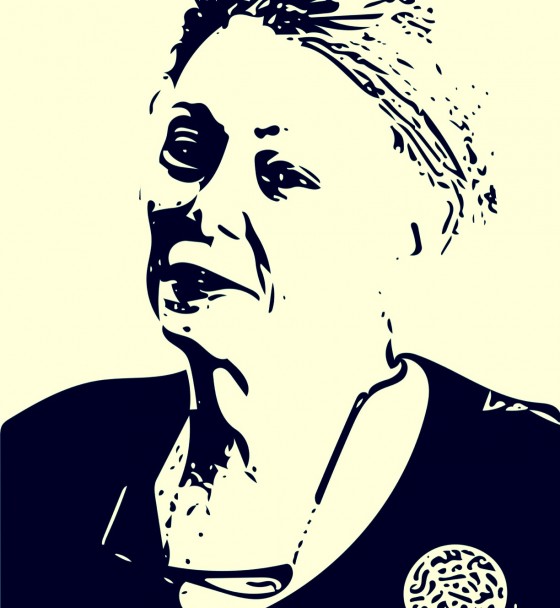
On May 10, 1872, Victoria Woodhull became the first woman nominated for President of the United States.
In a landmark Supreme Court decision on May 10, 1893, the tomato was ruled a vegetable, not a fruit.
“Many of the greatest things man has achieved are not the result of consciously directed thought, and still less the product of a deliberately coordinated effort of many individuals, but of a process in which the individual plays a part which he can never fully understand.”
F. A. Hayek, “Scientism and The Study of Society” (1944), p. 67; later published in The Counter-revolution of Science
“Speech is either free or it isn’t” — a provocative argument from Bill Whittle. Even if you disagree with some or all of what he says, doesn’t he have a right to say it? And shouldn’t we defend that right?
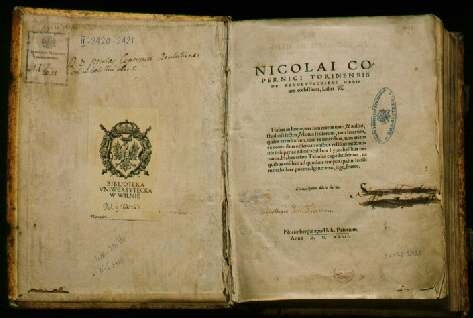
On May 9, 1800, abolitionist revolutionary (and, technically, terrorist) John Brown was born. In 1883 on this date, Spanish philosopher José Ortega y Gasset was born.
“All economic activity is carried out through time. Every individual economic process occupies a certain time, and all linkages between economic processes necessarily involve longer or shorter periods of time.”
F. A. Hayek, “Intertemporal Price Equilibrium and Movement in the Value of Money” (1928)
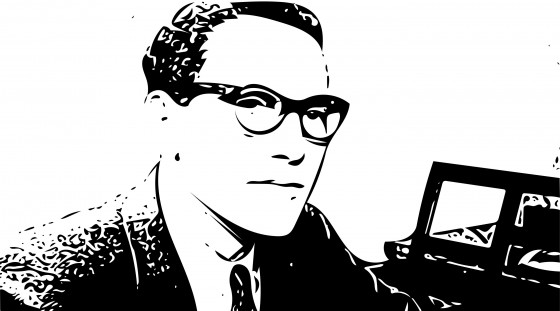
On May 8, 1899, Austrian-English economist and philosopher Friedrich August von Hayek was born. He signed the bulk of his books written in the English language as “F.A. Hayek,” and is best known for “The Road to Serfdom,” “The Constitution of Liberty,” “The Fatal Conceit,” and many essays, several of them which are widely cited, including “Individualism, True and False” and “The Use of Knowledge in Society.”
Years earlier, on the same date in 1873, English philosopher and economist John Stuart Mill died. Now best known for “On Liberty” and “Utilitarianism,” Mill’s letters were edited into book form by Hayek.
On May 8, 1946, two Estonian school girls (Aili Jõgi and Ageeda Paavel) blew up the Soviet memorial which stood in front of the Bronze Soldier in Tallinn.
“Never read any book that is not a year old.”
Ralph Waldo Emerson, “First Visit to England” in English Traits (1856)
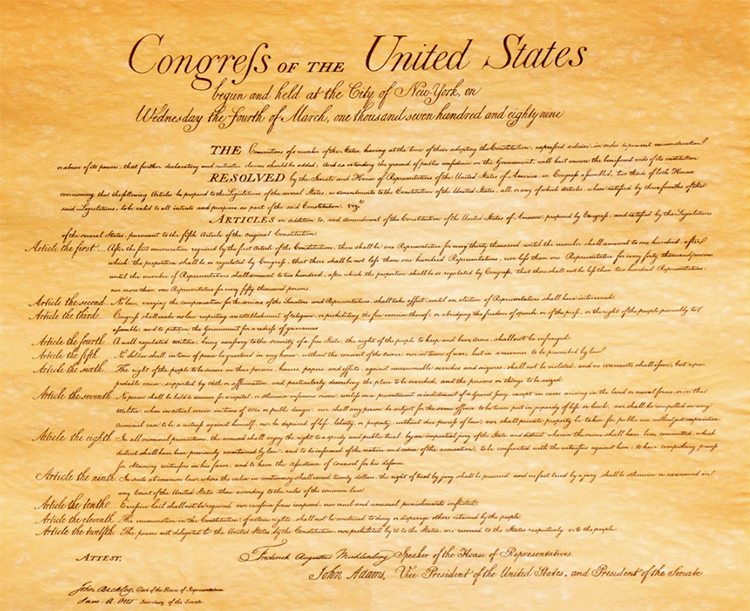
On May 7, 1992, Michigan ratified a 203-year-old proposed amendment to the United States Constitution, thereby fulfilling the terms of amending the document, adding it as 27th Amendment. The amendment had been written by James Madison. He had presented it as part of the original twelve amendments that became the ten making up the Bill of Rights. It bars the U.S. Congress from giving itself a pay raise until after the next election, so that voters have a chance to decide whether those voting for the raise would remain in Congress to receive it.