The blessed work of helping the world forward, happily does not wait to be done by perfect men.
George Eliot, Scenes of Clerical Life, 1858.
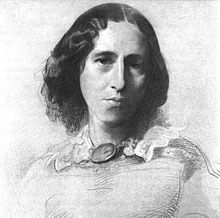
The blessed work of helping the world forward, happily does not wait to be done by perfect men.
George Eliot, Scenes of Clerical Life, 1858.
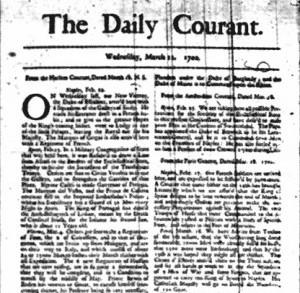
On March 11, 1702, The Daily Courant, England’s first national daily newspaper, was published for the first time. It was a one-sheet, concentrated on foreign news, sans commentary. The reverse side sported advertising. It was produced by Elizabeth Mallet (1672–1706), a printer and bookseller who lived, and published the paper, next to the Kings Arms tavern at Fleet Bridge in London.

On March 10, 1922, Mahatma Gandhi was arrested in India, tried for sedition, and sentenced to six years in prison, only to be released nearly two years later for an appendicitis operation.

An army is a diversion of energy from the productive life of a nation.
Isabel Paterson, The God of the Machine, 1943.
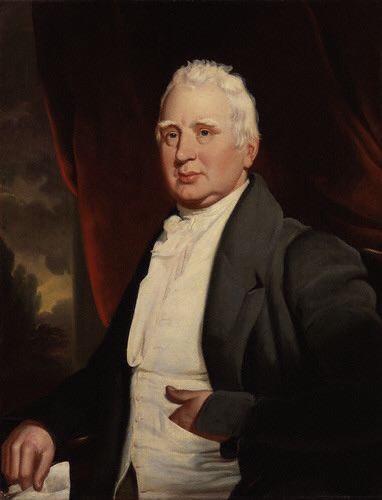
March 9 marks the 1763 birthday of British pamphleteer and activist William Cobbett. Cobbett was known for his lifelong opposition to authority, and his later-in-life “radicalism,” which included his opposition to Britain’s protectionist Corn Laws, and his support for Catholic Emancipation. Cobbett died in 1835.
In 1776 on this date, Scottish philosopher Adam Smith first published An Inquiry into the Nature and Causes of the Wealth of Nations, which became the first widely accepted landmark work in the field of economics. It was not the first general treatise on the subject, however; that designation almost certainly belongs to banker Richard Cantillon’s Essai sur la Nature du Commerce en Général, cited by Smith in his more famous book. It is also worth noting that Étienne Bonnot de Condillac’s systematic treatise, Le Commerce et le Gouvernement, also saw publication in 1776.
On March 9, 1862, the USS Monitor and CSS Virginia fought to a draw in the Battle of Hampton Roads, the first battle between two ironclad warships. The Virginia was built on the remains of the USS Merrimack, and the battle is often referred to as between “the Monitor and the Merrimack.”
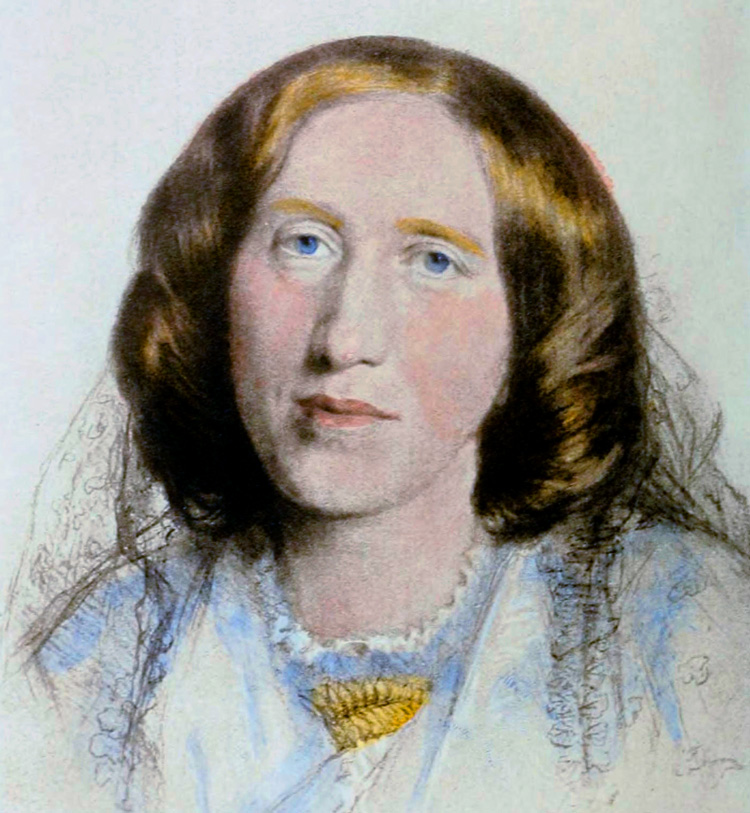
Nice distinctions are troublesome. It is so much easier to say that a thing is black, than to discriminate the particular shade of brown, blue, or green, to which it really belongs. It is so much easier to make up your mind that your neighbour is good for nothing, than to enter into all the circumstances that would oblige you to modify that opinion.
George Eliot, Scenes of Clerical Life, 1858.
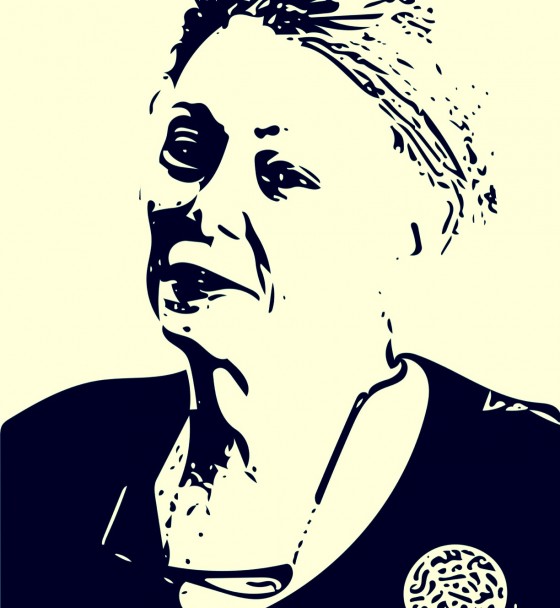
The change in rhetoric has constituted a revolution in how people view themselves and how they view the middle class, the Bourgeois Revaluation. People have become tolerant of markets and innovation.
Deirdre N. McCloskey, Bourgeois Dignity: Why Economics Can’t Explain the Modern World (2010).
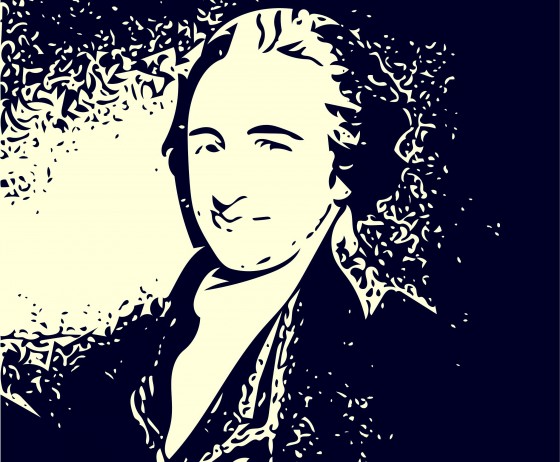
On March 8, 1775, “African Slavery In America,” the first known essay advocating the abolition of slavery in America, was published anonymously in the Pennsylvania Journal and the Weekly Advertiser. Thomas Paine (pictured) is believed to be the essay’s author.
The first anti-slavery society was formed in Philadelphia weeks after publication, and Paine was a founding member.
Exactly 120 years earlier, a court in Northampton County of the Virginia Colony ruled that John Casor, then working as an indentured servant to Robert Palmer, must be returned to Anthony Johnson as Johnson’s “lawful” slave for life. Ironically, Johnson was one of the original indentured servants brought to Jamestown, had completed his indenture to become a “free Negro” and the first African landowner in the colony. The case marked the first person of African descent to be legally-recognized as a lifelong slave in England‘s North American colonies. The first official chattel slave in English-speaking North America was of African descent, and was owned by a man also of African descent.
On March 7, 1644, Massachusetts established the first two-chamber legislature in the American colonies.
One hundred thirty years later, to the day, British forces closed the port of Boston to all commerce.

The Bill and Hillary Show has never stopped playing in America. Click on over to Townhall, for this weekend’s expansion of Friday’s Common Sense. Then come back here for a walk down Memory Lane — and don’t be fooled, at this point, it still makes a difference!