Categories
Thought

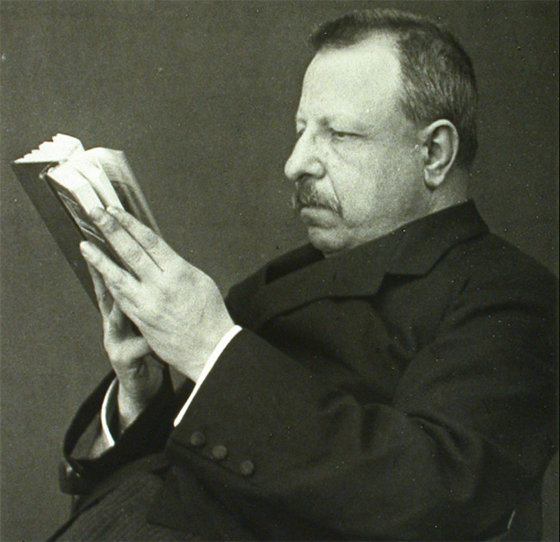
Benedetto Croce

All the following want for grace: the poet, who calls it inspiration; the philosopher, who calls it idea; the statesman, who calls it sure eyesight or firm hand; the man of war, who calls it boldness or impetus. Grace appears all of a sudden even to the humblest of men you can imagine, who is so much oppressed by tedium that he sometimes does not know how to get through it. It appears perhaps in the form of a sun ray, or a landscape fresh with verdancy and dew, which infuses new joy and love of life. Who, except for someone vain — and even this only in his empty words — could ever ‘do it alone’ and renounce the assistance of grace?


Benedetto Croce, as quoted in As If God Existed: Religion and Liberty in the History of Italy, by Maurizio Viroli, (Princeton University Press, 2012).
Categories
Today

Historian

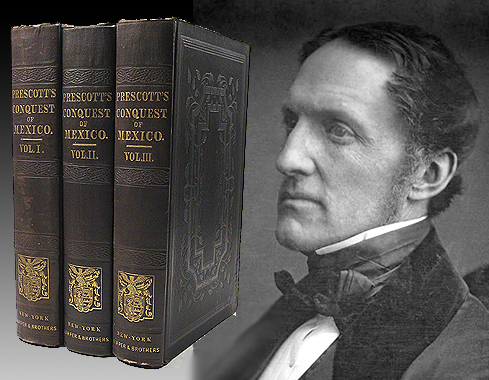
On May 4, 1796, American historian William H. Prescott was born. Prescott’s History of the Conquest of Mexico and his Conquest of Peru remain classic works of well-researched, “scientific history.” Prescott, Arizona, was named in his honor.

Categories
Today

Between the crosses

In 1791, the Constitution of May 3, the first modern constitution in Europe, was proclaimed by the Sejm of the Polish–Lithuanian Commonwealth.

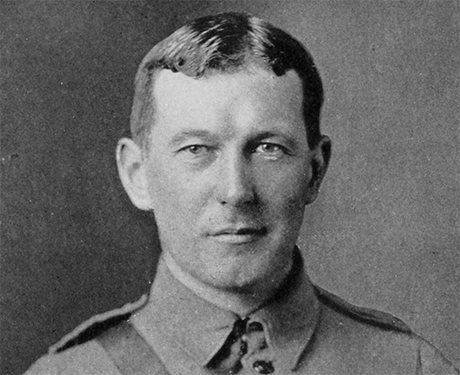
On May 3 in 1915, Lieutenant Colonel John McCrae composed the poem “In Flanders Fields.”


In Flanders fields the poppies blow
Between the crosses, row on row,
That mark our place; and in the sky
The larks, still bravely singing, fly
Scarce heard amid the guns below.

We are the Dead. Short days ago
We lived, felt dawn, saw sunset glow,
Loved and were loved, and now we lie
In Flanders fields.

Take up our quarrel with the foe:
To you from failing hands we throw
The torch; be yours to hold it high.
If ye break faith with us who die
We shall not sleep, though poppies grow
In Flanders fields.

Categories
Today

Maurizio Viroli

The tragedy of fascism and Nazism should have taught us that totalitarianism establishes itself through banal men, and the true antidote is a religion that prevents one from adoring men who pretend to be gods, for it teaches us to love instead the inner God of moral conscience, and to defend liberty with absolute devotion.


Maurizio Viroli, As If God Existed: Religion and Liberty in the History of Italy (Princeton University Press, 2012).
Categories
Today

Run for the border

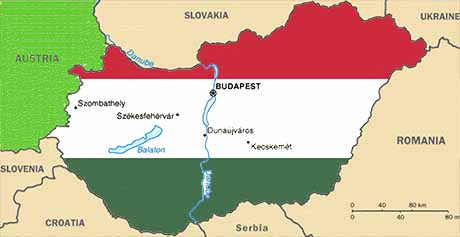
On May 2, 1989, Hungary began dismantling its border fence with Austria, allowing a number of East Germans to defect.

Categories
Thought

Benedetto Croce

We are products of the past and we live immersed in the past, which encompasses us. How can we move towards the new life, how create new activities without getting out of the past and without placing ourselves above it? And how can we place ourselves above the past if we are in it and it is in us? There is no other way out except through thought, which does not break off relations with the past but rises ideally above it and converts it into knowledge.


Benedetto Croce was an Italian philosopher and outspoken anti-fascist. He called his political philosophy “liberism.”

Categories
links

Townhall: Speaker of the Devil

Ah, what a difference an epithet can make! But, in the case of last week’s biggie, will the harsh words backfire?

A more extensive look at the logic of insider invective, at Townhall this weekend. Click on over, then come back here for kinder words:

Categories
Thought

Paul Gottfried

If you say ‘fascist’ it means ‘Hitler,’ although Hitler was probably more influenced by Stalin than by Mussolini — and ‘Hitler’ means ‘Auschwitz.’ So as soon as you disagree with the prevailing leftist culture or with either of our political parties and they want to call you a name, then you become a ‘fascist,’ which means you support the extermination of millions of people in a concentration camp.


Paul Gottfried, on the Tom Woods Show, April 28, 2016, a discussion of Gottfried’s book, Fascism: The Career of a Concept (2016).

Categories
Today

Anti-Fascist Manifesto

The Manifesto of the Anti-Fascist Intellectuals, written by philosopher Benedetto Croce [pictured, above] in response to the Manifesto of the Fascist Intellectuals by Giovanni Gentile, sanctioned the unreconcilable split between the philosopher and the Fascist government of Benito Mussolini, to which he had previously given a vote of confidence on October 31, 1922.

The manifesto was published by Il Mondo on May 1, 1925, which was Workers’ Day, symbolically responding to the publication of the Fascist manifesto on the Natale di Roma, the founding of Rome (celebrated on April 21). The Fascist press claimed that the Crocian manifesto was “more authoritarian” than its Fascist counterpart — a typical leftist dismissal of what used to be called “liberalism” — in Italian, liberismo — but which Croce dubbed liberism, to distinguish it from the dirigiste quasi-socialisms of self-described “liberals” of the time.

Categories
video

Video: A Republican Constitution

Legal scholar Randy Barnett, as interviewed by Reason’s Nick Gillespie: