On May 9, 1800, abolitionist revolutionary (and, technically, terrorist) John Brown was born.
In 1883 on this date, Spanish philosopher José Ortega y Gasset was born.
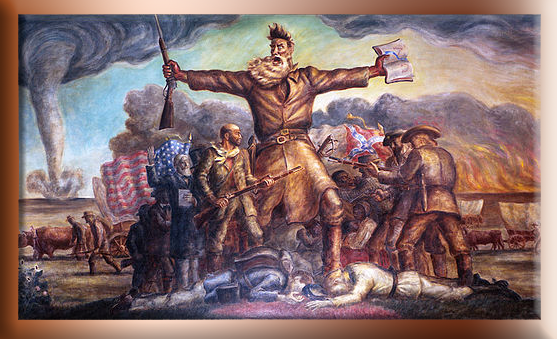
On May 9, 1800, abolitionist revolutionary (and, technically, terrorist) John Brown was born.
In 1883 on this date, Spanish philosopher José Ortega y Gasset was born.
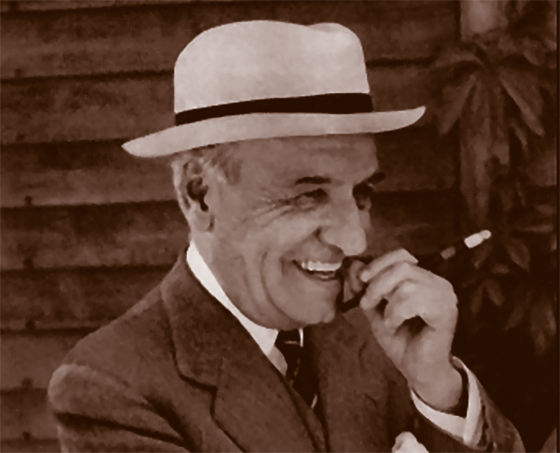
The metaphor is perhaps one of man’s most fruitful potentialities. Its efficacy verges on magic, and it seems a tool for creation which God forgot inside one of His creatures when He made him. All our other faculties keep us within the realm of the real, of what is already there. The most we can do is to combine things or to break them up. The metaphor alone furnishes an escape; between the real things, it lets emerge imaginary reefs, a crop of floating islands. A strange thing, indeed, the existence in man of this mental activity which substitutes one thing for another — from an urge not so much to get at the first as to get rid of the second.
José Ortega y Gasset, “Taboo and Metaphor,” The Dehumanization of Art, 1925.

Can you identify Hillary’s apparent co-partner in anti-coal? This weekend Paul Jacob asks the question, and puts it in context.
Click on over to Townhall, then come back here for more reading.
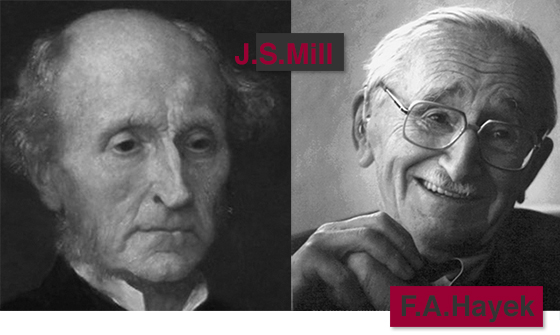
On May 8, 1899, Austrian-English economist and philosopher Friedrich August von Hayek was born. He signed the bulk of his books written in the English language as “F.A. Hayek,” and is best known for The Road to Serfdom, The Constitution of Liberty, The Fatal Conceit, and many essays, several of them which are widely cited, including “Individualism, True and False” and “The Use of Knowledge in Society.”
Years earlier, on the same date in 1873, English philosopher and economist John Stuart Mill died. Now best known for On Liberty and Utilitarianism, Mill’s letters to his wife were edited into book form by Hayek.
On May 8, 1946, two Estonian school girls (Aili Jõgi and Ageeda Paavel) blew up the Soviet memorial which stood in front of the Bronze Soldier in Tallinn.

A short discussion on campaign finance reform and the First Amendment, addressing the usual arguments against the Citizens United decision, but making a few points rarely heard together:
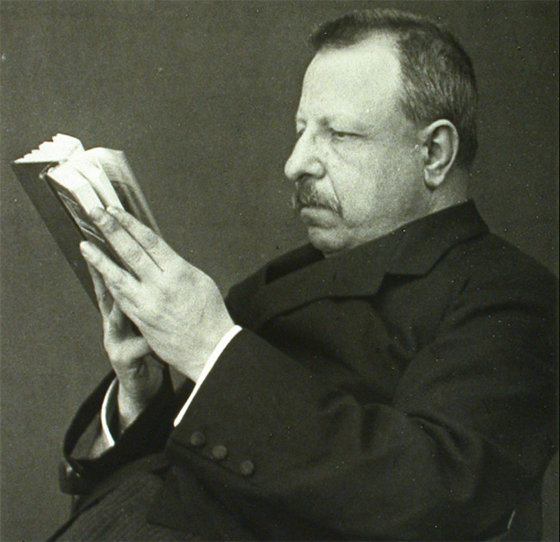
Poetry is produced not by the mere caprice of pleasure, but by natural necessity. It is the primary activity of the human mind.
Benedetto Croce, The Philosophy of Giambattista Vico, trans. R. G. Collingwood (London 1923).
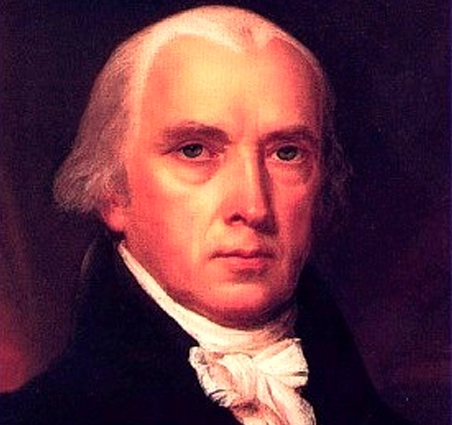
On May 7, 1992, the State of Michigan ratified a 203-year-old proposed amendment to the United States Constitution, thereby fulfilling the terms of amending the document, adding it as 27th Amendment. The amendment had been written by James Madison. He had presented it as part of the original twelve amendments that became the ten making up the Bill of Rights. It bars the U.S. Congress from giving itself a pay raise until after the next election, so that voters have a chance to decide whether those voting for the raise would remain in Congress to receive it.
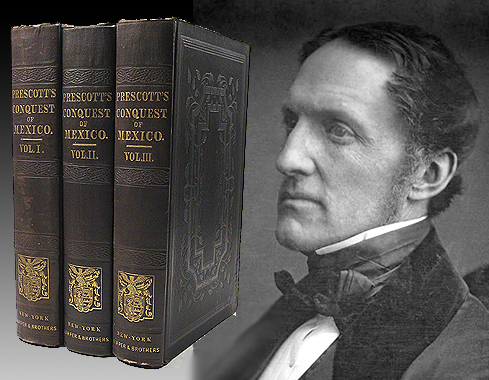
The history of literature is the history of the human mind. It is, as compared with other histories, the intellectual as distinguished from the material, the informing spirit as compared with the outward and visible.
William H. Prescott, “Chateaubriand’s English Literature” (1839), p. 245.
Liberty is not the function of the bourgeoisie or any other economy but rather the human soul and its deep needs; it possesses qualities and origins that are not economic but instead moral and religious. . . .
Benedetto Croce, as quoted in As If God Existed: Religion and Liberty in the History of Italy, by Maurizio Viroli, (Princeton University Press, 2012).
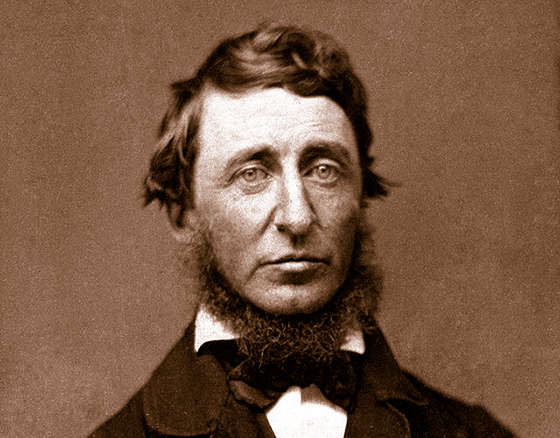
On May 6, 1862, American author, philosopher and abolitionist Henry David Thoreau died, after many years of tuberculosis.
Aware he was dying, Thoreau’s last words were “Now comes good sailing,” followed by two lone words, “moose” and “Indian.” Bronson Alcott planned the service and read selections from Thoreau’s works, and Ralph Waldo Emerson wrote the eulogy spoken at his funeral.
His remains, as well as those of members of his immediate family, were eventually moved to Sleepy Hollow Cemetery in Concord, Massachusetts.
His most famous works are Walden and An Essay on Civil Disobedience.