Isabel Paterson, The God of the Machine, 1943, p. 242.
The humanitarian in theory is the terrorist in action.
Categories
Isabel Paterson
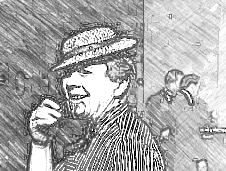
Isabel Paterson, The God of the Machine, 1943, p. 242.
The humanitarian in theory is the terrorist in action.
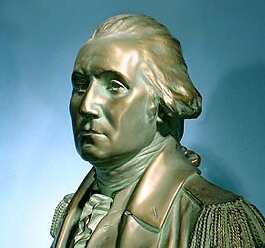
On May 14, 1787, delegates convened a Constitutional Convention, in Philadelphia, Pennsylvania, to write a new Constitution for the United States. George Washington presided over the convention.
On the same day a century later, Lysander Spooner — author of the pamphlets titled “The Constitution of No Authority” — died.
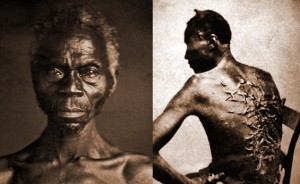
On May 13, 1888, Brazil abolished slavery with the passage of the Lei Áurea (“Golden Law”).
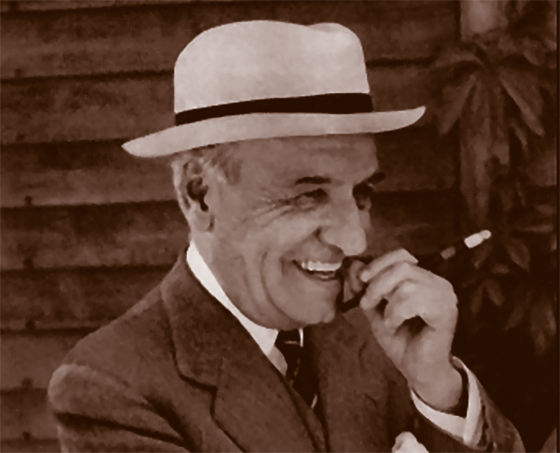
[T]he mass-man sees in the State an anonymous power, and feeling himself, like it, anonymous, he believes that the State is something of his own. Suppose that in the public life of a country some difficulty, conflict, or problem presents itself, the mass-man will tend to demand that the State intervene immediately and undertake a solution directly with its immense and unassailable resources. This is the gravest danger that to-day threatens civilisation: State intervention; the absorption of all spontaneous social effort by the State.
José Ortega y Gasset, Chapter XIII: The Greatest Danger, The State, The Revolt of the Masses, 1929.

On May 12, 1943, Axis forces in North Africa surrendered.

The biggest victory is one I’m going to have in a couple months. Up till now, I’ve basically been laying the groundwork.
Curly Haugland, as quoted in “The One Man Who Could Stop Donald Trump,” Erick Trickey, Politico, May 9, 2016.

On May 11, 1858, Minnesota was admitted as the 32nd U.S. State.
Nine years later to the day, the Grand Duchy of Luxembourg’s independence and neutrality were affirmed in the Second Treaty of London.
Strictly speaking, the mass, as a psychological fact, can be defined without waiting for individuals to appear in mass formation. In the presence of one individual we can decide whether he is ‘mass’ or not. The mass is all that which sets no value on itself — good or ill — based on specific grounds, but which feels itself ‘just like everybody,’ and nevertheless is not concerned about it; is, in fact, quite happy to feel itself as one with everybody else.
José Ortega y Gasset, The Revolt of the Masses, 1929.

On May 10, 1872, Victoria Woodhull became the first woman nominated for President of the United States.
In a landmark Supreme Court decision on May 10, 1893, the tomato was ruled a vegetable, not a fruit.
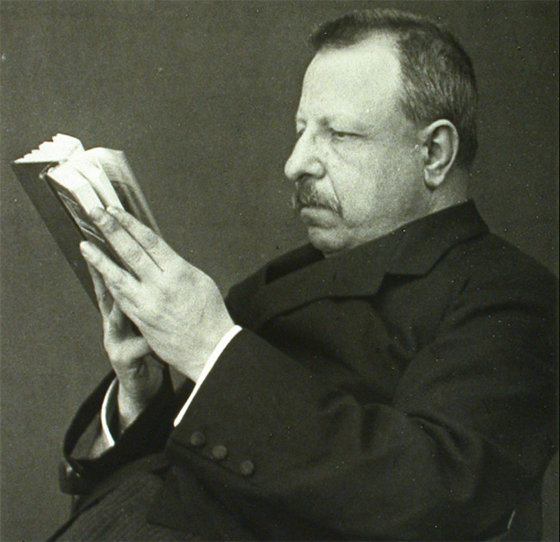
We must be severe, not only with ourselves, but with other also; exigent, not only with ourselves, but with others also; and so, on the contrary, benevolent not only towards others, but also toward ourselves; compassionate, not only toward others, but also towards this instrument of labour that we carry about with us and of which we sometimes demand too much; that is, our empirical individuality. Reality is neither democratic nor aristocratic, but both together; it abhors the privilege of some over others as much as that equality, according to which each one must have the same value as the other at every moment.
Benedetto Croce, The Philosophy of the Practical: Economic and Ethic, trans. Douglas Ainslie (1913, 1967), p. 429.