Categories
Thought

The Marquis de Lafayette

“Humanity has gained its suit; Liberty will nevermore be without an asylum.”


Lafayette, Letter to friends (1780), published in Memoirs de La Fayette, Vol. II, p. 50.

Categories
Today

Bagge It

On December 11, 1957, American cartoonist and Reason magazine contributor Peter Bagge was born.

Categories
Today

Passy, Dunant and Huck

On December 10, 1884, Mark Twain’s Adventures of Huckleberry Finn was first published. This novel, narrated in the first person by the title character, is a dark comedy of the antebellum South and slavery, and has been considered by many American critics and writers to qualify as the “Great American Novel.”

On this date in 1901, the first Nobel Peace Prizes were awarded — to economist Frédéric Passy (pictured above), co-founder of the Inter-Parliamentary Union; and to Henry Dunant the founder of the International Committee of the Red Cross.

Passy was an admirer of Cobden, and an active member in the French Liberal School of Political Economy that developed in the tradition of J.B. Say, Destutt de Tracy, Charles Comte and Charles Dunoyer, and Frédéric Bastiat. His published works include Leçons d’économie politique (1860-61); La Démocratie et l’Instruction (1864); L’Histoire du Travail (1873); Malthus et sa Doctrine (1868); and La Solidarité du Travail et du Capital (1875).

Categories
Thought

Arthur Latham Perry

“Wantonly and enormously heavy lies the hand of the national Government upon the masses of the people at present. But the People are sovereign, and not their transient agents in the government; and the signs are now cheering indeed, that they have not forgotten their native word of command, nor that government is instituted for the sole benefit of the governed and governing people, nor that the greatest good of the greatest number is the true aim and guide of Legislation.”

Arthur Latham Perry, 1890, preface to Principles of Political Economy, 1891.

Categories
Today

Mutual Aid, the Areopagitica, &tc.

On December 9, 1958, the John Birch Society was founded in the United States. December 9 also marks the birthdays of

  • Poet and anti-censorship advocate John Milton (1608), author of the masterpiece of blank verse narrative, Paradise Lost (1667) and the defense of free speech and the press, Areopagitica (1644).
  • Russian prince and anarchist theoretician Peter Kropotkin (1842), author of Mutual Aid and other books and pamphlets.
  • John Malkovich (1953), who directed The Dancer Upstairs (2002) and starred in the odd eponymous film Being John Malkovich (1999) . . . and many other movies
Categories
Thought

C. S. Lewis

The only people who object to escapism are jailers.

C. S. Lewis, as quoted by Arthur C. Clarke, God, The Universe and Everything Else (1988).

Categories
Today

The Brookings

On December 8, 1927, one of the United States’ oldest think tanks was founded through the merger of three organizations that had been created by philanthropist Robert S. Brookings. Called the Brookings Institution, it would provide a blueprint for future work by research and advocacy organizations in the modern era.

On this date in 1974, a plebiscite abolished the monarchy in Greece.

Categories
Thought

The Marquis de Lafayette

“I read, I study, I examine, I listen, I reflect, and out of all of this I try to form an idea into which I put as much common sense as I can.”


Lafayette, Letter to his father-in-law, the Duc d’Ayan (December 4, 1776).

Categories
Thought

C. S. Lewis

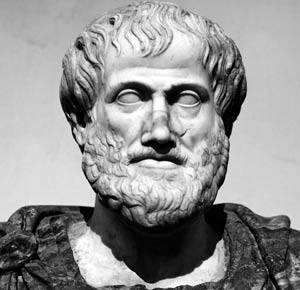
“I don’t deserve a share in governing a hen-roost, much less a nation. Nor do most people — all the people who believe advertisements, and think in catchwords and spread rumors. The real reason for democracy is just the reverse. Mankind is so fallen that no man can be trusted with unchecked power over his fellows. Aristotle said that some people were only fit to be slaves. I do not contradict him. But I reject slavery because I see no men fit to be masters.”


C. S. Lewis, “Equality,” The Spectator, Vol. CLXXI (27 August 1943).

Categories
Today

Maj. Gen. Lafayette

On December 7, 1776, the Marquis de Lafayette arranged to enter the American military as a major general. On the same date in 1787, Delaware became the first state to ratify the United States Constitution.

The 1941 date marks, of course, “the day that will live in infamy,” when Japan bombed Pearl Harbor.