Categories
Today

New Connecticut?

On January 15, 1777, New Connecticut declared independence from the crown of Great Britain and the colony of New York.

Delegates first named the independent state New Connecticut and, in June 1777, finally settled on the name Vermaont, an imperfect translation of the French for Green Mountain.

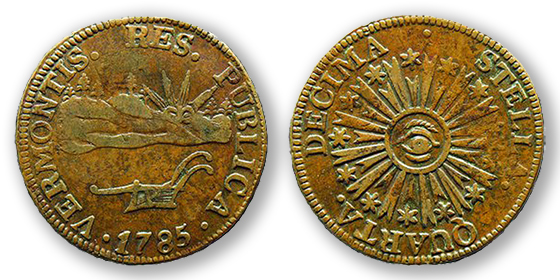
This new “Vermont Republic” minted copper coins (see above), first struck in 1785. The people of Vermont took part in the American Revolution although the Continental Congress did not recognize the jurisdiction, because of vehement objections from New York, which had conflicting property claims.

In 1791, Vermont was admitted to the United States as the 14th state, upon which its minting of coins ceased.

Categories
links

Townhall: Who Are We?

Where do the NGO’s go? To the SHC’s — as [allegedly] designated by our current president (SHC stands for S***-H***-Country). But is America in danger of sliding down into that very same status?

Click on over to Townhall. Then come back here.

Categories
Thought

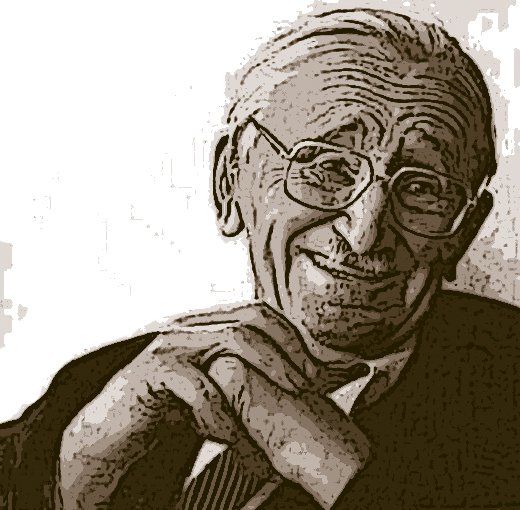
F. A. Hayek

It may indeed prove to be far the most difficult and not the least important task for human reason rationally to comprehend its own limitations. It is essential for the growth of reason that as individuals we should bow to forces and obey principles which we cannot hope fully to understand, yet on which the advance and even the preservation of civilization depends.

Categories
Thought

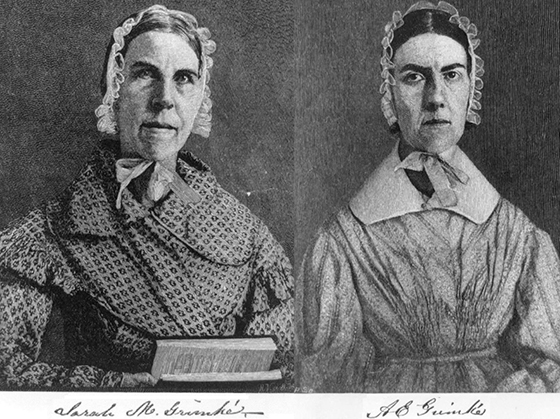
Sarah M. Grimké

“The system of slavery is necessarily cruel. The lust of dominion inevitably produces hardness of heart, because the state of mind which craves unlimited power, such as slavery confers, involves a desire to use that power, and although I know there are exceptions to the exercise of barbarity on the bodies of slaves, I maintain that there can be no exceptions to the exercise of the most soul-withering cruelty on the minds of the enslaved. All around is the mighty ruin of intellect, the appalling spectacle of the down-trodden image of God.”


Sarah M. Grimké, from An Epistle to the Clergy of the Southern States, New-York, 12th Mo. 1836.

Categories
Today

Against Slavery

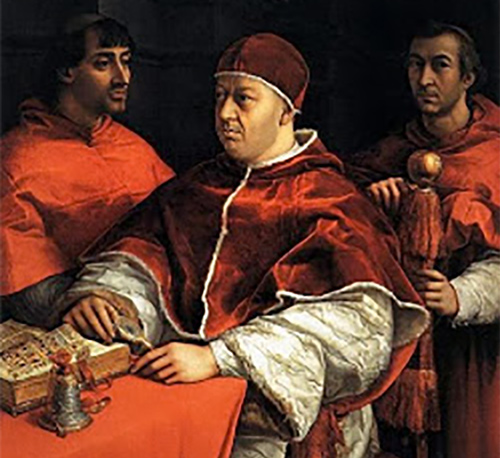
On January 14, 1514, Pope Leo X issued a papal bull against slavery. On the same date in 1639, the first written constitution to create a government, the “Fundamental Orders,” was adopted in Connecticut.

Categories
video

The Repeating Crossbow

We may be entering a new era of home-made invention and production. Some of this is being driven by 3-D printing technology. But good old-fashioned backyard innovation still has much to be said for it. And if you are interested in unregulated weaponry, preparing for the zombie apocalypse, or just doing something really cool, here is one man who pushes technology while having a great deal of fun:

Categories
Thought

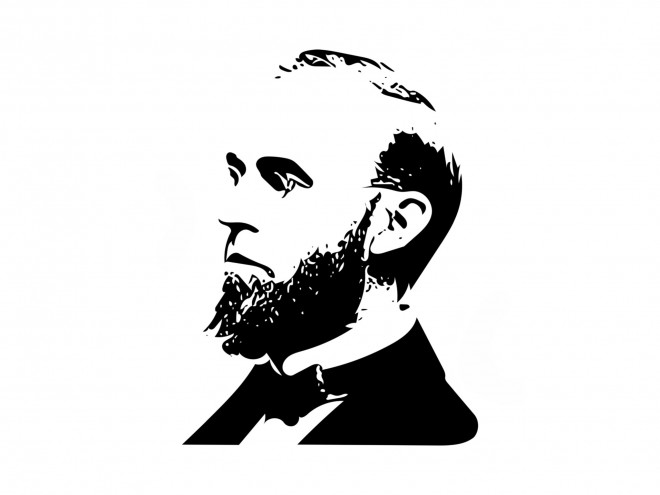
Arthur Latham Perry

“By far the most important of all the conditions, under which the production of material commodities goes broadly forward, is liberty of action on the part of the individual; because, wherever such liberty is conceded, association and invention and all other needful conditions follow right along by laws of natural sequence.”

Arthur Latham Perry, Principles of Political Economy, 1891.

Categories
Today

Nullification?

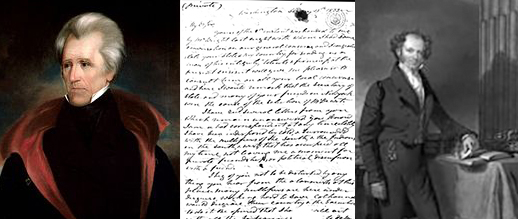
On January 13, 1833, United States President Andrew Jackson (pictured, top left) wrote to Vice President Martin Van Buren (pictured, top right) expressing his opposition to South Carolina’s defiance of federal authority in the Nullification Crisis. Jackson insisted that “the crisis must be now met with firmness” and “the modern doctrine of nullification & succession put down forever.”

South Carolina had blamed protectionist high tariffs for the severity of the economic slump of the time, and Andrew Jackson’s compromise Tariff of 1832 was still too much special-interest “protectionism” for South Carolina, which threatened to nullify the law as unconstitutional. Jackson, a nationalist at heart, had no sympathy for dissidents in the southern states. (The tariffs were designed by northern politicians to encourage the growth of industry. The belief among most economists of that time was that such high “protective” tariffs favored certain businesses at the expense of the general consumer, particularly farmers and agricultural producers.) After the crisis subsided, tariffs were further reduced from the 1832 level, much lower than of 1828’s “Tariff of Abominations,” which had been signed into law by President John Quincy Adams — and written mainly by Martin Van Buren as a way to precipitate the election of Jackson.

Since the somewhat ambiguous end to the Nullification Crisis, the doctrine of state prerogatives — “states’ rights” — has been asserted by opponents of the Fugitive Slave Act of 1850, proponents of California’s Specific Contract Act of 1863 (which nullified the Legal Tender Act of 1862), opponents of Federal acts prohibiting the sale and possession of marijuana in the first decade of the 21st century, and opponents of implementation of laws and regulations pertaining to firearms from the late 1900s up to 2013. State opposition to ObamaCare has also recently conjured up the issue.


On January 13, 1898, Émile Zola’s J’accuse exposed the Dreyfus affair.
Categories
Thought

T. H. White

”The best thing for being sad . . . is to learn something. That’s the only thing that never fails. You may grow old and trembling in your anatomies, you may lie awake at night listening to the disorder of your veins, you may miss your only love, you may see the world about you devastated by evil lunatics, or know your honour trampled in the sewers of baser minds. There is only one thing for it then — to learn. Learn why the world wags and what wags it. That is the only thing which the mind can never exhaust, never alienate, never be tortured by, never fear or distrust, and never dream of regretting. Learning is the only thing for you. Look what a lot of things there are to learn.”

Categories
Today

Fast Ford

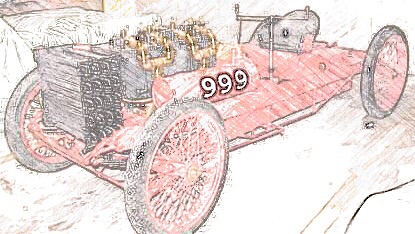
On Jan. 12, 1904, Henry Ford set a land-speed record of 91.37 mph on the frozen surface of Lake St. Clair in Michigan, driving a four-wheel vehicle, dubbed the “999,” with a wooden chassis but no body or hood. Ford’s record was broken within a month, but the publicity from Ford’s achievement was valuable to the auto pioneer, who had incorporated the Ford Motor Company the previous year.