Categories
Today

Two Criminals

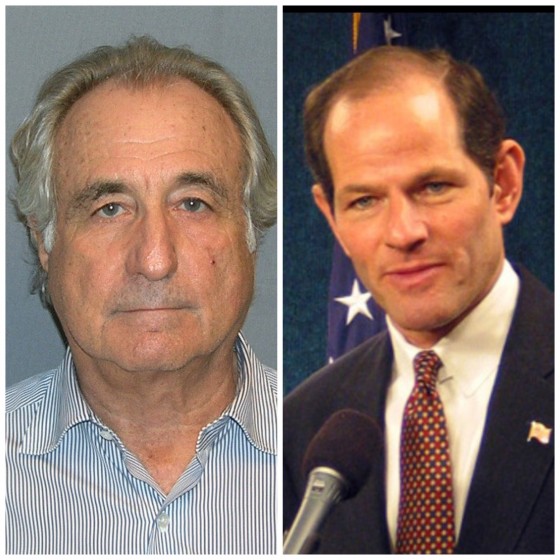
On March 12, 2009, financier Bernard Madoff pled guilty to pulling off perhaps the biggest swindle in U. S. history. One year earlier to the day, in the same city, New York, the state’s governor, Eliot Spitzer, resigned a mere two days after reports had surfaced that he was listed as a client in a high-end escort/call-girl prostitution ring.

Categories
links

Townhall: Trump’s Tariffs, Congress’ Cowardice

Trade policy and a do-nothing Congress, a match made in hell … read about it at Townhall. And come back here for more kindling:

Categories
Today

Daily Courant

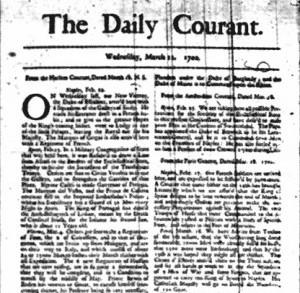
On March 11, 1702, The Daily Courant, England’s first national daily newspaper, was published for the first time. It was a one-sheet, concentrated on foreign news, sans commentary. The reverse side sported advertising. It was produced by Elizabeth Mallet (1672–1706), a printer and bookseller who lived, and published the paper, next to the Kings Arms tavern at Fleet Bridge in London.

Categories
Thought

Tolstoy

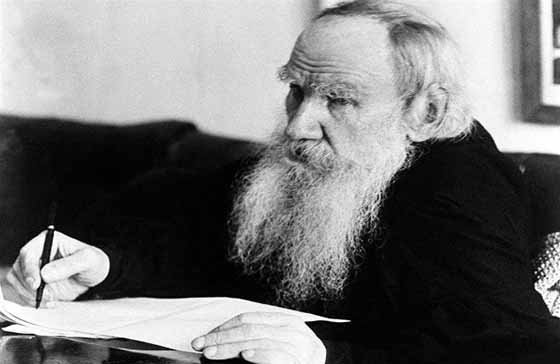
In all history there is no war which was not hatched by the governments, the governments alone, independent of the interests of the people, to whom war is always pernicious even when successful.


Leo Tolstoy, Christianity and Patriotism (1898).

Categories
video

When Doomsday Fails to Arrive on Schedule

Daniel Hannan tells a classic tale from the history of social psychology, and draws a Brexit lesson:

The story he tells was written about, originally, in the classic treatise by Leon Festinger, Henry Riecken and Stanley Schachter, When Prophecy Fails (1955).

Categories
Thought

John Adams

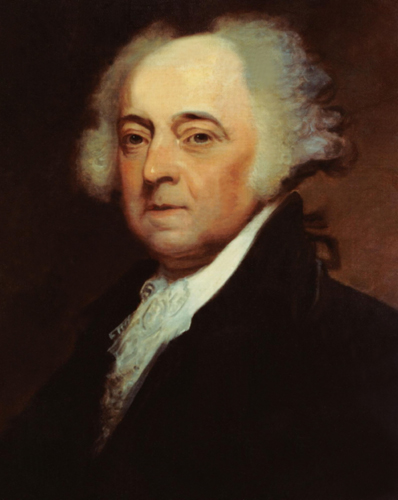
The nature of the encroachment upon the American constitution is such, as to grow every day more and more encroaching. Like a cancer, it eats faster and faster every hour. The revenue creates pensioners, and the pensioners urge for more revenue. The people grow less steady, spirited and virtuous, the seekers more numerous and more corrupt, and every day increases the circles of their dependants and expectants, until virtue, integrity, public spirit, simplicity and frugality, become the objects of ridicule and scorn, and vanity, luxury, foppery, selfishness, meanness, and downright venality swallow up the whole society.

Categories
Today

The Mahatma

On March 10, 1922, Mahatma Gandhi was arrested in India, tried for sedition, and sentenced to six years in prison, only to be released nearly two years later for an appendicitis operation.

Categories
Today

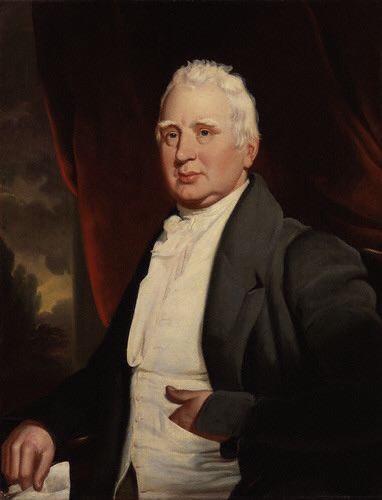
William Cobbett

March 9 marks the 1763 birthday of British pamphleteer and activist William Cobbett. Cobbett was known for his lifelong opposition to authority, and his later-in-life “radicalism,” which included his opposition to Britain’s protectionist Corn Laws as well as his support for Catholic Emancipation. Cobbett died in 1835.

In 1776 on this date, Scottish philosopher Adam Smith first published An Inquiry into the Nature and Causes of the Wealth of Nations, which became the first widely accepted landmark work in the field of economics. It was not the first general treatise on the subject, however; that designation almost certainly belongs to banker Richard Cantillon’s Essai sur la Nature du Commerce en Général, cited by Smith in his more famous book. It is also worth noting that Étienne Bonnot de Condillac’s systematic treatise, Le Commerce et le Gouvernement, also saw publication in 1776.

On March 9, 1862, the USS Monitor and CSS Virginia fought to a draw in the Battle of Hampton Roads, the first battle between two ironclad warships. The Virginia was built on the remains of the USS Merrimack, and the battle is often referred to as between “the Monitor and the Merrimack.”

Categories
Thought

Arthur Latham Perry

The Greek writer, Aristotle, quoted some centuries before Christ from “the African,” probably some Carthaginian writer on agriculture, the now familiar saying, “the best manure for the land is the foot of the owner.” This homely word long attributed to Dr. Franklin, who stole it for his “Poor Richard’s Almanack” more than a century ago, is based on the sound principle, that personal supervision to be most effective must be limited in its sphere, and that the best agricultural skill becomes weak when it attempts to exhibit itself on too broad a surface. Because a man can cultivate 100 acres better than any of his neighbors, it does not prove that he will cultivate 50 acres additional to them better than a neighbor of inferior skill, who is the owner of these 50 and no more.

Arthur Latham Perry, Principles of Political Economy (1891).
Categories
Today

Slavery and Anti-Slavery in America

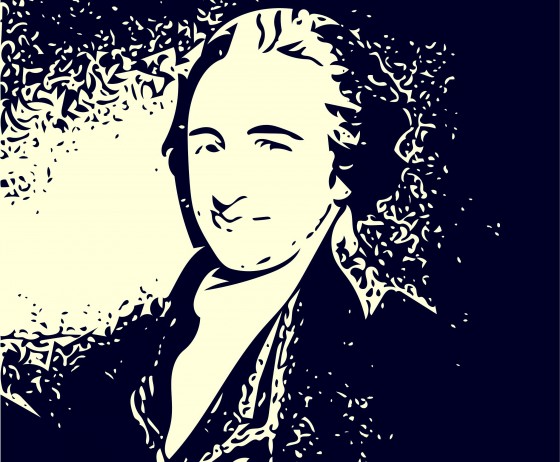
On March 8, 1775, “African Slavery In America,” the first known essay advocating the abolition of slavery in America, was published anonymously in the Pennsylvania Journal and the Weekly Advertiser. Thomas Paine (pictured) is believed to be the essay’s author.

The first anti-slavery society was formed in Philadelphia weeks after publication, and Paine was a founding member.

Exactly 120 years earlier, a court in Northampton County of the Virginia Colony ruled that John Casor, then working as an indentured servant to Robert Palmer, must be returned to Anthony Johnson as Johnson’s “lawful” slave for life. Ironically, Johnson was one of the original indentured servants brought to Jamestown, had completed his indenture to become a “free Negro” and the first African landowner in the colony. The case marked the first person of African descent to be legally-recognized as a lifelong slave in England‘s North American colonies. The first official chattel slave in English-speaking North America was of African descent, and was owned by a man also of African descent.


Centenary Dates:

The February Revolution began on February 23, 1917 (Old Style calendar: March 8 by modern reckoning), in Russia: Women calling for bread in Petrograd started riots, which spontaneously spread throughout the city.

On March 8, the United States Senate adopts the cloture rule in order to limit filibusters.